
 By Titik Puspa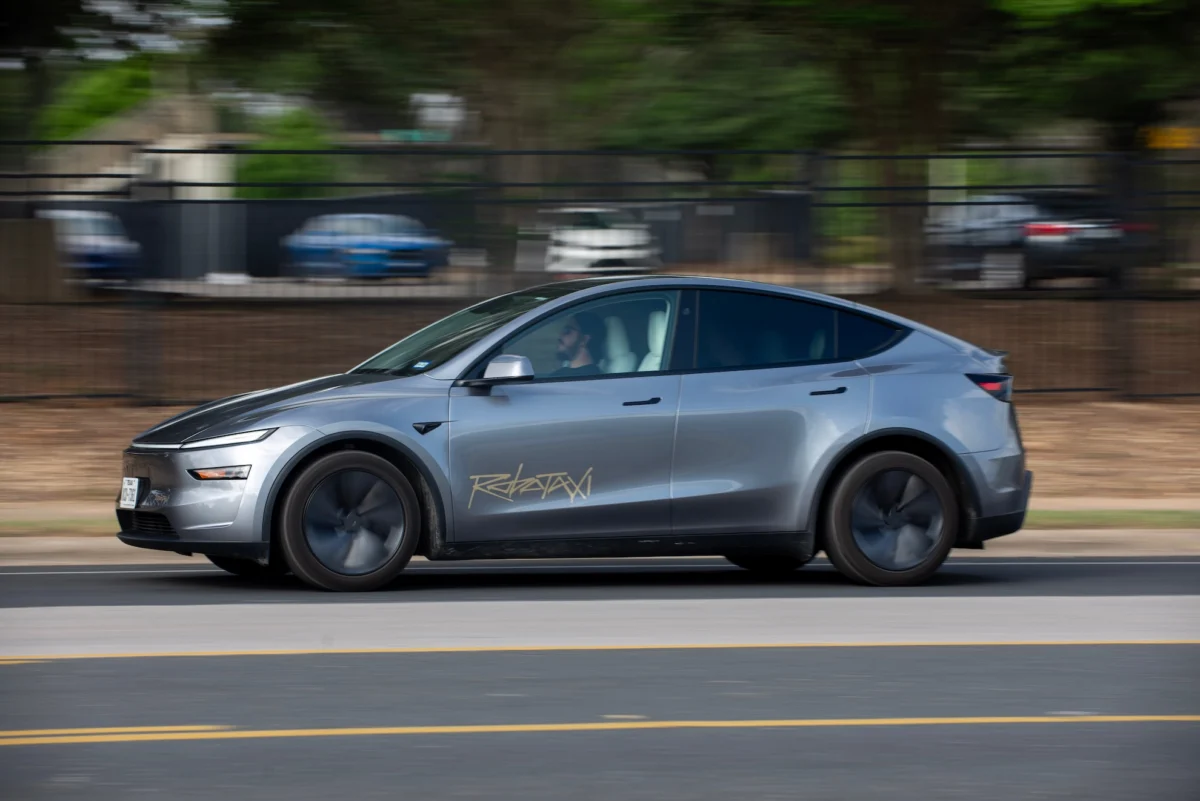
Tesla, the electric vehicle and clean energy titan led by Elon Musk, has officially announced a significant expansion of its autonomous robotaxi service, rolling out operations in two major Texas cities: Dallas and Houston. This latest move, confirmed via a social media post from the company, marks a pivotal moment in Tesla’s ongoing pursuit of a fully driverless future and expands its footprint in the burgeoning autonomous ride-hailing sector. The announcement, though brief, signals a strategic push to capture market share in key urban centers, further solidifying Texas as a proving ground for Tesla’s advanced autonomous driving technology.
The social media announcement, characterized by its succinctness and visual accompaniment, stated simply: "Robotaxi is now rolling out in Dallas & Houston 🤠." This declaration was accompanied by a 14-second video showcasing Tesla vehicles navigating city streets without any human presence in the driver’s seat, a powerful visual testament to the company’s progress in developing and deploying self-driving capabilities. The absence of human monitors or drivers in these showcased vehicles underscores Tesla’s commitment to its vision of a fully autonomous transportation network, where vehicles operate independently of human intervention. This visual narrative is crucial for building public confidence and demonstrating the technological prowess behind the robotaxi service.
With the addition of Dallas and Houston, Tesla’s robotaxi service now operates in three major Texas cities, underscoring the state’s importance in the company’s autonomous vehicle strategy. This expansion follows the initial launch of robotaxi services in Austin, which commenced last year. Furthermore, Tesla has been progressively phasing out human safety drivers in its Austin operations, with a significant shift occurring in January 2026 when the company began offering rides without safety drivers, a milestone that generated considerable attention and debate. This gradual removal of human oversight is a key indicator of Tesla’s confidence in its Full Self-Driving (FSD) software and its ability to handle complex driving scenarios autonomously.
However, this rapid expansion and the push towards driverless operation have not been without their challenges and controversies. Public records and reports have highlighted instances of autonomous vehicle incidents, raising questions about the safety and reliability of Tesla’s robotaxi fleet. Specifically, in a February filing, Tesla disclosed that its robotaxis operating in Austin had been involved in 14 crashes since their launch. This figure, while needing further contextualization regarding the severity and circumstances of each incident, inevitably draws scrutiny from regulators, safety advocates, and the public alike. The National Highway Traffic Safety Administration (NHTSA) is known to closely monitor such incidents, and any pattern of accidents involving autonomous vehicles can lead to increased regulatory oversight and potential investigations.
The incidents in Austin serve as a critical reminder of the inherent risks and complexities associated with deploying autonomous vehicles in real-world urban environments. While Tesla’s technology aims to surpass human driving capabilities in terms of safety and efficiency, the unpredictable nature of traffic, pedestrian behavior, and unexpected road conditions presents ongoing challenges. The data from Austin will undoubtedly inform Tesla’s rollout in Dallas and Houston, as the company endeavors to learn from past experiences and refine its operational protocols. The ethical implications of deploying driverless vehicles, particularly concerning accident liability and passenger safety, remain a central theme in ongoing public discourse.
Beyond its fully autonomous robotaxi service, Tesla also maintains a more conventional ride-hailing operation in the San Francisco Bay Area. This service, however, utilizes human drivers, offering a more limited ride experience compared to the driverless robotaxis. This distinction highlights Tesla’s multi-pronged approach to the ride-sharing market, catering to different levels of technological readiness and regulatory environments. The San Francisco Bay Area, being a hub for technological innovation and a testing ground for autonomous vehicle technologies, provides Tesla with valuable insights into consumer acceptance and operational logistics, even for its human-driven services.
The current scale of Tesla’s robotaxi operations in Dallas and Houston remains relatively nascent, according to crowdsourced data. The Robotaxi Tracker website, a valuable resource for monitoring the deployment of autonomous vehicles, indicates that only a single Tesla robotaxi has been registered in each of these new cities. This contrasts sharply with Austin, where the tracker logs 46 active vehicles. This initial low number suggests a phased rollout, allowing Tesla to meticulously monitor performance, gather data, and address any unforeseen issues before scaling up its fleet. Such a cautious approach is strategically sound, enabling the company to refine its operations in a controlled manner and mitigate potential risks associated with rapid, large-scale deployment.
The expansion into Dallas and Houston represents a significant strategic maneuver by Tesla. These cities are not only major population centers but also possess robust economic activity and a growing appetite for innovative transportation solutions. The competitive landscape for ride-hailing services is intense, and the introduction of a fully autonomous option could disrupt existing market dynamics. Tesla’s ability to leverage its existing brand recognition, technological leadership in electric vehicles, and the growing adoption of its FSD software positions it favorably to capture a substantial share of the autonomous ride-hailing market.
The underlying technology powering Tesla’s robotaxi service is its proprietary Full Self-Driving (FSD) software. FSD is designed to enable Tesla vehicles to navigate autonomously, including handling urban driving, traffic signals, and complex intersections. The continuous development and refinement of this software are paramount to the success of the robotaxi initiative. Tesla relies heavily on data collected from its fleet of vehicles, including those driven by consumers with FSD enabled, to train and improve its algorithms. The feedback loop between real-world driving data and software updates is crucial for advancing the capabilities and safety of its autonomous systems.
Expert perspectives on the future of autonomous vehicles often highlight both the immense potential and the significant hurdles. Dr. Anya Sharma, a leading researcher in AI and robotics at Stanford University, notes, "Tesla’s expansion is an exciting development, but it’s crucial to maintain a balanced perspective. While the technology has advanced dramatically, the last mile of autonomy, especially in unpredictable urban environments, remains a complex challenge. The industry needs robust testing, transparent data sharing, and clear regulatory frameworks to ensure public safety and foster widespread trust." Her comments underscore the ongoing need for rigorous validation and public assurance.
The economic implications of widespread robotaxi adoption are also substantial. Proponents argue that autonomous ride-hailing could lead to lower transportation costs, increased mobility for underserved populations, and reduced traffic congestion and emissions through optimized routing and ride-sharing. However, concerns about job displacement for professional drivers are also a significant consideration. The transition to a driverless future will necessitate careful planning and support for affected workers.
Tesla’s strategy of focusing on Texas for its robotaxi expansion is likely influenced by a combination of factors. The state generally has a favorable regulatory environment for autonomous vehicle testing and deployment, with less stringent regulations compared to some other states. Furthermore, Texas’s large and growing urban centers provide a substantial market for ride-hailing services. The state’s commitment to innovation and its business-friendly climate likely also play a role in Tesla’s strategic decisions.
Looking ahead, the success of Tesla’s robotaxi service in Dallas and Houston will depend on several key factors: the reliability and safety of its autonomous technology, its ability to scale its fleet efficiently, its competitive pricing strategy, and its capacity to navigate evolving regulatory landscapes. The company’s history of ambitious goals and rapid innovation suggests a determined push towards realizing its vision of a driverless future. However, the path forward will undoubtedly involve continued scrutiny, adaptation, and a relentless focus on safety and public acceptance. The data from these new markets will be closely watched by the industry, regulators, and the public as Tesla continues to push the boundaries of autonomous transportation. The coming months and years will be critical in determining whether Tesla’s robotaxi gamble in Texas will pave the way for a new era of personal mobility or encounter further unforeseen challenges on the road to full autonomy.
