
 By admin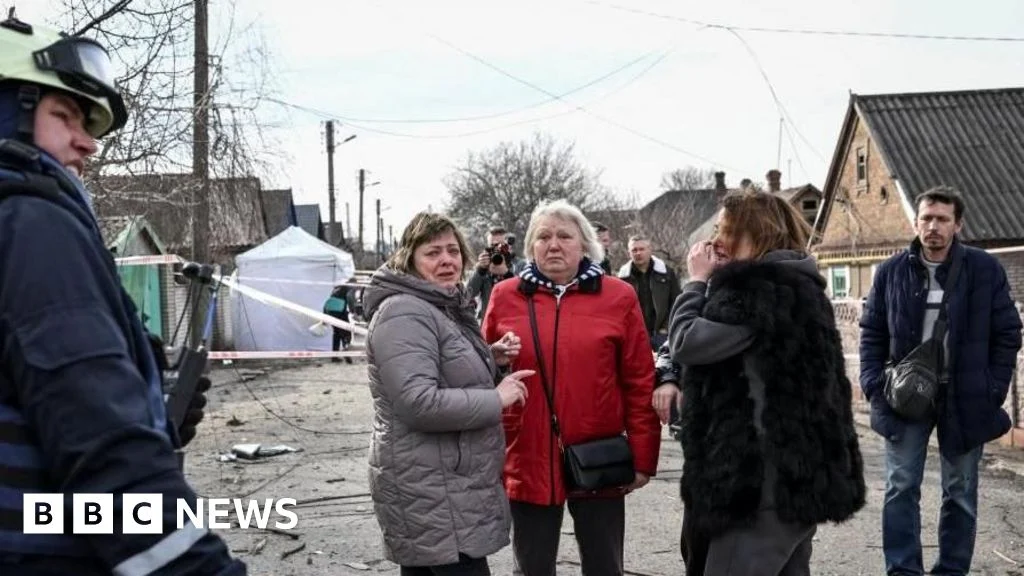
Six lives were tragically extinguished across four Ukrainian regions in the span of 24 hours, local authorities have confirmed, as Russia’s relentless assault on Ukraine continues to exact a devastating human toll. The southern city of Zaporizhzhia bore witness to particular horror on Saturday, where a residential building was struck by a drone, resulting in the deaths of two individuals and leaving eight others wounded, including two children. The nearby Dnipropetrovsk region also suffered grievous losses, with two fatalities and five injuries reported. The eastern Donetsk and southern Kherson regions, though reporting fewer casualties, each confirmed one death attributed to the ongoing hostilities.
These grim statistics emerge against a backdrop of intensified diplomatic maneuvering, with Ukrainian and United States teams currently engaged in high-stakes discussions aimed at charting a path towards ending Russia’s full-scale invasion. These negotiations mark the first significant engagement of their kind since the United States and its allies launched wide-ranging strikes against Iran in the preceding month, a development that has undeniably reshaped the global geopolitical landscape and introduced new layers of complexity to the conflict in Ukraine.
Ukrainian President Volodymyr Zelensky has underscored the critical importance of his negotiating team discussing the recent decision by the US to ease sanctions on Russian oil. These sanctions, initially implemented by Washington with the stated intention of curbing global energy prices, have sparked considerable apprehension within Ukraine. The implications of such a policy shift are viewed with deep concern by Kyiv, which fears it could inadvertently bolster Russia’s economic resilience and prolong its capacity to wage war.
The initial day of talks, held in Florida, saw Ukrainian negotiators engage with prominent figures from the US political sphere, including Donald Trump’s envoy Steve Witkoff and the former president’s son-in-law, Jared Kushner. President Zelensky, in his late-night video address, emphasized the global imperative for continued diplomatic engagement. "It is important for all of us across the world that diplomacy continues and we’re trying to stop this war," he stated, highlighting the urgent need for a cessation of hostilities. He further elaborated on the crucial objective of understanding Russia’s genuine readiness for peace and its commitment to engaging in honest and equitable negotiations. "The most important thing is to understand how prepared Russia is for moving towards really ending the war and how prepared they are to do this honestly and decently," Zelensky articulated. "This is particularly important given that because of the Iran situation geopolitical problems have only got worse." The diplomatic dialogue was scheduled to resume on Sunday, with hopes pinned on a potential, albeit perhaps slim, breakthrough.
However, the history of US-mediated talks regarding the conflict in Ukraine has been fraught with limited success. Numerous rounds of negotiations have, thus far, failed to achieve a lasting ceasefire or compel Russia to significantly alter its maximalist demands. Consequently, expectations for a substantial breakthrough in the current discussions remain cautiously subdued. The lingering impact of the war on civilian populations is palpable, with a friend of one of the victims of the Zaporizhzhia drone strike voicing the profound exhaustion and despair felt by many. "I stopped believing long ago," the individual confided to Reuters. "When will this all just end? When will they finally reach an agreement? How long can they keep negotiating? Just give it to the Russian side so hard that it hurts them as much as it hurts us." This poignant sentiment encapsulates the desperate yearning for an end to the suffering and a decisive resolution to the conflict.
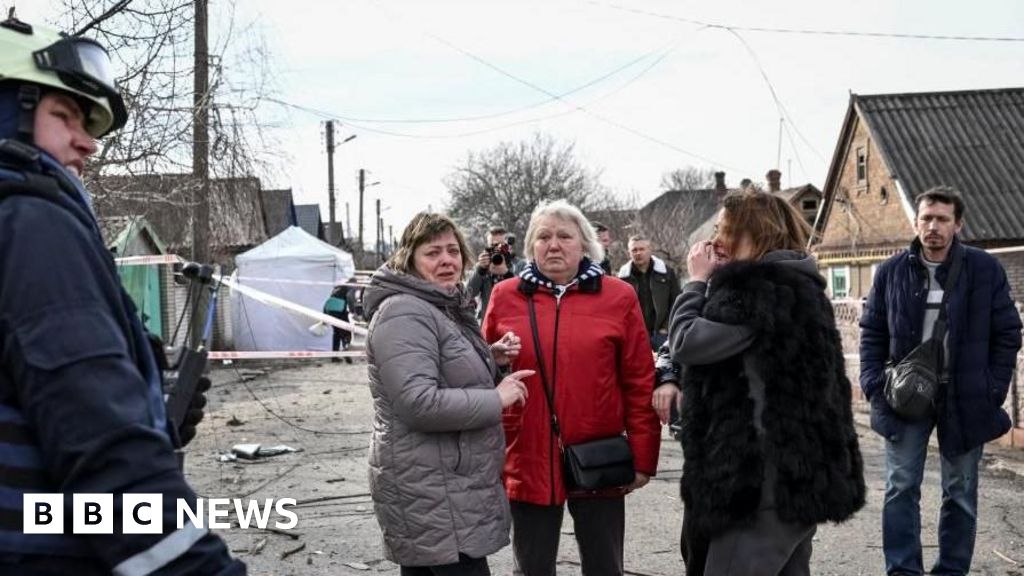
The mother of another victim of the Zaporizhzhia attack shared a harrowing account of the moments leading up to the strike. She recounted being at a friend’s apartment when the drone hit. "When the strike happened I checked a Telegram channel and I saw their fence and my son’s car," she recounted, her voice likely heavy with grief and disbelief. These personal testimonies underscore the indiscriminate nature of the attacks and the profound personal losses endured by Ukrainian families.
On the agenda for the ongoing US talks are several critical issues, including the establishment of a trilateral meeting that would involve Russia, and concerted efforts to mend the often strained relationship between President Zelensky and former President Trump. Trump has, in the past, publicly accused the Ukrainian leader of being a primary impediment to peace, a characterization that has undoubtedly added a layer of complexity to diplomatic efforts. Furthermore, Ukraine is reportedly exploring opportunities to share its advanced drone expertise and technological innovations with the United States. Given the heightened tensions in the Middle East and the potential utility of such capabilities in countering threats from Iran, this offer holds significant strategic importance for both nations.
The city of Zaporizhzhia has been a frequent target of Russian forces since the commencement of the full-scale invasion of Ukraine in February 2022. Its strategic location and proximity to the Zaporizhzhia Nuclear Power Plant, Europe’s largest, have made it a focal point of military activity and a persistent source of concern for international observers. The recurrent shelling and drone attacks underscore the ongoing threat to civilian infrastructure and the safety of its inhabitants.
In a recent interview with the BBC’s Laura Kuenssberg, President Zelensky articulated his concerns about Ukraine’s missile deficit, attributing this shortage, in part, to the ongoing conflict in the Middle East. He posited that Russian President Vladimir Putin’s strategic objective may be to prolong the conflicts involving the US, Israel, and Iran, thereby diverting critical US resources away from supporting Ukraine. This perspective highlights the intricate web of global conflicts and the potential for their interconnectedness to influence the trajectory of the war in Ukraine.
The Trump administration’s decision to grant a waiver on sanctions for countries purchasing Russian oil, implemented earlier this month, has been met with a degree of welcome by the Kremlin, signaling a potential shift in international energy dynamics. However, this move has ignited deep-seated concerns among Ukrainians and their allies. The waiver, which is set to remain active for a period of one month, is intended to facilitate easier trade of Russian oil for international buyers. Pro-Ukraine campaigners have decried this decision as a symbolic departure from the unified Western strategy of exerting maximum economic pressure on Russia, raising fears that it could undermine efforts to isolate the Russian economy and thereby weaken its war-making capacity. The complex interplay of geopolitical alliances, economic pressures, and the enduring human cost of conflict continues to define the challenging landscape of the war in Ukraine. The ongoing diplomatic engagements, while offering a sliver of hope, are unfolding against a backdrop of escalating violence and a deeply fractured international order.
