
 By admin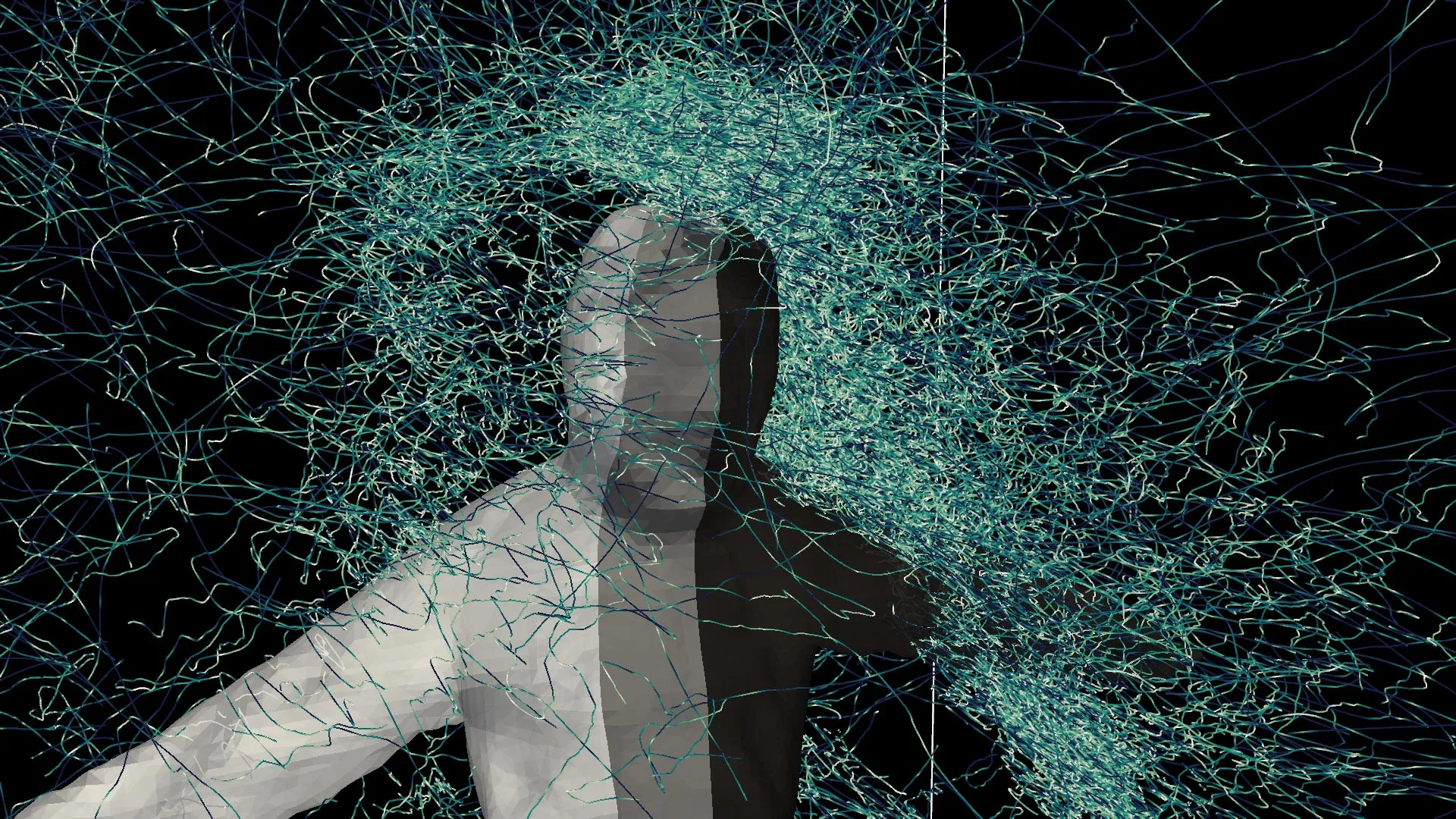
The development of this predictive mathematical model marks a significant leap forward in entomological science and public health. Previous understanding of mosquito host-seeking behavior, while foundational, often relied on observational studies that lacked the granular precision of 3D motion tracking and the vast datasets now available. By quantifying the intricate dance of these tiny insects, scientists can move beyond trial-and-error approaches, designing control strategies rooted in a deep understanding of the mosquitoes’ sensory perception and navigational algorithms. This interdisciplinary collaboration between Georgia Tech, renowned for its engineering and biological sciences, and MIT, a leader in advanced computational modeling, highlights the power of merging diverse scientific expertise to tackle complex biological challenges.
In a commendable effort to democratize scientific knowledge and foster public engagement, the research team also launched an interactive public website. This innovative platform, accessible to anyone with an internet connection, allows users to explore mosquito movement and behavior simulations based directly on the collected data. Through this digital interface, students, educators, and even citizen scientists can visualize how factors like color, carbon dioxide levels, and their combination influence mosquito flight paths, providing a tangible and dynamic illustration of the research findings. This initiative not only enhances scientific literacy but also empowers communities to better understand the behavior of these pervasive pests, potentially informing local prevention efforts.
Unveiling Mosquito Navigation: The Power of 3D Imaging
To unravel the complex mechanisms by which mosquitoes navigate their environment and locate a blood meal, the scientists employed a sophisticated experimental setup centered on advanced 3D infrared cameras. This cutting-edge technology allowed for the precise, real-time tracking of hundreds of individual mosquitoes within a controlled chamber, capturing their movements with unprecedented accuracy. The initial phase of the study focused on observing how these minute insects responded to inanimate objects, leveraging visual signals and plumes of carbon dioxide (CO2) – a key long-range attractant for mosquitoes, mimicking the exhalations of potential hosts. By systematically manipulating these environmental cues, researchers could isolate and quantify their individual and synergistic effects on mosquito flight patterns.
The methodology involved meticulously designing a controlled environment where variables could be precisely managed. For instance, specific objects were introduced, and their visual properties (e.g., color, size, contrast) were altered, while CO2 concentrations were carefully regulated. This allowed the team to build a baseline understanding of how mosquitoes process sensory information. The pivotal step, however, involved introducing a human subject into the controlled chamber. This daring, yet crucial, component of the research involved a researcher changing various clothing colors and allowing the mosquitoes to swarm around him, all while the high-speed infrared cameras continuously recorded their every movement. This provided invaluable data on how mosquitoes behave in the presence of an actual human host, bridging the gap between theoretical models and real-world interactions.
The findings, rigorously peer-reviewed and published in the prestigious journal Science Advances, primarily focused on female Aedes aegypti mosquitoes. This particular species, often referred to as the yellow fever mosquito, is of immense public health concern. It is widely distributed across the southeastern United States, California, and numerous tropical and subtropical regions worldwide, making it a primary vector for not only yellow fever but also dengue, chikungunya, and Zika viruses. Its prevalence and aggressive daytime biting habits make understanding its host-seeking behavior particularly critical for disease control efforts. The ability to track such small, fast-moving insects in 3D, distinguishing their individual trajectories and interactions with their environment, represented a significant technical achievement, pushing the boundaries of biological imaging and data analysis.
Individual Instinct, Collective Outcome: Mosquitoes Follow Signals, Not Each Other
One of the most profound and counterintuitive findings of the study challenged long-held assumptions about mosquito swarming behavior. The extensive data analysis revealed that mosquitoes do not gather in clusters because they are following one another, akin to a flock of birds or a school of fish. Instead, each individual insect responds independently to the environmental cues it perceives. Despite this autonomous decision-making process, the cumulative effect of these individual responses leads them to converge and cluster in the same location at the same time. This emergent behavior, where simple individual rules lead to complex collective patterns, has significant implications for how we approach mosquito control.
David Hu, a professor in Georgia Tech’s George W. Woodruff School of Mechanical Engineering and the School of Biological Sciences, eloquently articulated this phenomenon with a relatable analogy: "It’s like a crowded bar. Customers aren’t there because they followed each other into the bar. They’re attracted by the same cues: drinks, music, and the atmosphere. The same is true of mosquitoes. Rather than following the leader, the insect follows the signals and happens to arrive at the same spot as the others. They’re good copies of each other." This analogy vividly illustrates that the apparent coordinated behavior is not a result of social interaction or mimicry among the mosquitoes but rather a parallel response to identical, compelling stimuli. Each mosquito, acting as an independent sensory processor, is drawn to the most salient environmental signals indicative of a blood meal, leading to a synchronous convergence on the host. This insight suggests that control strategies might be more effective by focusing on manipulating these universal attractants rather than attempting to disrupt hypothetical social dynamics within a swarm.
The Synergistic Power of Visual Cues and CO2
The research meticulously dissected the interplay between visual cues and carbon dioxide, revealing a powerful synergistic effect that drives mosquito host-seeking. The team conducted three distinct experiments to precisely quantify how these attractants influence mosquito flight paths and decision-making.
In the initial test, a simple black sphere was introduced into the chamber. The results indicated that while the black object could draw mosquitoes in, it primarily did so if the insects were already flying in its general direction. Crucially, once they reached the object, they typically did not linger. Instead, they quickly moved on, suggesting that a visual target alone, without additional compelling cues, was insufficient to elicit sustained interest or feeding attempts. The black color itself is known to be attractive to mosquitoes because it absorbs heat and provides high contrast against most backgrounds, making it easier to spot. However, without further confirmation of a host, the attraction was fleeting.
The second experiment replaced the black object with a white one and, more significantly, introduced a plume of carbon dioxide. White objects are generally less attractive visually due to lower contrast and heat absorption. However, the addition of CO2 dramatically altered mosquito behavior. Mosquitoes were now able to locate the CO2 source, but primarily at closer ranges. A fascinating observation was made: Hu noted the insects pausing briefly, almost as if doing a "double take," before gathering nearby. This "double take" behavior suggests a critical processing stage where the mosquito confirms the presence of a host-associated cue, possibly integrating the olfactory signal of CO2 with a subtle visual or thermal cue before committing to a closer approach. This implies that while CO2 is a powerful long-range attractant, its full effect is realized when it can be combined with other, perhaps more localized, sensory inputs.
The third experiment combined both a black object and carbon dioxide, yielding the most potent and sustained attraction. When both these cues were present together, the effect was overwhelmingly strong. Mosquitoes swarmed the area, lingered significantly longer than in previous experiments, and actively attempted to feed on the inert object. This finding underscores the sophisticated sensory integration employed by mosquitoes. They don’t rely on a single cue but rather process a hierarchy of signals. CO2 acts as a primary long-range indicator, signaling the presence of a breathing host. Once within closer proximity, visual cues, particularly high-contrast, dark objects (which absorb heat and mimic body outlines), become crucial for pinpointing the exact location of the host and initiating landing and feeding behaviors.
Christopher Zuo, who conducted a significant portion of the study as a Georgia Tech master’s student, aptly summarized this intricate decision-making process: "Previous studies had shown that visual cues and carbon dioxide attract mosquitoes. But we didn’t know how they put those cues together to determine where to fly. They’re like little robots. We just had to figure out their rules." This "rule-based" understanding is precisely what the mathematical model aims to capture, translating observed behaviors into predictive algorithms that can simulate and forecast mosquito movements under various environmental conditions. The ability to identify these "rules" opens up unprecedented avenues for designing smarter traps that exploit the mosquito’s inherent sensory biases.
Human Tests: Pinpointing Mosquito Targets
Building upon the insights gained from experiments with inanimate objects, Zuo took the research a step further by becoming a human subject himself. This direct human interaction was crucial for validating the model’s predictions in a more realistic context. He entered the controlled chamber wearing various outfits, including all black, all white, and mixed clothing combinations, to assess how different visual presentations of a human body would influence mosquito behavior.
Standing with his arms extended, Zuo allowed dozens of Aedes aegypti mosquitoes to fly freely around him while the high-speed cameras meticulously recorded their flight paths. The vast amount of data generated from these human trials was then rigorously analyzed at MIT to deduce the most likely "rules" guiding the mosquitoes’ movement in the presence of a living host. The findings were striking and provided direct evidence of mosquito preferences for specific areas of the human body.
The mosquitoes behaved as if Zuo were simply another object, albeit a dynamic and complex one. The largest clusters of mosquitoes formed consistently around his head and shoulders. This observation aligns perfectly with known mosquito biology and human physiology. The head and shoulders are typically areas with higher CO2 emissions (due to breathing) and often greater skin exposure. Furthermore, the head, with its distinct visual outline and potential for hair or dark clothing, provides a strong visual contrast against many backgrounds, making it an attractive target. This concentration around the upper body suggests a refined targeting mechanism, where the combination of CO2 plume and visual silhouette creates an irresistible beacon for the hungry insects.
Despite being surrounded by dozens of mosquitoes, Zuo reported that he wasn’t bitten very often during the experiments. This seemingly counterintuitive outcome can be attributed to several factors. First, he wore a long-sleeved sweatshirt, pants, and a head covering during the trials, minimizing exposed skin. While the clothing itself served as a visual target, the protective layers prevented frequent bites. Second, the experiments were likely conducted for specific, controlled durations, limiting the opportunity for sustained feeding. This aspect, however, further reinforces the practical implications of the research: understanding mosquito targeting preferences can directly inform personal protective measures, such as choosing lighter-colored, loose-fitting clothing that covers more skin, particularly in high-risk areas.
An Interactive Model for Global Understanding
The interactive model and website developed by the team represent a powerful educational and research tool. This platform not only visualizes the complex flight patterns but also allows users to actively manipulate variables and observe the simulated responses of up to 20 mosquitoes. Users can switch between different conditions, including varying colors of target objects, adjusting carbon dioxide levels, combining both cues, or observing behavior in the absence of either. This dynamic interaction helps users grasp how mosquitoes change direction, accelerate, and slow down based on their interpretation of these critical visual and CO2 signals. Furthermore, the platform offers the unique capability for users to upload custom images as targets, allowing for personalized exploration and hypothesis testing, potentially even fostering citizen science initiatives. This accessibility democratizes the research, making complex scientific findings digestible and engaging for a broad audience, from students learning about insect behavior to researchers exploring new control strategies.
Paving the Way for Smarter Mosquito Control
The immediate and long-term implications of this research for global mosquito control are substantial. The researchers firmly believe their findings could usher in an era of more effective, targeted, and environmentally sound pest management strategies. Current mosquito control methods often rely on broad-spectrum pesticides, which can have detrimental ecological impacts, or traditional traps that may not be optimally efficient.
"One tactic is using suction traps that rely on steady cues, such as continuous CO2 release or constant light sources, to attract mosquitoes," Zuo explained. "Our study suggests using them intermittently, then activating suction at intervals, might be better. That’s because mosquitoes don’t tend to stick around their target when both clues aren’t used at the same time." This insight is particularly revolutionary. Instead of a constant, undifferentiated attractant, the model suggests mimicking the natural, dynamic cues of a living host. A breathing animal doesn’t emit a perfectly steady stream of CO2; it exhales in pulses. Similarly, the "double take" behavior observed when CO2 is present but visual cues are ambiguous suggests a period of assessment. By programming traps to release CO2 in intermittent pulses, perhaps combined with a flickering light or a heat source, and then activating the suction mechanism during the precise window when mosquitoes are lingering and attempting to "confirm" the host, traps could achieve significantly higher capture rates. This more intelligent approach could lead to a reduction in the need for chemical insecticides, benefiting both the environment and human health.
Future research stemming from this model could explore optimal pulse frequencies for CO2, investigate the integration of other human-derived attractants (like lactic acid or specific volatile organic compounds), and even develop visual lures that better mimic the dynamic appearance of a host. The economic benefits of more efficient trapping are also considerable, potentially reducing the costs associated with widespread insecticide application and the healthcare burden of mosquito-borne diseases.
This monumental study was a collaborative triumph, with Christopher Zuo and David Hu leading the efforts alongside mechanical engineering Ph.D. candidate Soohwan Kim from Georgia Tech. Essential contributions also came from MIT’s Chenyi Fei and Alexander Cohen, who were instrumental in the computational modeling and data analysis. The expertise of Ring Carde from the University of California at Riverside, a renowned authority in insect olfaction and behavior, further enriched the study’s scientific rigor and breadth. This multidisciplinary team, spanning engineering, biology, and computational science, exemplifies the collaborative spirit necessary to tackle some of humanity’s most pressing public health challenges. The mathematical model and the "rules" it uncovers represent not just a scientific achievement, but a new weapon in the ongoing fight against mosquito-borne diseases, offering a clearer path toward protecting millions globally.
