
 By admin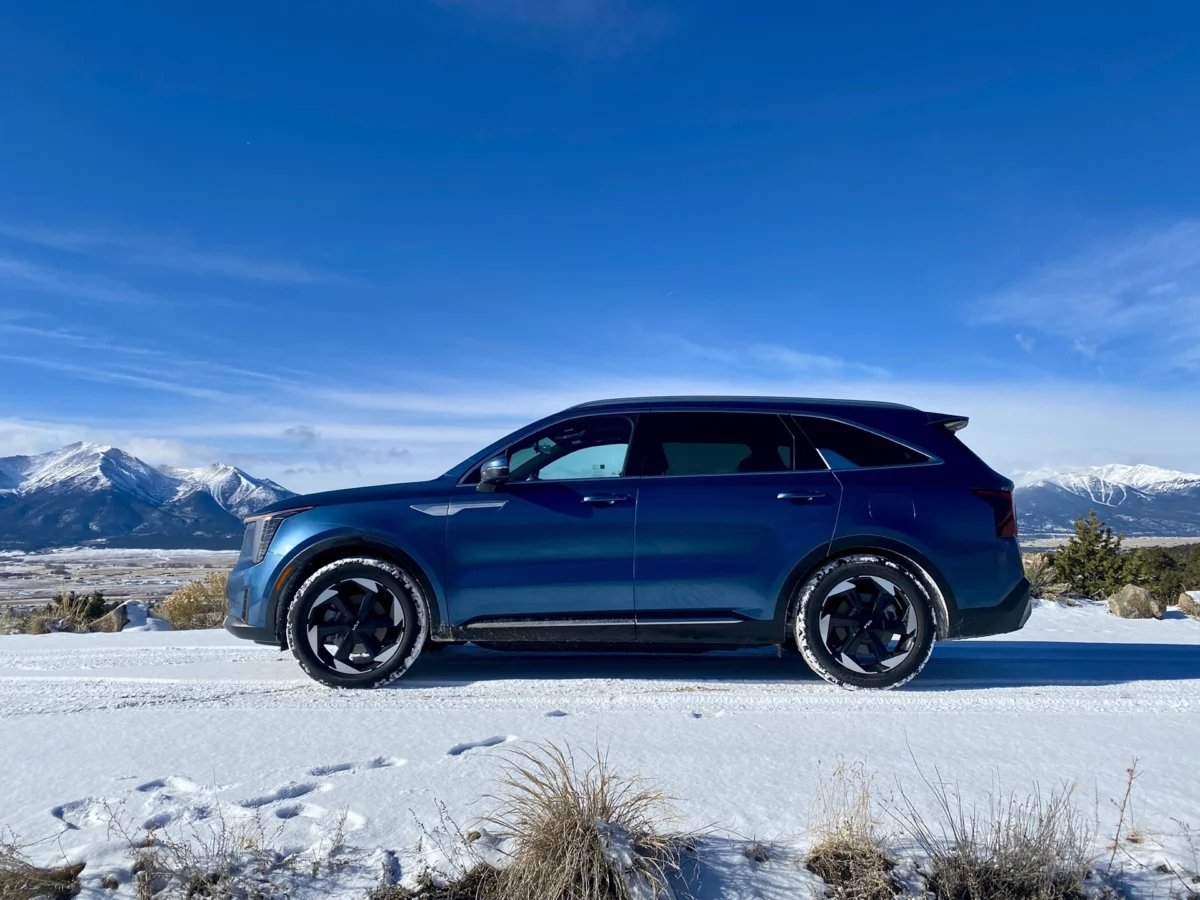
The familiar parental refrain, "Drink more water," often serves as a panacea for myriad childhood ailments, a mantra frequently uttered by this author to her teenagers. Ironically, it was this very directive that echoed in her mind as a holiday adventure in the Colorado Rockies took an unexpected turn, highlighting both the unpredictable nature of high-altitude travel and the unwavering capabilities of the redesigned 2025 Kia Sorento Hybrid.
Our journey began in the flatlands of Chicago, a stark contrast to the mountainous terrain awaiting us. Loaded into our refreshed Kia Sorento Hybrid were three sets of ski gear, six pieces of luggage, and a family of four anticipating a festive Christmas vacation. The vehicle, a testament to modern automotive engineering, provided ample space, allowing the second-row captain’s chairs to recline for comfortable naps during the three-hour ascent from Denver, beyond the Mile High City, and deep into the majestic Rockies. The initial climb saw us well-hydrated, even pausing for a necessary bathroom break at a dizzying 10,000 feet in Fairplay, Colorado, before finally settling into Salida, at a still significant 7,200 feet of altitude. It was late that night, far from the familiar sea-level comforts, that the insidious grip of altitude sickness manifested for the first time in this traveler’s life. A debilitating combination of headache, body aches, and nausea rendered the irony of the situation — the "drink more water" advocate laid low by dehydration’s extreme cousin — almost too much for her teenagers to point out. While the family hit the slopes, she remained grounded, as idle as the sleek Sorento parked below her window.
From her vantage point, the Sorento’s revitalized exterior seemed to silently beckon her to join the adventure. Its new face, characterized by a broader, bolder "dogbone" grille, now anchors a more vertical front fascia, flanked by distinctive stacked headlights and boomerang-shaped running lights. This aesthetic transformation for the 2025 Sorento Hybrid mirrors the updates applied to its gasoline-only counterpart in 2024, signaling a deliberate shift towards a more rugged, yet sophisticated, design language. Kia’s "Opposites United" design philosophy, which seeks to blend contrasting elements like nature and modernity, or tension and harmony, is evident here. The blockier, more upright ends evoke a nostalgic nod to traditional SUVs, yet it retains the practicalities and refined lines of a modern crossover. This design choice strategically differentiates it from its corporate cousin, the Hyundai Santa Fe Hybrid, which adopted an even more pronounced, almost "Lego blocky" aesthetic, ultimately earning it this publication’s prestigious Best Car To Buy 2025 award. The Sorento, while embracing a bolder stance, maintains a more fluid, integrated appearance, appealing to those who desire capability without sacrificing contemporary elegance.

Soon enough, through diligent rehydration and rest, the altitude sickness began to recede, allowing the author to rejoin her family on the slopes the following day. The six-passenger Sorento, once again loaded with family and an even greater array of gear, was ready for action.
2025 Kia Sorento Hybrid Sports a Smarter Interior
While the exterior received a commendable facelift, the most impactful updates reside within the Sorento’s cabin. Kia’s designers have meticulously reimagined the interior, notably by eradicating the previously busy center stack and its dual vent towers. The result is a profoundly streamlined dashboard that now seamlessly integrates a 12.3-inch digital instrument cluster with an equally expansive 12.3-inch touchscreen infotainment system. This wide, panoramic display not only enhances the visual appeal but also improves functionality, now offering wireless smartphone compatibility for both Apple CarPlay and Android Auto – a crucial modern convenience that eliminates cable clutter.
The reviewer, having recently recovered from illness, found herself appreciating the "little things" even more. Below the integrated screens lies a tactile haptic menu bar, a thoughtful innovation that can toggle between controlling climate settings or serving as customizable hot buttons for infotainment functions. This dual-purpose design strikes an admirable balance between digital sophistication and user-friendly physical controls. Crucially, dedicated toggles for heated seats have been reinstated, moving this essential comfort feature out of the touchscreen menus and back to an intuitive, immediate access point. The overall impression is one of a nicer, neater, and significantly more intuitive cabin, reflecting Kia’s commitment to enhancing the user experience.

As the road ascended, tracing the contours of a mountain river carving its way through valleys dotted with ranches and wilderness, the Sorento Hybrid performed admirably. The 6-speed automatic transmission, operating in Smart mode, found its groove, maintaining engine revolutions around 3,500 rpm. This intelligent management ensured sufficient power delivery without unduly taxing the engine or disrupting the cabin’s serene calm, a testament to the hybrid powertrain’s refined operation.
Under the hood, the Sorento Hybrid employs the same robust 1.6-liter inline-4 turbocharged engine found in the award-winning Hyundai Santa Fe Hybrid. This internal combustion engine is intelligently paired with a 47.7-kW electric motor, sandwiched between the engine and the 6-speed automatic transmission. This synergistic setup generates a combined output of 231 horsepower and a substantial 271 lb-ft of torque. This torque figure is particularly noteworthy, providing ample thrust for challenging driving conditions. When confronted with an older pickup truck, laden with what appeared to be a lifetime’s worth of cargo, struggling on an uphill stretch, the Sorento demonstrated its passing prowess. A quick dial into Sport mode and a flick of the paddle shifters to downshift allowed for immediate access to the ample torque, enabling a confident and effortless uphill overtake, leaving no doubt about its capability even at altitude where internal combustion engines typically lose power.
In contrast to Sport mode, where paddle shifters control gear selection, in Eco or Smart mode, these same paddles transform into controls for the regenerative braking system. This system offers up to four distinct levels of regeneration, allowing the driver to tailor the vehicle’s deceleration. At its lowest setting, the Sorento can coast much like a conventional gasoline car. At its most assertive, designated L3, it significantly harvests energy upon lifting off the accelerator. The reviewer noted that while effective, the most aggressive L3 setting exhibited "too much grab" for a truly smooth transition. A preference for L2 was established, striking a better balance between energy recovery and a more gradual, natural deceleration feel, bridging the gap between traditional engine braking and pure EV-like one-pedal driving.
For drivers accustomed to single-geared electric vehicles or continuously variable transmissions (CVT) common in many hybrids, the Sorento’s characteristic gear shifts at low speeds, even when operating solely on electric power (up to approximately 18 mph), might initially come as a surprise. However, this peculiarity of Kia and Hyundai’s hybrid system soon normalizes, becoming an unremarkable aspect of the driving experience. Beyond this specific characteristic, the intricate dance between the electric motor and the gasoline engine is remarkably seamless, transitioning between power sources almost imperceptibly, contributing to the overall refined cabin experience.

For the passengers, particularly in the opulent SX Prestige trim, the journey was marked by quiet comfort, conducive to extensive napping. Heated second-row captain’s chairs provided an extra layer of luxury. On this particular leg of the voyage, with four heads alert with excitement, the third row was stowed, allowing the three sets of skis to be laid out flat, extending from the rear through the captain’s chairs. This flexible configuration showcased the Sorento’s impressive cargo versatility, with ample room remaining for boots, helmets, and various other essential gear.
The drive back down the mountain after a day of skiing, even without the celebratory "après" beer, served to further solidify the Sorento Hybrid’s reputation for comfort and intelligent design. The top-tier SX-Prestige trim lavished its occupants with luxury-like appointments, including a heated steering wheel, sumptuous leather-trimmed upholstery, heated and ventilated front seats with nap-inducing power lumbar and bolstering support, and a panoramic sunroof. This expansive sunroof, which offered breathtaking views of frosted trees and bluebird skies on the morning ascent, later provided a dramatic window to the incoming storm.
Kia Sorento Hybrid AWD System Handles Snow and Ice
The second half of our ski day brought with it a dramatic change in weather. Sixty mph winds forced the resort to shut down all but two lifts, and swirling clouds rapidly obscured the majestic 14,000-foot peaks, severely diminishing visibility both on the slopes and the winding mountain roads. The panoramic sunroof, which had offered such pleasant views earlier, was now wisely shielded by its screen, a stark contrast to the morning’s serene gaze.

The storm brought a sharp drop in temperatures, coating the winding descent home with a treacherous mix of snow, sludge, and hidden ice patches. Faced with these challenging conditions, the Sorento Hybrid’s advanced all-wheel-drive system proved its worth. The reviewer instinctively turned the drive mode dial to Snow mode and engaged the center locking differential. This action immediately altered the vehicle’s behavior, apportioning torque evenly between the front and rear axles to ensure optimal grip and stability, albeit in exchange for peak fuel efficiency.
A unique challenge arose during the downhill descent: with the battery fully charged, the hybrid system primarily utilized electric power, limiting the effectiveness of traditional engine braking. This meant using the paddle shifters for regenerative braking was not an option for generating more resistance, as the battery couldn’t absorb additional charge. Furthermore, the gear dial, which replaced the mechanical shifter of previous models, prevented the driver from simply "popping it into manual mode" to hold a lower gear and let the engine rev higher, thereby preserving the service brakes. However, Kia’s intelligent design mitigated this. Snow mode inherently shortened the first gear ratio and seemed to delay subsequent shifts, allowing the engine to rev higher and generate more torque, effectively achieving a similar braking effect without manual intervention. This demonstrated a thoughtful integration of safety and performance features within the hybrid system’s constraints. The confidence instilled by the Sorento’s AWD system, coupled with its intelligent handling of slippery conditions, made for a secure journey. This system, enhanced by standard safety features like traction control, stability control, and a comprehensive suite of advanced driver-assistance systems (ADAS), including forward collision avoidance, blind-spot monitoring, and lane-keeping assist, created a protective cocoon around the family.
We arrived home safe and sound, the adrenaline from a challenging ski day and copious rehydration finally dispelling the last vestiges of altitude sickness. The Sorento Hybrid had undeniably played a crucial role, easing the inherent stress of mountain driving and providing a comforting, capable sanctuary for the eventual three-hour drive back down the range to Denver.
Over the course of 380 miles, navigating significant elevation changes—nearly a mile of total ascent and descent—and loaded with three adult-sized passengers and all their ski gear, the Sorento Hybrid averaged an impressive 32.7 mpg. This figure, while a shade off the EPA-estimated 34 mpg combined, is remarkable considering the demanding terrain and heavy load. Its large 17.7-gallon gas tank was another significant advantage, requiring only a single refill during our entire travels, conveniently on the way to the airport for drop-off. This exceptional range and efficiency proved invaluable, effectively neutralizing the financial sting often associated with family vacations, whether battling altitude or simply covering vast distances.

The 2025 Kia Sorento Hybrid, particularly in its SX Prestige AWD trim, emerges as a compelling choice for families seeking a versatile, efficient, and adventure-ready mid-size SUV. It seamlessly blends refined comfort with robust performance, proving its mettle in the most challenging of environments.
___
2025 Kia Sorento Hybrid SX Prestige AWD
Base price: $40,065, including a $1,375 destination charge
Price as tested: $49,090
Drivetrain: 231-hp 1.6-liter turbo-4 and 47.7-kw motor with a 6-speed automatic transmission; all-wheel drive
EPA fuel economy: 34/34/34 mpg (city/highway/combined)
Torque: 271 lb-ft
