
 By admin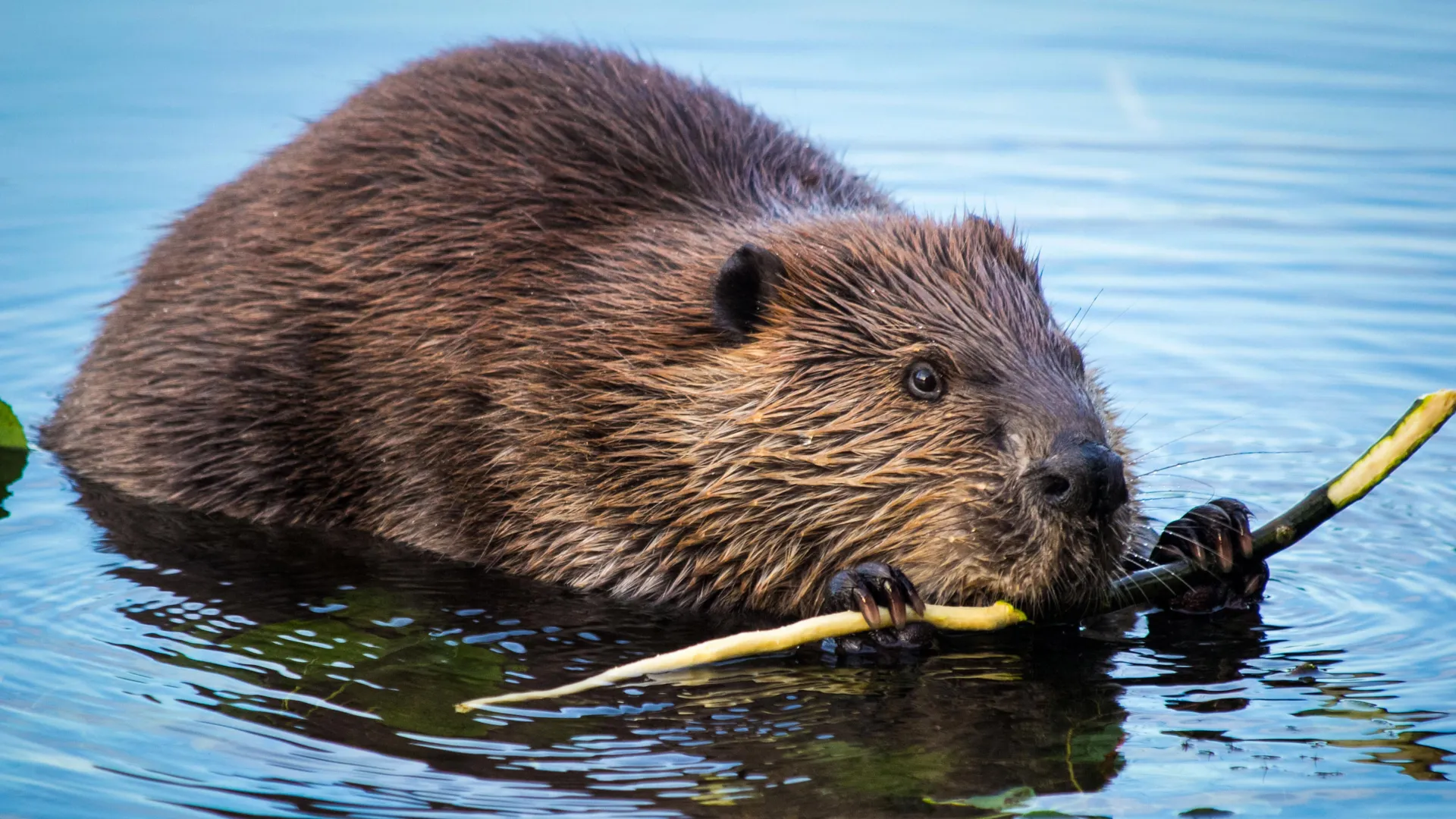
Conducted by an international consortium of scientists from the University of Birmingham, Wageningen University, the University of Bern, and several other collaborating institutions, the research focused on a specific stream corridor in northern Switzerland. This site proved to be an ideal natural laboratory, having experienced over a decade of active beaver presence, allowing the researchers to observe and quantify long-term ecological changes and their impact on carbon cycling. The findings unequivocally demonstrate that wetlands shaped by beavers possess an extraordinary capacity to store carbon, doing so at rates up to ten times higher than comparable areas devoid of their industrious influence. Over a thirteen-year period, the study site alone accumulated an impressive 1,194 tonnes of carbon, which translates to approximately 10.1 tonnes of CO2 per hectare annually.
Dr. Joshua Larsen, a distinguished researcher from the University of Birmingham and the lead senior author of this pivotal study, emphasized the transformative power of these animals. "Our findings show that beavers don’t just change landscapes: they fundamentally shift how CO2 moves through them," Dr. Larsen stated. "By slowing water, trapping sediments, and expanding wetlands, they turn streams into powerful carbon sinks. This first-of-its-kind study represents an important opportunity and breakthrough for future nature-based climate solutions across Europe." His comments underscore a paradigm shift in understanding the ecological role of beavers, moving beyond their traditional classification as ecosystem engineers to recognizing them as vital agents in the global carbon cycle.
Beaver Dams: Reshaping Rivers and Revolutionizing Carbon Storage
The return of beavers to rivers and natural habitats across Europe is a remarkable conservation success story, following centuries of hunting that drove them to near extinction. Historically prized for their fur, meat, and castoreum (a glandular secretion used in perfumes and traditional medicine), beaver populations plummeted, drastically altering riparian ecosystems. However, concerted conservation and reintroduction efforts over recent decades have seen these keystone species make a significant comeback. This resurgence is now revealing the profound and previously underestimated influence they exert on carbon movement, particularly within headwater streams – the crucial small, upper sections where rivers originate.
Beavers are renowned for their dam-building activities, which are far more than mere construction projects. These dams are the catalysts for a cascade of ecological transformations. As beavers construct their intricate dams, they intentionally flood adjacent land, leading to the formation of expansive wetlands and intricate pond systems. These activities dramatically redirect groundwater flow and create novel hydrological regimes. Crucially, these modified environments act as highly efficient traps for both organic and inorganic materials, including dissolved and particulate carbon compounds. These alterations fundamentally reshape how carbon is stored, circulated, and processed within these ecosystems. The creation of slow-moving, anoxic (oxygen-depleted) waters behind dams is particularly significant, as these conditions inhibit the decomposition of organic matter, allowing it to accumulate and become sequestered in sediments over long periods.
The implications of these findings are substantial. They suggest that strategically expanding beaver populations in suitable wetland regions could yield considerable climate benefits. By actively increasing the amount of carbon captured and stored within these modified landscapes, while simultaneously limiting its release back into the atmosphere, beavers offer a low-cost, self-sustaining mechanism for climate mitigation. This natural engineering solution holds immense promise for enhancing the resilience of freshwater ecosystems and bolstering regional climate strategies.
Beaver Ecosystems: Unveiling Their Long-Term Carbon Sink Capacity
To fully comprehend the comprehensive impact of beaver activity on carbon dynamics, the research team employed a sophisticated and multi-faceted methodological approach. Their investigation integrated detailed hydrological measurements to track water movement, extensive chemical testing to analyze water and sediment composition, rigorous sediment analysis to quantify stored carbon, precise greenhouse gas (GHG) monitoring to measure emissions, and advanced long-term modeling. This holistic approach enabled them to construct the most complete and robust carbon budget yet for a beaver-influenced landscape in Europe.
The meticulous analysis revealed that, on an annual basis, the studied wetland functioned as a net carbon sink, storing an average of 98.3 ± 33.4 tonnes of carbon each year. This impressive sequestration capacity was primarily driven by the efficient removal and retention of dissolved inorganic carbon (DIC) below the surface. DIC, often found as bicarbonates and carbonates in water, plays a significant role in the global carbon cycle. Beaver activity, by altering water chemistry and creating conditions conducive to mineral precipitation, facilitates the long-term storage of this carbon in sediments.
The study also observed interesting seasonal variations in carbon dynamics. During the warmer summer months, when water levels typically recede and more sediment is exposed to the atmosphere, a temporary shift occurred. During these periods, carbon dioxide (CO2) emissions briefly exceeded storage, causing the system to function as a short-term carbon source. This phenomenon is likely attributed to increased microbial decomposition of exposed organic matter under aerobic conditions. However, the researchers emphasized that when averaged across the entire year, the persistent buildup of sediments, accumulation of plant matter, and the strategic collection of deadwood consistently resulted in significant net carbon storage. Furthermore, a critical finding addressed a common concern regarding wetlands: methane (CH4) emissions. Despite wetlands often being associated with methane production, the study found that CH4 emissions from the beaver-modified wetland were remarkably minimal, accounting for less than 0.1% of the total carbon budget. This suggests that beaver wetlands, under these observed conditions, do not contribute significantly to this potent greenhouse gas, further strengthening their credentials as a climate solution.
Dr. Lukas Hallberg from the University of Birmingham, the corresponding author of the study, highlighted the rapid and profound transformation observed. "Within just over a decade, the system we studied had already transformed into a long-term carbon sink, far exceeding what we would expect from an unmanaged stream corridor," Dr. Hallberg commented. "This highlights the enormous potential of beaver-led restorations and offers valuable insights into potential land-use planning, rewilding strategies, and climate policy." His statement underscores the speed at which beavers can initiate and sustain positive environmental change, offering a compelling case for their role in proactive climate action.
Long-Lasting Carbon Storage and Broad Climate Benefits
The carbon sequestration achieved in beaver-created wetlands is not merely transient; it is designed for longevity. Over time, as sediments continuously build up and deadwood accumulates within the impoundments, carbon becomes effectively locked in place. The research provided compelling evidence for this long-term storage, revealing that these beaver-modified sediments contained up to 14 times more inorganic carbon and eight times more organic carbon compared to nearby forest soils. This dramatic difference highlights the efficiency of beaver engineering in concentrating and preserving carbon. Furthermore, deadwood sourced from the riparian forests – the vegetated areas along riverbanks, streams, and wetlands – played a surprisingly significant role, accounting for nearly half of the long-term stored carbon. This organic material, when submerged in oxygen-poor waters, decomposes at a much slower rate, allowing for prolonged carbon retention.
These substantial carbon reserves can remain intact and stable for decades, if not longer, provided the beaver dams are maintained. This stability indicates that beaver-modified wetlands can serve as remarkably resilient and long-term carbon sinks, offering a durable solution for climate mitigation.
Dr. Annegret Larsen, an Assistant Professor in the Soil Geography and Landscape Group at Wageningen University, further articulated the active role of beavers. "Our research shows that beavers are powerful agents of carbon capture and adsorption," Dr. Larsen explained. "By reshaping waterways and creating rich wetland habitats, beavers physically change how carbon is stored across landscapes." This perspective reinforces the idea that beavers are not just passive beneficiaries of ecosystems, but active, indispensable drivers of ecosystem function, particularly in the context of carbon cycling.
The practical implications of this research are far-reaching. When the researchers extrapolated their findings to encompass all floodplain areas in Switzerland deemed suitable for beaver recolonization, the potential climate benefits were striking. Their conservative estimates indicated that these naturally restored wetlands could collectively offset between 1.2% and 1.8% of Switzerland’s annual carbon emissions. What makes this figure particularly compelling is that this significant climate benefit would accrue without requiring any direct human intervention or incurring additional costs – a truly passive yet powerful nature-based solution. This positions beavers as a unique and economically viable tool in a nation’s climate strategy.
The study, a collaborative effort spearheaded by the University of Birmingham, Wageningen University, the University of Bern, and various international partners, meticulously focused on a Swiss stream corridor that has experienced over a decade of continuous beaver activity. This sustained observation period allowed for an unparalleled understanding of the long-term ecological shifts and their quantifiable impacts on carbon dynamics.
As beaver populations continue their gradual recovery and expansion across Europe and beyond, the need for further research becomes increasingly paramount. Future studies will be essential to broaden our understanding of how these remarkable animals influence diverse ecosystems and contribute to future carbon storage on a larger, regional, and even continental scale. Investigating different geological settings, climatic zones, and existing land-use patterns will provide a more comprehensive picture of the global potential of beaver-led rewilding initiatives. Ultimately, this research not only highlights the intrinsic value of biodiversity and ecosystem restoration but also presents a compelling, nature-driven pathway to address one of humanity’s most pressing challenges: climate change. The humble beaver, once almost lost, is now emerging as an unexpected, powerful ally in the global fight for a sustainable future.
