
 By Rifan Muazin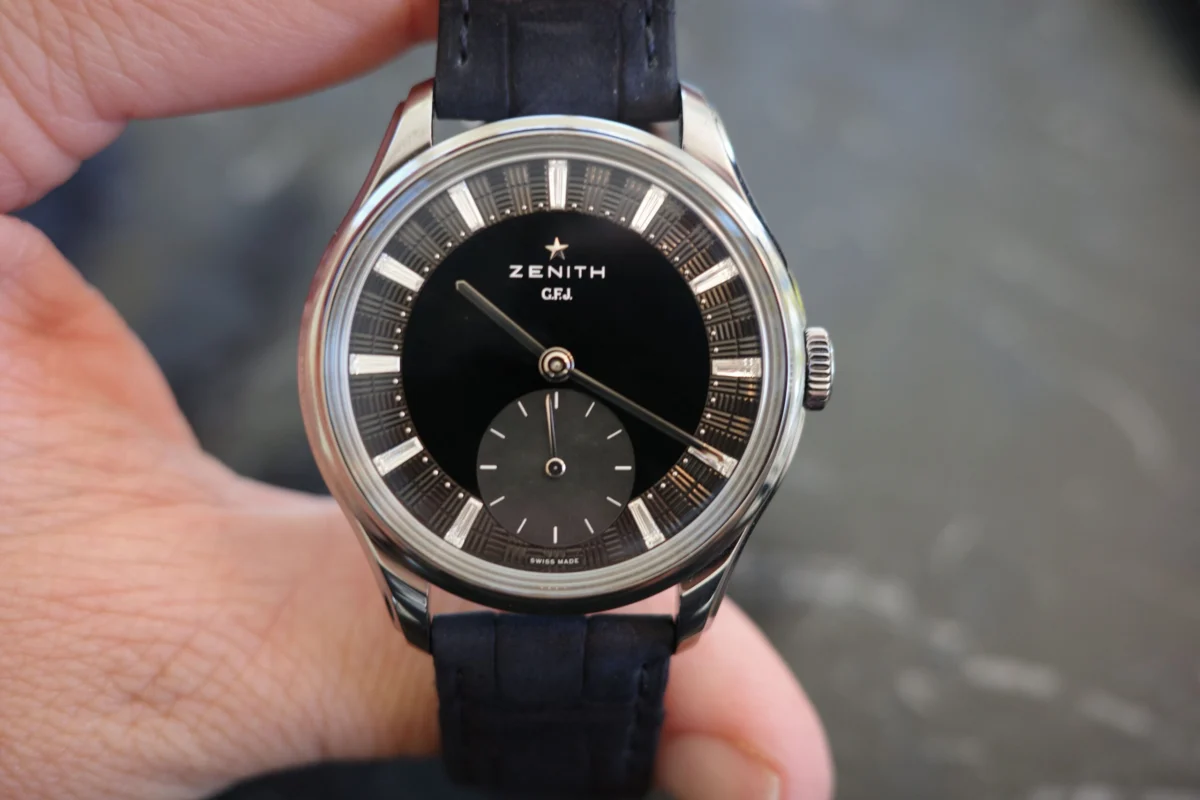
In the tradition-bound world of haute horlogerie, the ascension of a timepiece to the status of a "classic" is typically a slow, generational crawl. Horological icons are not born; they are forged through decades of cultural saturation, historical significance, and often, the reflected glory of the titans who wore them. We think of the Rolex Daytona, which languished on shelves for years before becoming the most sought-after watch in the world, fueled by the enduring cool of Paul Newman. We think of the Omega Speedmaster, whose reputation is inextricably linked to the Apollo missions and the lunar surface, or the Rolex Explorer, which carries the weight of Tenzing Norgay and Sir Edmund Hillary’s Himalayan triumphs. Even for the established "Big Three" of the Swiss watch industry, a new model usually requires several release cycles, iterative refinements, and a substantial period of market digestion before it is recognized as a permanent fixture of the landscape.
However, the Zenith G.F.J.—named in honor of the brand’s visionary founder, Georges Favre-Jacot—has defied this historical gravity. When Zenith debuted the model last April at Watches and Wonders in Geneva, it bypassed the usual period of skepticism. The watch world collectively exhaled a sigh of admiration. From the moment the initial lapis lazuli variant was unveiled, it was clear that Zenith had captured lightning in a bottle. The industry’s response was immediate and visceral: a "freaking sick watch," as many critics and collectors noted upon first handling the cool-toned, stone-dialed masterpiece. In the months that followed, the G.F.J. did more than just sell out; it garnered prestigious accolades, including recognition at the Grand Prix d’Horlogerie de Genève (GPHG)—the Oscars of the watch world—and generated a waiting list that stretches into the foreseeable future. Now, building on that explosive momentum, Zenith has unveiled two new sequels that further solidify the G.F.J.’s place in the pantheon of modern horological greats.

The expansion of the G.F.J. collection represents a strategic pivot for Zenith, a brand historically celebrated for its technical prowess—specifically its El Primero chronograph movement—but perhaps less known for the sort of high-jewelry, red-carpet elegance typically reserved for brands like Cartier or Piaget. That perception shifted dramatically during the most recent Academy Awards season. While the G.F.J. is a technical powerhouse, its aesthetic appeal has vaulted it into the rarified air of Hollywood’s elite. A new variant featuring a tantalum case and a smoky onyx dial recently made its way from the Zenith manufacture directly to the wrist of actor Simu Liu for the Oscars. Orchestrated by renowned Hollywood stylist Fabio Immediato, this placement signaled Zenith’s arrival as a "red-carpet brand," capable of holding its own against the most established names in luxury.
The G.F.J. collection now comprises three distinct, maximalist expressions of Zenith’s "zenith." The original lapis lazuli model, with its deep celestial blue, set the tone. It is now joined by the brooding, monochromatic tantalum and onyx edition, and a warm, regal variant featuring a yellow-gold case paired with a jasper bloodstone dial. To wear a G.F.J. is to make a profound statement. While many collectors enjoy the "high-low" aesthetic of pairing a luxury dress watch with a simple white t-shirt, the G.F.J. demands a higher level of sartorial respect. At 39.15mm, the watch possesses a modern, versatile diameter, yet the vast majority of that real estate is dedicated to the dial, creating a visual impact that feels much larger and more commanding. These are watches that encourage the wearer to stand a little taller and don a well-tailored jacket.
The soul of the G.F.J. lies in its stone dials, a design choice that has transitioned from a niche trend to an essential component of high-end watchmaking. Stone dials are notoriously difficult to manufacture; the materials—lapis lazuli, onyx, and bloodstone—are brittle and prone to cracking during the slicing and polishing process. Zenith has elevated this craft by incorporating an intricate guilloché pattern along the outer track of the dial, adding a layer of geometric complexity to the natural patterns of the stone. At the 6 o’clock position, a small subdial for the seconds provides a subtle contrast. While it appears to be a seamless part of the stone dial, it is actually crafted from mother-of-pearl. This juxtaposition of materials—stone, metal, and shell—creates a depth of texture that rewards close inspection, functioning much like a high-end chef shaving truffles over wagyu beef to emphasize a sense of uncompromising luxury.

Yet, for all its external beauty, the G.F.J. is not merely a piece of jewelry. Its true significance to the horological community lies in its "guts." Zenith chose to power this collection with a modern reworking of one of its most historically significant movements: the Calibre 135. Originally produced between 1949 and 1962, the Calibre 135 was the "Bill Russell" of the watch world—a dominant champion that racked up over 235 prizes at various chronometry competitions. During the mid-20th century, Swiss watch brands competed fiercely at observatory trials to prove who could manufacture the most accurate movement. The Calibre 135, designed by Ephrem Jobin, featured a massive balance wheel and a unique regulator system that allowed it to achieve unparalleled precision. By reviving this movement for the G.F.J., Zenith is connecting its modern high-jewelry ambitions to its storied past as a pioneer of precision engineering.
The choice of tantalum for the onyx-dialed variant further emphasizes Zenith’s commitment to material innovation. Tantalum is a rare, blue-gray transition metal that is notoriously difficult to work with. It is twice as dense as steel, extremely hard, and highly resistant to corrosion. Because of its hardness, machining a tantalum case requires specialized tools and a high degree of expertise, making it a rarity in the watch industry. However, the result is a watch with a unique, weighty presence on the wrist and an intense gray luster that is virtually immune to the dings and scratches of daily wear. When paired with diamond hour markers and the deep, ink-black void of an onyx dial, the tantalum G.F.J. becomes a study in sophisticated, dark elegance.
This shift toward ultra-high-end, low-volume production is a deliberate move by Zenith’s leadership. Romain Marietta, the brand’s Chief Product Officer, has been vocal about Zenith’s strategy to "swim upstream." In a market where many brands are focused on mass-market volume, Zenith is increasingly leaning into exclusivity and bespoke craftsmanship. This was evidenced by the recent launch of a Chronomaster flagship set with a rainbow of sapphires and the announcement of a bespoke program for high-end chronographs. The G.F.J. is the centerpiece of this master plan. With prices reaching approximately $83,400, it is positioned to attract a new echelon of clients—collectors who value historical movements, artisanal dials, and the prestige of a brand that is currently redefining its own limits.

The G.F.J. represents a convergence of three distinct worlds: the rigorous world of 1950s chronometry, the artisanal world of stone-cutting and guilloché, and the high-gloss world of modern celebrity fashion. It is rare for a watch to successfully bridge these gaps, yet the G.F.J. does so with an ease that suggests it has been around for decades. It honors Georges Favre-Jacot’s original vision of a vertically integrated manufacture while pushing the boundaries of what a modern dress watch can be. Whether it is the vibrant green of the bloodstone variant or the "mysterious" allure of the tantalum and onyx, the collection proves that Zenith is no longer just a maker of legendary chronographs. It is a house of haute horlogerie capable of creating icons in real-time.
As the G.F.J. continues to rack up awards and appear on the wrists of A-listers, its status as a "modern classic" is no longer in doubt. It serves as a reminder that while history and heritage are vital, they can be reinvigorated through bold design and a refusal to play it safe. Zenith has successfully taken its most accurate movement from the past and placed it in its most glamorous case of the present. In doing so, they haven’t just released a new watch; they have set a new standard for what a luxury timepiece should represent in 2025 and beyond. The G.F.J. is a testament to the fact that when the technical, the aesthetic, and the cultural align perfectly, a watch doesn’t need decades to become a classic—it only needs to be seen.
