
 By Titik Puspa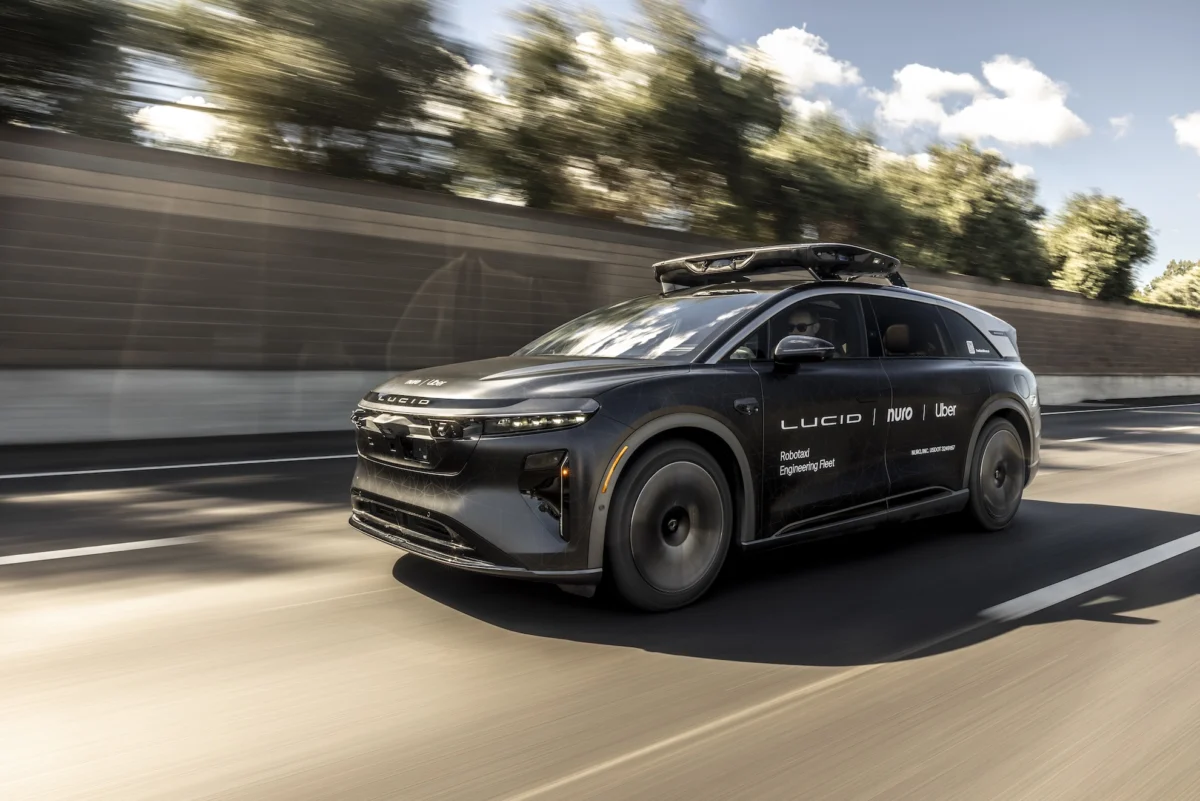
San Francisco, CA – October 13-15, 2026 – The streets of San Francisco are now playing host to a significant milestone in the evolution of autonomous transportation, as select Uber employees have begun taking rides in Lucid Gravity SUVs equipped with Nuro’s advanced self-driving technology. This internal testing phase marks a crucial step forward in Uber’s ambitious plan to launch a public robotaxi service later this year. The vehicles, visually identifiable by their array of sophisticated sensors, are currently operating in autonomous mode, though a human safety operator remains behind the wheel as a backup measure, ensuring operational safety and providing valuable real-world data.
This development underscores the tangible progress made since Uber announced a monumental partnership and multi-million dollar investment in July 2025. The ride-hailing giant committed a substantial $300 million to Lucid, the luxury electric vehicle manufacturer, and concurrently agreed to procure at least 20,000 of Lucid’s new Gravity SUVs over the next six years. These advanced electric vehicles are being purpose-built to integrate Nuro’s cutting-edge autonomous vehicle system, a sophisticated platform powered by Nvidia’s formidable Drive AGX Thor computer.
The Lucid Gravity robotaxi, first unveiled to the public in January 2026, is a marvel of engineering designed for autonomous operation. Its exterior is a testament to advanced sensing capabilities, featuring a suite of high-resolution cameras that provide a comprehensive visual understanding of the environment, solid-state lidar sensors for precise distance measurement and 3D mapping, and advanced radars for detecting objects in various weather conditions. This integrated sensor array is the backbone of the self-driving system, enabling it to perceive, interpret, and navigate the complex real-world environment with a high degree of accuracy and safety.
Beyond the investment in Lucid, Uber also injected a significant, though undisclosed, "multi-hundred-million dollar" sum into Nuro, the autonomous technology company responsible for the self-driving system. This dual investment highlights Uber’s strategy to secure both the vehicle platform and the autonomous driving intelligence necessary for its robotaxi aspirations. The ultimate vision is for Uber to own and operate a premium robotaxi service, likely with the support of a third-party fleet management partner. Production of these specially modified Lucid Gravity vehicles is slated to commence in late 2026, according to a regulatory filing made public last year, aligning with the projected timeline for a public service rollout.
Nuro has been diligently working to bring this vision to fruition. The company successfully completed closed-course testing of the autonomous Lucid Gravity SUVs and initiated its first public road testing late last year. Currently, Nuro’s engineering fleet comprises 100 Lucid Gravity SUVs outfitted with its self-driving system. These vehicles are instrumental in gathering vast amounts of real-world data and rigorously testing autonomous driving capabilities across a diverse range of U.S. cities and states, a crucial step in refining the technology for widespread deployment.
The current phase of employee test rides serves a critical purpose for Nuro’s development team. As articulated by the company, these rides are designed to meticulously evaluate the integrated performance of the autonomy stack, the vehicle itself, and the overall rider experience within a live operating environment. A particular focus of this testing is the vehicle’s ability to flawlessly execute rider pickups and drop-offs – operations that have historically presented significant challenges for autonomous ride-hailing systems. By observing and gathering feedback from employees, Nuro can identify and address any potential friction points, optimize the user journey, and ensure a seamless and intuitive experience for future passengers.
The partnership between Uber, Lucid, and Nuro represents a convergence of expertise and resources aimed at accelerating the adoption of autonomous mobility. Uber, with its extensive ride-hailing network and deep understanding of urban transportation dynamics, provides the crucial service layer and market access. Lucid brings its prowess in designing and manufacturing high-performance electric vehicles, ensuring the robotaxis are not only technologically advanced but also offer a premium passenger experience. Nuro, a pioneer in autonomous vehicle technology, contributes its specialized expertise in developing safe and reliable self-driving systems, honed through years of dedicated research and development.
This collaborative effort is not merely about deploying self-driving cars; it’s about reshaping urban mobility. The potential benefits are far-reaching, including increased road safety by reducing human error, improved traffic flow through optimized routing and driving patterns, enhanced accessibility for individuals who are unable to drive, and a more sustainable transportation ecosystem with the widespread adoption of electric vehicles. The integration of autonomous technology into a ride-sharing model promises to make transportation more convenient and potentially more affordable in the long run, as operational efficiencies are realized.
The road to a fully autonomous public robotaxi service is paved with rigorous testing and continuous refinement. The current employee test rides are a testament to this iterative development process. Each ride generates invaluable data that informs software updates, sensor calibration, and system improvements. The presence of a human safety operator, while temporary, is a critical safeguard during this developmental stage, allowing for immediate intervention if unexpected situations arise and providing a human perspective on the vehicle’s performance. This layered approach to safety and testing is paramount in building public trust and ensuring the responsible deployment of autonomous technology.
The strategic significance of this partnership extends beyond the immediate launch of a robotaxi service. It positions Uber at the forefront of the autonomous revolution, potentially granting it a competitive advantage in a rapidly evolving transportation landscape. By investing heavily in both the hardware and software aspects of autonomous driving, Uber is building a robust foundation for future mobility solutions. The company’s commitment to innovation, coupled with the technical capabilities of its partners, suggests a long-term vision for transforming how people move in cities.
Furthermore, the involvement of Lucid and Nuro signals a broader industry trend towards strategic alliances and specialized partnerships. Developing fully autonomous vehicles is a complex undertaking that requires expertise across multiple domains, from automotive engineering and battery technology to artificial intelligence and sensor fusion. By collaborating, these companies can leverage their respective strengths, share the substantial costs and risks associated with R&D, and accelerate the pace of innovation. This model of cooperation is likely to become increasingly prevalent as the industry matures.
The regulatory landscape for autonomous vehicles is also a critical factor in their widespread adoption. As these technologies mature and undergo extensive testing, governments worldwide are grappling with how to establish appropriate frameworks for their safe and equitable integration into public spaces. The ongoing dialogue between technology developers, regulators, and the public will shape the future of autonomous mobility. Uber’s proactive approach to testing and its transparent communication about progress are likely to contribute positively to this ongoing discussion.
The employee test rides in San Francisco are more than just a technical trial; they are a public demonstration of commitment and progress. They signal to investors, regulators, and the general public that the era of autonomous ride-hailing is drawing nearer. While the initial service will be limited to Uber employees, it serves as a crucial stepping stone towards a broader rollout that could eventually redefine urban transportation, offering a glimpse into a future where summoning a self-driving vehicle is as commonplace as hailing a traditional taxi today. The data gathered from these initial rides will be instrumental in paving the way for a safer, more efficient, and potentially more accessible transportation system for everyone. The insights gained from these early passengers will be crucial in fine-tuning the user experience, ensuring that when the service does open to the public, it is met with confidence and widespread adoption. The ongoing evolution of the Lucid Gravity robotaxis on San Francisco’s streets represents a tangible step towards that future.
