
 By admin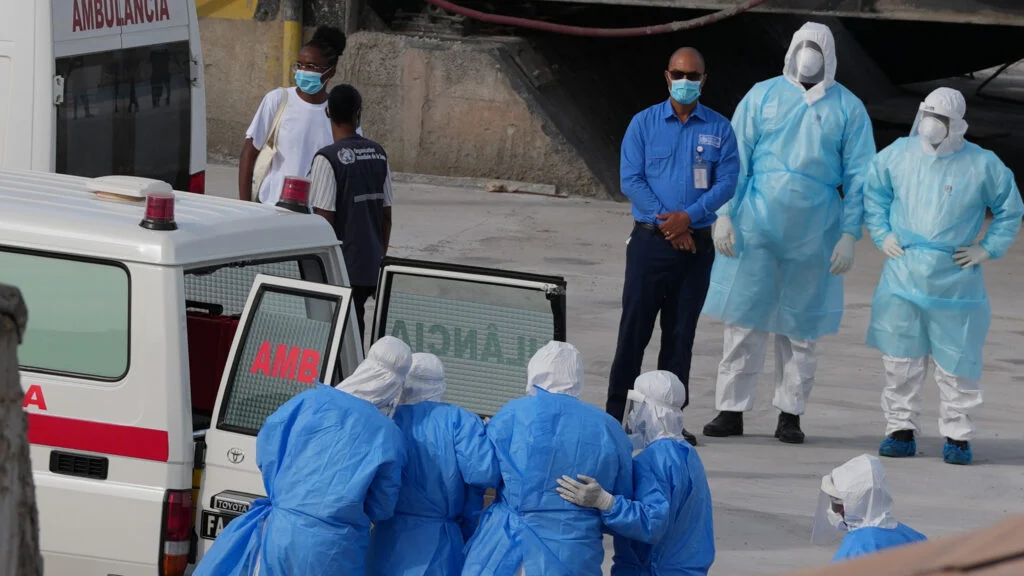
The typical hallmarks of a federal response to a burgeoning international health crisis were conspicuously absent during the opening week of the current hantavirus outbreak. There were no rapid deployments of elite disease investigators to foreign ports, no televised press briefings from the hallowed halls of Atlanta, and no immediate, high-priority health alerts dispatched to the nation’s frontline physicians. Instead, as a cruise ship carrying dozens of Americans became the epicenter of a rare and deadly viral cluster, the United States government’s premier public health agency, the Centers for Disease Control and Prevention (CDC), appeared to be uncharacteristically sidelined. This perceived paralysis has sparked a firestorm of criticism from global health experts who argue that the agency, once considered the world’s "gold standard" for outbreak response, is being systematically hollowed out or politically constrained.
The situation began to unfold in early April when a 70-year-old Dutch national traveling aboard a cruise vessel—navigating the treacherous but scenic waters between Argentina, Antarctica, and the South Atlantic islands—succumbed to a mysterious, feverish illness. Within days, the man’s wife and a German woman also died, exhibiting similar symptoms of respiratory distress and organ failure. By early May, laboratory results confirmed the presence of hantavirus, a pathogen typically carried by rodents that can cause severe pulmonary and hemorrhagic syndromes in humans. While the World Health Organization (WHO) moved swiftly to categorize the situation as an outbreak and issue risk assessments, the CDC remained largely silent, prompting Lawrence Gostin, a professor of international health law at Georgetown University, to remark that he had "never seen" the agency so marginalized in his decades of observation. "The CDC is not even a player," Gostin noted, highlighting a shift that many fear signals a permanent retreat from American leadership in global health security.
The political backdrop of this silence is impossible to ignore. President Donald Trump, speaking to reporters on a Friday evening, projected an image of calm, asserting that the government had the situation "under very good control." However, critics argue that this control is more about optics than epidemiological rigor. Under the leadership of Health and Human Services (HHS) Secretary Robert F. Kennedy Jr., the administration has embarked on a radical restructuring of the nation’s health apparatus. Kennedy has publicly stated his intent to "restore the CDC’s focus on infectious disease" and "rebuild trust through integrity and transparency," yet the current outbreak response suggests a different reality. The administration has overseen the departure of thousands of career scientists and the downsizing of critical departments, including the very ship sanitation programs designed to prevent such maritime outbreaks.
It was not until late Friday that the CDC finally showed signs of movement, but even then, the response felt reactive rather than proactive. The agency confirmed it was deploying a small team to Spain’s Canary Islands to meet the vessel upon its arrival. Simultaneously, a second team was dispatched to Offutt Air Force Base in Nebraska to facilitate the evacuation of 17 American passengers to a specialized quarantine center at the University of Nebraska. For the first time since the outbreak began, a formal health alert (HAN 528) was issued to U.S. doctors, warning them to look for imported cases among travelers returning from South America. Despite these late-stage efforts, the communication strategy remained tightly controlled. The first briefing, held on a Saturday, was restricted to invited reporters via telephone, and officials were forbidden from being identified by name—a move dictated by HHS aides that seemed to contradict Kennedy’s promises of transparency.
This "subdued" approach stands in stark contrast to the CDC’s historic role. For more than half a century, the agency worked hand-in-hand with the WHO, often serving as the technical engine behind international investigations. During the 2020 Diamond Princess COVID-19 outbreak, for example, the CDC was the primary source of data for the entire world. Under then-Director Dr. Tom Frieden, the agency was "right on top of it," sending teams to Japanese ports, managing complex quarantines, and publishing real-time genetic data that shaped the global understanding of viral transmission. Today, that role has been largely ceded to the WHO. Jennifer Nuzzo, director of Brown University’s Pandemic Center, observed that the current situation reveals an "empty and vapid" CDC. While she agreed that hantavirus does not pose a pandemic threat on the scale of COVID-19—largely because it does not typically spread easily from person to person—she argued that the agency’s lack of visibility does lasting damage to its credibility. "A core principle of public health communications is humility and presence," Nuzzo said, suggesting that the CDC’s recent boast that the U.S. is the "world’s leader in global health security" rings hollow when the agency is barely participating in a live investigation.
The technical handling of the outbreak has also come under scrutiny. Dr. Jay Bhattacharya, the CDC’s acting director, made his first on-camera appearance on Fox News on a Saturday morning, urging Americans not to worry. However, his performance was marred by factual inaccuracies that raised questions about the agency’s internal coordination. Bhattacharya incorrectly stated that two passengers in their 80s had died after contracting the virus while bird-watching in Argentina. In reality, the deceased were a 70-year-old man and his 69-year-old wife, and while Argentine officials are investigating a bird-watching excursion as a possible source of exposure to rodent droppings, that link has not been definitively established. In the high-stakes world of infectious disease, such errors can erode public trust and lead to confusion among health providers.
Further complicating the landscape is the Trump administration’s shift away from multilateralism. Having withdrawn from the WHO and restricted its scientists from collaborating with certain international counterparts, the administration is now betting on a series of bilateral agreements. Currently, the U.S. has roughly 30 one-on-one deals with individual nations to share health data and promote "American technologies." Experts like Lawrence Gostin argue this is a fundamental misunderstanding of how viruses work. "You can’t possibly cover a global health crisis by doing one-on-one deals," Gostin explained. A virus on a cruise ship, by its very nature, involves multiple jurisdictions, nationalities, and regulatory bodies. Without a central, coordinated effort through an organization like the WHO, the response becomes fragmented and prone to gaps.
The biological nature of hantavirus itself adds a layer of complexity to the debate. Hantaviruses are a family of viruses spread mainly by rodents. In the Americas, they can cause Hantavirus Pulmonary Syndrome (HPS), a severe and sometimes fatal respiratory disease. Transmission occurs when people breathe in air contaminated with the virus through rodent urine, droppings, or saliva. While person-to-person transmission is extremely rare, it has been documented in South America with the "Andes virus" strain, which is likely what is at play in this cruise ship outbreak. This rare potential for human-to-human spread is exactly why experts believe a robust CDC presence was necessary from day one. Dr. Jeanne Marrazzo, CEO of the Infectious Diseases Society of America, characterized the outbreak as a "sentinel event"—a warning sign that the country’s defensive posture has weakened. "It speaks to how well the country is prepared for a disease threat," Marrazzo said. "And right now, I’m very sorry to say that we are not prepared."
As the American passengers prepare for their period of evaluation at the University of Nebraska, many questions remain unanswered. Federal officials have refused to clarify whether these citizens are under a mandatory or voluntary quarantine, further muddying the waters regarding the government’s authority and its strategy for containing rare pathogens. The hantavirus outbreak may ultimately be contained without a widespread domestic incident, but for the public health community, the damage to the CDC’s reputation may be harder to repair. The agency that once led the world in "shoe-leather epidemiology" now finds itself in a defensive crouch, navigated by political appointees who prioritize message control over scientific visibility. In the world of global health, where speed and transparency are the primary currencies, the CDC’s current trajectory suggests a superpower in retreat, leaving a vacuum that may be filled by less capable actors—or by the next pandemic itself.
