
 By admin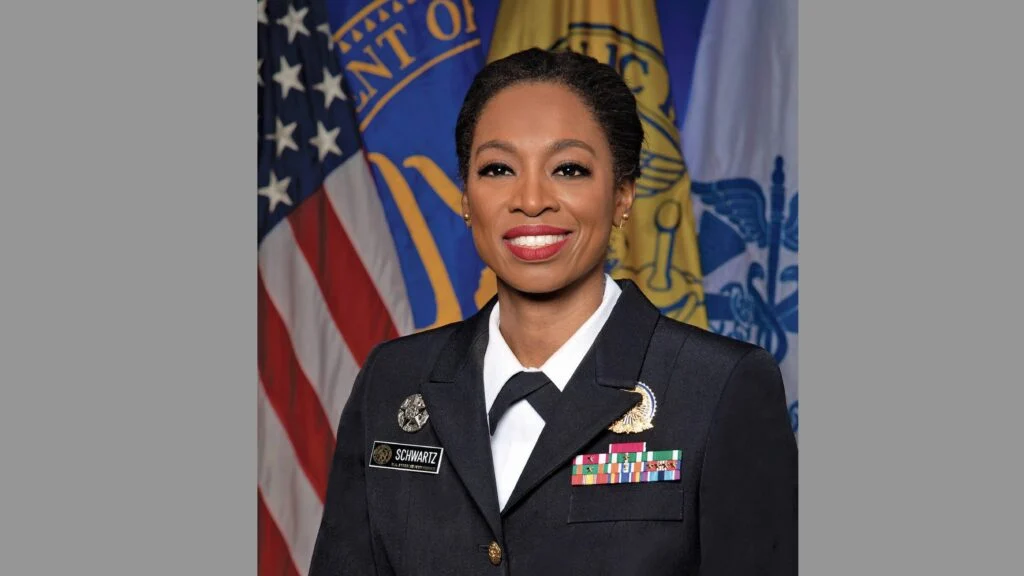
The relief stems largely from Schwartz’s resume, which stands in stark contrast to some of the more ideological figures who have been floated for high-level health positions in recent months. A career officer with extensive experience in the Navy and the Coast Guard, Schwartz is viewed as a "traditional" pick—a physician and public health veteran who understands the machinery of government. However, even those applauding her selection are harbor deep-seated anxieties about whether any individual, regardless of their qualifications, can effectively lead an agency that has seen its independence systematically eroded.
Schwartz’s nomination follows the chaotic exit of her predecessor, Susan Monarez, who was fired after a bruising and public standoff with Health and Human Services (HHS) Secretary Robert F. Kennedy Jr. The primary point of contention was vaccine policy, an area where Kennedy has sought radical shifts in the federal government’s long-standing positions. The fragility of Monarez’s leadership was perhaps best illustrated by a seemingly minor but telling bureaucratic skirmish: during her brief and embattled tenure, Monarez attempted to move a political appointee—one she had not hired—out of her immediate office suite to a different floor. Her decision was summarily overruled by HHS leadership, sending a clear signal that the CDC Director’s authority was being curtailed even in matters of office logistics.
The political landscape, however, has shifted since Monarez’s ouster. As the 2026 midterm elections approach, the White House has reportedly begun pressuring Secretary Kennedy to sideline his more controversial pursuits regarding vaccine policy changes. Internal polling commissioned by the administration has suggested that Kennedy’s efforts to erode public trust in vaccination schedules are proving unpopular not only with Democrats but with a significant portion of the Republican base. This political calculus may have paved the way for Schwartz’s nomination, as the administration seeks a more "confirmable" and less polarizing figure to steady the ship.
Yet, this shift has not sat well with all corners of the administration’s coalition. Some of Kennedy’s more radical supporters have questioned the choice of Schwartz, viewing her as a representative of the "establishment" they seek to dismantle. Conversely, she received a strong, albeit qualified, endorsement from her former boss, Jerome Adams, who served as Surgeon General during the first Trump administration. Writing on social media, Adams stated, “She has the expertise, credibility, and integrity to lead the CDC effectively. If allowed to follow the science without political interference, she’ll excel.” Adams’ caveat—“if allowed”—is the central question currently haunting the public health community.
Department of Health and Human Services spokesperson Rich Danker defended the choice in a formal statement, asserting that “Dr. Schwartz is a physician, public health expert, and veteran who is eminently qualified to lead the CDC in its mission of protecting America from infectious disease threats.” But experts in health security worry that Schwartz’s fate could mirror that of Monarez: another qualified professional who understands how government is supposed to function, only to find herself in a role she is not permitted to actually perform.
There is also a secondary concern regarding Schwartz’s long military history. While her service in the Navy and Coast Guard is a testament to her dedication, some critics worry that a career spent in a "command and control" environment might make her too inclined to follow orders from the HHS Secretary, even if those orders conflict with scientific consensus. Daniel Jernigan, a former CDC center director who resigned in protest following Monarez’s firing, emphasized that the focus should not be on Schwartz’s personality, but on the power dynamics at play. “It’s not about her. It’s about what the secretary’s going to do,” Jernigan told STAT. “She could be terrible, she could be great. But it’s really: What is the secretary going to allow?”
The skepticism is particularly acute among those who have already felt the sting of the administration’s policies. Abby Tighe, a former CDC employee who lost her job during a round of significant budget and staff cuts in February 2025, expressed a mix of hope and deep-seated mistrust. As a founder of the National Public Health Coalition (formerly known as "Fired But Fighting"), Tighe represents a vocal group of former officials who view the current administration’s health policies as a threat to national security. “After what happened with Dr. Monarez, I am most concerned that Dr. Schwartz has been chosen by this administration to rubber stamp misinformation and bad health policy,” Tighe said. She noted that while Schwartz has the credentials, the "year and a half of trauma and turmoil" at the CDC makes it difficult to trust any nominee.
Schwartz’s past performance provides a complicated roadmap for what her leadership might look like. During the height of the COVID-19 pandemic, Jernigan worked with her when she served as Deputy Surgeon General. He recalled her as an effective "doer" who was tasked with the massive logistical challenge of standing up public testing facilities. “She really jumped into it and took it on and made it happen,” Jernigan said, praising her ability to navigate complex operational hurdles.
However, other accounts are less flattering. An individual who served on the Biden administration’s transition team recalled dealing with Schwartz when she was the designated HHS liaison for the outgoing Trump administration. Speaking on the condition of anonymity, this source described Schwartz as an “intentional bottleneck” who made it difficult for the incoming team to access basic information about department operations. “She was the point person and essentially the choke point,” the source said. This history of bureaucratic gatekeeping has led some to wonder if she will use those same skills to protect the CDC from political interference, or if she will use them to shield Secretary Kennedy from scientific dissent.
Amesh Adalja, a senior scholar at the Johns Hopkins University Center for Health Security, argued that Schwartz’s impressive CV might ultimately be "window dressing" if she is not granted true autonomy. Reporting from The Washington Post suggests that several other potential candidates for the CDC directorship withdrew from consideration after demanding the same kind of hiring and firing authority currently enjoyed by Mehmet Oz at the Centers for Medicare and Medicaid Services (CMS). While The Post reported that Schwartz would ostensibly have a “free hand” to run the agency, the reality of the CDC’s current structure suggests otherwise.
One of the most significant challenges Schwartz faces is the "political infiltration" of the director’s office. Historically, the CDC was unique among federal agencies for having only one political appointee: the director. This structure was designed to insulate the agency’s scientific output from partisan whims. However, over the past 15 months, that tradition has been demolished. There are now an estimated 21 political appointees embedded within the agency.
The announcement of Schwartz’s nomination was accompanied by the appointment of three more political figures: Sean Slovenski, a former Walmart Health executive, as CDC deputy director and chief operating officer; Jennifer Shuford, the Texas state health commissioner, as deputy director and chief medical officer; and Sara Brenner, a senior official from the FDA, who will serve as a senior counselor to Secretary Kennedy. While some of these names, particularly Shuford, have been praised for their public health backgrounds, their presence adds to a crowded field of political monitors.
Phil Huang, health director for the city of Dallas, spoke highly of Shuford’s work in Texas, noting her support for vaccination and her experience managing the pandemic. However, he echoed the same concern that applies to Schwartz: these experts can only be effective if they are "trusted for their expertise" by the senior leadership at HHS.
The broader context of the administration’s health policy remains a source of alarm. Just last week, the charter for the Advisory Committee on Immunization Practices (ACIP) was rewritten. After a federal court ruled that Kennedy’s previous appointments to the board lacked the necessary credentials, the new charter simply diluted the expertise requirements and refocused the committee’s mandate toward studying the "purported harms" of vaccines rather than their effective use. Simultaneously, reports emerged that Jay Bhattacharya, the head of the NIH and de facto acting director of the CDC, had delayed the publication of a study confirming the effectiveness of COVID-19 vaccines in preventing hospitalization—a move he justified by questioning standard methodologies.
For Erica Schwartz, the path ahead is fraught. If confirmed, she will inherit an agency that is not only politically besieged but internally fractured. The presence of political appointees like Stuart Burns—who critics argue do not have the agency’s best interests at heart—means that Schwartz will have to navigate a minefield of internal surveillance while trying to rebuild the CDC’s tarnished reputation. As Daniel Jernigan aptly summarized, "The landscape has not changed, and we’re just adding more politicals to it." Whether Schwartz can transcend this landscape or will simply become part of it remains the most critical question for the future of American public health.
