
 By Rifan Muazin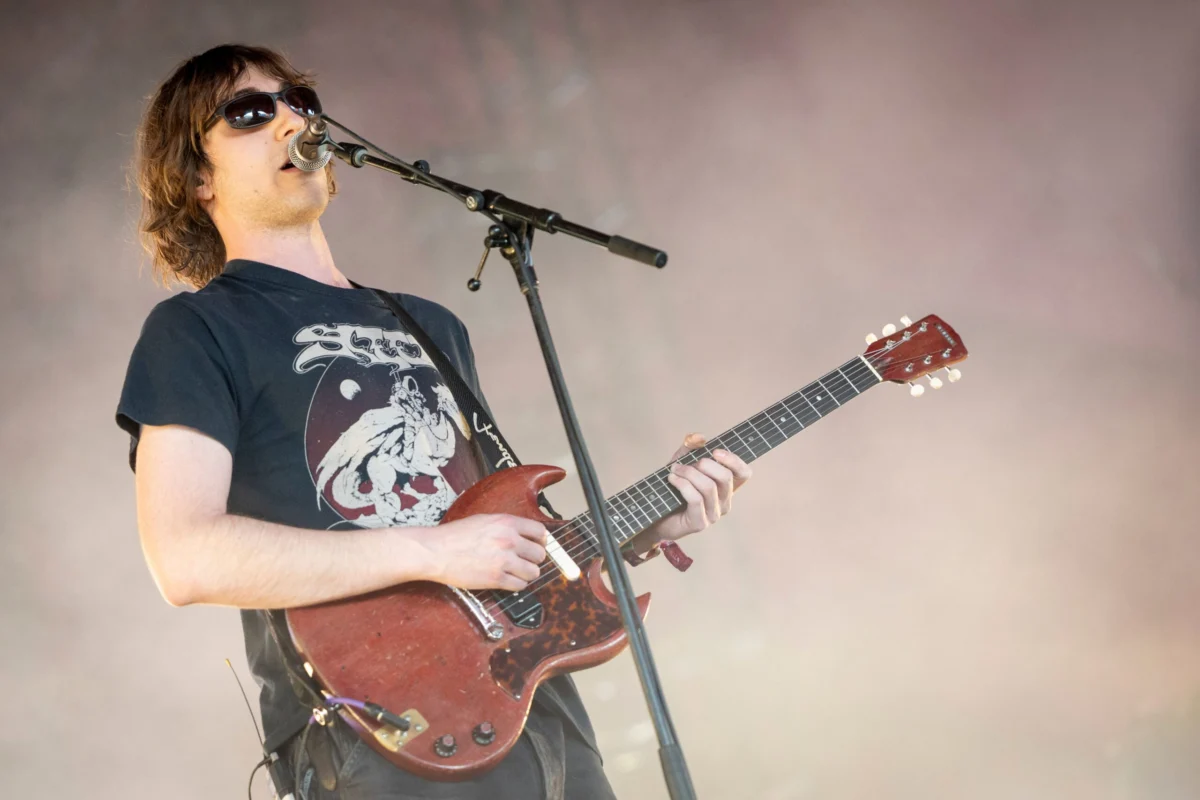
Watching a Geese set from the comfort of a living room during Coachella’s second weekend offers a perspective that the dusty polo fields of Indio cannot: the ability to witness the festival as a high-stakes corporate sporting event. Through the lens of a YouTube multi-stream, Coachella transforms into something akin to the Super Bowl, a grand stage where brands, influencers, and musicians compete for the finite currency of modern attention. In this digital "quad-box" view, one can monitor the Sahara Tent, the Gobi, and the Mojave stages simultaneously, tracking the movements of artists like Alex G or the sudden appearances of Addison Rae and Olivia Rodrigo with the frantic intensity of a gambler tracking prop bets. It is a modern, sterilized way to consume culture, yet it provided the perfect vantage point to witness the most discussed rock performance of the 2025 festival season.
For the first time in the history of Coachella’s two-weekend format, the secondary market for tickets defied traditional logic. Typically, Weekend 1 commands a premium for its "first-look" status and celebrity density, while Weekend 2 offers a slightly more relaxed, music-focused atmosphere at a lower price point. However, in 2025, prices for Weekend 2 skyrocketed, with full passes reportedly fetching between $3,000 and $7,000 in the days leading up to the event. This unprecedented surge has been dubbed the "Justin Bieber Bump" or the "Sabrina Surge," fueled by rumors of high-profile surprise appearances. Yet, amidst the pop spectacle, a significant portion of the crowd descending upon the Gobi Tent seemed to be there for a different reason entirely: to witness Geese, a band currently embroiled in a controversy that strikes at the very heart of artistic authenticity in the digital age.
The week leading up to Geese’s second Coachella performance was, for the band’s dedicated following, a period of existential reckoning. The catalyst was a bombshell report from Wired magazine that pulled back the curtain on the band’s meteoric rise. The article revealed that Geese and their frontman, Cameron Winter—who has also been exploring a burgeoning solo career—were the primary subjects of an "astroturf-y" marketing strategy known as a "Narrative Campaign." This campaign was orchestrated by Chaotic Good, a boutique online marketing agency that specializes in manufacturing virality. The agency’s founders had previously been quite vocal about their methods, even discussing the "secrets to song virality on TikTok" during a Billboard podcast in March. For many fans, the revelation that their favorite "organic" discovery was the result of calculated digital machinations was a bitter pill to swallow.
The discourse surrounding Geese is complicated by the fact that the line between genuine critical acclaim and manufactured hype has become almost indistinguishably blurred. As the editor behind several high-profile profiles of the band and Cameron Winter, I have occupied a front-row seat to this "Geese-industrial complex." To some, my involvement makes me a "handmaid to the hidden persuaders," a tool used to facilitate a 2025 attention glow-up that many now view as a psychological operation, or "psyop." While it is the responsibility of any discerning consumer of art to question the origins of what they consume, there is a counter-argument to be made: even the most sophisticated, Russian-intelligence-level flood of bot traffic and paid engagement cannot sustain a career if the underlying art is hollow. The "psyop" label, while catchy and provocative, often ignores the reality that a band must still deliver when the lights come up.
This controversy has become a cultural lightning rod because it taps into a broader, global crisis of meaning. We are living in an era where manufactured realities exert immense pressure on the physical world. We are more conscious than ever of the social media manipulation we are subjected to, yet we find ourselves increasingly unable to resist its effects. Our ability to perceive events accurately is under constant siege, reshaping our lives with a speed that is often terrifying. In this context, the idea that a rock band’s popularity is merely the result of "sockpuppeting" by a marketing firm is, in a strange way, psychically soothing. It provides a tangible, graspable symptom of an imponderably large problem—an existential earthquake that we can attempt to process before returning to our daily routines.
The most poignant commentary on this phenomenon did not come from a tech journalist or a marketing executive, but from singer-songwriter Eliza McLamb. In a blog post that preceded the Wired story, McLamb delved into the struggles of the "attention economy." She explored the daily effort required to game the digital system enough to ensure survival while still trying to remain present in one’s life and art. Her writing touched on the exhausting necessity of "making the cobras dance"—performing for the algorithm just enough to maintain a career without losing one’s soul in the process. The Geese controversy became a "discourse grenade" because it took these nuanced anxieties and attached them to the provocative, sexy label of a "psyop."

Interestingly, the themes of authenticity and the erosion of the real are woven into the very fabric of Geese’s 2025 album, Getting Killed. Throughout the record, Cameron Winter’s lyrics hurl themselves against the bars of the digital cage. Lines like "I can’t even hear myself talk / I’m trying to talk over everybody in the world" reflect the artist’s struggle to find a voice in an oversaturated attention economy. The album functions as a meta-commentary on the band’s own situation, addressing the difficulty of functioning in a world where the "real" has been terminally compromised by the "fake."
When Geese took the stage for Weekend 2, they wisely chose not to address the internet’s firestorm directly. To do so would have been a descent into the "dorky" meta-commentary that rarely translates well to a festival setting. The audience had not paid thousands of dollars to watch a band argue with Twitter; they were there for a performance. As the word "GEESE" flashed in bold, massive lettering behind them—a final, ironic nod to the "subliminal marketing" they’ve been accused of—the band launched into a ferocious rendition of "2122." The performance was highlighted by Emily Green’s aggressive, "ack-ack-gun" wah-wah pedal work and a chaotic, fishtailing transition into The Stooges’ "TV Eye," replacing the viral cover of Justin Bieber’s "Baby" they had performed the previous week.
The nine-song set was a masterclass in live rock dynamics. As the desert sun dipped low, casting a brilliant, blinding glow directly into the Gobi Tent, Winter remarked on the intensity of the light before launching into "Au Pays Du Cocaine." The set reached its crescendo with a high-speed version of "Husbands," which triggered a spontaneous mosh pit that felt entirely earned rather than manufactured. The performance served as a potent reminder that Geese is, above all else, a fantastic live band. While their 2023 album 3D Country established their genre-bending credentials, Getting Killed has pushed them into a new echelon. The record’s sharp, dynamic mix—overseen by a hip-hop producer—ensures that every musical peak lands with the visceral impact of an EDM drop.
As the crowd erupted during the "You’re gonna have to nail me down" section of the song "Taxes," the distinction between "real" fans and "manufactured" hype seemed to evaporate. Through the digital window of the YouTube stream, the people in the Gobi Tent looked undeniably real, their reactions genuine and unforced. In the "sunset glow of the desert of the real," Cameron Winter’s hair—the subject of its own minor GQ lore—looked impeccable, and the music carried a weight that no marketing agency could fabricate. Whether Geese is a product of a "Narrative Campaign" or a genuine cultural shift, the reality of their performance was impossible to deny.
The Geese Coachella Weekend 2 setlist remains a testament to their current trajectory:
- “2122” —> "TV Eye" —> "2122"
- “100 Horses”
- “Cobra”
- “Cowboy Nudes”
- “Crusades”
- “Bow Down”
- “Au Pays Du Cocaine”
- “Taxes”
- “Trinidad”
In the end, the Geese saga serves as a case study for the music industry in the mid-2020s. It highlights the desperation of artists trying to break through the noise and the cynicism of an audience that has been burned too many times by "industry plants." However, it also suggests that even in a world of "psyops" and "astroturfing," there is still a place for a band that can step onto a stage and "drop the hammer." The marketing might get them to the Gobi Tent, but only the music can keep the crowd there when the sun goes down.
