
 By Rifan Muazin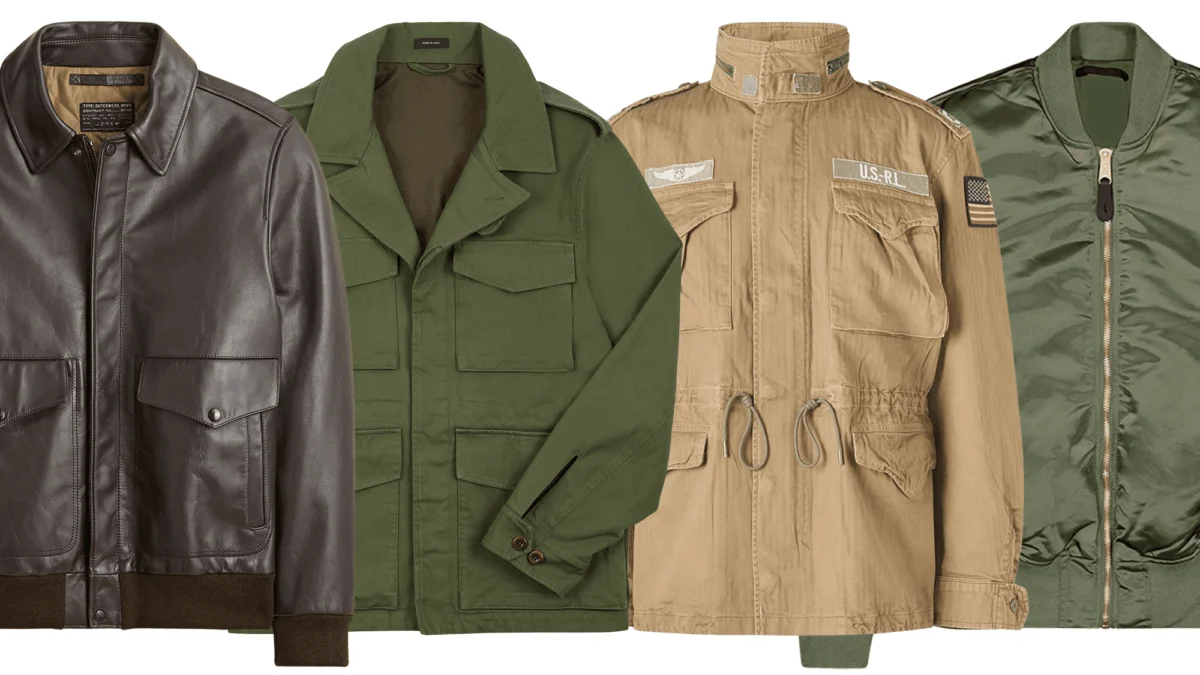
In 2026, we are witnessing a significant resurgence in military-inspired outerwear. Reports from recent global fashion weeks and previews of upcoming Autumn-Winter collections suggest that the "Field Jacket" energy is reaching a fever pitch. Classic brands, heritage reproduction specialists, and luxury houses are all leaning into "Mil-Spec" (Military Specification) aesthetics. However, to truly appreciate these garments, one must understand the functional DNA behind the specification numbers. Understanding why a pocket is slanted or why a hem is split allows a wearer to move beyond mere "military inspiration" and into the realm of timeless style. Here are the nine definitive military jackets that changed menswear forever.
The M-1951 Field Coat represents what many historians consider the Platonic ideal of functional outerwear. Positioned chronologically between the rugged M-1943 of World War II and the iconic M-1965 of the Vietnam era, the M-1951 is often the "forgotten middle child" that arguably offers the most versatile silhouette for modern civilian life. Its design moved away from the open lapels of earlier uniforms toward a more protective shirt-collar construction. Key features include a heavy-duty zip front shielded by a snap-down wind placket and a unique drawstring waist that terminates outside the shell, allowing for rapid adjustments. Today, brands like Polo Ralph Lauren and Mfpen frequently reference the M-51 when they want to capture a sense of mid-century utility without the aggressive "tactical" look of later models. It is a jacket that bridges the gap between formal military history and the relaxed requirements of contemporary urban environments.
Following the M-51 is the undisputed heavyweight champion of the genre: The M-1965 Field Jacket. If you were to ask a man on the street to describe a military jacket, he would almost certainly describe an M-65. Its cultural pedigree is unmatched, having transitioned from the jungles of Vietnam to the shoulders of Hollywood’s most brooding anti-heroes. From Al Pacino in Serpico to Robert De Niro in Taxi Driver and Sylvester Stallone in Rambo, the M-65 became the "Jacket of Loneliness"—the uniform of the rugged individualist. Technically, the M-65 introduced several innovations that are now industry standards, most notably the use of Velcro on the cuffs and collar and the distinctive Mandarin stand collar which houses a concealed emergency hood. Alpha Industries, the original contractor for many of these jackets, continues to produce the "Heritage" version, maintaining the oversized, boxy fit that allows for the layering of insulated liners, making it a true four-season garment.
While the field jackets were designed for land-based infantry, the Mil-Spec Fishtail Parka was engineered for extreme cold. Comprising the M-1948, M-1951, and M-1965 variants, the fishtail parka is defined by its long silhouette and the iconic split rear hem. This "tail" was originally designed to be tied around a soldier’s legs to trap heat, but it became a symbol of subcultural rebellion in the 1960s. British Mods adopted the parka to protect their expensive Italian suits while riding Vespas and Lambrettas through the rainy streets of London. This juxtaposition of high-fashion tailoring and rugged surplus gear remains a foundational look in menswear today. Modern iterations from labels like The Real McCoy’s focus on the heavy cotton poplin and authentic mohair-trimmed hoods, preserving the garment’s status as the ultimate shield against the elements.
The evolution of flight gear offers a different, more streamlined aesthetic, starting with the A-1 Flying Jacket. Produced during the interwar years between 1926 and 1931, the A-1 predates the widespread use of zippers in military clothing. It features a button-front closure and a stand-up knit collar, giving it a softer, almost academic appearance compared to its successors. This "gentlemanly" military style has made the A-1 a favorite for luxury brands like Valstar, whose "Valstarino" model is a direct descendant of the A-1. By replacing heavy leather with linen or goat suede, designers have turned a piece of cockpit equipment into an essential piece of spring knitwear, proving that military DNA can be elegant rather than just aggressive.
However, when people think of a "pilot’s jacket," they are usually envisioning the A-2 Flying Jacket. Introduced in 1931 to replace the A-1, the A-2 brought the zipper to the forefront. Originally constructed from horsehide or goatskin, these jackets were cropped at the waist to accommodate pilots sitting in cramped, unpressurized cockpits. The A-2 became a canvas for "nose art," with pilots painting elaborate designs on the back, making it one of the first examples of personalized military fashion. The classic combination of knit cuffs, a snap-down collar, and two front patch pockets has been replicated by everyone from J.Crew to Ralph Lauren Purple Label. It remains the gold standard for leather outerwear, offering a silhouette that suggests authority and adventure in equal measure.
As the military transitioned into the jet age, leather gave way to technical fabrics, leading to the creation of the MA-1 Bomber Jacket. The MA-1 is perhaps the most ubiquitous military garment in the world, having been adopted by every subculture from punks and skinheads to 90s rappers and modern street-style stars. Made from high-quality flight nylon with a polyester interlining, the MA-1 was designed to be lightweight yet warm. One of its most famous features is the bright "International Orange" lining. This was a survival feature: if a pilot crashed, they could flip the jacket inside out to be more visible to Search and Rescue teams. Today, the MA-1 is a staple for brands like Schott NYC and Alpha Industries, serving as a versatile, weather-resistant layer that fits as easily over a hoodie as it does over a crisp white shirt.
While the Air Force and Army dominated the field and the sky, the US Navy contributed one of the most rugged designs in history: The N-1 Deck Jacket. Designed for sailors facing the freezing salt spray of the North Atlantic during WWII, the N-1 is built from "jungle cloth"—a incredibly dense, water-repellent corded cotton grosgrain. The interior is lined with thick alpaca pile, providing a level of warmth that rivaled the heaviest wool coats of the era. The N-1 found a second life in the 1950s and 60s among California’s motorcycle culture, where its wind-breaking capabilities were highly prized. Modern heritage brands like Wythe and Kestin continue to produce versions of the deck jacket, often fading the fabric to mimic the "salt-washed" look of a vintage original.
The 45P CWU (Cold Weather Uniform) Jacket represents the modern evolution of the bomber. Introduced in 1977 to replace the MA-1, the CWU-45P was a response to the need for fire-resistant clothing in the era of high-performance jet fuel. It replaced nylon with Nomex and swapped the MA-1’s slash pockets for large, secure patch pockets with slanted flaps. The knit collar was also replaced with a structured fabric collar. While the MA-1 feels retro, the CWU-45P feels contemporary and tactical. It is still in active use today, and its influence can be seen in the "washed twill" bombers found at retailers like GAP, which capture the technical look without the specialized price tag of flame-retardant materials.
Finally, the Tropical Combat Jungle Jacket rounds out the list as the quintessential lightweight layer. Developed for the humid, dense environments of Vietnam, the jungle jacket was a masterpiece of ventilation and storage. It featured four oversized bellowed pockets, with the top two slanted toward the center to allow easy access even when the soldier was wearing heavy webbing or a rucksack. Made from "rip-stop" cotton—a fabric woven with a crosshatch pattern to prevent small tears from spreading—it was designed to be baggy and breathable. In the modern wardrobe, the jungle jacket has replaced the blazer for many men. Its structured yet casual appearance makes it the perfect "third piece" for a spring outfit. Brands like BEAMS Plus have even experimented with the design, utilizing "Tiger Stripe" camouflage or mesh jacquard to push the jungle jacket into the realm of avant-garde fashion.
The enduring relevance of these nine jackets proves that in menswear, function eventually dictates form. We do not wear these garments because we wish to be soldiers; we wear them because the military has already solved the most difficult problems of clothing design. Whether it is the wind-resistance of an N-1, the visibility of an MA-1, or the pocket-utility of a jungle jacket, these pieces offer a sense of purpose that fast-fashion trends can never replicate. As we move further into 2026, the "Mil-Spec" influence will only continue to grow, reminding us that the best clothes are those that were built to survive.
