
 By Rifan Muazin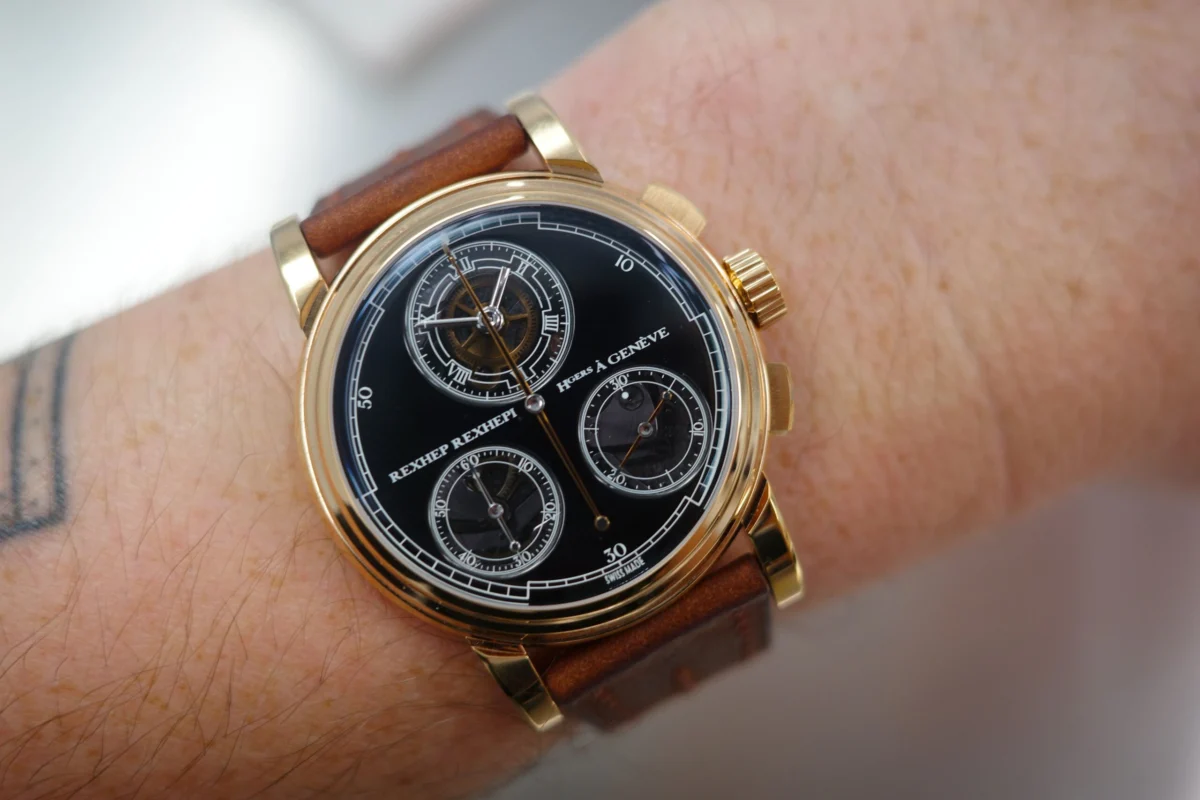
The first and perhaps most significant trend to emerge is the realization that no complications are the new complications. For decades, the "arms race" in watchmaking was defined by how many functions—perpetual calendars, minute repeaters, split-second chronographs—a brand could cram into a single case. However, at this year’s Watches and Wonders, a counter-movement took center stage. Heavyweights like Patek Philippe and Chopard invested significant engineering resources not into adding more hands to the dial, but into perfecting the three-hand watch. This shift toward extreme simplicity is often more difficult to execute than a complex movement; without the distraction of sub-dials, every finishing detail, every proportion of the case, and every nuance of the dial must be flawless. Patek Philippe, in particular, showcased a commitment to this "quiet luxury" in horology, emphasizing that true elegance lies in the reduction of elements to their most essential forms. This mirrors a broader trend in the global luxury market where "stealth wealth" and understated design are superseding overt displays of technical bravado.

In terms of public discourse, the five most talked-about new releases at the show served as the primary drivers of "booth gravity." While these often included the usual suspects—Rolex, Tudor, and Cartier—the conversation was marked by a sense of historical reverence. Brands are increasingly looking into their archives to find inspiration, resurrecting shapes and movements that resonate with a nostalgic consumer base. This "greatest hits" approach provides a safety net in an uncertain economy, as proven designs carry less risk than avant-garde novelties. Yet, among the sea of reissues, personal favorites emerged that pushed the boundaries of the "fair experience." Jaeger-LeCoultre’s Duometre collection and the refined, geometric aesthetics of the Hermès Cut provided a necessary balance to the more conservative offerings, proving that there is still room for poetic design and technical ingenuity in a market often dominated by "hype" watches.
The most jarring experience of the fair, however, occurred away from the main Palexpo floor, at F.P. Journe’s manufacture in the heart of Geneva. It raised a pressing question: Are watches becoming more inaccessible than ever? In a move that felt almost subversive in an era of instant social media gratification, Journe displayed his 13 novelties behind glass cases with a "No Photos" sign—a rarity at a press event. This decision reflects the unique position of independent watchmakers today. Journe, whose pieces have seen a meteoric rise in value—highlighted by a collaboration with Francis Ford Coppola selling for $10.75 million—is no longer just a watchmaker; he is the curator of an ultra-exclusive club. When the secondary market price for a quartz "Elegante" jumps from a $17,000 retail price to over $100,000, the brand faces the challenge of managing the frustration of collectors who can no longer access the product.

Journe’s 2024 novelties are the epitome of this exclusivity. He is releasing two box sets that defy conventional retail logic. The first set includes four gem-set versions of his Tourbillon Vertical, featuring sapphires, emeralds, rubies, and diamonds paired with exotic dials like sodalite and green jade. With only one set produced per year and a price tag starting at 8 million Swiss francs, these are not merely watches; they are portable sovereign wealth. The second set, a nine-watch collection from the Linesport family, is limited to five boxes per year at a cost of over 1 million Swiss francs. By refusing to release public images, Journe is intentionally cooling the "hype" while simultaneously signaling to his VVIP clients that their privacy and exclusivity remain his top priorities.
This "Area 51" level of insider knowledge is becoming a requirement for modern collecting. Across Geneva, the heat around independent makers is reaching a boiling point. Rexhep Rexhepi, a darling of the horological community, received more requests for his 150,000 Swiss franc CHF chronograph within 48 hours of its announcement than he could possibly produce in his lifetime. Other watchmakers are following suit, selling out multi-year production runs to existing clients before a single public image is even rendered. This creates a difficult friction: collectors are increasingly shut out of the brands they love, while watchmakers are forced to spend more time "fending off" billionaires than actually making watches. Even the collaboration between Material Good and Vanguart, featuring a blush-pink "Orb," saw its 25-piece run claimed instantly, leaving thousands of hopeful buyers with nothing but a polite rejection text.

While the independents dominated the "insider" talk, Rolex provided the fair’s most consequential moment not through a launch, but through a discontinuation. The rumored demise of the red-and-blue "Pepsi" GMT-Master II sent shockwaves through the secondary market. The "Pepsi" has long been a cornerstone of the Rolex catalog, but production difficulties involving the two-tone ceramic bezel have fueled rumors of its retirement for years. Once the news was confirmed via dealer channels, the market reacted with predatory speed. A watch listed for $22,500 in February climbed to $35,000 by the end of the fair week. This $13,000 jump in two months illustrates the raw power of scarcity. As Paul Altieri of Bob’s Watches noted, the price increase was partially "baked in" due to rumors, but the official confirmation created a supply vacuum that will likely keep prices on an upward trajectory for the foreseeable future.
In the midst of this market frenzy, Rexhep Rexhepi managed to create what many are calling a "perfect thing." His new CHF Chronograph, housed in a 38.8mm case, is a masterclass in artisanal watchmaking. The story behind the case size—a mistake in a test run that resulted in a .02mm deviation which Rexhepi preferred—underscores the human element that collectors are desperate for in an automated world. The watch, with its central chronograph mechanism and lugs that "hug" the wrist, felt like a soulful departure from the industrial precision of the larger brands. It was a reminder that at its core, watchmaking is still about the obsessive pursuit of a singular vision by a single craftsman.

On the corporate side, Cartier’s CMO Arnaud Carrez provided some much-needed clarity regarding the future of the Privé program. Speculation had been mounting that the program, which resurrects iconic shapes from the brand’s past, was reaching its natural conclusion. However, Carrez confirmed that the program is not going anywhere, though the brand clearly enjoys the air of mystery that surrounds its release cycle. This "controlled speculation" is a key part of Cartier’s strategy, keeping the brand at the center of the "enthusiast" conversation without over-extending its production.
Even the smallest details of the fair provided insight into the competitive nature of the industry. Rolex’s "Jubilee dial" on the new Oyster Perpetual drew immediate comparisons to the colorful, grid-based tapestries of the late artist Alighiero Boetti. While no official collaboration was announced, the resemblance was too striking for the "watch-spotting" community to ignore, highlighting the increasingly thin line between horology and fine art. Meanwhile, the "celebrity economy" behind the fair reached new heights of absurdity, with rumors of six-figure payments for single-night "wrist placements" at the Oscars, suggesting that for many brands, the watch is secondary to the person wearing it.

Finally, the logistics of the fair itself spoke to the lengths brands will go to to cultivate a specific atmosphere. From Bremont importing American Diet Coke into "Coke Zero-only" Switzerland to Parmigiani Fleurier flying in a master barista from Milan, the fair has become as much about hospitality as it is about movements. These efforts are not just perks; they are part of a brand’s identity. In an industry where every competitor can produce a high-quality timepiece, the winner is often the one who can provide the most refined experience, the most exclusive access, and the most compelling narrative. As Watches and Wonders 2024 concludes, the industry looks forward to a year defined by extreme exclusivity, the continued rise of the independent master, and a market that values the "simple" more than ever before.
