
 By admin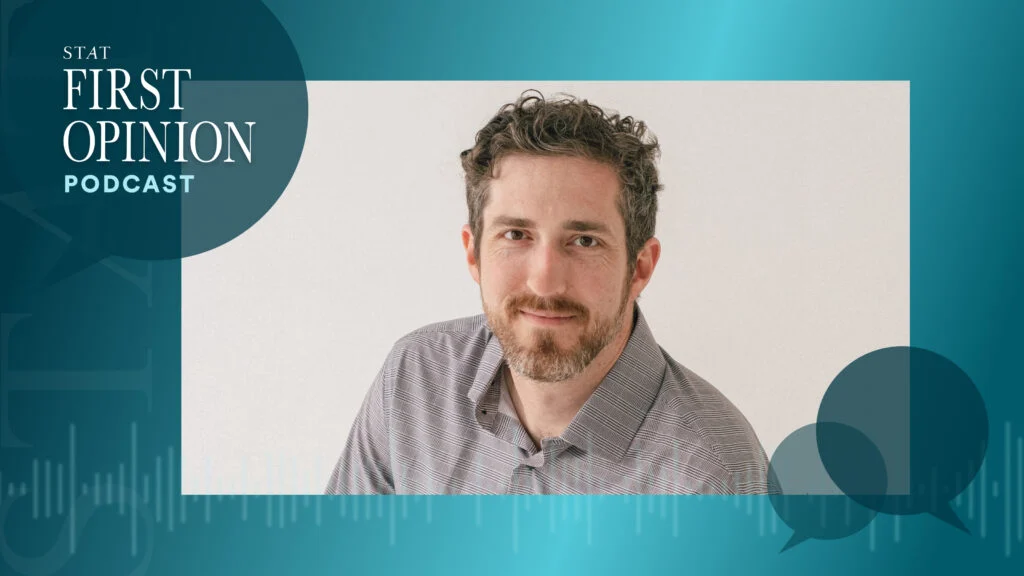
Will Flanary, an Oregon-based ophthalmologist, has spent the last decade navigating a dual existence. In the sterile environment of his clinic, he is a specialist dedicated to preserving vision; on the screens of millions, he is Dr. Glaucomflecken, a satirical force of nature who uses costumes and deadpan delivery to dismantle the absurdities of the American healthcare system. In a recent appearance on the "First Opinion Podcast" with STAT editor Torie Bosch, Flanary delved into the increasingly blurred lines between medical practice, corporate interests, and the ethics of digital influence. His insights arrive at a pivotal moment for the medical profession, as physicians struggle to maintain autonomy in an era defined by private equity takeovers and the siren song of social media stardom.
The conversation began with a look at a brewing crisis in Flanary’s own backyard: the healthcare landscape of Eugene, Oregon. For decades, the medical needs of Eugene—the state’s second-largest city and home to the University of Oregon—were served by a robust network including the University District Hospital. However, in 2023, PeaceHealth, a massive non-profit Catholic health system, shuttered the University District facility, including its emergency department. This decision left the metro area of 200,000 people with a single primary emergency room at RiverBend Hospital in neighboring Springfield.
As Flanary explained, the closure was met with immediate warnings from frontline physicians. They predicted that shunting an entire city’s emergency volume into one facility would lead to catastrophic wait times and "boarding"—a phenomenon where patients languish in ER hallways for days because no inpatient beds are available. These warnings proved prescient. Yet, rather than addressing the systemic lack of resources, PeaceHealth leadership took a controversial turn. They declined to renew the contract of Eugene Emergency Physicians (EEP), a democratic, physician-owned group that had staffed the local ER for 35 years. Instead, they sought proposals from outside entities, eventually selecting ApolloMD, a corporate management group based in Atlanta.
This move highlights a national trend: the displacement of local, independent physician groups by large, corporate-backed staffing firms. "You’re taking local medicine run by people in the community who know the patients and the social services available, and you’re just giving that away," Flanary noted. The implications are profound. Local groups often have deep institutional knowledge and a vested interest in the community’s health, whereas corporate firms are frequently criticized for prioritizing shareholder returns or administrative efficiency over clinical continuity.
The conflict in Eugene has now entered the legal and legislative arena. Oregon recently passed a "Corporate Practice of Medicine" (CPOM) law, designed to prevent non-physicians or corporate entities from interfering with clinical decision-making. The EEP has challenged the transition, and Oregon’s governor has even called for a pause to investigate potential violations of state law. Flanary revealed that the situation grew even "juicier" with the release of internal emails suggesting that the CEO of RiverBend—a physician who holds only an administrative license and does not see patients—attempted to influence clinical decisions from the C-suite. These emails allegedly showed the CEO questioning the necessity of MRIs and hospital admissions, a move the EEP views as a dangerous overreach of administrative power.
Flanary’s involvement in this local struggle is a testament to his evolution from a comedian making "relatable content" to a high-stakes advocate. He understands that hospital systems and insurance companies thrive in the shadows. "They don’t want people to know what’s happening," he said. By using his massive platform to shine a light on these administrative maneuvers, Flanary is engaging in a form of "noise-making" that forces accountability. This is not the first time he has taken on giants; he previously led a social media charge against Aetna when the insurer attempted to require prior authorizations for nearly all cataract surgeries, a policy they eventually rescinded under public pressure.
However, the power of a digital platform comes with significant ethical baggage, a topic Bosch and Flanary explored in depth. The rise of the "medical influencer" has created a new set of professional hazards. As medical students and residents face mounting debt—often exceeding $200,000—the financial incentives of social media are tempting. Flanary pointed out that even a student with a modest following might be offered thousands of dollars to promote "gut health" supplements or unregulated wellness products.
This financial pressure can lead to a degradation of professional integrity. Flanary addressed recent controversies where medical students and physicians faced backlash for "punching down"—creating content that mocks patients’ bodies, choices, or intelligence. "The last thing you want to do is put out content that will undermine the public’s trust in us," he warned. For Flanary, the rule is simple: comedy in medicine should be used to critique the powerful, not the vulnerable. He maintains strict "ethical guardrails," refusing to create patient characters or disclose information that could even tangentially violate HIPAA or the sanctity of the doctor-patient relationship.
The conversation shifted to the specific dangers within Flanary’s own specialty, ophthalmology. He expressed horror at the "cosmetic eye color change" trend, recently highlighted in the Netflix documentary "Caterpillar." This procedure involves surgically implanting a colored silicone disk over the iris. While iris implants have legitimate medical uses—such as for patients with aniridia (the absence of an iris) or severe ocular trauma—their use for purely cosmetic reasons is, in Flanary’s view, "unethical."
"You’re introducing a foreign body into a totally healthy eye that sees 20/15," he explained. The risks are not theoretical; these implants can cause permanent damage, including secondary glaucoma, chronic inflammation (uveitis), and corneal failure, often requiring a transplant to fix. Despite these risks, some "ophthalmology influencers" continue to promote the surgery for its dramatic "before and after" visuals. This highlights the dark side of the attention economy, where the pursuit of viral content can lead physicians to bypass evidence-based safety standards in favor of aesthetic trends.
Beyond the operating room, Flanary is also fighting a war against everyday medical misinformation. He frequently encounters patients who believe that wearing glasses will "weaken" their eyes or that they should "stare at the sun" to improve their vision. While these myths might seem benign, Flanary noted that they can have irreversible consequences, particularly for children. If a parent, influenced by "wellness" rhetoric, refuses to let their child wear prescribed glasses, the child can develop amblyopia (lazy eye). If not corrected during the critical period of visual development, the brain essentially "shuts off" the signal from the blurred eye, leading to permanent vision loss that cannot be corrected in adulthood.
In the face of such daunting systemic and cultural challenges, one might wonder how Flanary maintains his sense of humor. He admits that satire began as a coping mechanism—a way to process the trauma of being a two-time cancer survivor and a sudden cardiac arrest survivor. Today, however, humor is his most effective educational tool. He has mastered the art of "hiding the medicine in the candy," using skits to explain complex topics like Pharmacy Benefit Managers (PBMs) or the intricacies of the insurance "denial" cycle.
"Something’s got to be entertainment. It’s got to be catchy," he said. By making people laugh at the absurdity of a PBM, he ensures they actually learn what a PBM is and how it affects their drug prices. This approach was particularly vital during the COVID-19 pandemic. While an ophthalmologist had limited utility in a respiratory crisis, Flanary’s videos provided a necessary reprieve for exhausted ICU doctors and nurses. "If I can at least make someone laugh, who is seeing death and disease all day, that’s something," he reflected.
As the interview concluded, the message was clear: the modern physician can no longer afford to remain silent. Whether it is fighting the corporatization of local ERs, debunking dangerous wellness trends, or calling out the unethical behavior of fellow "med-influencers," the role of the doctor has expanded into the public square. Will Flanary, through his alter ego Dr. Glaucomflecken, has shown that while the healthcare system may be broken, the physician’s voice—when sharpened by humor and grounded in ethics—remains a powerful instrument for change. His work serves as a reminder that advocacy is not just about policy papers and legislative hearings; it is about telling the truth in a way that people can’t help but hear.
