
 By admin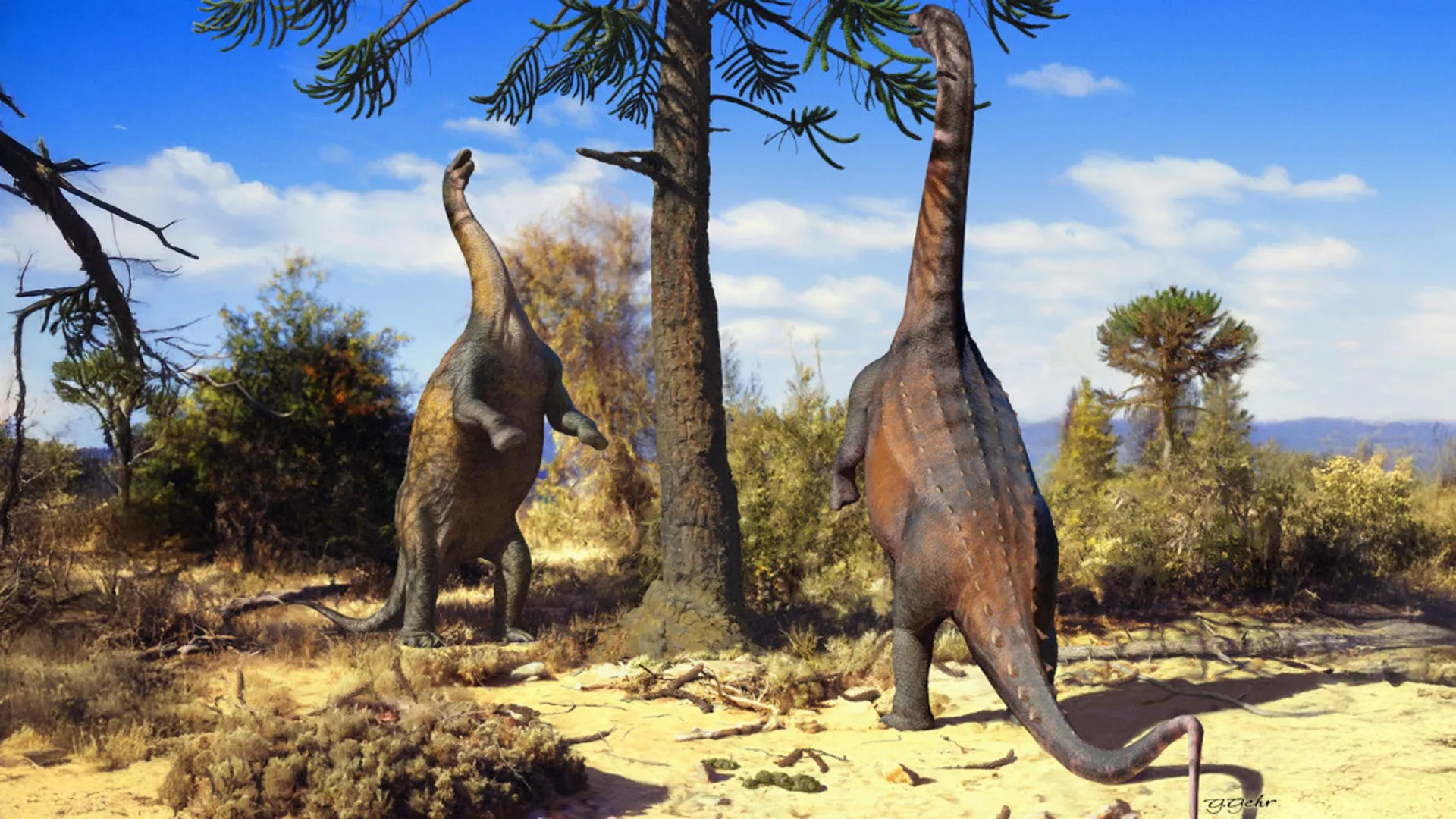
For decades, the sheer scale of sauropods—the largest land animals to have ever lived—led many paleontologists to assume their locomotion was largely restricted to a quadrupedal stance. The idea of a creature weighing tens of tons lifting its front half into the air seemed a physical impossibility, or at best, an extremely brief and strenuous maneuver. However, the study, which employed sophisticated engineering simulations on fossilized bones, suggests that for species like Uberabatitan from Brazil and Neuquensaurus from Argentina, standing upright might have been a common and advantageous behavior around 66 million years ago.
These two South American sauropods, though modest in stature compared to the absolute behemoths of their lineage, were still colossal by modern standards, roughly comparable to modern elephants in mass. Adult Uberabatitans, for instance, could stretch up to an impressive 26 meters, making them the largest known dinosaurs from Brazil. Yet, their anatomy, particularly their femur structure, indicates a surprising capacity for bipedal or tripodal rearing, especially during their younger, more agile years. This ability could have been a critical evolutionary advantage, enabling them to access high-reaching foliage, intimidate potential predators, or engage in elaborate courtship rituals.
The research highlights a significant age-related decline in this capability. Younger, lighter individuals were demonstrably better equipped to support their weight on two legs. As these animals matured and their bulk increased dramatically, the strain on their skeletal structure, particularly the thigh bones, would have become immense, likely rendering prolonged upright stances far less comfortable and more energy-intensive. This ontogenetic shift in locomotor capability offers a fascinating glimpse into the life history of these ancient reptiles, suggesting a dynamic relationship between growth, biomechanics, and behavior.
The study, supported by the São Paulo Research Foundation (FAPESP) and published in the prestigious journal Palaeontology, brought together an international team of scientists from Brazil, Germany, and Argentina. Their interdisciplinary approach, fusing paleontology with advanced engineering analysis, marks a significant step forward in understanding the functional morphology of extinct animals.
Unlocking Ancient Biomechanics with Modern Engineering Tools
To unravel the mysteries of sauropod posture, the researchers turned to a computational method widely utilized in modern engineering: Finite Element Analysis (FEA). This powerful simulation technique allows engineers to predict how a structure will react to various forces, stresses, and environmental conditions before it is even built. In this paleontological application, FEA was deployed to estimate the internal stresses placed on a dinosaur’s femur, or thigh bone, when the animal shifted its immense weight onto its hind legs.
"Smaller sauropods like these had a bone and muscle structure that allowed them to stand more easily and for longer on their two hind legs," explains Julian Silva Júnior, the study’s first author and a postdoctoral researcher at the School of Engineering of São Paulo State University (FEIS-UNESP) in Ilha Solteira, Brazil. "Larger ones were probably also able to stand, but for a shorter time and with less comfort, since the position caused a lot of stress on the femur." Silva Júnior conducted this pivotal research during an internship at the University of Tübingen in Germany, supported by a FAPESP scholarship, underscoring the collaborative and international nature of cutting-edge scientific inquiry.
The team meticulously created digital reconstructions of the femurs from seven distinct sauropod species. These chosen dinosaurs represented a diverse cross-section of sauropod evolution, encompassing different evolutionary branches, a wide range of body sizes, and varied anatomical features. The fidelity of these digital models was paramount, and they were painstakingly constructed from highly detailed scans of fossilized bones preserved in natural history museums across the globe. This meticulous process ensures that the simulations are as accurate a representation of the actual skeletal mechanics as possible.
Simulating the Forces of Standing Upright: A Dual Approach
Finite Element Analysis works by breaking down a complex structure, such as a dinosaur femur, into a myriad of tiny, interconnected elements. For each of these elements, the method calculates how it responds to applied pressures, weight, heat, or other forces. This granular approach allows engineers to identify areas of high stress or potential failure, a technique routinely applied to ensure the structural integrity of everything from bridges and buildings to aircraft and machinery.
"Using this technique, we performed two simulations," Silva Júnior elaborates. "One dealt with the extrinsic scenario, simulating the force coming from outside to inside. In this case, gravity and the animal’s own weight on the femur when the dinosaur was standing on its hind legs. In the other, we analyzed the intrinsic scenario, the force that the muscles would exert on the femur." The extrinsic simulation modeled the crushing forces imposed by gravity and the animal’s body mass. The intrinsic simulation, on the other hand, estimated the counteracting forces generated by the powerful musculature attached to the femur, which would have been essential for maintaining an upright posture. By combining the data from these two simulations, the researchers were able to derive a comprehensive estimate of the total stress experienced by the femur of each sauropod species under the hypothetical upright stance.
The results of these simulations were striking. The lowest levels of stress on the femur, indicating the greatest biomechanical efficiency for standing, were consistently observed in two specific South American sauropods: a juvenile Uberabatitan ribeiroi and an adult Neuquensaurus australis. Uberabatitan ribeiroi is named after the Brazilian municipality of Uberaba, where its remains were discovered, which coincidentally is also Silva Júnior’s hometown. Neuquensaurus australis derives its name from the Neuquén River region in Argentina. Both species thrived during the Late Cretaceous period, approximately 66 million years ago, just before the end-Cretaceous mass extinction event.
Robust Bones: The Key to Bipedal Capability
A critical insight from the study was the discovery that Uberabatitan and Neuquensaurus possessed particularly robust femurs. These dinosaurs featured thicker, sturdier bone structures in their thigh bones, which were exceptionally well-suited to dissipating the immense forces generated when the animals attempted to stand upright. The increased cross-sectional area and density of their femurs allowed the stress to be spread more broadly across the bone, reducing localized pressure points that could lead to injury or structural failure.
"They had more robust femurs and could dissipate stress better," states the paleontologist, referring to the smaller, more agile sauropods. "The bigger ones had very large muscles and even giant femurs, but not enough to support their weight. That doesn’t mean they couldn’t stand up, but they probably chose the best time to do so, because it must have been an uncomfortable position." This distinction is crucial. While all sauropods likely retained some capacity to rear up, the biomechanical advantage conferred by the robust femurs of Uberabatitan and Neuquensaurus meant they could do so more frequently, for longer durations, and with greater comfort.
For the truly gargantuan sauropods, the simulations suggested that while a momentary upright stance might have been possible, it would have been an energetically costly and potentially risky endeavor. The sheer scale of their bodies meant that even the most massive femurs and powerful muscles were pushed to their limits, resulting in high stress levels. Similarly, even though the juvenile Uberabatitan showed exceptional aptitude for standing upright, fully grown adults of the same species would have faced substantially higher stress due to their increased body mass, likely placing them in a similar category to other giant sauropods regarding the comfort and duration of an upright posture.
Why Sauropods May Have Mastered the Upright Stance
The ability to stand on two legs, even if for limited periods, would have provided several profound evolutionary advantages for sauropods, impacting their feeding ecology, reproductive strategies, and defensive behaviors.
As obligate herbivores, sauropods were constantly seeking vegetation. Rising onto their hind legs would have significantly extended their vertical reach, allowing them to access leaves, fruits, and seeds high in trees that were otherwise unavailable to shorter animals or even to other sauropods restricted to ground-level browsing. This could have reduced competition for food resources and enabled them to exploit a wider range of ecological niches, particularly during periods of resource scarcity.
Beyond feeding, the upright posture could have played a vital role in reproduction. Males might have performed visual displays, using their impressive height and bulk to attract potential mates. The mechanics of sauropod mating are still debated, but an upright stance could also have facilitated mounting, a common reproductive behavior among many large vertebrates.
Furthermore, the pose could have served as a potent defensive strategy. By lifting the front of its body high into the air, a sauropod would have instantly appeared even larger and more formidable to approaching predators. In the Late Cretaceous of South America, formidable theropods like abelisaurids roamed the landscape. An upright sauropod, towering over its attacker, could have deterred a predator through sheer intimidation, potentially delivering powerful kicks with its hind legs or strikes with its tail. Crucially, when supported by both hind legs and its massive, muscular tail, the animal would have formed a "tripodal stance." This three-point contact—two legs and the tail acting as a sturdy third limb—would have provided substantial stability, shifting the animal’s center of gravity and allowing it to maintain the intimidating posture more effectively.
Acknowledging the Limits: The Art of Paleontological Modeling
The researchers, while confident in their findings, were also transparent about the inherent limitations of their computational models. Science, particularly when reconstructing the behaviors of extinct animals, often involves making informed assumptions due to the incomplete nature of the fossil record.
One significant factor not included in the simulations was cartilage. Cartilage is the flexible connective tissue that cushions joints, helping to absorb and distribute stress across bone surfaces. Because cartilage rarely fossilizes, its precise structure and properties in sauropods remain largely unknown. Its absence in the models means that the calculated stress levels might be slightly overestimated, as cartilage would have helped to dissipate some of the forces.
Similarly, the models did not explicitly account for the full supportive role of the tail in a tripodal position. While the concept of the tail acting as a third leg was considered in the behavioral interpretation, its intricate biomechanical contribution to stability and weight distribution was not fully integrated into the femur stress calculations. Modeling the complex interplay of a massive, muscular tail with the rest of the skeleton presents considerable challenges.
However, the researchers emphasize that these limitations do not invalidate the comparative strength of their findings. Because cartilage was not analyzed in any of the seven specimens, the assumption was made that it played a relatively similar role across all species. This means that while the models may not provide an absolutely exact measurement of stress for each individual animal, they are highly effective for comparing the relative capabilities of different sauropod species.
"The tool we use is very efficient for comparisons, even if the answer isn’t exact for each one," Julian Silva Júnior explains. "By comparing representatives from different lineages, we can get a fairly accurate picture of how these animals behaved millions of years ago." This comparative approach allows paleontologists to draw robust conclusions about evolutionary trends and behavioral adaptations, pushing the boundaries of what we can understand about life in the deep past. Future research, perhaps incorporating more advanced soft-tissue modeling or dynamic simulations of movement, will continue to refine our understanding of these magnificent creatures and their incredible ability to defy the constraints of their enormous size.
