
 By admin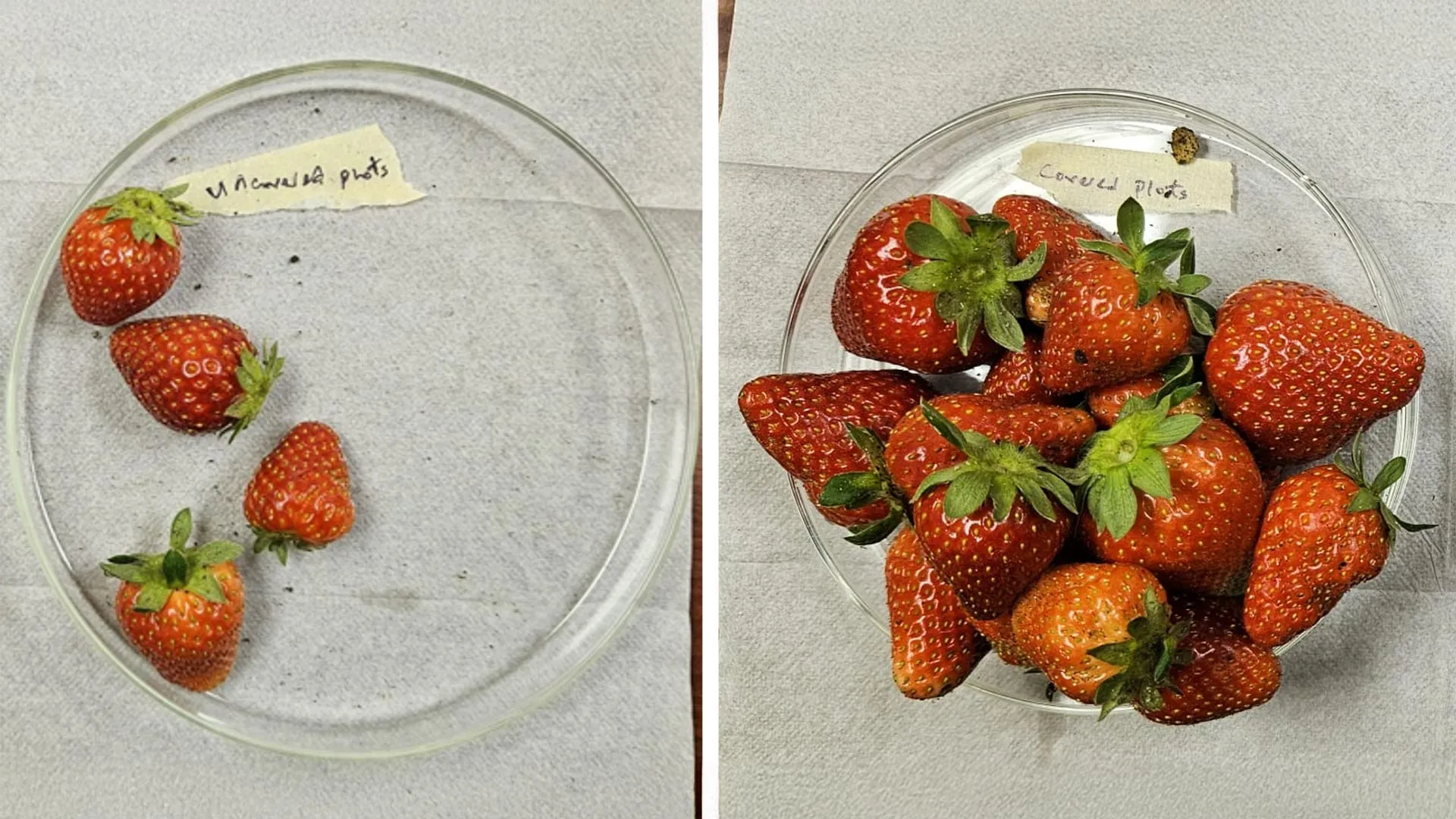
Strawberry production is a multi-billion dollar industry globally, but it faces persistent challenges from pests, diseases, and the increasing demand for environmentally friendly farming practices. Conventional methods often rely heavily on chemical pesticides to protect delicate plants from a myriad of insect threats, ranging from tiny aphids and mites to larger beetles and slugs. This reliance raises concerns about environmental contamination, potential health risks for farm workers and consumers, and the development of pesticide-resistant insect populations. Furthermore, ensuring optimal growing conditions to maximize yield and fruit quality often requires significant water input and protection from variable weather patterns. It is against this backdrop that Plant Armor presents a compelling solution, offering a physical, non-chemical barrier combined with microclimate regulation.
The fabric, meticulously engineered and named Plant Armor, is designed for direct application over strawberry plants, functioning as an intelligent, permeable shield. Its distinctive three-dimensional structure is not merely a cover but a sophisticated barrier that physically prevents harmful insects from reaching the vulnerable plants. This physical exclusion is a critical departure from chemical control, offering an immediate and non-toxic defense mechanism. Despite its robust protective qualities, the innovative, layered material is specifically engineered to remain permeable, allowing essential elements—sunlight, natural rainfall, and vital air circulation—to pass through unimpeded. This balance is crucial; a covering that blocks too much light or airflow would inevitably harm plant development, negating any protective benefits.
The efficacy of Plant Armor was rigorously tested in tunnel field trials, a controlled yet realistic agricultural environment that mimics commercial growing conditions while offering protection from extreme weather. The results were nothing short of remarkable. Strawberries cultivated under the protective embrace of Plant Armor produced yields that were as much as 3.56 times higher than those from uncovered control plants. This exponential increase in fruit production underscores the profound impact of the textile. Crucially, researchers confirmed that the fabric did not compromise light availability—a fundamental requirement for photosynthesis—nor did it negatively affect relative humidity within the plant canopy, factors often detrimental to plant health and susceptibility to fungal diseases if not properly managed.
A Fabric That Protects Without Blocking Sunlight: Unpacking the Physiological Benefits
One of the most surprising and significant findings of the research centered on Plant Armor’s interaction with light. "To produce fruit, plants need sunlight," explained Gabriel Olawuyi, a graduate research assistant at North Carolina State University and the lead author of the pivotal paper detailing Plant Armor’s capabilities. "We expected that Plant Armor’s seemingly opaque fabric would lead to an increase in vegetative biomass at the expense of fruiting—because reduced sunlight would trigger a ‘shade-avoidance’ response, making the plant divert energy toward stem and leaf growth rather than fruit production." The shade-avoidance response is a well-documented plant physiological mechanism where plants, sensing insufficient light, elongate their stems and leaves in an effort to "outcompete" neighboring plants for sunlight, often at the cost of reproductive effort like fruit production.
However, the experimental outcomes defied this initial expectation. "We found the fabric did not impede access to light at all, and fruit production increased significantly," Olawuyi confirmed. This counterintuitive result suggests that Plant Armor’s material properties might be diffusing light in a beneficial way, or perhaps its unique structure allows for sufficient light penetration despite its appearance. Diffused light can often penetrate deeper into the plant canopy, illuminating lower leaves that might otherwise be shaded, leading to more efficient photosynthesis across the entire plant and ultimately supporting greater fruit development. This nuanced interaction with light is a testament to the sophisticated engineering behind the textile.
Beyond its light-management properties, researchers also discovered that Plant Armor created a steady, beneficial warming effect throughout the three growing seasons of the trials. This consistent elevation in temperature, even if slight, proved to be a critical factor in accelerating plant development. According to Olawuyi, that extra warmth helped covered plants reach the fruiting stage earlier than plants grown without the textile, a significant advantage for growers seeking to optimize harvest times and potentially tap into early-season markets that command premium prices.
"Plants require a certain amount of accumulated heat, calculated as ‘growing degree-days,’ to progress through developmental stages including fruiting. Our plant cover has proven to enhance these," Olawuyi elaborated. Growing degree-days (GDD) represent a simple heat index that helps predict plant development rates. By consistently providing optimal warmth, Plant Armor effectively "fast-forwarded" the plants’ internal clocks. "The plants were in a condition whereby the warmth they need to go through each phenological stage to their production was given to them optimally, and they produced far more than the uncovered plants," he added. This optimized thermal environment not only boosted yields but could also extend the growing season in cooler climates or buffer against unexpected cold snaps, adding another layer of resilience for farmers.
The implications for sustainable agriculture extend further. Because Plant Armor physically prevents insects from feeding on the plants, Olawuyi emphasized that the technology could dramatically reduce the amount of conventional pesticides needed in agricultural fields. This shift from chemical intervention to physical exclusion aligns perfectly with growing consumer demand for organic and residue-free produce, while simultaneously reducing the environmental footprint of farming operations. Less pesticide use means healthier ecosystems, reduced exposure for farm workers, and a cleaner food supply chain. Furthermore, by creating a protective microclimate, Plant Armor could also contribute to water conservation by reducing evaporation from the soil surface and protecting plants from wind desiccation, although further research is needed to quantify these specific benefits.
From Military Textiles to Strawberry Fields: An Accidental Innovation
Perhaps one of the most intriguing aspects of Plant Armor is its unexpected genesis. The idea and underlying technology did not originate in an agricultural lab or a botanical garden. Instead, it emerged from research initially focused on completely different challenges: making military uniforms more resistant to mosquito bites and improving comfort for soldiers wearing heavy body armor in demanding environments.
R. Michael Roe, a co-author of the paper and the William Neal Reynolds Distinguished Professor at NC State, recounted this serendipitous journey. The initial military research aimed to develop advanced textiles that could protect soldiers from mosquito-borne diseases like malaria, dengue, and Zika, which pose significant threats in many operational theaters. Simultaneously, the team explored ways to enhance the breathability and comfort of military gear, mitigating issues like heat stress and chafing caused by prolonged wear of body armor. This required developing materials that were both robust and permeable, offering protection without sacrificing comfort or airflow.
"The path to Plant Armor started with trying to make a cloth to go on a soldier’s chest to make body armor more comfortable," Roe explained. The iterative process of designing, testing, and refining these specialized military textiles involved exploring various material compositions, weave patterns, and three-dimensional structures. Through this meticulous "trial and error," as Roe described it, a textile emerged with properties—specifically, its protective yet permeable nature and its ability to modulate microclimates—that proved unexpectedly relevant to plant protection.
This unexpected trajectory from military clothing research to revolutionizing agriculture vividly demonstrates the profound value of collaboration across traditionally disparate scientific fields. It highlights how foundational research, even when initially directed at one problem, can yield solutions for entirely different challenges when approached with an open mind and interdisciplinary collaboration. NC State University, with its world-renowned College of Natural Resources, Wilson College of Textiles, and College of Agriculture and Life Sciences, provided the ideal institutional ecosystem for such cross-pollination of ideas and expertise. Researchers from entomology, plant science, and textile engineering converged, translating insights from one domain to another. "We couldn’t have predicted that when we started. Without all these people here doing research and following the science, we wouldn’t have arrived at this product," Roe emphasized, underscoring the collective effort and the unpredictable nature of scientific discovery.
Study Details and Support: A Foundation for Future Growth
The comprehensive findings of this research are detailed in the paper titled, "Knitted 3-D, Porous Textile Cover to Enhance Strawberry Fruit Production and Prevent Insect Feeding," which has been published in the respected academic journal Agriculture. The multidisciplinary team of co-authors includes James Clothier, Matthew Bertone, Grayson Cave, Reuben Garshong, Andre West, Loganathan Ponnusamy, and Clyde Sorenson, all affiliated with NC State University, representing a diverse pool of expertise in entomology, textiles, and horticulture.
The project received critical financial backing from a grant provided by the North Carolina Agricultural Foundation (grant number AG00463770), underscoring the state’s commitment to fostering agricultural innovation that directly benefits its farmers. Further support was provided by the Research Capacity Fund (HATCH), project award no. 02853, from the U.S. Department of Agriculture’s National Institute of Food and Agriculture, recognizing the national significance of sustainable agricultural technologies.
Crucially, the Plant Armor Gen 2 fabric, the specific iteration studied and validated in this paper, has been officially patented by North Carolina State University (US Patent No. 11,582,968 B2; issued February 21, 2023). This patent protects the intellectual property and lays the groundwork for commercialization. The technology is now licensed for commercial development by the University, signaling a clear path from academic research to practical application in the agricultural sector. This collaborative spirit, spanning multiple colleges within NC State, exemplifies the institution’s commitment to translational research that addresses real-world challenges.
Looking ahead, the successful development and initial validation of Plant Armor open numerous avenues for future research and commercial expansion. While the initial trials focused on strawberries in tunnel environments, the technology’s principles could potentially be adapted for other high-value fruit and vegetable crops that struggle with similar pest pressures and climate vulnerabilities. Further studies will likely explore the long-term durability of the fabric, its cost-effectiveness at commercial scale, optimal deployment strategies for different farm sizes and climates, and its impact on water usage and soil health in greater detail. The potential for Plant Armor to contribute to global food security by increasing yields, reducing reliance on chemical inputs, and fostering more resilient agricultural systems is immense, marking a pivotal moment in the quest for sustainable and productive farming practices.
