
 By admin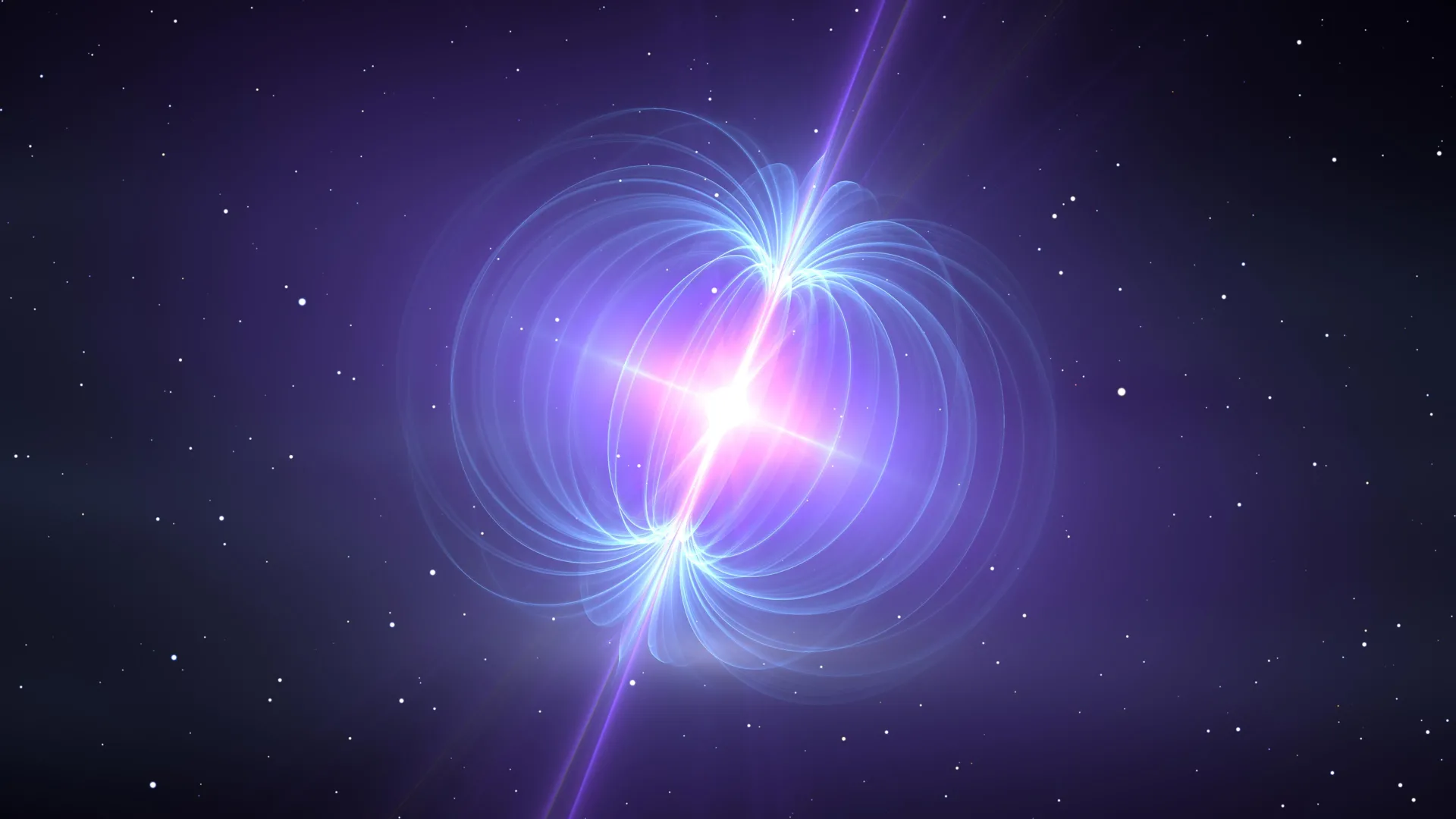
A groundbreaking study, published in the esteemed journal Science Bulletin, presents compelling evidence for this extended X-ray emission directly linked to neutron star mergers. These findings fundamentally alter the traditional view of how these powerful collisions manifest across the electromagnetic spectrum and raise the exciting possibility that some previously enigmatic cosmic flashes, whose origins have long baffled astronomers, may in fact emanate from the violent fusion of neutron stars. This paradigm shift underscores the importance of wide-field X-ray observatories in capturing the full complexity of transient phenomena.
Since its launch in January 2024, the cutting-edge Einstein Probe satellite has become an indispensable tool in the astronomical arsenal, rapidly detecting hundreds of bright X-ray flashes originating from distant galaxies. These high-energy events, collectively termed fast X-ray transients (FXRTs), have a variety of proposed origins. While some have been confidently linked to the spectacular deaths of massive stars – known as supernovae or hypernovae – a significant number have remained stubbornly unexplained, representing a persistent puzzle in astrophysics. The challenge in deciphering their true nature often stems from the difficulty in precisely determining their cosmic distance and, consequently, the immense energy they unleash. Without these crucial parameters, distinguishing between various potential sources – from stellar flares in our own galaxy to supermassive black holes accreting matter – becomes exceedingly complex.
A New Paradigm: The Birth of a Magnetar from a Cosmic Collision
The breakthrough came through the diligent work of researchers led by Professor Eleonora Troja, whose group is generously supported by a prestigious European Research Council (ERC) Consolidator grant. Their team obtained critical observations that were instrumental in pinpointing the true source of one such previously mysterious X-ray transient. This event, designated EP250704a/GRB 250704B, provided the clearest evidence yet of a neutron star merger producing a prolonged X-ray afterglow.
The chain of events unfolded with remarkable speed and precision. Upon receiving an initial alert from the Einstein Probe satellite, Professor Troja’s team immediately sprang into action, orchestrating a rapid and coordinated follow-up observation campaign. This involved a global network of some of the world’s most powerful astronomical instruments, including the European Southern Observatory’s (ESO) Very Large Telescope (VLT) in Chile and the Very Large Array (VLA) radio observatory in New Mexico. By meticulously studying the remnants and lingering emissions following the initial explosion, the researchers arrived at a profound conclusion: they had likely witnessed the birth of a magnetar, a superlatively magnetized neutron star, forged in the crucible of a neutron star collision.
Neutron stars are among the most exotic and extreme objects in the universe. They are the ultra-dense, compact stellar remnants left behind after massive stars, typically eight to thirty times the mass of our Sun, exhaust their nuclear fuel and undergo spectacular supernova explosions. A mere sugar cube of neutron star material would weigh billions of tons. When two such incredible objects spiral inward and eventually merge, they unleash a torrent of gravitational waves – ripples in spacetime itself – that propagate across the cosmos. These events are also expected to produce a suite of electromagnetic signals, and it is the light produced during these cataclysmic events that helps astronomers decipher the aftermath and determine what survives the collision.
Historically, short gamma-ray bursts (sGRBs) have been considered the definitive electromagnetic signature of neutron star mergers. These fleeting, intense bursts of high-energy radiation last less than two seconds and are thought to be produced by relativistic jets launched from the merger remnant. The groundbreaking detection of gravitational waves from a neutron star merger (GW170817) in 2017, accompanied by an sGRB and a subsequent kilonova (a much longer-lasting optical and infrared transient), cemented this multi-messenger view. However, the new discovery adds a crucial, longer-duration X-ray component to this already complex picture.
"While short gamma-ray bursts have been our primary beacon for neutron star mergers, this new event tells a more nuanced story," explained Professor Troja, a key member of the Einstein Probe European collaboration and co-corresponding author of the pivotal paper. "If the remnant of the collision is a magnetar, it could indeed keep bursting for significantly longer periods." Professor Troja elaborated on the nature of these enigmatic objects: "Magnetars are incredibly rapidly spinning neutron stars endowed with magnetic fields thousands of trillions of times stronger than the Sun’s. When these colossal magnetic fields dissipate their immense power into the surrounding environment, they can dramatically enhance and prolong any associated explosion. The moment I analyzed the X-ray data from this unprecedented event, I immediately sensed that we were observing something truly extraordinary, something that defied our conventional expectations."
EP250704a/GRB 250704B: A Record-Breaking X-Ray Flash
The event, officially designated EP250704a/GRB 250704B, was initially detected on July 4, 2025, by a consortium of international satellite observatories: the Space Variable Objects Monitor (SVOM), the Hard X-ray Modulation Telescope (Insight-HXMT), and the Einstein Probe. What immediately struck astronomers was the stark contrast between the duration of its gamma-ray burst component and its X-ray emission. The gamma-ray burst lasted an astonishingly brief half a second, firmly placing it within the "short" GRB category traditionally associated with neutron star mergers. In stark opposition, the Einstein Probe recorded brilliant X-ray emission that persisted for nearly ten minutes – an unprecedented duration for a prompt X-ray signal from such an event.
"This is, without a doubt, the longest-lasting prompt X-ray flash ever observed from a neutron star merger," affirmed graduate student Niccolò Passaleva, who played a critical role in leading the rapid follow-up observations using the VLT in Chile. His immediate and decisive action proved crucial in capturing the event while it was still bright enough for detailed spectroscopic analysis. "It represents an unparalleled opportunity to have a front-row seat to the most extreme forces of the Universe and, through this privileged view, to uncover more of its profound secrets."
The research team, including Passaleva, had dedicated several years to the arduous task of searching for a definitive link between fast X-ray transients and neutron star mergers. Previous candidate events, while intriguing, had faded too rapidly, denying astronomers the crucial observation time needed to gather sufficient evidence for a robust connection. This time, however, the combination of Einstein Probe’s rapid alert system and Passaleva’s swift response made all the difference. He was able to initiate observations within minutes of the alert, allowing the VLT to begin its work while the event’s X-ray afterglow was still luminous enough for comprehensive study.
"I was actually traveling home by train when the alert came through," Passaleva vividly recounted, illustrating the constant readiness required in transient astronomy. "Suddenly, I found myself in a race against time, needing to commandeer one of the largest and most sophisticated telescopes in the world directly from my laptop. It was an exhilarating and nerve-wracking experience."
Unveiling a Flash from Six Billion Years Ago
The VLT’s X-Shooter instrument proved pivotal in unraveling the event’s cosmic story. Passaleva and his colleagues utilized X-Shooter to meticulously break down the event’s light into its individual spectral components. By identifying distinct absorption and emission patterns within this spectrum, they were able to accurately measure its redshift – a fundamental cosmological parameter that indicates how much the light from a distant object has been stretched by the expansion of the universe, thereby revealing its distance and the epoch in cosmic history when the event occurred.
The team precisely measured a redshift of z=0.6610. This measurement placed the explosion in a remarkably distant past, indicating that the event transpired long before our own Sun and its planetary system had even coalesced. Its light journeyed for over six billion years across the vast expanse of the expanding universe before finally reaching Earth. This immense distance underscored the power of the event and the incredible sensitivity of the observatories involved.
Following the redshift measurement, the researchers embarked on a search for another critical clue that could either support or refute their hypothesis. Using deep observations from the VLT’s FORS2 instrument, they meticulously searched for the tell-tale signature of a bright supernova. A supernova would typically be expected if a long-lasting X-ray flash had been produced by the core-collapse of a massive star, as these events release vast amounts of energy across the electromagnetic spectrum, often leaving behind a bright, expanding shell of gas for weeks or months.
Crucially, no supernova appeared in their observations. This absence was a powerful piece of evidence. Taken together, the confluence of the precisely measured distance (z=0.6610), the definitive lack of a bright supernova, and the unique properties of the burst – a very short gamma-ray component followed by an extended, bright X-ray afterglow – provided an overwhelmingly strong case that the event originated from the merger of two neutron stars. This multi-faceted evidence effectively ruled out alternative explanations, solidifying the neutron star merger interpretation.
A New Pathway to Uncover Neutron Star Mergers
This landmark discovery opens up an entirely new avenue for astronomers to identify and study neutron star mergers, particularly those that might form magnetars. If additional events exhibiting similar long-lasting X-ray flashes are detected, astronomers will be able to determine with greater statistical confidence how frequently neutron star mergers result in the formation of these ultra-magnetic stellar remnants. This has profound implications for understanding the end-states of binary neutron star evolution and the extreme physics governing matter under such conditions.
"Finding more of these extended X-ray flashes could be instrumental in revealing how often neutron star mergers create magnetars, which are fascinating objects in their own right," concluded Passaleva, expressing his excitement for the future. "I am particularly thrilled for the next run of gravitational wave observations. Imagine the scientific bounty when we could finally pair one of these extraordinary X-ray flashes with a burst of gravitational waves emanating from the very same cosmic source. That would truly be the holy grail of multi-messenger astronomy for these events."
Such a simultaneous detection of X-rays and gravitational waves would provide an unprecedented, comprehensive view of a neutron star merger, allowing scientists to probe the intricate processes occurring in these extreme environments, from the dynamics of the merger itself to the immediate aftermath and the nature of the remnant object. It would also offer unique insights into the equation of state of matter at nuclear densities, a frontier of fundamental physics. The ongoing upgrades to gravitational wave detectors like LIGO, Virgo, and Kagra, alongside the development of future observatories, promise a new era of multi-messenger discoveries that will undoubtedly build upon the foundations laid by this pivotal research. The "QUEENB: a QUEst for Elusive Neutron star and Black hole mergers" large program (PI: Eleonora Troja), under which the VLT observations were conducted, epitomizes this forward-looking approach, actively seeking to unravel the mysteries of these most elusive and powerful cosmic events.
Additional Information
This groundbreaking research was the product of an extensive international collaboration of astronomers, highlighting the global effort required for cutting-edge astrophysics.
Lead authors for the study include: An Li (Beijing Normal University), Chen-Wei Wang (Chinese Academy of Sciences), Niccolò Passaleva (University of Rome Tor Vergata), and Jie An (Chinese Academy of Sciences).
Corresponding authors, responsible for the overall direction and scientific integrity of the research, are: Binbin Zhang (Nanjing University), Eleonora Troja (University of Rome Tor Vergata), Yi-Han Iris Yin (The University of Hong Kong), Jing-Wei Hu (Chinese Academy of Sciences), and Hua-Li Li (Chinese Academy of Sciences).
The crucial VLT observations utilized in this study were conducted as part of the ambitious large program 114.27LW, titled "QUEENB: a QUEst for Elusive Neutron star and Black hole mergers," led by Principal Investigator Professor Eleonora Troja, underscoring the strategic planning and long-term vision necessary to achieve such monumental scientific breakthroughs.
