
 By admin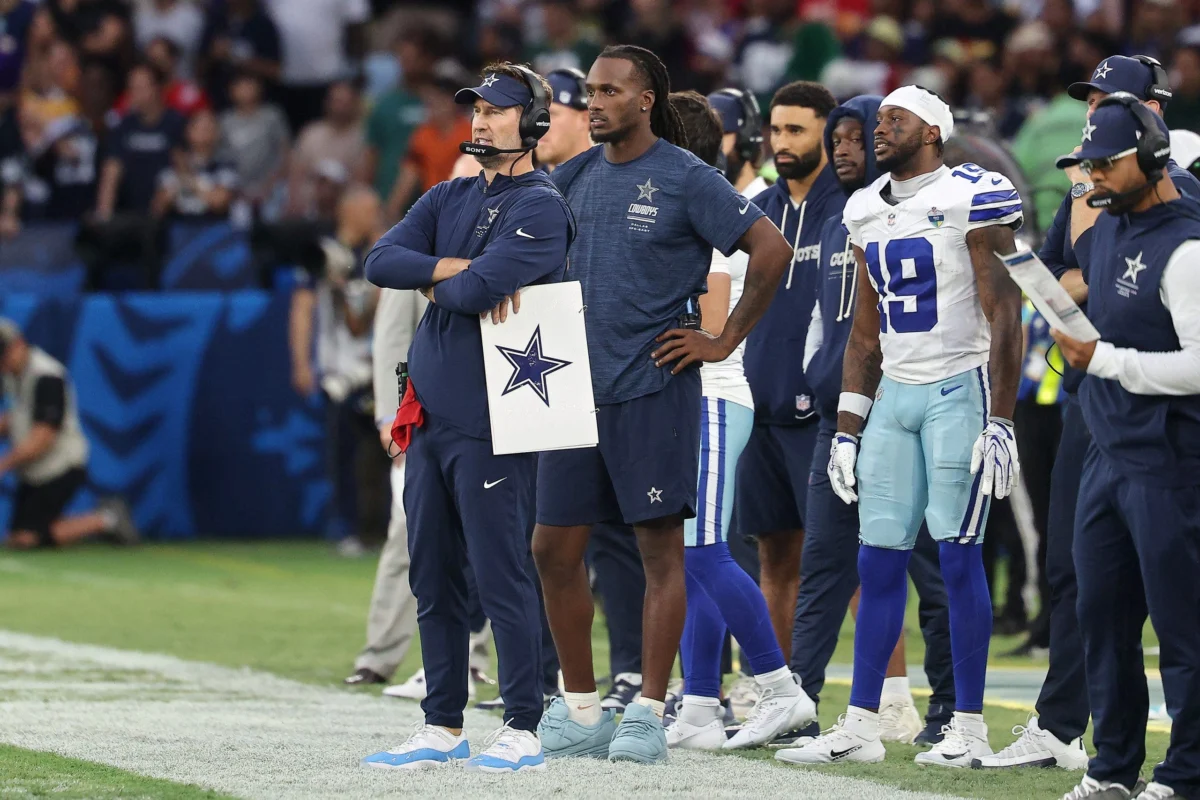
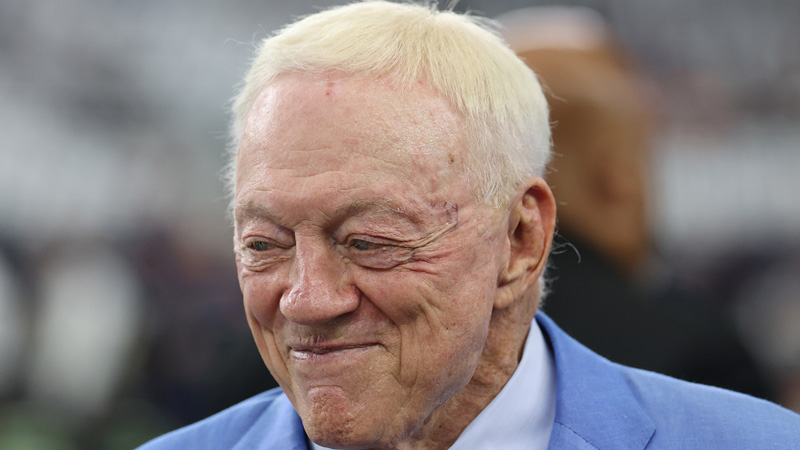
Dallas Cowboys owner Jerry Jones has unequivocally stated that critical errors in game management by his coaching staff during the closing moments of a heartbreaking 34-31 loss to the Baltimore Ravens were directly responsible for his team’s defeat. The outspoken owner pulled no punches on his weekly radio show Tuesday, expressing profound dissatisfaction with the sequence of events that allowed the Ravens just enough time to secure a game-winning field goal following a Cowboys tying score.
When pressed for explanations regarding the perplexing decision to leave ample time on the clock after a crucial field goal, thereby exposing the defense to a potentially game-ending drive by the Ravens, Jones’s response was blunt and devoid of excuses. "There is no explanation you’re satisfied with. None," Jones declared, emphasizing the gravity of the situation. "Let’s be sure that we all understand that. They [coaches] don’t have one that they’re satisfied with. We made mistakes during that time. There’s no question about it. So there is no explanation. But there’s an evaluation of how not to make the same mistakes again." This direct indictment of his coaching staff, particularly in such a high-stakes scenario, signals a significant level of concern within the Cowboys’ hierarchy.
The critical juncture of the game unfolded with the Cowboys trailing 31-28. They held a first down at the Baltimore 2-yard line with a seemingly comfortable 23 seconds remaining. However, a crucial incomplete pass into the end zone by quarterback Dak Prescott, followed by a costly false-start penalty against tight end Luke Schoonmaker, shifted the momentum. This sequence moved the ball back to the 7-yard line. It was at this pivotal moment, with only 14 seconds left on the clock, that head coach Brian Schottenheimer, who also serves as the team’s offensive playcaller, made the decision to call his final timeout.
According to Jones’s account, Schottenheimer’s instructions to Prescott were to either execute a quick out pass to wide receiver George Pickens or, if that option was unavailable, to wisely throw the ball away to prevent any further loss of time or yardage. The urgency of the situation, coupled with the understanding that the clock would continue to run with no further timeouts available, dictated this conservative approach. Prescott opted for the latter, executing a throwaway that consumed a mere four seconds off the clock.
This strategic miscalculation proved to be a fatal flaw. Following the throwaway, the Cowboys managed to convert on a field goal by kicker Brandon Aubrey, tying the game at 31-31. However, the damage was already done. With a seemingly insufficient seven seconds remaining, the Dallas defense inexplicably allowed a significant gap to open near the target line, a space that proved to be precisely what the Ravens needed. Lamar Jackson, the Ravens’ dynamic quarterback, capitalized on this defensive lapse, completing a crucial 27-yard pass to wide receiver Zay Flowers. This timely completion, coupled with Jackson’s quick thinking to call a timeout with just one second left, set the stage for kicker Tyler Loop to attempt and successfully convert a dramatic 56-yard field goal, sealing the victory for Baltimore.
The ramifications of this collapse are particularly acute for Schottenheimer, who is in his second season as a head coach after an extensive 25-year career as an NFL assistant. His inexperience in a lead role, especially in critical end-of-game situations, is now under intense scrutiny. Equally under the microscope is Christian Parker, the team’s 34-year-old defensive coordinator, who is making his debut in that capacity. Both individuals are expected to face considerable criticism from fans and football analysts, and potentially from the Cowboys’ own front office, as the team navigates the aftermath of this devastating loss.
Despite the bitter taste of defeat, Jones attempted to frame the experience as a catalyst for future growth. "We will be better from this experience that we had with Baltimore and what happened to us at the end of the game," he stated. "A win would have given you another way of couching it as far as having growth and enthusiasm for having won a game like that, because we did come back, and we came back in an impressive way. All of that makes us realize we really are just at the beginning of what I hope is an exciting year for us." This optimistic outlook, however, is tempered by the undeniable reality of the team’s current standing and the evident issues that need to be addressed.
Adding a layer of complexity to the Cowboys’ early-season narrative is the unexpected development in the NFC East. The Philadelphia Eagles, the two-time defending champions of the division, suffered a surprising upset loss to the Chicago Bears and their backup quarterback Case Keenum on Monday night. This result, while not directly impacting the Cowboys’ internal situation, offers a glimmer of hope for Dallas in the divisional race.
Looking ahead, the Cowboys (1-2) are scheduled to visit the Houston Texans (0-3) this coming Sunday. Meanwhile, the New York Giants, who have been dealt a significant blow with the news that their starting quarterback Jaxson Dart will miss the remainder of the regular season due to a knee injury, find themselves surprisingly tied with the Eagles atop the NFC East standings at 2-1. This division race, often considered one of the most competitive in the league, is already proving to be unpredictable.
Jones, while acknowledging the divisional landscape, reiterated his confidence in his own team’s potential. "We are very much in the hunt, and I say that principally based upon the way I feel about our team, as much or more than what’s happening with the other teams," he asserted. "Philadelphia has things that they want to work on just as the Giants do, just as we do. It makes you see how health is a factor. Availability is a factor. And we’re just getting started." His emphasis on internal assessment and improvement, rather than solely relying on the fortunes of their rivals, suggests a focus on building resilience and addressing the fundamental flaws exposed in the Ravens game.
The Cowboys’ early season has been a study in contrasts, marked by flashes of offensive brilliance and critical late-game collapses. The loss to the Ravens, in particular, highlights a recurring theme of struggling to close out games effectively, a trend that has plagued the team in the past. The defensive breakdown in the final seconds, coupled with the questionable clock management decisions by the offensive staff, provides fertile ground for criticism and introspection.
From a strategic standpoint, the decision to call a timeout with 14 seconds left, with the ball at the 7-yard line and a tying field goal on the horizon, is a particularly contentious point. While the intention may have been to ensure a specific play call or prevent a hurried, ill-advised attempt, the outcome proved disastrous. Had the Cowboys allowed the clock to run, forcing a field goal attempt from a more manageable distance or even a potential snap from scrimmage with minimal time, the scenario might have unfolded differently. The fact that they chose to stop the clock, and then failed to execute defensively, is a bitter pill to swallow.
The scrutiny on Schottenheimer and Parker is warranted, given the immense pressure associated with coaching an NFL franchise, especially one with the high expectations of the Dallas Cowboys. Their performance in critical situations will undoubtedly be a key storyline as the season progresses. The owner’s public admonishment, while direct, could serve as a wake-up call, potentially spurring the necessary adjustments and improvements to avoid similar costly errors.
The Cowboys’ schedule, while presenting opportunities, also demands a higher level of execution. The Texans, despite their winless record, will be desperate for a victory. A road game against a motivated opponent, especially after a demoralizing loss, presents a significant challenge. The Giants’ resilience, even without their starting quarterback, underscores the competitive nature of the NFC East. Dallas cannot afford to continue dropping winnable games, particularly those that hinge on fundamental execution and sound decision-making.
Jones’s closing remarks, emphasizing health and availability as crucial factors, are particularly relevant. The NFL is a league where injuries can derail even the most promising seasons. The Cowboys’ ability to stay healthy, particularly on the offensive line and at key defensive positions, will be paramount to their success. However, health alone cannot compensate for fundamental strategic errors and a lack of execution in crucial moments.
The narrative surrounding the Dallas Cowboys this season is far from settled. The talent is undeniable, and the potential for a deep playoff run remains. Yet, the recurring issues in critical game management and defensive execution are significant roadblocks. Jerry Jones’s vocal frustration serves as a stark reminder that the margin for error in the NFL is razor-thin, and for the Cowboys to realize their aspirations, the coaching staff must demonstrate an immediate and sustained ability to learn from their mistakes and implement effective solutions. The coming weeks will be a critical test of their mettle and their capacity for improvement under the watchful eye of their owner and a demanding fanbase.
