
 By admin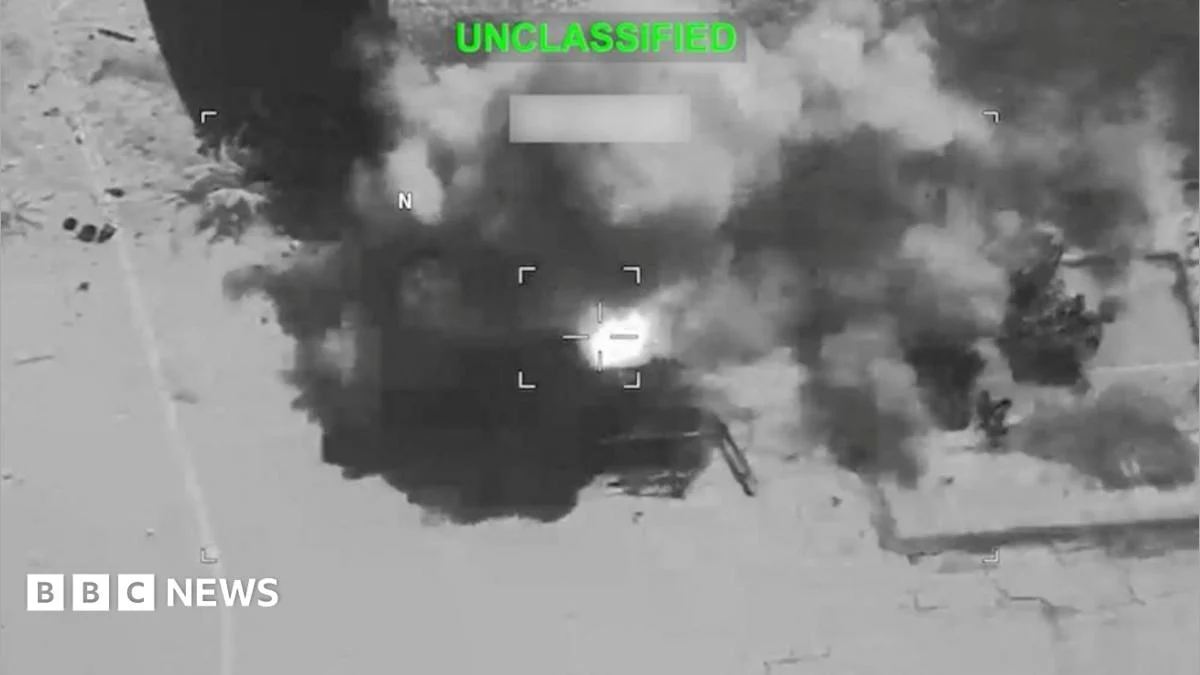
The United States launched a sustained barrage of strikes against Iran for the eleventh consecutive night late on Tuesday, intensifying a tit-for-tat conflict that has sent shockwaves through the global energy markets and raised fears of a wider regional conflagration. The escalating military actions, which US Central Command (Centcom) stated were "designed to continue degrading Iran’s ability to threaten commercial shipping" in the vital Strait of Hormuz, were met with a stern warning from Tehran, which declared that any targeting of its nuclear facilities would be considered an "expansion of war in the region" and would elicit devastating reprisals.
The latest wave of US strikes, occurring just hours after President Donald Trump vowed to soon strike an underground nuclear site near Natanz, illuminated the precarious state of international security. Iranian state media reported the activation of air defense systems across the capital, Tehran, while simultaneous explosions were heard in the northwestern city of Tabriz, the southeastern ports of Chabahar and Konarak, and crucially, in the southern city of Bushehr, home to Iran’s sole operational nuclear power plant. This deliberate targeting of strategic locations, including Bushehr, carries immense symbolic and practical weight, hinting at a potential shift in the US strategy to directly challenge Iran’s nuclear ambitions.
The resumption of hostilities, which had seen a brief ceasefire agreement in April, highlights the fragility of diplomatic efforts in the volatile Middle East. Centcom detailed the extensive nature of the US operations, reporting that its forces had targeted "Iranian military operations centers, maritime capabilities, aircraft hangars, drone storage facilities, and military logistics infrastructure." This broad spectrum of targets underscores the US objective of systematically dismantling Iran’s capacity to project power and disrupt maritime trade. Centcom further accused Iran of launching "more than 30 commercial vessels" transiting the Strait of Hormuz over the preceding three months, framing the US actions as a necessary response to Iranian aggression. "The unwarranted attacks have endangered hundreds of innocent mariners and undermined freedom of navigation," a Centcom statement asserted, while simultaneously reaffirming that the waterway "remained open for commercial vessel transit."
The regional reverberations of these strikes were immediate and palpable. Early on Wednesday morning, Kuwait’s army announced that its air defenses were actively engaging drone attacks originating from Iran. Similar reports emerged from Bahrain and Jordan, both of which confirmed the interception of drone and missile strikes. This widespread regional involvement suggests a coordinated Iranian effort to extend its retaliatory capabilities beyond its immediate borders, drawing neighboring nations into the escalating conflict.
The price of crude oil surged in response to the latest escalation, reaching $94 per barrel on Wednesday, reflecting market anxieties over potential supply disruptions. The Strait of Hormuz, through which approximately 20% of the world’s oil supply passes, is a critical chokepoint, and any significant threat to its security invariably impacts global energy prices.
Adding another layer of complexity to the already tense situation, US Secretary of State Marco Rubio indicated that while Washington remained open to diplomatic engagement with Tehran, he harbored doubts about Iran’s genuine willingness to negotiate. This sentiment was echoed by President Trump’s provocative remarks earlier in the day, where he explicitly identified a complex known as "Pickaxe Mountain," an underground nuclear site suspected of housing an undeclared enrichment facility, as a potential next military target. "We’ll be hitting that area pretty soon, and very heavily," Trump declared during a White House meeting, defiantly adding, "there’s not a thing they can do about it." This public declaration of future targets, a departure from standard military protocol, appears designed to exert psychological pressure on Iran and signal an unwavering US resolve.
Iran’s response to such a potential strike was swift and severe. The Khatam Al-Anbiya military command, a powerful entity within Iran’s military structure, stated that it would interpret an attack on its nuclear facilities as an "expansion of war in the region." The command further threatened to unleash strikes on "all the interests of America, the allies and supporters," according to state-run broadcaster IRIB. This rhetoric signifies a red line for Tehran, suggesting that any direct assault on its nuclear infrastructure would trigger a disproportionately large and potentially devastating response.
The US president also extended his threats to include Houthi rebels in Yemen, warning he would "take care of" the Iran-backed militant group if they proceeded with their threatened blockade of Saudi ports. This statement directly links the ongoing conflict in the Red Sea to the broader Iran-US confrontation. A Houthi media official had earlier announced the closure of the Bab al-Mandab Strait, the southern gateway to the Red Sea, to Saudi vessels. This move by the Houthis, seemingly coordinated with or at least emboldened by Iranian actions, further complicates the maritime security landscape. The Red Sea has become increasingly crucial for oil shipments from Saudi Arabia, particularly during the current US-Israeli war with Iran, which has led to the effective closure of the Strait of Hormuz.
The immediate impact of the Houthi announcement was evident, with two oil tankers that had just loaded Saudi crude at the Red Sea port of Yanbu, bound for China and India, making U-turns and heading towards the Suez Canal instead, according to British maritime risk management group Vanguard. This rerouting highlights the significant disruption to global shipping routes already being experienced due to regional hostilities, and the threat from the Houthis risks further exacerbating this situation, leading to continued volatility in global fuel prices.
The current escalation marks a stark departure from a Memorandum of Understanding (MoU) signed in June between Iran and the US, which aimed to halt military operations, reopen the Strait of Hormuz, and reach a comprehensive agreement to end the war within 60 days. However, this fragile accord collapsed just three weeks after its signing when President Trump declared the ceasefire "over" in response to Iranian attacks on ships in Hormuz, leading to the current cycle of US strikes. The breakdown of this agreement underscores the deep-seated mistrust and the difficulty in achieving lasting de-escalation in the region.
The intricate web of alliances and proxy conflicts in the Middle East, coupled with the strategic importance of maritime trade routes, has created a highly combustible environment. The US strategy of sustained military pressure aims to cripple Iran’s capabilities and deter further aggression, while Iran’s retaliatory actions and threats, particularly concerning its nuclear program, signal a willingness to escalate the conflict to an unprecedented level. The international community watches with bated breath as the situation continues to unfold, with the potential for a wider regional war and its devastating consequences for global stability and the world economy.
Expert analyses of the situation are divided. Some analysts believe the US strategy of targeted strikes, while risky, is a necessary measure to protect international shipping and deter Iranian aggression. They point to the economic imperative of keeping the Strait of Hormuz open and the need to counter Iran’s destabilizing influence in the region. Others express grave concerns about the potential for miscalculation and unintended escalation. They argue that the continuous military engagement, without a clear diplomatic off-ramp, could inadvertently push Iran towards a more extreme response, including the potential pursuit of nuclear weapons or the activation of its extensive network of regional proxies. The pronouncements from President Trump, openly discussing potential targets like nuclear facilities, are seen by some as a dangerous escalation of rhetoric, while others interpret it as a calculated attempt to signal resolve and deter further Iranian provocations.
The role of regional powers also remains a critical factor. Saudi Arabia, a key US ally and a direct target of Houthi threats, has a vested interest in maintaining the stability of its oil exports and maritime security. The involvement of Kuwait, Bahrain, and Jordan in intercepting drone attacks suggests a growing regional consensus against Iranian assertiveness, but also highlights the expanding reach of the conflict. The implications for the ongoing war in Yemen, where Iran-backed Houthis are engaged in a protracted conflict with a Saudi-led coalition, are also significant. Any further escalation in the Red Sea could have profound humanitarian and geopolitical consequences for Yemen.
The economic implications extend beyond oil prices. The disruption to shipping routes, the increased insurance premiums for vessels transiting the region, and the potential for retaliatory cyberattacks on financial institutions all contribute to a broader economic uncertainty. The interconnectedness of the global economy means that a conflict in the Middle East can have far-reaching effects, impacting supply chains, inflation rates, and overall economic growth worldwide.
In conclusion, the eleventh consecutive night of US strikes on Iran marks a critical juncture in the escalating regional tensions. While the US asserts its actions are defensive and aimed at preserving freedom of navigation, Iran’s defiant stance and threats of severe retaliation, particularly concerning its nuclear facilities, paint a grim picture of a conflict teetering on the brink of a wider conflagration. The international community faces the urgent challenge of navigating this complex geopolitical landscape, seeking a path towards de-escalation and diplomatic resolution before the situation spirals into an uncontrollable regional war with devastating global consequences. The coming days and weeks will be crucial in determining whether diplomacy can prevail over military might in this increasingly volatile theater.
