
 By admin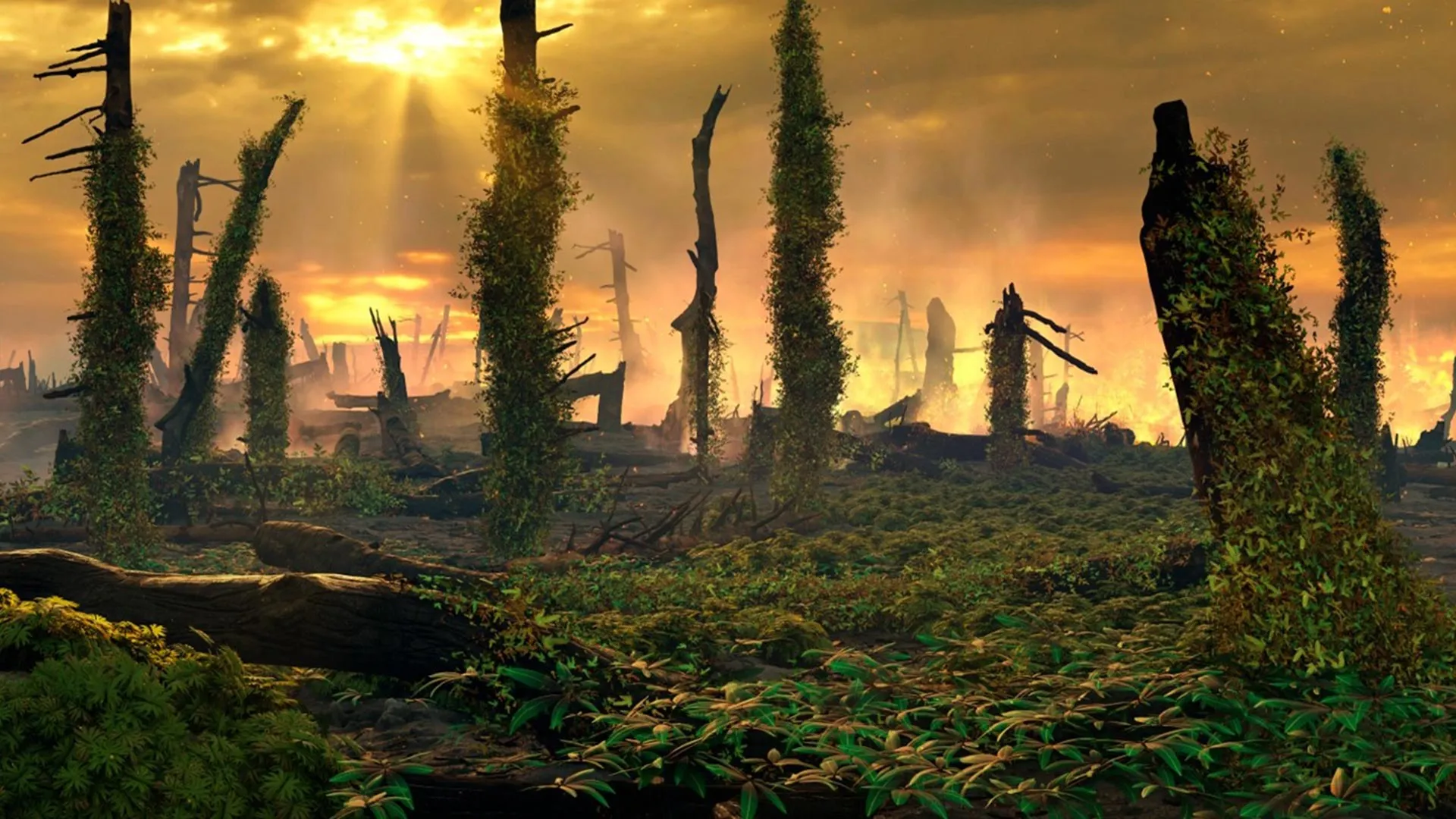
As the planet heated, ecosystems buckled under the unprecedented stress. Lush, diverse forests, once dominated by conifers and other seed plants, collapsed across vast continental expanses. The destruction was comprehensive, leading to widespread deforestation and severe soil erosion. Into these damaged, barren landscapes, a group of resilient pioneer plants – ferns – quickly moved. These hardy "disaster species" spread rapidly across large parts of what is now Northwest Europe, establishing broad, monotonous savannah-like environments. New research from an international team led by geologists at Utrecht University, published in Nature Geoscience on July 21, 2026, suggests that these fern-covered regions were not merely a consequence of the environmental upheaval, but became highly vulnerable to recurrent, intense wildfires. Intriguingly, the ferns themselves may have supplied much of the readily combustible fuel that kept the flames spreading, creating a destructive feedback loop that exacerbated the devastation.
Reconstructing Ancient Wildfires: A Challenge in Deep Time
Investigating wildfire activity from such a distant period, over 200 million years ago, presents significant scientific challenges. Traditional methods often rely on the analysis of fossil charcoal and specific organic compounds. To piece together the fiery history of the End-Triassic, the researchers meticulously studied exceptionally well-preserved sediment from four drill cores. One of these was a recently collected, remarkable 640-meter-long core from the United Kingdom, offering an unparalleled stratigraphic record of the period.
The team reconstructed ancient fire activity primarily by measuring the abundance and characteristics of fossil charcoal. Charcoal, formed when plant material is incompletely combusted during a wildfire, is a direct indicator of fire presence. Its microscopic fragments can be preserved in sediments for geological timescales. Complementing this, they also analyzed organic compounds produced in wildfire smoke, known as polycyclic aromatic hydrocarbons (PAHs). These complex molecules, such as retene, are formed during the high-temperature pyrolysis of organic matter and can be incorporated into sediments, serving as geochemical markers of past burning events.
When these traditional indicators were analyzed and combined with records of fossil pollen and spores, a clear and dramatic picture emerged: a sharp, pronounced increase in wildfire activity occurred precisely during the main phase of the End-Triassic extinction. This fiery interval also correlated exactly with a dramatic and widespread expansion of ferns, suggesting a close ecological relationship between the two phenomena.
However, both traditional indicators, while valuable, have inherent limitations that can complicate quantitative interpretations. Large pieces of fossil charcoal, for instance, can easily break apart into many smaller fragments during sedimentary transport or laboratory processing, leading to an overestimation of the actual amount of biomass burned or the frequency of fires. PAHs, on the other hand, can travel significant distances from the fire that produced them via atmospheric transport before settling into sediments, making precise spatial attribution difficult. Furthermore, some PAH molecules are susceptible to degradation over geological timescales, and their preservation can be influenced by post-depositional processes (diagenesis), potentially leading to an underestimation of fire activity. Because of these persistent problems and the desire for a more robust and independent proxy, the researchers embarked on developing an entirely new, complementary method for tracking fires in deep time.
"The true novelty of this study came from the analysis of color changes of organic microfossils," explains Dr. Bas van de Schootbrugge from Utrecht University, a senior author on the paper, highlighting the innovative aspect of their approach. "We used a simple and very low-cost technique that quantifies the ‘darkness’ of fossil pollen and spores, a so-called Palynomorph Darkness Index (PDI)."
A Strange Pattern in Fossil Color: The "Dark Zone" Anomaly
The PDI method is based on a well-understood geological principle: organic microfossils, such as pollen and spores, typically become progressively darker after they are buried. This gradual darkening is a result of diagenesis, a series of physical and chemical changes that occur as sediments are compacted and heated over millions of years. Rising pressure and temperature gradually alter the organic material, leading to increased carbonization. In most geological settings, a straightforward relationship exists: sediments that sink deeper underground are exposed to more heat and pressure, causing the organic matter inside them to become increasingly "cooked" or thermally mature, resulting in darker fossils. In essence, greater burial depth usually means darker fossils.
"But here we found a very different pattern, which was immediately striking," Van de Schootbrugge says, describing the unexpected observation.
In their analysis of the drill cores, the oldest and deepest pollen and spores, which should have been the darkest due to their greater thermal maturity from deep burial, paradoxically remained lightly colored, a pale yellow. Yet, fossils specifically from the End-Triassic extinction interval became progressively darker, eventually reaching an extremely dark brown, almost black, hue. Once the main extinction period ended, and conditions stabilized, the fossils abruptly returned to a pale yellow color, indicating a return to less intense thermal alteration.
"We were quite puzzled by this phenomenon as it occurs in all four cores at exactly the same time, despite them being collected from geographically distinct locations that experienced very different geological histories in terms of burial and tectonic activity," Van de Schootbrugge explains. This synchronous darkening across disparate basins was crucial. It strongly suggested that the color change was not a product of typical, localized burial diagenesis, but rather a widespread, geologically instantaneous event affecting the entire region.
The Ancient Fire "Dark Zone": A New Window into Paleo-Wildfires
The Palynomorph Darkness Index (PDI) method measures color quantitatively using the standard RGB (Red, Green, Blue) spectrum. A high-resolution digital camera connected to a light microscope records images of the individual fossil pollen and spores. This color information is then processed and converted into an average grayscale value, providing an objective, numerical measure of "darkness." This standardized approach allows scientists to rigorously compare samples from different layers within the same core and, crucially, to compare samples taken from cores located in entirely separate geographical locations, minimizing subjective interpretation.
To ensure the robustness of their findings, the researchers completed an astonishing 15,000 individual measurements of pollen and spores from plants that lived before, during, and after the extinction event. They also meticulously compared tree pollen with fern spores to determine whether the darkening might have been caused by intrinsic biological differences in the chemical composition or structure between different plant groups.
"Remarkably, all plant groups analyzed, from conifers to ferns, showed the same darkening effect within the extinction interval, which is a strong indication that it was the result of an outside force, acting universally on all preserved organic matter, rather than a species-specific response," Van de Schootbrugge emphasizes.
When the team systematically compared these fossil color changes, quantified by the PDI, with the established records of fossil charcoal and PAH levels, the pattern became unmistakably clear. The unusual, synchronous "Dark Zone" in the palynomorphs appeared to be a direct, independent, and highly sensitive record of an extended period of severe wildfire activity during the fern spike. The unprecedented darkening was not due to deep burial, but likely to the direct thermal effects of repeated, intense wildfires burning across the landscape, altering the organic chemistry of the pollen and spores before or shortly after their deposition.
"The darkening overlaps exactly with the fern spike, the main extinction interval, and elevated abundance of charcoal and PAHs, providing a powerful, multi-proxy confirmation of widespread burning," Van de Schootbrugge confirms, underscoring the convergence of evidence.
Ferns Spread Across a Warming World: The Rise of the Resilient
The rapid and widespread rise of ferns during the main extinction interval, often referred to as a "fern spike," was likely driven by a complex interplay of several connected environmental forces unleashed by the End-Triassic event. These included massive deforestation due to initial climate warming and volcanic ashfall, leading to widespread soil erosion, intense greenhouse warming that favored heat-tolerant species, and critically, the repeated wildfires themselves.
"Ferns are truly remarkable plants that have withstood many crises throughout Earth history, and some species can adapt to some of the most extreme environments," Van de Schootbrugge notes. "They can be considered to be true disaster species, perfectly equipped for ecological opportunism."
Ferns possess several key biological advantages that allow them to thrive in disturbed environments. Unlike many seed plants, they reproduce via spores, which are lightweight and can be dispersed over vast distances by wind, rapidly colonizing newly cleared or barren ground. Crucially, while the visible fronds of ferns are highly flammable and burn readily, many species possess extensive underground rhizome (root) systems. These subterranean networks are often protected from the direct heat of surface fires, allowing the plants to rapidly resprout and regrow shortly after a fire has passed. This remarkable ability to recover quickly gives ferns a significant competitive advantage over slower-growing, seed-producing plants, enabling them to quickly take over and dominate even more territory in fire-scarred landscapes.
That ability to rapidly colonize and regenerate helps explain why the fern spike lasted for such an extended period during the End-Triassic crisis. Researchers estimate that this interval of fern dominance continued for at least 40,000 years and possibly for as long as 300,000 years – a significant duration in geological terms, indicative of a prolonged ecological imbalance.
Ferns Became Fuel for Repeated Fires: A Hellish Feedback Loop
The research paints a picture of a devastating positive feedback cycle: the initial climate warming and forest loss opened the landscape to opportunistic ferns. These ferns then became an abundant, readily available fuel source, which, once ignited, perpetuated a cycle of repeated, massive wildfires.
"When the ferns dry out, the thick mats of their fronds act as the ideal fuel to trigger massive wildfires, creating conditions ripe for widespread conflagration," Van de Schootbrugge explains. Fast-spreading pioneer and weeding fern species, often forming dense, low-lying vegetation, created extensive "fern savannahs" across the deforested continents. Some species, with their taller fronds, may even have acted as "fire ladders," helping flames to climb and spread more effectively through the landscape, while simultaneously crowding out and smothering any struggling remnants of other plant communities.
The ultimate consequence was a self-perpetuating cycle of destruction: "Ferns responded to the environmental crisis and delivered the fuel that fanned the flames, triggering repeated massive wildfires. It truly was a hellish world," Van de Schootbrugge concludes, vividly describing the dire conditions of the End-Triassic. Climate warming and widespread forest loss created the perfect conditions for ferns to proliferate. The ferns, in turn, supplied abundant dry, flammable biomass for new fires. After each conflagration, the resilient ferns rapidly regrew from their protected rhizomes, spreading even further into the fire-cleared terrain, thus setting the stage for the next round of destructive blazes.
The profound implications of this ancient feedback loop resonate with modern environmental challenges. "The lesson we can learn from this, is that the combination of rapid climate change, widespread deforestation, and the unchecked spread of opportunistic, resilient species can provide all the ingredients for a perfect storm," Van de Schootbrugge cautions. This comprehensive study not only offers unprecedented insights into the dynamics of one of Earth’s great mass extinctions but also serves as a potent reminder of the interconnectedness of climate, ecosystems, and fire regimes, particularly in the face of rapid environmental change. The innovative Palynomorph Darkness Index provides a robust new tool for understanding Earth’s fiery past and underscores the critical importance of preserving biodiversity and mitigating climate change in the present.
