
 By admin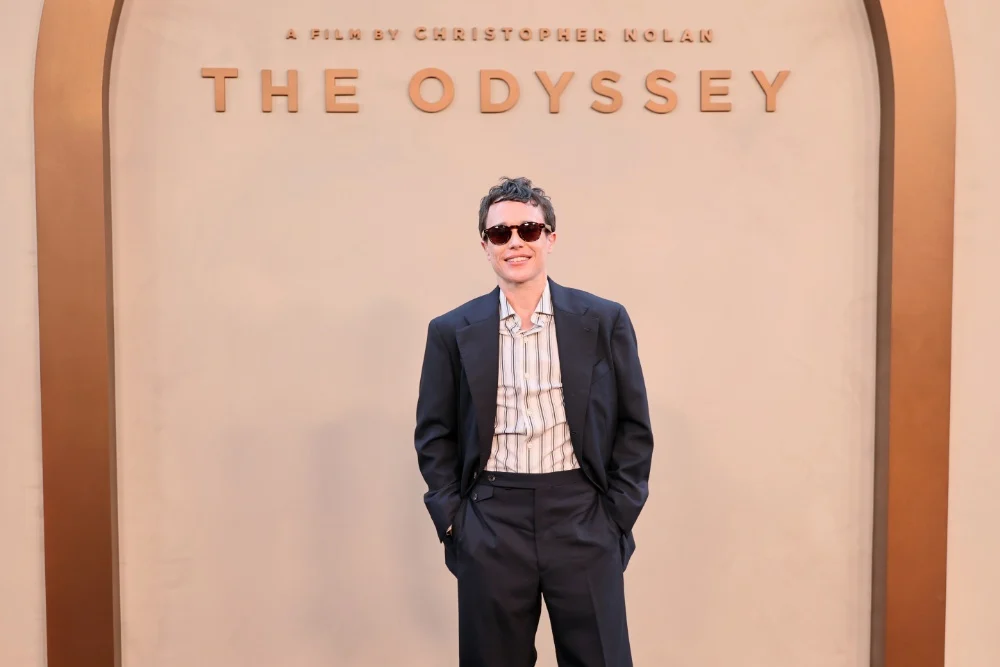
Whoopi Goldberg, a prominent voice on the daytime talk show "The View," has vociferously defended the casting of Elliot Page in Christopher Nolan’s highly anticipated epic, "The Odyssey," directly addressing and dismissing conservative backlash spearheaded by figures like commentator Ben Shapiro. During Tuesday’s episode of "The View," Goldberg used her platform to counter the narrative that Page’s inclusion in the film, particularly in the role of Sinon, is a misstep. The controversy ignited following the circulation of a clip featuring Shapiro, who expressed bewilderment over Nolan’s decision, labeling Page’s casting an "absolute puzzler." Shapiro’s critique focused on Page’s physical stature, stating he is "about 5’2 and 105 pounds soaking wet and has the voice of a woman. It doesn’t work." This sentiment, Shapiro argued, is shared by "a lot of conservatives."

Goldberg, however, challenged this perspective with a direct and pragmatic question: "If you don’t want to see it, don’t go see it. Why do you care who’s cast in it?" Her argument centered on the principle of individual choice and the irrelevance of external opinions on artistic decisions for those who are not the target audience. This stance highlights a broader debate about artistic freedom versus audience reception and the role of political or social commentary in film criticism.
Elliot Page portrays Sinon, a cousin to Matt Damon’s Odysseus, in Nolan’s rendition of Homer’s classic epic. The role, as described in Variety‘s review, is "tersely vulnerable," suggesting a nuanced performance that transcends superficial judgments. Page, who publicly came out as transgender in December 2020, has been a vocal advocate for LGBTQ+ rights, and his casting in this prominent role has, for some, become a focal point for broader cultural anxieties and political polarization. The conservative criticism, as articulated by Shapiro and others, appears to stem from a discomfort with Page’s gender identity and its perceived incongruence with the character’s traditional portrayals or narrative expectations.

Goldberg’s defense extended beyond just Page, as she also took aim at the overused and often misapplied term "woke." She argued that the label is frequently deployed to dismiss ordinary individuals simply trying to navigate their lives – working, raising families, and pursuing education – rather than those actively pushing a specific agenda. This critique of the "woke" label underscores a growing weariness with its use as a broad-brush condemnation that stifles genuine discussion and misrepresents progressive ideals. The term, which originated in African American Vernacular English, has been co-opted and weaponized in political discourse, often to denigrate social justice movements and individuals associated with them.
The controversy surrounding Page’s casting is not an isolated incident. Earlier in the film’s development and promotion, there were widespread, albeit inaccurate, rumors that Page would be playing Achilles. This led to considerable outcry from the right, with prominent figures like Elon Musk weighing in before the actual casting details were confirmed. This pattern of preemptive criticism based on speculation and often fueled by animus towards LGBTQ+ individuals or progressive social change highlights a concerning trend in contemporary media consumption and discourse. Furthermore, a similarly hostile response was directed at Lupita Nyong’o’s involvement in the project, a backlash rooted in racist objections, demonstrating the intersectionality of prejudice that can manifest in reactions to casting decisions.

Despite the vocal criticism from certain segments of the population, "The Odyssey" has demonstrated remarkable resilience at the box office. Christopher Nolan has achieved the most successful opening of his illustrious career with this film, and its global collections have surpassed the $300 million mark. This financial success serves as a powerful counterpoint to the narrative of backlash, suggesting that audience reception is far more complex and multifaceted than the loudest voices in online discourse might indicate. The film’s commercial triumph suggests that audiences are, in large part, more interested in compelling storytelling and directorial vision than in adhering to politically charged critiques of casting choices. Nolan’s reputation as a filmmaker capable of drawing massive audiences, coupled with the inherent appeal of the timeless "Odyssey" narrative, appears to have overshadowed the controversies.
The enduring appeal of Homer’s "Odyssey" lies in its exploration of universal themes such as homecoming, perseverance, identity, and the human struggle against adversity. These themes resonate across cultures and generations, making the story a fertile ground for reinterpretation. Christopher Nolan, known for his ambitious and intellectually stimulating cinematic endeavors, has a proven track record of breathing new life into established narratives, often with a modern sensibility. His approach to "The Odyssey" likely aims to capture the epic scope and emotional depth of the original while making it accessible and relevant to contemporary viewers. The casting of Elliot Page, a prominent figure in contemporary culture, can be seen as part of this effort to connect the ancient epic with the present day, reflecting a diverse and evolving world.

The debate ignited by Page’s casting in "The Odyssey" is emblematic of a larger cultural schism. On one side, there is a movement advocating for greater inclusivity and representation in media, seeking to reflect the diversity of society and challenge traditional norms. On the other, there are those who express concern over what they perceive as an erosion of traditional values or an imposition of ideological agendas. This tension plays out frequently in discussions about art, entertainment, and popular culture. Goldberg’s intervention on "The View" serves as a powerful reminder that dissenting voices, particularly those with a significant public platform, can shape public perception and encourage a more nuanced understanding of complex issues. Her straightforward approach bypasses the often-convoluted rhetoric surrounding "woke" culture and focuses on the fundamental question of artistic freedom and individual autonomy.
The success of "The Odyssey" at the box office also speaks to the power of cinema as a collective experience. While online discourse can be fragmented and polarized, the communal act of going to the movies often transcends these divisions. Audiences may be drawn to the spectacle, the storytelling, or the directorial prowess of Nolan, and in doing so, they may implicitly or explicitly endorse the creative decisions made by the filmmakers, including casting. The $300 million global gross is not merely a financial metric; it represents millions of individuals who chose to engage with the film, suggesting that the conservative outcry, while vocal, did not translate into a significant deterrent for the broader moviegoing public. This data point is crucial for understanding the actual impact of such controversies in the marketplace.

Moreover, the critical reception of the film, as indicated by Variety‘s review, suggests that Page’s performance is being evaluated on its artistic merit. The description of his role as "tersely vulnerable" points to a character portrayal that is intended to evoke specific emotional responses and contribute to the film’s overall thematic resonance. This focus on performance and character development, rather than on the actor’s personal identity or perceived political alignment, is the hallmark of serious film criticism. The fact that the film is critically lauded, even amidst controversy, further bolsters the argument for artistic freedom and the importance of separating the art from the artist’s identity.
In conclusion, Whoopi Goldberg’s impassioned defense of Elliot Page’s casting in "The Odyssey" on "The View" highlights a critical juncture in contemporary cultural discourse. By directly challenging conservative criticism and dissecting the misuse of terms like "woke," Goldberg has reinforced the principles of artistic freedom and individual choice. The film’s impressive box office performance serves as a testament to its broad appeal, demonstrating that commercial success can often transcend polarizing social and political debates. As "The Odyssey" continues its run, it stands not only as a cinematic epic but also as a symbol of the ongoing dialogue surrounding representation, identity, and the ever-evolving landscape of popular culture. The narrative surrounding the film’s casting, far from hindering its progress, has instead become an integral part of its cultural footprint, sparking conversations that extend far beyond the confines of the movie theater.
