
 By admin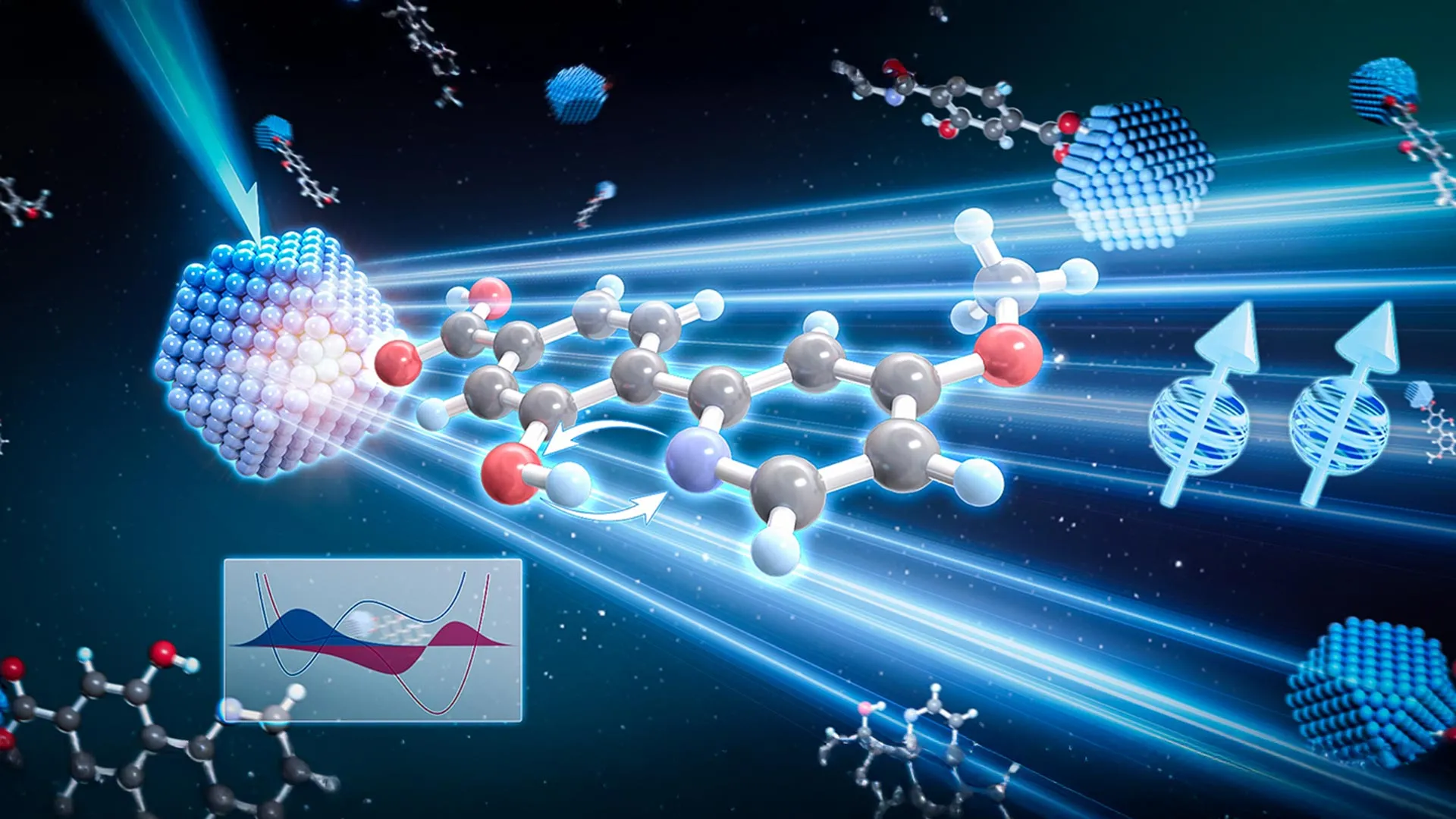
Building upon these foundational insights into PCET and PCEnT, a pioneering team led by Prof. Kaifeng Wu at the Dalian Institute of Chemical Physics of the Chinese Academy of Sciences embarked on an investigation into another critical, yet surprisingly poorly understood, process: triplet energy transfer intimately linked to proton movement. Their groundbreaking research has unveiled a novel mechanism with far-reaching implications for fundamental science and technological innovation.
Triplet energy transfer, distinct from its singlet counterpart, represents a major pathway for the efficient relocation of energy within both natural biological systems and sophisticated synthetic materials. While singlet energy transfer typically occurs rapidly over short distances, triplet energy transfer often involves longer lifetimes and can be harnessed for different applications, such as upconversion or long-range energy transport. However, the precise mechanisms governing how proton motion might influence this particular mode of energy transfer have remained largely elusive. Unlocking this understanding holds the key to developing entirely new strategies for precisely controlling energy flow in next-generation advanced materials.
In a landmark study published in the prestigious journal Nature Materials, the researchers reported the discovery of a previously unknown mechanism, which they aptly named proton shuttle-assisted triplet energy transfer (PS-TET). This intricate process was meticulously observed as energy propagated from specially engineered ZnSe-based colloidal quantum dots (QDs) to precisely positioned phenol-pyridine dyadic acceptor molecules attached to their surfaces. This system provided an ideal platform to probe the subtle interplay between electronic excitation and proton dynamics.
Deconstructing the Proton Shuttle: A Detailed Mechanism
To fully appreciate the significance of PS-TET, it is crucial to delve into the nuanced steps of its operation. The process initiates when the ZnSe quantum dots, semiconductor nanocrystals renowned for their tunable optical properties, absorb light energy. This absorption excites the quantum dot, promoting an electron to a higher energy level and leaving behind a "hole" (a vacant electron position).
The first critical step in the PS-TET mechanism involves a swift charge separation: a hole rapidly moves from the excited ZnSe QD to the phenol moiety of the dyadic acceptor. Simultaneously, and in a remarkably concerted fashion, a proton shifts from the phenol group to the adjacent pyridine group within the same dyad. This synchronized movement establishes a transient charge-separated state and forms a phenoxyl radical (due to the loss of a proton and a hole) and a pyridinium ion (due to the gain of a proton).
Following this initial charge redistribution, the second crucial set of events unfolds. An electron then transfers from the ZnSe QD to the newly formed phenoxyl radical. At precisely the same moment, the proton, which had temporarily resided on the pyridine, moves back to its original location on the phenol, effectively completing its "shuttle" journey. Together, these exquisitely linked and sequential steps — involving both electron and hole transfers coupled with reversible proton migration — culminate in the overall movement of spin-triplet energy from the excited ZnSe QDs to the phenol-pyridine dyads.
The profound impact of this proton shuttle mechanism cannot be overstated. While the proton ultimately returns to its starting position, its transient, dynamic movement during the energy transfer process has a monumental effect. The shuttle dramatically enhances both the speed and the overall efficiency of triplet energy transfer. To underscore this effect, the researchers compared the PS-TET system with a carefully designed methylated analog. This control system, lacking the mobile proton, demonstrated significantly slower and less efficient triplet energy transfer, unequivocally highlighting the indispensable role of the proton shuttle. The ability of the proton to transiently reconfigure the electronic landscape of the acceptor dyad is what facilitates the rapid and efficient spin-triplet formation.
Furthering their investigation, the team also discovered that the strategic incorporation of a strongly electron-withdrawing trifluoromethyl substituent onto the pyridine component of the dyad could subtly alter the chronological order in which the proton-coupled electron and hole transfer steps occur. This observation provides invaluable insights into the fine-tuning capabilities of the PS-TET mechanism, suggesting that molecular design can be used to control not just the efficiency but also the precise pathway of energy flow.
The Quantum Leap: Room Temperature Tunneling of Protons
Perhaps one of the most astonishing revelations of this study concerns the underlying physical mechanism of proton movement. The researchers observed that the rate of PS-TET exhibited a remarkably weak dependence on temperature. This striking temperature insensitivity strongly suggests that the proton is not moving through a conventional, heat-driven classical diffusion process, which would typically show a significant increase in rate with rising temperature. Instead, this evidence points compellingly to a phenomenon characteristic of the quantum realm: the proton appears to traverse energy barriers through quantum mechanical tunneling.
Quantum tunneling is a counter-intuitive quantum phenomenon where a particle can pass through a potential energy barrier even if it does not have sufficient classical energy to surmount it. This is possible because, at the quantum scale, particles behave as waves, and there is a non-zero probability for a wave to extend into and emerge from a barrier. Protons, being light particles, are particularly susceptible to tunneling, especially over short distances. The observation of room-temperature quantum tunneling for a process as complex as energy transfer is a significant scientific achievement, challenging conventional assumptions about energy dynamics in materials.
To rigorously support this interpretation, the research team performed sophisticated theoretical calculations involving proton vibrational wavefunction overlap integrals. These complex quantum mechanical calculations are crucial for determining the probability of a proton existing at different positions and thus for understanding its movement. The calculated overlap integrals provided robust theoretical confirmation, indicating which excited-state relaxation pathways are energetically favored and, critically, steering the entire system towards highly efficient triplet energy migration. This synergy between experimental observation and theoretical validation strengthens the credibility and impact of their findings.
The implications of discovering room-temperature quantum tunneling in such a practical context are profound. It demonstrates that fundamental quantum effects, often thought to be confined to cryogenic temperatures or highly specialized laboratory conditions, can be harnessed and exploited to control charge and energy transfer processes in complex materials under ambient, real-world conditions. This opens up unprecedented avenues for designing materials with tailored quantum properties for practical applications.
Broader Scientific Context and Transformative Potential
The discovery of PS-TET represents a significant advancement in our understanding of proton-coupled phenomena, building logically upon the earlier identification of PCET and PCEnT. PCET typically involves the transfer of an electron and a proton, often in a concerted fashion. PCEnT, on the other hand, deals with the transfer of singlet excited-state energy mediated by a proton. PS-TET now completes this trilogy by revealing how a proton shuttle can specifically facilitate triplet energy transfer, a distinct and often more challenging form of energy propagation.
The distinction between singlet and triplet states is fundamental to photochemistry and photophysics. When a molecule absorbs light, its electrons are typically excited to a singlet state. From here, the energy can be released as light (fluorescence), heat, or transferred to another molecule (singlet energy transfer). However, electrons can also undergo intersystem crossing to a triplet state, where two electrons have parallel spins. Triplet states are typically longer-lived than singlet states and possess different reactivity and energy transfer characteristics. While singlet energy transfer is well-understood, controlling triplet energy transfer, especially with the precision offered by a proton shuttle, has been a significant challenge.
"The discovery of the PS-TET mechanism has profound implications for many modern molecular technologies involving the spin-triplet excited states of molecules," Prof. Wu noted, emphasizing the wide-ranging impact of their work.
The ability to precisely manipulate triplet generation efficiency has dual-edged utility across various technological domains:
-
Photoredox and Environmental Catalysis: In applications such as photoredox catalysis and environmental remediation, increasing triplet generation efficiency is highly desirable. Triplet states are often highly reactive and can serve as potent intermediates in chemical reactions. For instance, in photoredox catalysis, triplet states can initiate complex organic transformations, allowing for the synthesis of new molecules under mild conditions. In environmental catalysis, enhanced triplet states can drive reactions that degrade persistent organic pollutants, purifying water or air more effectively. The PS-TET mechanism offers a novel strategy to generate these reactive triplet species with unprecedented control and efficiency.
-
Organic Optoelectronic Devices: Conversely, in other technologies, the formation of triplet states may need to be carefully limited or suppressed. For example, in organic optoelectronic devices such as organic solar cells and organic light-emitting diodes (OLEDs), unwanted triplet states can lead to significant energy losses. In solar cells, triplet excitons can undergo triplet-triplet annihilation, which reduces the number of charge carriers and thus lowers efficiency. Similarly, in lasers, triplet states can absorb emitted light, leading to quenching and reduced laser performance. The PS-TET study suggests a powerful new avenue for scientists to precisely tune triplet formation as needed. By designing systems that incorporate a proton shuttle, researchers could enhance triplet generation when desired, while conversely, by carefully removing or disrupting the shuttle mechanism, they could effectively reduce or even prevent unwanted triplet formation, thereby improving device performance and stability.
The ability to switch between enhancing and suppressing triplet states, simply by the presence or absence of a proton shuttle, represents a significant leap in materials design. This level of control offers a versatile tool for engineers to optimize materials for specific functionalities, pushing the boundaries of what is achievable in energy science and advanced materials.
Challenges and Future Outlook
While the discovery of PS-TET marks a monumental achievement, it also opens up a plethora of new research avenues. Future work will likely focus on exploring the generality of this mechanism across different types of quantum dots and molecular dyads. Researchers will aim to systematically vary the chemical properties of the phenol-pyridine system and the quantum dot composition to further fine-tune the PS-TET process. Scaling up these findings from laboratory experiments to practical device prototypes will also present significant engineering challenges.
Ultimately, the groundbreaking work from Prof. Kaifeng Wu’s team at the Dalian Institute of Chemical Physics has not only unveiled a fascinating new mechanism of energy transfer but has also underscored the profound and often surprising ways in which quantum mechanics can manifest in complex chemical systems at room temperature. The proton shuttle-assisted triplet energy transfer mechanism offers a powerful new paradigm for controlling energy flow, promising to revolutionize the design of materials for applications ranging from high-efficiency solar energy conversion and advanced catalysis to next-generation optoelectronics and quantum information technologies. This discovery is a testament to the ongoing quest to unravel nature’s most intricate secrets and harness them for the betterment of humanity.
