
 By admin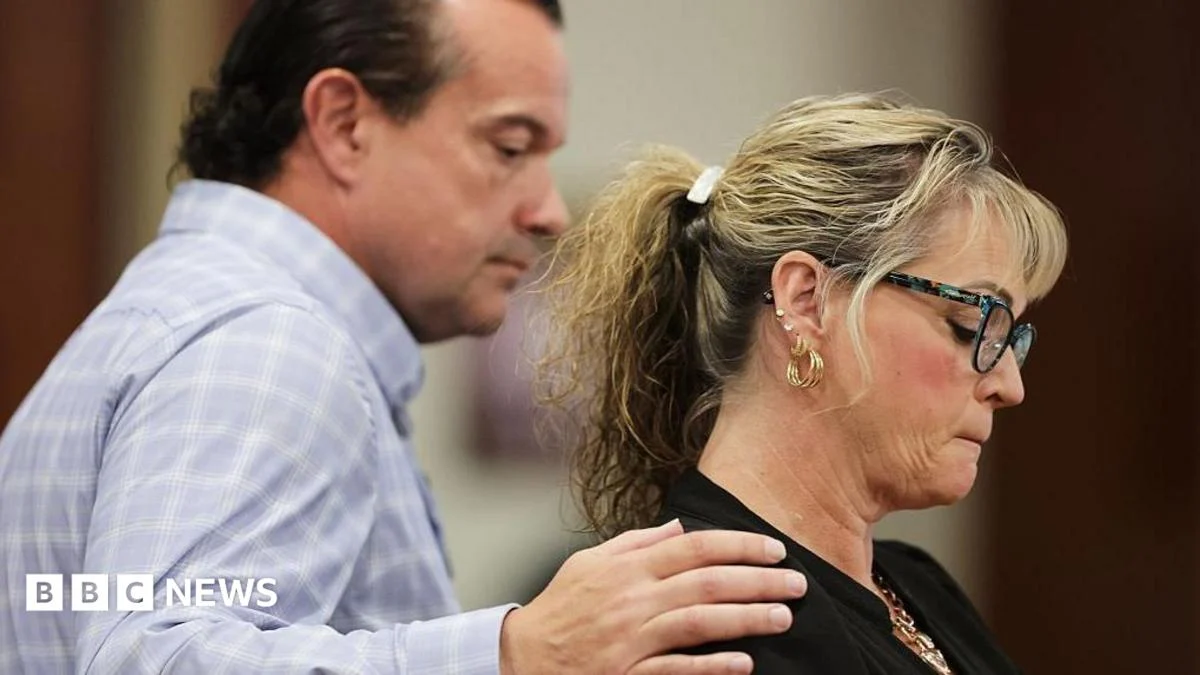
The grieving families of the four University of Idaho students brutally murdered in November 2022 are reeling and expressing profound anger following revelations that Bryan Kohberger, the man convicted of their heinous crimes, is now attempting to withdraw his guilty plea. Kohberger, who was sentenced last year to four consecutive life sentences without the possibility of parole, has reportedly informed The New York Times that he is retracting his plea, which he claims was made under duress, based on "false promises and blatant disinformation." This dramatic shift in stance has ignited fresh pain and frustration for the families, who had believed the legal process was nearing a definitive conclusion.
The family of Kaylee Goncalves, one of the four slain students, has been particularly vocal in their condemnation of Kohberger’s actions. In a strongly worded statement, they characterized him as a "narcissist" whose current pronouncements appear to be a calculated manipulation. "He chose not to leave his fate – or the facts of the case – to a jury," the statement from the Goncalves family pointedly stated, underscoring the fact that Kohberger’s initial guilty plea was a strategic decision to avoid the death penalty, a sentence that had been a significant point of contention throughout the proceedings. They further elaborated, "He never cried foul, never claimed he was uninformed or pressured, and never suggested there were problems with the discovery materials he and his counsel had reviewed for two years that should have been challenged." This assertion highlights the apparent contradiction between Kohberger’s current claims and his previous conduct during the legal process.
The Goncalves family expressed their deep dismay at the renewed media attention being lavished upon Kohberger, arguing that it detracts from the memory and the true tragedy endured by the victims and their loved ones. "The real tragedy," they stated, "is the amount of attention that Kohberger was now receiving at the expense of the victims." This sentiment reflects a broader concern among victims’ families that the legal machinations of the accused can overshadow the immense suffering and loss they have experienced.
The case itself sent shockwaves through the close-knit college town of Moscow, Idaho, and garnered national attention for nearly two months before Kohberger’s arrest. The victims, Kaylee Goncalves, Ethan Chapin, Xana Kernodle, and Madison Mogen, were all undergraduate students at the University of Idaho. They were found brutally stabbed to death in their off-campus residence on November 13, 2022. The sheer brutality and seemingly random nature of the attack, coupled with the youth of the victims, created an atmosphere of fear and uncertainty within the student community and beyond.
Kohberger, at the time of his arrest, was a criminology doctoral student at Washington State University, located just across the border in Pullman, Washington. This proximity, and his academic background in the very field that studies criminal behavior, added a layer of chilling irony to the case. Despite extensive investigation, prosecutors never officially revealed a clear motive for the killings. The lack of a discernible connection between Kohberger and the victims, at least in the public domain, made his alleged actions all the more perplexing and disturbing. Investigators, however, were able to build a compelling case through a combination of forensic evidence, cell phone data, and surveillance footage that placed Kohberger at or near the crime scene around the time of the murders.
In his statement to The New York Times, Kohberger unequivocally proclaimed his innocence and signaled his intention to enter a not-guilty plea. He even went so far as to suggest that prosecutors could pursue the death penalty again if they so chose, a stark reversal of his earlier decision to plead guilty to avoid capital punishment. This declaration, if formally acted upon, would re-open a case that many had assumed was settled, plunging the victims’ families back into the agonizing uncertainty of a protracted legal battle.
Idaho Attorney General Raúl Labrador acknowledged the immense pain the victims’ families are experiencing. In a statement, he said, "They had already endured unimaginable loss and now must face today’s deeply painful news." He pledged his office’s commitment to ensuring justice, stating, "My office stands ready to do whatever is necessary to ensure justice is fully carried out." This statement, while supportive, also implicitly acknowledges the challenge posed by Kohberger’s attempted plea withdrawal.
However, legal experts are tempering expectations regarding the likelihood of Kohberger successfully reversing his plea. Sam Newton, an associate professor at the University of Idaho College of Law, explained the significant hurdles involved. "He told the judge under oath at the plea hearing that he understood the deal, was acting voluntarily, and was pleading guilty because he was guilty," Newton told the BBC. This sworn testimony is a critical piece of evidence that would be difficult for Kohberger to overcome. Newton further elaborated, "That’s a real problem, since courts don’t take kindly to walking a voluntary plea back without hard proof that something went seriously wrong behind the scenes."
The legal ramifications of Kohberger’s alleged "false promises and blatant disinformation" claim are crucial. To successfully withdraw a guilty plea, especially after sentencing, Kohberger would likely need to demonstrate that the plea was not voluntary, was coerced, or was based on demonstrably false information provided by the prosecution or his own defense counsel. The fact that he made his initial plea to avoid the death penalty, a common and understandable strategic move, complicates his current narrative of being misled. Prosecutors presented a substantial amount of evidence against him, and his defense team would have had access to this discovery material for an extended period. Any claims of "blatant disinformation" would need to be substantiated with concrete proof of deception or material misrepresentation that fundamentally undermined the basis of his original plea.
The psychological impact of such a plea withdrawal on the victims’ families cannot be overstated. They have already navigated the deeply traumatic process of grieving their loved ones, attending court proceedings, and coming to terms with the conviction of the perpetrator. The prospect of reliving the details of the murders, facing Kohberger in court again, and enduring the uncertainty of a new trial or protracted legal appeals would be a crushing burden. The Goncalves family’s statement, highlighting the "real tragedy" of Kohberger receiving attention at the expense of the victims, underscores this emotional toll.
Furthermore, Kohberger’s claims of "false promises" raise questions about the nature of any alleged assurances he may have received. It is standard legal practice for plea bargains to involve negotiations and discussions between the defense and prosecution. However, the idea of "false promises" suggests a deliberate act of misrepresentation that influenced his decision to plead guilty. Without specific details from Kohberger or his legal team about what these promises entailed, it remains speculative. It is possible that he is attempting to leverage a perceived advantage or to create doubt in the public and legal spheres.
The University of Idaho massacre remains one of the most prominent and disturbing criminal cases in recent American history. The meticulous investigation that led to Kohberger’s arrest, the subsequent plea, and now this potential reversal, have captivated the public’s attention. The case has also sparked broader discussions about campus safety, the psychological profiles of perpetrators, and the complexities of the criminal justice system.
The path forward for Kohberger is fraught with legal challenges. His initial guilty plea, made under oath, is a significant obstacle. Courts generally uphold sworn testimony and are reluctant to allow defendants to renege on their admissions of guilt without compelling evidence of extraordinary circumstances. If Kohberger formally attempts to withdraw his plea, the prosecution will undoubtedly present evidence of his prior sworn statements and the thoroughness of the legal process that led to his sentencing. The burden of proof would then shift to Kohberger to demonstrate a valid legal basis for overturning his plea.
The unwavering support and resilience of the victims’ families are a testament to their strength in the face of unimaginable adversity. Their continued advocacy for justice and their unwavering focus on honoring the memories of Kaylee Goncalves, Ethan Chapin, Xana Kernodle, and Madison Mogen serve as a powerful reminder of the human cost of such senseless violence. As the legal landscape surrounding Bryan Kohberger’s case potentially shifts once again, the families remain at the forefront, demanding that the focus stay on the lives lost and the justice they so profoundly deserve. The coming days and weeks will reveal whether Kohberger’s dramatic attempt to rewrite his legal narrative will succeed or if the weight of his previous sworn testimony and the evidence against him will ultimately prevail.
