
 By admin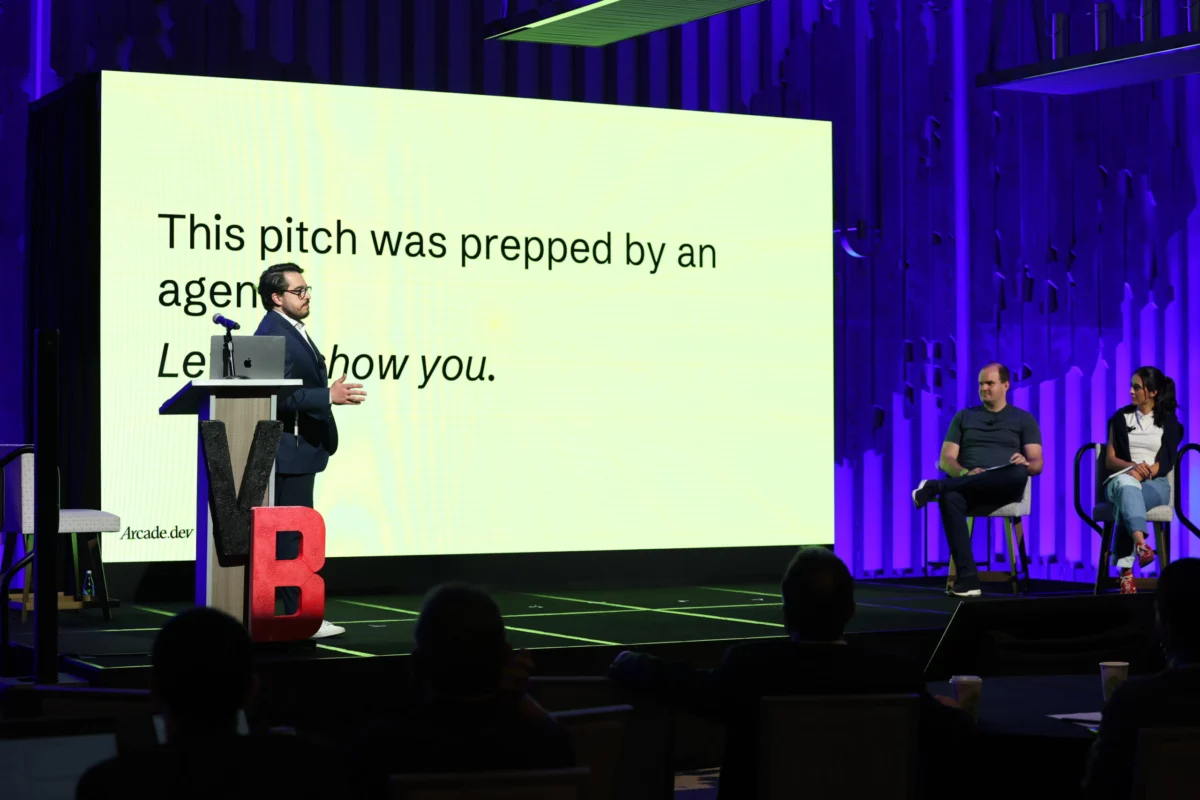
The promise of enterprise AI agents is immense: they can perform complex tasks, streamline operations, and unlock new levels of productivity. However, the infrastructure required to enable these agents to effectively communicate with each other, establish trust, and be held accountable when errors occur, is still very much in its nascent stages of development. This critical gap, spanning orchestration, observability, connectivity, and security, was a central theme at VB Transform 2026, where several innovative startups showcased their solutions.
BAND: Orchestrating the Swarm of Background AI Agents
Vlad Luzin, CTO and co-founder of BAND, painted a vivid picture of a near future where AI agents are ubiquitous, diligently working on our behalf. These agents will receive tasks, access vast registries, intelligently recruit other specialized agents to assist, and delegate subtasks in a dynamic, "conversational space." The results will be meticulously gathered, synthesized, and presented back to human users in a concise summary. BAND is building the foundational coordination infrastructure layer to make this multi-agent AI system a reality.
Luzin highlighted a crucial distinction between human-centric communication platforms like Telegram, Slack, or Discord, and the needs of AI agents. "These platforms were built for humans," he explained. "Agents need to be onboarded manually in numerous steps, and they can’t see each other; they are still alone in a kind of digital solitary confinement." This isolation prevents them from collaborating effectively. He further illustrated the friction caused by stateless systems like Claude, where developers often juggle multiple open sessions for different tasks, a process that is inherently inefficient for AI agents.
The core challenge, Luzin emphasized, lies in connecting remote processes – a fundamental problem in distributed systems. "The transportation layer needs to be solved first, how the agents communicate in real time," he stated. Simple IP addresses and URLs are insufficient for agent communication. Instead, a sophisticated abstraction layer is required to enable agents to converse seamlessly across various channels, conversational spaces, and even different platforms.
"Agents see each other. They understand. They can collaborate together. They discuss issues. They fix issues, and they ask for review from another," Luzin elaborated, describing the vision for BAND’s platform. This orchestration layer supports autonomous workflows that can operate for extended periods, from eight to 20 hours, and is compatible with established protocols like A2A (Agent-to-Agent) and MCP (Multi-Agent Coordination Protocol). Crucially, humans can seamlessly integrate into these agent-driven conversations, observing and even participating as agents discover and interact with one another. "We can record and show you all the tasks that your agent generates in real time," Luzin assured, underscoring the platform’s transparency and auditability.
Conifers: Empowering Defenders to Match Machine-Speed Adversaries
Tom Findling, CEO and co-founder of Conifers, addressed a critical chasm in cybersecurity: the speed mismatch between defenders and attackers. "The biggest challenge defenders face today is that they’re still running at human speed, but adversaries are running at machine speed," he stated. The alarming reality is that attackers are already leveraging AI agents, and a single successful breach can have catastrophic consequences. Malicious campaigns that once took weeks or months to execute are now being condensed into hours, or even minutes. In stark contrast, traditional security operations remain fragmented, manual, inefficient, and consequently, slow.
Conifers is tackling this challenge by agenticizing various components of cyber defense, including private intelligence gathering, threat hunting, detection, security engineering, incident investigation, and response. By breaking down the silos that traditionally separate these functions, Conifers enables these agentic systems to communicate and collaborate in real-time. This ensures that operational defense and active defense remain constantly engaged and adaptive to evolving threats.
Findling presented compelling data on Conifers’ impact, reporting a significant reduction in containment time from an average of 7 hours to a mere 12 minutes. Furthermore, the company can complete complex cyber investigations in under four minutes. A key aspect of Conifers’ approach is its seamless integration with an enterprise’s existing security stack, including Endpoint Detection and Response (EDR) solutions, Security Information and Event Management (SIEM) systems, and posture management tools. The platform provides deep insights into an organization’s security posture, identifies critical pain points, evaluates the effectiveness of existing controls, and guides investment decisions for optimal return on security investment.
"The threat landscape is changing, detection stays the same, and threat intelligence is not being operationalized," Findling lamented. "This is a job for agents," he concluded, highlighting the transformative potential of AI in modern cybersecurity.
Raindrop AI: Building an Unassailable Audit Trail for AI Agents
Ben Hylak, CTO of Raindrop AI, identified a fundamental and escalating problem in the current AI landscape: identifying critical issues within AI agents. This challenge is compounded by a "double whammy" effect. As AI agents become increasingly sophisticated and capable, their complexity naturally increases, leading to longer development and operational timelines. In some cases, these agents can run for hours or even days. This extended operational duration, coupled with the increasing criticality of AI applications in sectors like healthcare and defense, means that even minor issues can have catastrophic repercussions.
"This problem is getting a lot worse as models and agents improve," Hylak observed, expressing concern that this trend is likely to continue. Raindrop AI’s platform is designed to proactively identify critical issues in production AI agents and then simulate potential fixes based on historical user behavior. This allows development teams to rigorously validate the efficacy of proposed solutions before deployment, ensuring they function as intended without introducing unforeseen side effects.
The startup’s reinforcement learning (RL) platform is instrumental in this process, harnessing and training models directly from Raindrop’s proprietary data. Its pre-deployment simulation engine accurately predicts the impact of fixes in a production environment, while live A/B testing allows for real-world validation of these changes. All agent interactions, including messages, tool calls, retries, and errors, are captured in a centralized repository. Human users are promptly notified of any issues, typically via Slack. Crucially, models are trained for each individual customer, and the signals generated power a continuous learning loop across both models and harnesses. "It is condensed into something that is actually navigable, easy to understand, easy to verify," Hylak stated, emphasizing the platform’s user-friendly and transparent nature.
Arcade: Granting AI Agents the Necessary Security Clearance for Action
Sam Partee, co-founder and CTO of Arcade.dev, zeroed in on three significant hurdles that frequently impede AI agents from fulfilling their intended functions: authorization, governance, and reliability. For AI agents to effectively act on behalf of real users and exercise legitimate permissions, a fundamentally new approach to security architecture is imperative.
Arcade’s secure agent runtime provides this essential authentication and authorization layer, enabling agents to successfully navigate critical security reviews. Beyond security, the platform offers robust observability features, allowing human users to meticulously monitor every action undertaken by an agent. Each action is precisely timestamped and attributed, with the principle of least privilege strictly enforced.
Arcade is available as an installable plugin that can be deployed on-premises within a secure, "clean room"-like environment. This allows organizations to continue leveraging their existing sign-in and security tools. Every operation within Arcade is rigorously governed by the same established checkpoints, including role-based access controls (RBACs), intrusion detection and prevention systems (IDPS), organizational policies, and entitlement management.
Partee highlighted Arcade’s role in combating the escalating threat of supply chain attacks, a problem he described as "rampant; it’s unbelievable." He attributed the persistent challenges in security and observability to a fundamental flaw in the prevailing abstraction layers.
Omilia: Navigating the Complexities of Enterprise Customer Experience
Claudio Rodrigues, CPO of Omilia, characterized the challenge of optimizing enterprise customer experience (CX) as "really not straightforward." He drew a clear distinction between heuristic-based systems, which offer control but are inherently slow, and agentic systems, which are fast but can be unpredictable. Omilia’s platform is engineered to deliver both control and speed in tandem.
The company’s agentic, self-learning offering is built on a philosophy of observing customer service operations as they actually unfold, rather than relying on abstract theoretical models. Omilia’s agents gain first-hand insights by listening to every customer and agent interaction, ingesting a wide array of data including API specifications, screen recordings, and standard operating procedures (SOPs). This comprehensive understanding is then meticulously mapped to specific use cases for customer support.
Rodrigues asserted that contact centers should function as revenue drivers, and Omilia’s key differentiators lie in its advanced speech-to-text systems, coupled with robust governance and observability layers. The platform leverages AI to generate actionable insights, suggest improvements, automatically create conversational agents, retrieve information from diverse documents and APIs, and design sophisticated dialogue flows. Human experts then have the opportunity to rigorously test both real and simulated interactions before deploying them into production under their direct supervision. Omilia consolidates all these capabilities into a unified, enterprise-wide engine that continuously learns and evolves over time.
Rodrigues shared impressive performance metrics, noting that the company handles over 3 billion calls annually, with some deployments processing more than a million voice calls per day. This has resulted in a remarkable 30 to 45% improvement in time to resolution (TTR). Furthermore, Omilia’s agents have demonstrated a significant revenue uplift, generating 21 times more upsell revenue compared to human agents. In mature deployments, automation levels easily reach 80% to 90%, though Rodrigues stressed that the "human in the loop is still very fundamental for us," underscoring the importance of human oversight and intervention in critical customer interactions.
