
 By admin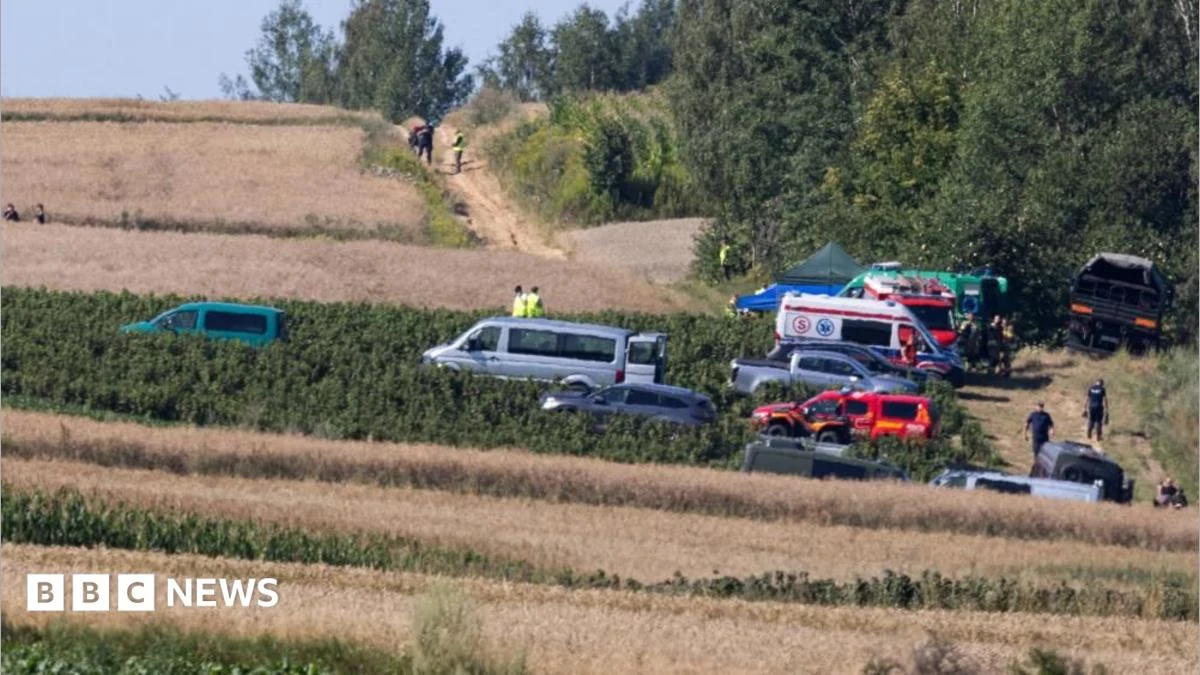
In the pre-dawn hours of Thursday, a startling incident unfolded in the eastern Polish countryside, sending shockwaves through the nation and intensifying concerns over the spillover effects of Russia’s ongoing war in Ukraine. A significant, unidentified object slammed into a field near the village of Tarnawa Kolonia, excavating a crater approximately 10 meters wide and leaving behind a tangible scar on the landscape. This event, occurring roughly 100 kilometers from the Ukrainian border, coincided with a massive Russian aerial assault on the Ukrainian city of Lviv, a brutal barrage that claimed eight lives across the border. Polish Prime Minister Donald Tusk, speaking with grim certainty from a specially convened meeting in the nearby city of Lublin, declared that "all the indications are that it was a Russian Kh-101 ballistic missile," though he emphasized the ongoing efforts to achieve absolute 100% certainty regarding its precise type and origin.
The proximity of this incident to the Ukrainian conflict, and its timing with a direct Russian attack on a major Ukrainian city, immediately placed it under intense international scrutiny. Ukraine’s acting Foreign Minister, Andriy Sybiha, corroborated the Polish assessment earlier in the day, stating that a Russian Kh-101 cruise missile had "crossed into Poland as part of Russia’s massive strike against Ukraine, violating Nato airspace." This assertion underscored the gravity of the situation, as any incursion into NATO territory, regardless of intent or consequence, carries profound geopolitical implications. Prime Minister Tusk, demonstrating a proactive and measured response, confirmed that he had been in direct communication with fellow European leaders prior to his arrival at the crash site, a clear indication of the high-level diplomatic engagement triggered by the event.
Fortunately, the impact did not result in any reported casualties, a detail that Prime Minister Tusk was keen to highlight, while simultaneously underscoring that the incident was being treated with the utmost seriousness. He reassured the public that there was no immediate threat to civilian life, as the object had not landed in a densely populated area. Tusk also revealed a critical detail of the nation’s preparedness: "We were prepared to shoot it down if it had continued its flight," a statement that speaks volumes about the readiness of Poland’s air defenses and the willingness to act decisively in the face of a perceived aerial threat.
This incident is not an isolated event in the context of the protracted conflict. Since Russia’s full-scale invasion of Ukraine commenced in February 2022, Poland has experienced a series of unwelcome intrusions into its airspace. A number of Russian drones have been detected and dealt with, and on at least one prior occasion, an unarmed Russian missile had landed on Polish soil. However, the memory of November 2022 remains particularly poignant. In that instance, two Polish farmers tragically lost their lives to a missile that struck just over the border from Ukraine. While initially raising alarm bells, that incident was later attributed to a Ukrainian air defense missile, likely fired in response to a Russian attack. The distinction between a deliberate Russian strike or a collateral consequence of Ukrainian defensive measures is crucial, and the current incident appears to be leaning towards the former.
The Polish Ministry of Defense provided further details on the overnight events. Defense Minister Wladyslaw Kosiniak-Kamysz stated that approximately 20 unidentified objects were observed in close proximity to Polish airspace during the night. This suggests a coordinated and widespread Russian aerial operation that extended beyond Ukraine’s borders. Pyrotechnical analysis is currently underway at the crash site near Tarnawa Kolonia, a meticulous process aimed at definitively identifying the type of ordnance that fell.
The timeline of events, as pieced together by Polish authorities, paints a picture of swift detection and response. Poland’s military first detected the object of concern at approximately 03:40 local time on Thursday (01:40 GMT). In response, an F-16 fighter jet was scrambled to intercept the incoming threat. However, the object mysteriously disappeared from radar systems mere minutes later, adding an element of suspense and uncertainty to the situation. Following this disappearance, a military helicopter was dispatched to the area to conduct a physical search, ultimately leading to the discovery of the crash site.
The Russian airstrikes that targeted Ukraine were not without their own devastating consequences. Air raid sirens blared in Polish cities like Lublin and Krasnystaw, located further to the southeast, a stark reminder of the proximity and intensity of the conflict. These strikes in Ukraine resulted in the tragic loss of eight lives. Residents in Tarnawa Kolonia, the village closest to the crash site, reported hearing a loud bang around 04:00, a sound that likely signaled the impact of the falling object. It was approximately an hour later that police forces located the crater and the remnants of the mysterious projectile.
Adding another layer of contextual significance to this unfolding crisis is the fact that Polish Prime Minister Donald Tusk had met with Ukrainian President Volodymyr Zelensky in Lublin just the evening prior. President Zelensky was in Poland as he was returning from important talks with U.S. President Donald Trump, a meeting that highlighted the ongoing international diplomatic efforts to support Ukraine. This prior meeting underscores the close ties and shared concerns between Poland and Ukraine regarding the escalating Russian aggression and its potential to destabilize the wider region.
The implications of a suspected Russian missile entering NATO airspace are far-reaching. NATO, a collective defense alliance, operates under the principle that an attack on one member is an attack on all. While Poland has not invoked Article 5 of the North Atlantic Treaty, which commits members to mutual defense, the incident undoubtedly heightens tensions and reinforces the strategic importance of robust border security and coordinated air defense within the alliance. The precise nature of the missile – whether it was a deliberate targeting of Polish territory, a navigational error during a large-scale attack on Ukraine, or a malfunction – will be critical in determining the appropriate diplomatic and strategic response.
Experts in military strategy and international relations have weighed in on the potential ramifications. Dr. Anna Kowalska, a senior fellow at the European Council on Foreign Relations, commented, "This incident, while thankfully not resulting in casualties, serves as a potent reminder of the unpredictable nature of modern warfare. The Kh-101 is a relatively modern and potent cruise missile, and its trajectory into Polish territory, even if unintentional, highlights the risks of collateral damage and escalation in a conflict zone adjacent to NATO borders." She further emphasized the need for transparent investigation and clear communication from all parties involved to prevent misinterpretations and further inflame the situation.
The Polish government’s commitment to a thorough investigation is paramount. The pyrotechnical analysis, coupled with radar data and any recovered debris, will be crucial in definitively identifying the missile and its origin. This evidence will inform Poland’s diplomatic engagements with Russia and its allies within NATO. The incident also renews calls for increased defense spending and enhanced military cooperation among NATO members, particularly those on the eastern flank.
The economic and social impact, though less immediate than the security concerns, also warrants consideration. The disruption to local life, the fear and uncertainty generated by the event, and the potential for increased military presence in the region can all have tangible effects on communities. The agricultural land impacted by the crater will require significant remediation, adding a practical burden to the already heightened security environment.
As the investigation continues, the world watches closely. The suspected Russian missile in a Polish field is more than just a physical impact; it is a stark symbol of the widening ripples of the war in Ukraine and a potent reminder of the delicate balance of peace and security in Europe. The coming days and weeks will likely see intense diplomatic activity, further analysis of the incident, and potentially, a recalibration of defensive postures across the continent. The commitment to uncovering the full truth and responding appropriately will be a critical test of international resolve and cooperation in the face of ongoing aggression. The incident also serves as a potent reminder of the need for continuous vigilance and the critical importance of intelligence gathering and rapid response capabilities in an era of persistent geopolitical instability. The ongoing narrative surrounding this event will undoubtedly contribute to the broader discourse on European security architecture and the future of international relations in a multipolar world increasingly defined by conflict and competition.
