
 By Titik Puspa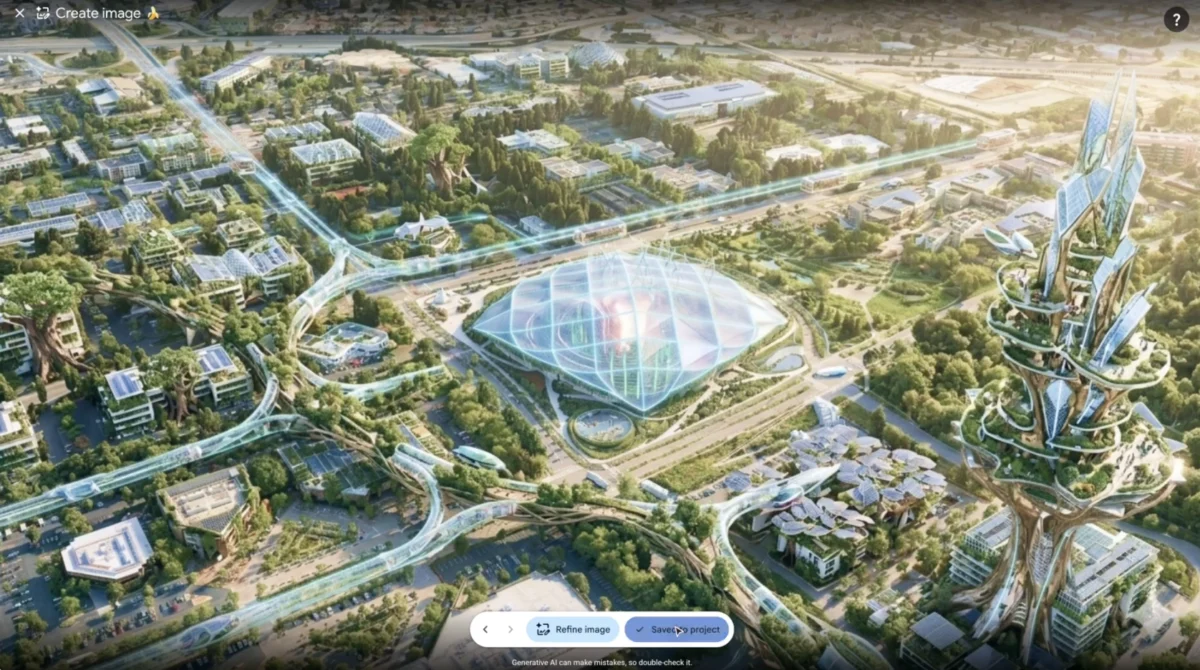
San Francisco, CA – July 31, 2026 – Google has swiftly deactivated a newly launched AI-powered image generation feature within its popular Google Earth application, just a day after its debut. The feature, which allowed users to create fabricated images superimposed onto real-world satellite imagery, was intended to foster creativity and engagement with geography. However, the rapid rollout and subsequent backlash highlight the persistent challenges and ethical dilemmas surrounding the proliferation of AI-generated content and its potential for misuse in spreading misinformation.
The tool, branded as an extension of Google’s Nano Banana 2 AI image generator, was integrated into Google Earth with the stated purpose of enabling users to "get creative with geography." This meant that individuals could input textual prompts, and the AI would generate corresponding images that could then be placed and viewed within the context of Google’s extensive satellite and street-view data. Imagine, for instance, placing a whimsical illustration of a dragon soaring over the Grand Canyon or a fantastical castle perched atop Mount Everest, all within the familiar interface of Google Earth. Google’s initial announcement, published on their official blog on Thursday, July 31, 2026, emphasized the innovative possibilities for artistic expression and educational exploration.
However, the announcement was met with immediate and widespread criticism from journalists, researchers, and digital ethics advocates. Concerns quickly surfaced that the very design of the feature – allowing virtually any image to be "superimposed over real maps" via simple text prompts – presented a potent tool for the creation and dissemination of sophisticated misinformation. Critics argued that by blending AI-generated visuals with the seemingly authoritative and fact-based foundation of Google Earth, the feature could easily produce fabricated scenarios that appear deceptively real. This could range from conjuring non-existent landmarks or altering existing ones to fabricating historical events or even staging fictional conflicts on a global scale.
The speed at which these concerns materialized was notable. Within hours of the feature’s announcement, prominent voices in the media began to voice their apprehensions. A particularly sharp critique came from a journalist at the BBC, who, in a sarcastic post on X (formerly Twitter) on Thursday, July 31, 2026, questioned the potential for abuse. "There’s no way that this new AI image generation feature on Google Earth, one of the most reliable sources of visual evidence for journalists and researchers, could possibly be abused to spread misinformation online," the journalist, identified as @Shayan86, posted. This sentiment was echoed by numerous others who pointed to the growing landscape of AI-driven disinformation campaigns that have already plagued social media and news cycles.
The implications for journalistic integrity and historical accuracy were a primary concern. Google Earth has long served as an invaluable resource for investigative journalism, providing visual verification for on-the-ground reports, documenting environmental changes, and offering context for geopolitical events. The introduction of a tool that could seamlessly inject fabricated imagery into this trusted platform was seen as a direct threat to its credibility. Researchers, too, rely on the platform for geographical analysis, and the introduction of potentially manipulated data could compromise the integrity of their findings.
The immediate aftermath of the public outcry saw Google taking rapid action. Less than 24 hours after the feature’s launch, the company announced its retraction. In a statement posted on the official @NewsFromGoogle X account on Friday, August 1, 2026, the company acknowledged both the positive and negative aspects of the feature’s initial reception. "We’ve seen geospatial professionals using this feature for a range of useful purposes," the statement read, "however we’ve also seen people sharing screenshots of generated imagery that appear to violate our policies." This admission confirmed that the misuse of the tool had already begun, leading to the swift decision to pull it offline.

The company further elaborated on its decision, stating, "We’re rolling back this feature in Google Earth while we work on implementing stronger guardrails." This indicates a commitment to addressing the vulnerabilities that were exposed, suggesting that a future iteration of the feature might be reintroduced with more robust safety mechanisms and content moderation policies. The phrase "stronger guardrails" implies measures such as stricter prompt filtering, enhanced detection of AI-generated content within the platform, and potentially a more curated or verified process for image generation.
While the criticism of Google’s tool is undeniably valid, it also underscores a broader, more pervasive challenge in the current digital age: the democratization of image manipulation. The era where sophisticated image alteration was the exclusive domain of skilled graphic designers and expensive software like Adobe Photoshop is rapidly fading. The advent of advanced AI image generators has lowered the barrier to entry significantly. Now, individuals with little to no technical expertise can generate visually plausible, albeit fabricated, images with remarkable ease. Google’s own Nano Banana 2, and similar offerings from numerous other AI companies, represent this shift, empowering a wider audience with potent creative (and potentially destructive) capabilities.
This accessibility means that the potential for disinformation is no longer confined to state actors or organized groups with significant resources. Individuals with malicious intent, or even those simply seeking to cause mischief, can now leverage these tools to create and spread false narratives. The speed at which these narratives can propagate across social media platforms, amplified by algorithms designed for engagement, makes them particularly insidious. The incident with Google Earth serves as a stark reminder that even the most well-intentioned technological advancements can have unintended and harmful consequences when deployed in an environment ripe for manipulation.
The debate surrounding AI-generated content extends beyond mere image manipulation. It touches upon the very nature of truth, trust, and authenticity in the digital realm. As AI continues to evolve, its ability to mimic and generate human-like content – be it text, images, audio, or video – will only become more sophisticated. This raises profound questions about how we will verify information, distinguish between genuine and fabricated content, and maintain a shared understanding of reality.
Experts in digital ethics and AI safety have been warning about these issues for years. Dr. Anya Sharma, a leading researcher in AI governance at Stanford University, commented on the situation, stating, "The Google Earth incident is a textbook example of the ‘move fast and break things’ ethos clashing with the imperative for responsible AI deployment. While innovation is crucial, companies must prioritize ethical considerations and potential societal impacts from the outset, especially when dealing with platforms that hold significant public trust." She further emphasized the need for proactive measures, including robust content provenance tracking, watermarking of AI-generated content, and public education campaigns on media literacy.
The implications for the future of technology development are significant. Companies are now under increased pressure to develop and implement comprehensive ethical frameworks and safety protocols for their AI products. This includes rigorous testing, adversarial attacks to identify vulnerabilities, and the establishment of clear policies against misuse. Furthermore, there is a growing call for industry-wide collaboration to establish standards and best practices for AI development and deployment, ensuring that the technology serves humanity rather than undermines it.
The rapid rollback of the Google Earth feature, while perhaps a disappointing outcome for those who envisioned its creative potential, represents a necessary step in acknowledging and addressing the immediate risks. It highlights the ongoing struggle to balance technological advancement with the preservation of truth and trust in an increasingly digital world. As AI continues to permeate our lives, the lessons learned from incidents like this will be crucial in shaping a future where these powerful tools can be harnessed for good, without succumbing to their potential for widespread deception. The journey towards responsible AI is a continuous one, marked by innovation, vigilance, and a constant re-evaluation of our ethical compass. The coming months and years will likely see a heightened focus on developing more resilient systems and fostering a more discerning digital citizenry, capable of navigating the complex landscape of AI-generated realities.
