
 By admin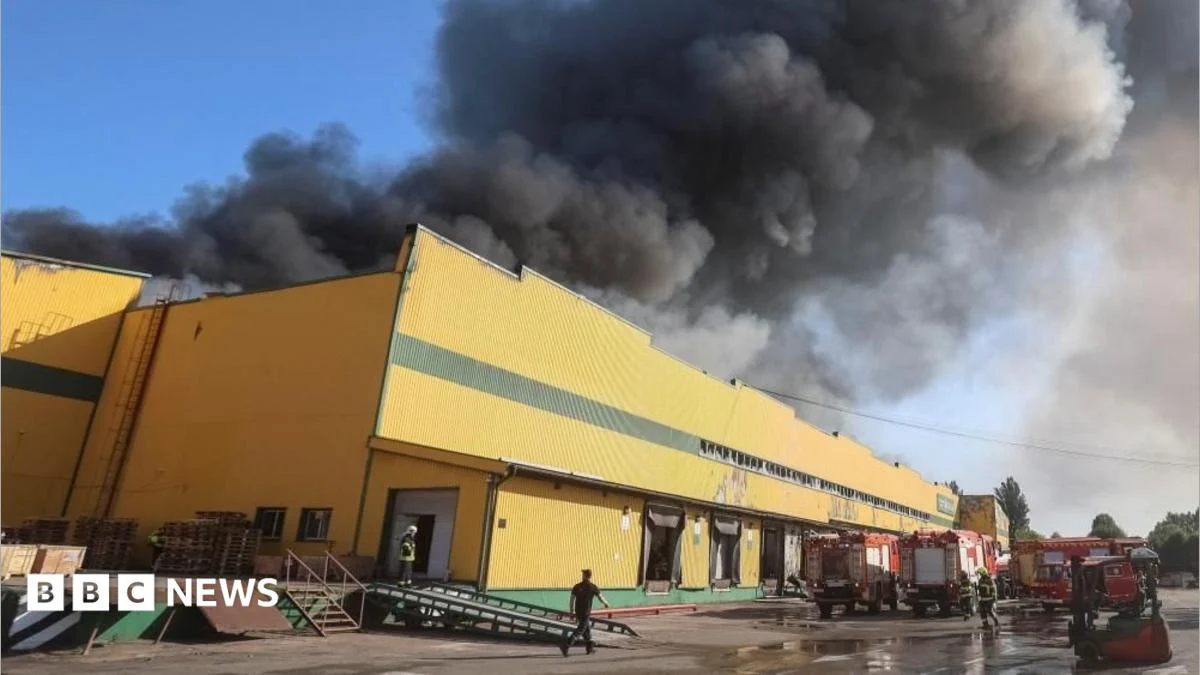
Kyiv, Ukraine – A devastating barrage of Russian ballistic missiles struck the Ukrainian capital on Saturday morning, claiming the lives of at least nine civilians and injuring 28 others, according to local officials. The State Emergency Service confirmed the grim toll as fires erupted across the city and power outages were reported in several districts. This latest escalation in aerial assaults on Kyiv, characterized by a significant increase in the use of deadly ballistic missiles, underscores President Volodymyr Zelensky’s urgent plea for more advanced missile interceptor systems. The attacks come just two days after a suspected Russian cruise missile incident in Poland, which resulted in the deaths of at least eight people in that neighboring country, including a family of six. Adding to the escalating tensions, Ukrainian drones have successfully targeted and sunk a Russian-owned container ship in the Black Sea, President Zelensky announced.
Kyiv’s Mayor Vitali Klitschko described the attack as a ballistic missile strike, with eyewitness accounts and reports from international news agencies like AFP detailing more than ten distinct explosions echoing through the city. The destruction was widespread, with a residential building in the Shevchenkivskyi district suffering partial collapse, trapping individuals inside. Emergency services reported that the Darnytskyi district bore the brunt of the casualties, with at least seven fatalities and 14 injuries, including two children. In the Solomyanskyi district, another five-story residential building was partially destroyed, leading to two deaths and eight injuries, also involving children. The indiscriminate nature of the attack was further highlighted by a missile landing perilously close to the Lithuanian embassy, shattering windows and scattering debris across its grounds, a stark reminder of the pervasive threat to diplomatic missions.
The sinking of the Russian container ship, identified as the "Yanina," was confirmed by President Zelensky via a post on the social media platform X. He declared that the 100,000-tonne capacity vessel had been "sent to the bottom." The ship, owned by Russia’s state-owned nuclear operator Rosatom, was reportedly sunk in the early hours of Saturday, forcing its 17-member crew to abandon ship. Rosatom claimed the vessel was carrying civilian goods, including frozen food and construction materials, and its CEO, Alexey Likhachev, decried the attack as "piracy and robbery." Russian news outlet Stsana Rosatom reported the incident occurred approximately 130 miles (209 kilometers) from Novorossiysk, and stated that all 17 crew members were "in good condition." Ukraine has been systematically targeting Russian-flagged vessels in the Black Sea since the full-scale invasion of its territory in 2022, accusing Moscow of using these routes to transport sanctioned goods, including oil.
The renewed onslaught on Kyiv arrives in the wake of President Zelensky’s recent visit to Washington D.C., where he met with former President Donald Trump to advocate for the United States to grant Ukraine a license to produce Patriot interceptor missiles. During a cabinet meeting at the Camp David presidential retreat on Friday, Trump indicated that the U.S. had not yet agreed to Ukraine’s request for domestic Patriot missile production, but acknowledged that discussions were ongoing. He emphasized the need for extreme caution regarding the sharing of advanced U.S. weaponry, describing the prospect of allowing another nation to build such systems as "a big step." These remarks follow earlier statements from Trump in which he reportedly offered Ukraine the right to produce Patriot missiles, signaling a potentially shifting stance or ongoing internal deliberation within U.S. defense policy circles.
The urgency of Ukraine’s request for Patriot interceptors cannot be overstated, particularly as Russia has intensified its air attacks. Ukraine’s existing stockpiles of Patriots, which represent the sole weapon system in its arsenal capable of effectively intercepting ballistic missiles, are reportedly dwindling. This strategic vulnerability has been exacerbated by the sustained aerial bombardment, leaving the nation increasingly exposed to devastating attacks. The Patriot system, officially the Patriot Surface-to-Air Missile System, is a highly sophisticated air defense system developed by Raytheon. It is designed to intercept a wide range of aerial threats, including tactical ballistic missiles, cruise missiles, and advanced aircraft. Its effectiveness against ballistic missiles, which travel at extremely high speeds and follow parabolic trajectories, makes it a critical component of any nation’s defense against such threats.
The current geopolitical landscape surrounding the provision of advanced weaponry to Ukraine is complex and fraught with political considerations. While the United States and its allies have committed substantial military aid to Ukraine, the transfer of certain sensitive technologies, such as the manufacturing capabilities for advanced missile systems, involves intricate discussions about national security, intellectual property, and the potential for proliferation. Former President Trump’s emphasis on caution stems from a broader concern about the long-term implications of sharing such advanced defense technology, particularly in a region prone to ongoing conflict. The potential for reverse-engineering or unauthorized replication of these systems by adversaries is a significant factor in such decisions.
The recent escalation in Russian ballistic missile attacks on Kyiv is indicative of a broader strategic shift by Moscow. While cruise missiles and drones have been consistently employed throughout the conflict, the increased reliance on ballistic missiles suggests a determined effort to overwhelm Ukraine’s air defenses and inflict maximum damage on civilian infrastructure and population centers. Ballistic missiles, characterized by their unpowered flight phase after an initial boost, are notoriously difficult to intercept due to their high speed and unpredictable trajectories once they begin their descent. The accuracy and destructive potential of these weapons make them particularly devastating, and their deployment against urban areas raises serious concerns about potential war crimes.
The international community has largely condemned Russia’s continued attacks on Ukrainian cities. Reports of civilian casualties and the destruction of residential buildings consistently emerge from the front lines and from cities far from the immediate combat zones. The United Nations and various human rights organizations have been meticulously documenting alleged violations of international humanitarian law, with a focus on the indiscriminate nature of some of the attacks and the targeting of civilian infrastructure. The International Criminal Court (ICC) has opened investigations into alleged war crimes committed during the conflict, and any evidence of deliberate targeting of civilians or civilian objects could lead to further legal repercussions for those responsible.
The situation in the Black Sea remains a critical theater of operations, with both sides seeking to control maritime routes and disrupt enemy logistics. Ukraine’s successful drone attacks on Russian naval assets and shipping underscore its growing asymmetric capabilities. The sinking of the "Yanina" represents a significant blow to Russian commercial shipping and a demonstration of Ukraine’s resolve to impede Russia’s economic activities related to its maritime trade. The Black Sea has been a crucial artery for global trade, and the ongoing disruptions have had ripple effects on international markets, particularly for grain and other commodities. Ukraine’s ability to project power into the Black Sea, even with its more limited naval resources, has forced Russia to re-evaluate its security posture in the region.
The ongoing debate surrounding the provision of advanced weaponry, such as the Patriot missile system, highlights the delicate balance that Western allies must strike between supporting Ukraine’s defense and managing the broader strategic implications of the conflict. While the immediate need for effective air defense is paramount for protecting Ukrainian civilians and infrastructure, the long-term implications of technology transfer and the potential for escalation are also critical considerations. President Zelensky’s persistent diplomatic efforts aim to bridge this gap, emphasizing that enhanced defensive capabilities are not merely offensive tools but essential for safeguarding human lives and preserving the sovereignty of Ukraine. The coming weeks and months will likely see continued diplomatic maneuvering and further developments on the battlefield, as both sides adapt their strategies in this protracted and devastating conflict. The world watches, hoping for a swift resolution that prioritizes civilian safety and upholds international law.
