
 By Lina Irawan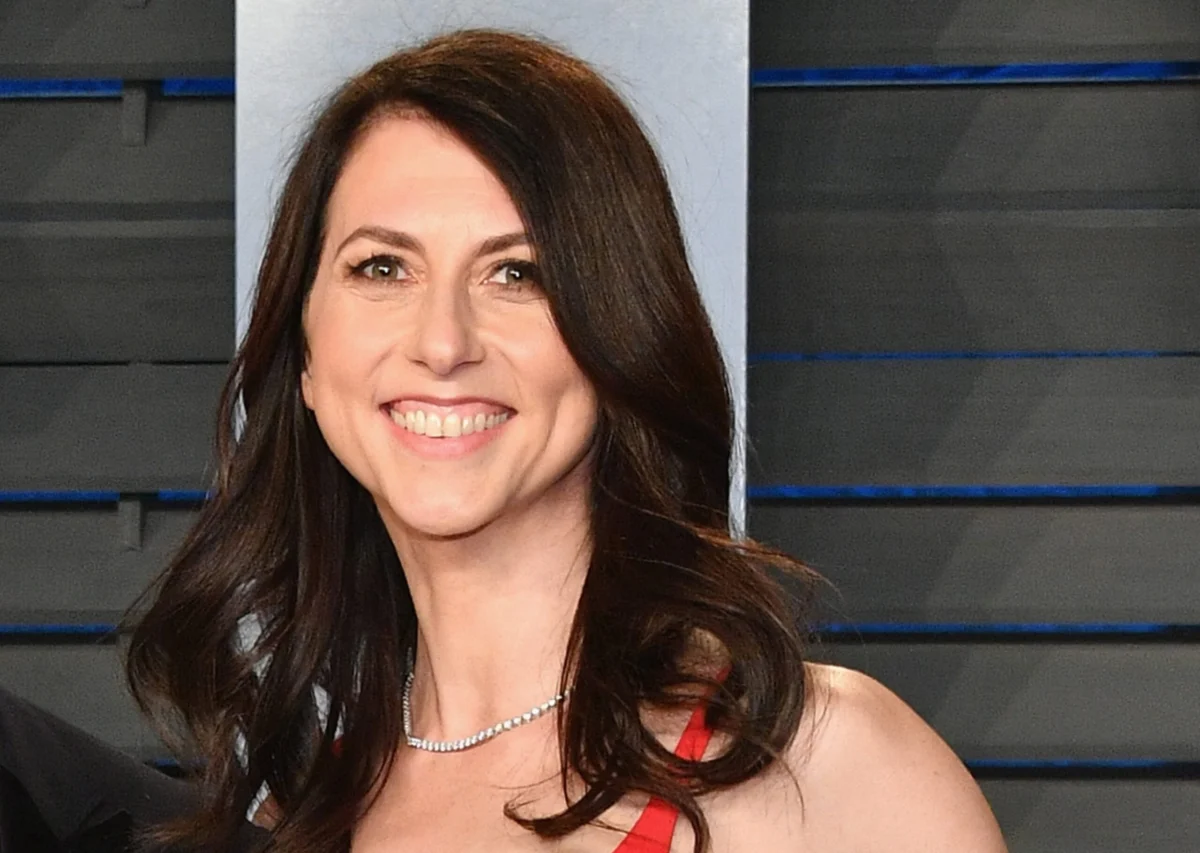
The fascination with Scott doesn’t solely stem from the sheer volume of her donations—a staggering sum exceeding $26 billion—but equally from the astonishing pace at which the novelist and ex-wife of Amazon founder Jeff Bezos has distributed this fortune. Amassing such a colossal amount of giving in just a few short years stands in stark contrast to the conventional, often protracted, timelines through which billionaires typically disburse their wealth. Her rapid, trust-based model challenges the prevailing "slow philanthropy" paradigm, a term coined by Jeffrey Bradach, cofounder of the Bridgespan Group, a global consulting firm dedicated to nonprofits and philanthropy.
Bradach’s research sheds a revealing light on the prevailing trends among the ultra-wealthy. In 2017, families boasting assets exceeding $500 million collectively donated approximately 1.2% of those assets. Fast forward to 2023, and Bridgespan’s subsequent analysis revealed this figure remained essentially unchanged. This stagnation occurred despite these immense fortunes compounding at rates at or above the S&P 500’s long-run average of roughly 9%. In practical terms, while the absolute monetary value of donations may have increased due to the sheer growth of wealth, the proportion of wealth being given away remained static, effectively diminishing the relative impact of their philanthropy as their net worth soared. This phenomenon means that even as philanthropic dollars grow, the gap between the aspirations expressed by many wealthy donors and their actual giving remains vast, often leaving substantial portions of their wealth untouched.
This stark reality prompted Bradach to articulate his concept of "slow philanthropy" in an essay adapted from Bridgespan’s research and published by Stanford Social Innovation Review. He posits that the giving of many ultra-wealthy individuals lags significantly behind their stated philanthropic intentions. These intentions are frequently formalized through symbolic gestures like signing Giving Pledge letters, yet subsequent research indicates a pervasive failure to follow through on these grand commitments in a timely or substantial manner.
The Institute for Policy Studies (IPS) has been a vocal critic of the Giving Pledge, asserting it is "unfulfilled, unfulfillable, and not our ticket to a fairer, better future." Their report highlights a disturbing trend: "Three-quarters of the original U.S. Giving Pledgers who are still alive remain billionaires today. They have collectively gotten far wealthier since they signed, while just eight of 22 deceased Pledgers fulfilled their pledges." This data strongly suggests that for many, the pledge functions more as a public relations exercise or a long-term aspiration rather than an immediate call to action, allowing wealth to continue accumulating for decades while pressing societal needs persist.
This perceived inertia has drawn sharp criticism from within the philanthropic community itself. Melinda French Gates, a prominent philanthropist in her own right, has openly challenged her fellow billionaires regarding their perceived failure to honor their pledges. In a late 2025 interview with Wired, French Gates posed a pointed question: "Have they given enough? No." Her remarks underscore a growing impatience with the leisurely pace of traditional large-scale philanthropy.
However, French Gates has recently singled out MacKenzie Scott for praise, commending her for her exceptional pace and innovative approach to philanthropic giving. Speaking to Fortune‘s Most Powerful Women Editor Emma Hinchliffe, French Gates emphasized that in the realm of charity, actions often resonate far louder than mere words. "I look back at the giving MacKenzie [Scott] has done in the last year," French Gates noted. "Look at what she has said about historically Black colleges in the United States and the importance of them. People are maybe not always speaking about their grant-making, but boy, they are doing it behind the scenes." This acknowledgment from a peer as influential as French Gates further solidifies Scott’s standing as a transformative figure in contemporary philanthropy.
Bradach, too, directly spotlights Scott as a significant outlier—in the most positive sense—dubbing her "the most generous individual philanthropist of this century." What truly distinguishes Scott, according to Bradach, is not just the quantity but the underlying philosophy and speed with which she approaches her giving. Her strategy appears to be rooted in an understanding of wealth as a resource to be deployed, not merely managed.
Why Billionaire Philanthropy Usually Moves Slowly
Bradach identifies several core reasons why billionaire philanthropy typically operates at such a glacial pace, contrasting sharply with the dynamism often seen in their business ventures.
One significant factor is the inherent difference in how failure is perceived in philanthropy compared to investing. In the cutthroat world of venture capital, a portfolio might celebrate a few "home runs" amidst numerous average performers and even outright failures. The high-risk, high-reward nature is understood and accepted. However, "donors rarely think about their philanthropy this way," Bradach observes. This aversion to perceived failure often leads philanthropists to fixate excessively on issues like "overhead" and "waste" within recipient organizations. The desire for absolute certainty of impact can become paralyzing, slowing down the decision-making process to a crawl as they seek perfect, risk-free investments in social change. This can lead to an overly cautious approach, prioritizing meticulous due diligence and control over speed and responsiveness to urgent needs.
Another impediment is the struggle to delegate. Many major donors, even those with professional philanthropic staff, insist on personally approving every single grant. This micromanagement not only creates bottlenecks but also reflects a deeper distrust in the capacity and judgment of the very nonprofit leaders they aim to support. Furthermore, many philanthropists significantly underestimate the actual capacity of a nonprofit to effectively utilize substantial funds quickly and innovatively. They often believe that large sums cannot be absorbed efficiently, leading them to disburse funds in smaller, slower increments, further delaying impact.
However, Scott once again emerges as a clear outlier in this regard. She champions what is known as "trust-based philanthropy," a practice where she delegates significant authority and trust to the recipient organizations. Anne Marie Dougherty, CEO of the Bob Woodruff Foundation, previously told Fortune that Scott’s approach is characterized by "unrestricted giving"—meaning she places few, if any, conditions on how the funds are to be used. Noni Ramos, CEO of Housing Trust Silicon Valley, which received a $30 million gift from Scott in late 2024, articulated the profound benefits of this model. "Unlike traditional funding processes that often involve lengthy applications, specific restrictions, and reporting requirements, her style empowers organizations like ours to determine how best to direct funds quickly and innovatively to address pressing issues." This model not only accelerates the flow of funds but also respects the expertise of those on the front lines, enabling them to adapt to evolving needs with agility.
For other philanthropists, however, the extensive overhead and bureaucratic tendencies often translate into a default position of delay. Bradach poignantly notes, "Every nonprofit seeking support from a philanthropist is not just competing with other nonprofits, but with a donor’s option to leave the money in the bank—and maybe give later." This dynamic creates a powerful disincentive for immediate action. "In the absence of a forcing function, delay is costless to the donor and easy to rationalize," he argues. The compounding interest on their wealth often outpaces their giving, making it financially advantageous to hold onto assets, even as the social cost of delayed action mounts. This tendency is exacerbated by the legal framework around private foundations and donor-advised funds (DAFs), which, while offering immediate tax benefits, do not always mandate rapid disbursement of funds to operating charities. DAFs, in particular, have faced criticism for potentially becoming "warehouses" for wealth, where funds can sit for extended periods, growing tax-free, without a strict timeline for actual charitable deployment, thus contributing to the very "slow philanthropy" Scott actively combats.
Accelerating billionaire philanthropy is a complex undertaking, requiring a multifaceted approach. Bradach points out that the pathways where philanthropic money does flow more freely—such as bequests, donor-advised funds, and the Giving Pledge—share a common characteristic: they separate the initial decision to commit funds from the subsequent, often more deliberative, decision of where the money ultimately goes. This separation lowers the psychological hurdle to acting on an impulse to give. Charitable bequests, for instance, reached a record $62 billion in 2025, significantly outpacing the growth in giving by living donors. "Bequests sidestep many of the internal frictions that slow philanthropy," Bradach wrote, as the donor is no longer alive to micromanage or fear failure, and the commitment is final.
For Bradach, the deeper, more transformative solution to "slow philanthropy" necessitates a fundamental shift in mindset. He advocates for a revival of what he terms "the gift"—a way of giving rooted in profound generosity, moral obligation, and an inherent trust in the recipient, rather than an obsessive focus on metrics, control, and return on investment (ROI). This perspective views wealth not as a personal asset to be meticulously managed for maximum gain, but as a temporary stewardship, a resource that belongs to the broader community and should be deployed to address urgent needs. Scott, in this regard, stands out as a rare billionaire who explicitly frames her vast fortune as something to be given away, not merely managed or preserved. Her personal philosophy, articulated powerfully in her 2019 Giving Pledge letter, encapsulates this ethos perfectly: "My approach to philanthropy will continue to be thoughtful. It will take time and effort and care. But I won’t wait. And I will keep at it until the safe is empty." This commitment to emptying the safe, rather than merely opening it a crack, is the powerful differentiator that sets MacKenzie Scott apart and offers a compelling blueprint for the future of impactful philanthropy.
