
 By Lina Irawan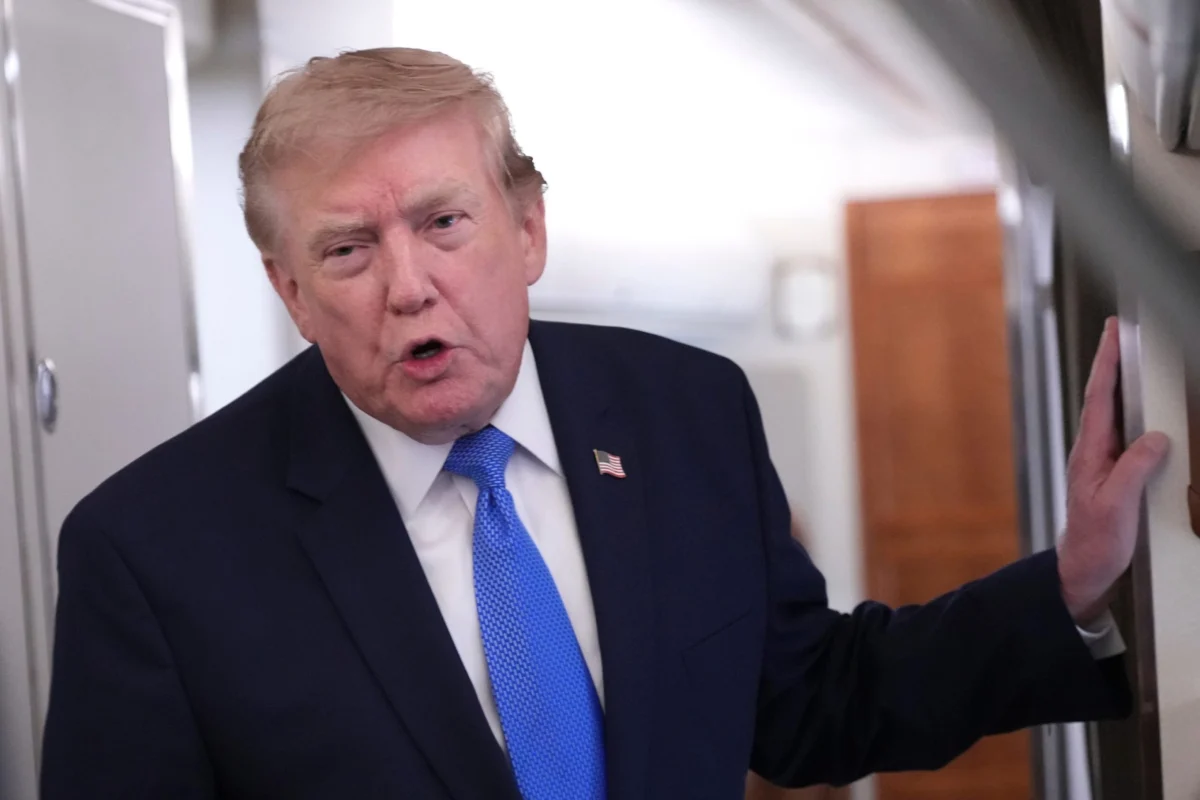
Washington D.C. – In a dramatic reversal of escalating threats, U.S. President Donald Trump announced Sunday his decision to halt imminent American military strikes against Iran, a move he attributed to the urgent diplomatic pleas from key Gulf allies, including Qatar, Saudi Arabia, and the United Arab Emirates. The eleventh-hour decision averted what Trump himself described as a plan for "the biggest attack since World War II," signaling a sudden pivot back towards diplomacy amidst a simmering five-month regional conflict.
The revelation came as President Trump spoke to reporters aboard Air Force One, en route back to Washington after a weekend at his Bedminster, New Jersey, golf club. He disclosed that the massive retaliatory strike, set for Sunday, had been meticulously planned, targeting a range of Iranian military assets in response to ongoing provocations. However, the plan was scrapped following direct appeals from influential Gulf leaders, most notably Saudi Crown Prince Mohammed bin Salman, and intriguingly, at the request of unnamed Iranian officials. This multi-pronged diplomatic pressure seemingly swayed the president from a path of potentially catastrophic military confrontation.
"I said to the crown prince, ‘What would you rather do? Would you rather us do this or not?’" Trump recounted, highlighting his direct, transactional approach to alliances. "They said we would much prefer a deal as opposed to an attack, because you don’t know where these attacks lead." This candid exchange underscores the deep anxieties among Gulf states, whose economies and stability are inextricably linked to regional peace. For these nations, the prospect of an all-out war with Iran, a neighbor with formidable proxy networks and missile capabilities, presented an existential threat far outweighing any short-term punitive gain. The uncertainty of escalation, as the Crown Prince articulated, was a critical deterrent.
The conversation between Trump and Prince Mohammed bin Salman took place on Saturday, just hours before the U.S. president made a cryptic social media announcement, stating that Mideast allies had reached the "perimeters" of a deal to end the five-month-old war. This conflict, ignited by a U.S. and Israeli attack on Iran on February 28th, has seen a dangerous cycle of naval skirmishes, drone incidents, cyberattacks, and proxy confrontations across the region, severely disrupting global shipping and raising fears of broader instability. The "perimeters" declaration, while vague, hinted at a significant diplomatic breakthrough, providing a potential off-ramp from the brinkmanship that has characterized the past months.
This latest decision marked yet another characteristic turnabout for President Trump, whose foreign policy has often been defined by rapid shifts in rhetoric and action. Only a day earlier, he had expressed a profound loss of faith in negotiations with Tehran, delivering an ominous warning that the U.S. military "will be hitting them very hard." Such dramatic swings, while keeping adversaries and allies alike on edge, also complicate long-term strategic planning and can erode trust. However, in this instance, the sudden pivot arguably prevented a conflict that many experts believed would spiral out of control.
Central to the "emerging deal" reiterated by Trump on Sunday are two critical components: the reopening of the Strait of Hormuz and the resolution of U.S. concerns regarding Iran’s nuclear program. The Strait of Hormuz, a narrow maritime chokepoint between the Persian Gulf and the open sea, is one of the world’s most vital energy arteries. Before the start of the conflict, approximately a fifth of the world’s crude oil and liquefied natural gas flowed through its waters daily, making its security paramount to global energy markets. Its closure or significant disruption would trigger a catastrophic surge in oil prices and could plunge the global economy into recession.
Throughout the five-month conflict, Iran has repeatedly demonstrated its capacity and willingness to disrupt shipping through the Strait, attacking vessels attempting to transit without its authorization. These actions, often involving mines, drone assaults, or the seizure of tankers, were a direct challenge to international maritime law and a clear signal of Iran’s leverage in the face of U.S. sanctions and military pressure. The impact on international shipping has been severe, with insurance premiums skyrocketing and many shipping companies rerouting vessels, adding to costs and delays.
However, Iran’s stance on the Strait’s future remains defiant. On Sunday, Foreign Ministry spokesperson Esmail Baghaei stated on Iranian state TV that the Strait of Hormuz "will in no way return to the status it was before February 28th," the day the conflict dramatically escalated with the U.S.-Israel attack. This declaration signals Tehran’s intent to maintain a degree of control or leverage over the waterway, perhaps seeking to negotiate new terms for its usage rather than simply restoring the pre-war status quo. Baghaei added that Iran is discussing shipping through the strait with Oman, a traditional regional mediator, but explicitly denied any current talks about fully reopening the crucial waterway, indicating a nuanced but firm position.
This isn’t the first time President Trump has announced halts to planned strikes on Iran since the initial U.S.-Israeli assault on February 28th. On several previous occasions, military action seemed imminent, only for Trump to pull back, citing various reasons, only for tensions to unravel and fighting to resume. This pattern of brinkmanship, while perhaps a deliberate negotiating tactic, has fostered an atmosphere of extreme unpredictability and has left regional actors and international observers constantly bracing for the next escalation.
Iran’s leadership, for its part, has maintained a posture of strength and vigilance. Following Trump’s announcement, Iran’s defense minister stated on X (formerly Twitter) that the country was "neither surprised nor passive" and reiterated Iran’s readiness to face "concrete threats" from the U.S. This public defiance reflects a carefully calibrated strategy aimed at projecting an image of resilience and deterrence, both for a domestic audience and international adversaries.
Beneath this outward display of unity, however, a struggle for control appears to be brewing within Iran’s intricate political and religious leadership. Sources suggest a deepening rift between hardliners, primarily within the Revolutionary Guard Corps (IRGC) and certain clerical circles, who vehemently oppose any negotiations with the "Great Satan" (the U.S.) and advocate for continued resistance, and more pragmatic factions within the Foreign Ministry and political establishment who see military pressure as a tool to gain leverage at the negotiating table. Supreme Leader Ayatollah Ali Khamenei ultimately holds the final say, but the internal debates reflect the complex calculus of survival and ambition within the theocracy.
The Latest Proposal: A Path Back to Negotiations
President Trump indicated that he expected negotiations to resume as early as "tomorrow afternoon," though he provided no specific details on who would be involved in such high-stakes talks. Analysts speculate that these discussions would likely involve senior U.S. State Department and National Security Council officials, alongside representatives from Iran’s Foreign Ministry and potentially even elements of the IRGC, given their prominent role in the conflict. European mediators and other regional actors might also play facilitating roles.
According to a regional official intimately involved in the mediation efforts, who spoke on condition of anonymity due to the sensitivity of the discussions, the proposal announced by Trump calls for both the U.S. and Iran to return to the negotiating table. The objective is to tackle the myriad complex issues that have stymied previous attempts at a comprehensive deal. These obstacles include a deep-seated trust deficit, disagreements over verification mechanisms for any nuclear concessions, and the scope of a potential agreement, particularly concerning Iran’s ballistic missile program and its regional proxy activities.
The comprehensive nature of the proposal is striking. It explicitly calls for the immediate reopening of the Strait of Hormuz, a crucial demand from global powers and regional economies. Furthermore, it mandates a halt to attacks across the region, specifically targeting Iranian-backed militias in Iraq, which have been active against U.S. interests and have posed a significant threat to Arab Gulf countries and Jordan. These militias, often operating under various banners, contribute significantly to regional instability, and their cessation of hostilities would be a major de-escalation step.
In return for these concessions, the U.S. is expected to make significant moves, including ending its naval blockade on Iran and, crucially, allowing Tehran to export its oil. This latter point, central to Iran’s economic survival, was reportedly a key provision in a tentative ceasefire deal reached in June, indicating that the current proposal builds upon earlier, unfulfilled agreements. The lifting of oil sanctions would provide Iran with much-needed revenue, offering a tangible incentive for de-escalation and a return to diplomacy.
While the "perimeters" of a deal have been identified, the official stressed that no final agreement has been reached, and mediation efforts remain ongoing. The delicate balance of power and mutual suspicion means that any resolution will be incredibly fragile and subject to continuous negotiation.
Adding another layer of complexity, Trump stated that Israel is joining his commitment to end the war by implementing the ceasefire deal reached in June. Israel, a critical U.S. ally with profound security concerns regarding Iran’s nuclear ambitions and regional military posture, has traditionally favored a harder line against Tehran. The absence of a public comment from Israel on Trump’s announcement is notable, potentially indicating internal deliberation, strategic silence, or even a degree of skepticism about the emerging deal’s implications for Israeli security. Israel’s historical doctrine of pre-emptive strikes against perceived threats from Iran makes its alignment with a diplomatic resolution a significant, if quiet, development.
Saudi Concerns: The Shadow of Retaliation
The decisive influence of Saudi Crown Prince Mohammed bin Salman (MBS) on Trump’s decision cannot be overstated. According to a person briefed on the Saturday phone call, described as "candid and constructive," Prince Mohammed, the kingdom’s de facto leader, conveyed profound concerns about the potential for the U.S. to escalate the conflict further. His anxieties were rooted in the realistic assessment that a new U.S. bombardment could trigger devastating Iranian retaliation against U.S. Gulf allies.
The Crown Prince specifically highlighted the severe impact such an escalation could have on the global economy. Iran, with its geographic proximity and array of missile and drone capabilities, could target vital oil infrastructure in Saudi Arabia, the UAE, and Qatar, as well as critical shipping lanes and desalination plants. Such attacks, even if limited, could send oil prices soaring, disrupt global supply chains, and trigger widespread economic instability, far beyond the immediate region. Saudi Arabia, heavily reliant on oil exports and pursuing ambitious economic diversification plans under Vision 2030, has a vested interest in regional stability.
The call between MBS and Trump occurred prior to the U.S. president’s social media announcement, underscoring the proactive role the Crown Prince played in seeking clarity on Trump’s intentions and advocating for a diplomatic off-ramp. Saudi officials, the anonymous source added, have consistently emphasized to the Trump administration that while Saudi Arabia, the UAE, and Qatar possess robust defensive capabilities against potential Iranian attacks, other regional partners like Kuwait could be significantly more vulnerable, particularly to attacks from Iranian-backed militias operating out of Iraq. Kuwait’s smaller military and its strategic location make it a potentially easier target, which would further destabilize the entire Gulf.
Ultimately, Trump suggested that his conversation with the Saudi Crown Prince weighed heavily in his decision to halt the planned strikes. "It would have been disastrous for them. And they didn’t want us to do it," Trump affirmed, encapsulating the powerful deterrent effect of allied concerns. "And frankly, Saudi Arabia didn’t want it either. They thought that a deal is imminent." This belief in an imminent diplomatic resolution, coupled with the profound fear of regional catastrophe, proved decisive in steering the U.S. away from what could have been a new, devastating chapter in the Middle East.
While the immediate threat of a massive U.S. strike has been averted, the path to a comprehensive and lasting resolution remains fraught with challenges. The deep-seated mistrust between Washington and Tehran, the internal divisions within Iran, and the complex web of regional interests mean that any emerging deal will require sustained diplomatic engagement and significant concessions from all parties. The coming days of renewed negotiations will test the true depth of commitment to peace and stability in a region long accustomed to conflict.
