
 By admin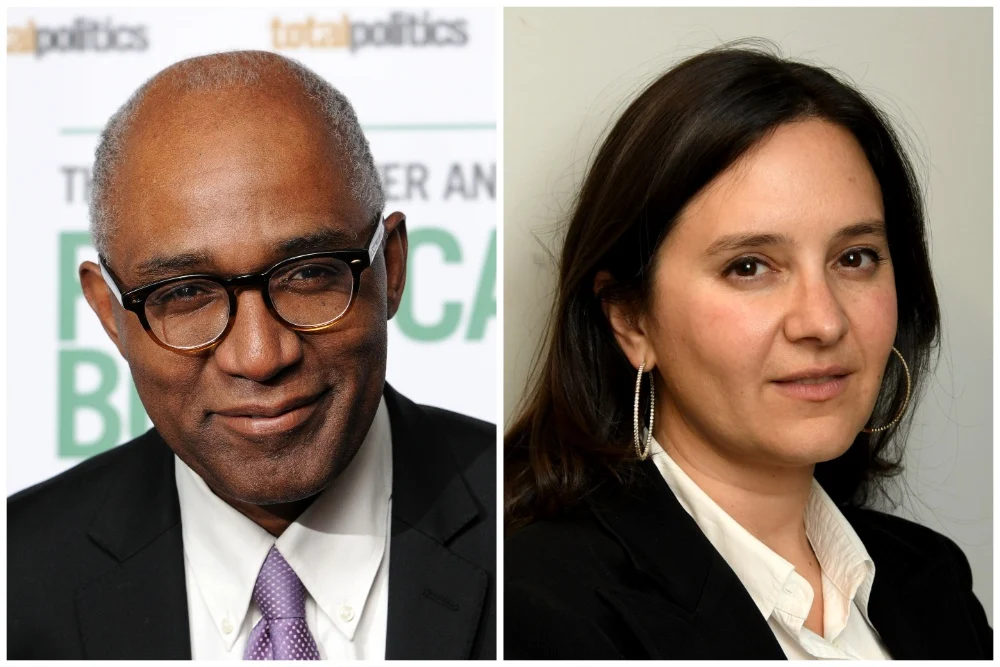
Newly appointed CBS News correspondent Trevor Phillips has delivered a characteristically candid assessment of his new superior, CBS News editor-in-chief Bari Weiss, framing her leadership as a high-stakes endeavor with the potential for dramatic outcomes. In an interview with The Daily Telegraph, Phillips drew a vivid analogy, stating, "Bari and her team have a huge tanker of a network news organisation to turn around, and they are assembling a little team on the bridge." He elaborated on the intensity of Weiss’s approach, noting, "The great thing about her is that she’s one of those people who will either change the world or crash and burn. But when they crash and burn, it’s in technicolour." This colorful description underscores the perception of Weiss as a transformative, albeit potentially volatile, figure at the helm of CBS News.
Phillips, a seasoned journalist and former politician, brings a wealth of experience to his new role. He joins CBS News from the UK’s Sky News, where he served as a correspondent since 2021. His appointment as senior global affairs correspondent, a role specifically created for him, signifies a significant investment by CBS News in Phillips’s expertise and perspective. His responsibilities will extend to contributing to the venerable investigative journalism program "60 Minutes," a testament to the confidence placed in his abilities by Weiss and the network’s leadership. Prior to his broadcasting career, Phillips held prominent positions in public service, including serving as the chair of the UK’s Equality and Human Rights Commission. His dedicated work in these areas was recognized in 2022 when he was knighted for his services to equality and human rights, a distinction that speaks to his long-standing commitment to public discourse and social justice.
The move to CBS News represents a significant transatlantic shift for the 72-year-old broadcaster. Reflecting on the offer, Phillips expressed a sense of adventure and a willingness to embrace new challenges. "You know, I’m 72. It’s a great adventure," he told The Telegraph, adding, "And who turns down adventures if someone is willing to take a chance on you?" This sentiment suggests a desire to contribute to a period of significant change within a major news organization, an opportunity that appeals to his seasoned yet adventurous spirit.
The interview with The Telegraph was a broad-ranging discussion that delved into the controversies surrounding Weiss’s appointment and her subsequent editorial direction at CBS News. Phillips directly addressed the perception in the United States that CBS News is undergoing an "anti-woke" transformation under Weiss’s leadership. He refuted this characterization, asserting, "In the U.S., the controversy has been framed as, ‘CBS News is becoming anti-woke’. But that’s not what Bari is about." Instead, he presented Weiss’s vision as one that champions intellectual diversity and a departure from rigid ideological frameworks. "She has her own views, some of which I’m sympathetic to, some of which I’m not, but her point is that the media should be heterodox. There should be a variety of voices," Phillips explained. This advocacy for a "heterodox" media landscape suggests an intention to move beyond established partisan divides and foster a more inclusive and intellectually challenging environment for news reporting.
Phillips also touched upon the evolving political landscape and his interest in engaging with a broader spectrum of political figures and ideologies. While he declined to comment on specific personnel decisions, such as rumors of his involvement in an interview with right-wing politician Nigel Farage, he articulated his strategic interest in covering figures who represent a departure from traditional political norms. "What’s interesting in politics now is this current of thought, represented by Farage, Giorgia Meloni and Marine Le Pen, which essentially says the way we have done conventional politics is bust in a new world, and we need to do things differently," he observed. He further elaborated on this point, stating, "We keep trying to fit it into the old Right/Left duopoly, and I don’t think that’s quite right. The interviews I’m interested in doing will include that group [of leaders]." This indicates a strategic intent to provide coverage that acknowledges and analyzes the rise of populist and nationalist movements, which challenge established political paradigms. His willingness to engage with these figures, even if controversial, aligns with Weiss’s stated goal of fostering a more diverse range of voices and perspectives within CBS News.
Reflecting on his own broadcast style, Phillips acknowledged that he might not be the most polished presenter but emphasized his ability to manage complex interviews and live situations effectively. "I’m not the smoothest presenter on television or reader of the autocue, but I guess they think that I manage the chaos [of live guests] well," he admitted. This self-awareness suggests a focus on substance over style, a characteristic that may be particularly valued in an era where journalistic integrity is under scrutiny. He then offered a broader critique of contemporary broadcast journalism, arguing that it has, to some extent, become overly influenced by entertainment. "Broadcast journalism has, to some extent, become the creature of entertainment. We need to return to the business of reporting," he stated. Phillips articulated a clear philosophy of journalistic practice, emphasizing the primacy of the story itself: "To put it in its crassest terms, the story needs to come before the reporter. Too many people who do what I do put themselves between the viewer and the story, and that’s not our job." This statement underscores a commitment to objective reporting and a desire to ensure that the news serves to inform the public rather than to showcase the personality of the journalist.
The appointment of Trevor Phillips to CBS News, coupled with Bari Weiss’s ambitious vision for the network, signals a potential shift in the landscape of American television journalism. Phillips’s experience, his willingness to engage with controversial figures and ideas, and his clear commitment to core journalistic principles suggest that he will be a significant contributor to Weiss’s efforts to reshape CBS News. His assessment of Weiss as someone who operates with a "huge tanker" of an organization, facing either world-changing success or spectacular failure, captures the high stakes of this endeavor. The network, under Weiss’s direction and with the addition of experienced journalists like Phillips, appears poised to embrace a more heterodox approach, seeking to provide a wider array of voices and perspectives in its reporting. The success of this strategy will likely depend on its ability to navigate the complexities of the current media environment while remaining true to the fundamental mission of informing the public. The inclusion of Phillips, a seasoned commentator with a history of tackling complex social and political issues, suggests a deliberate effort to bring a more nuanced and perhaps challenging perspective to CBS News’s global affairs coverage. His move across the Atlantic represents not just a personal career transition but a potential indicator of a broader editorial direction for one of America’s most established news organizations. The coming months and years will reveal whether Weiss’s bold vision for CBS News, supported by figures like Phillips, will indeed change the world or lead to a spectacular crash.
