
 By admin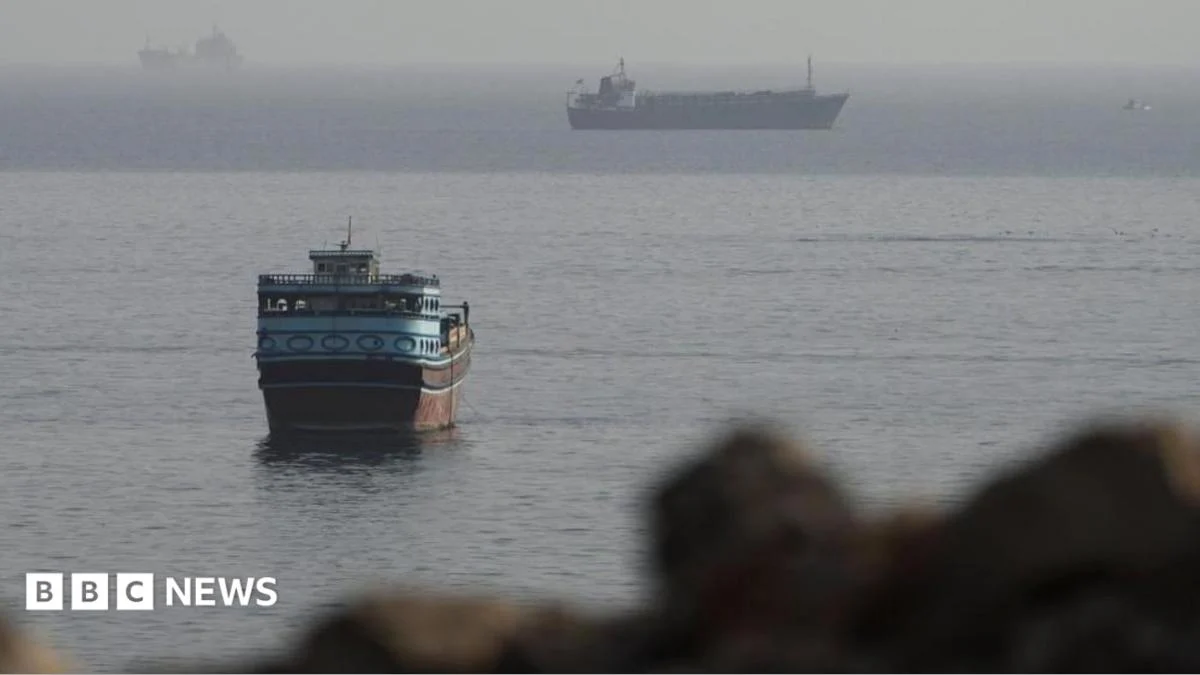
Tehran announced it is actively engaged in negotiations with Muscat, aiming to forge an "understanding" for a temporary transit route through the critical Strait of Hormuz, a move intended to facilitate the resumption of commercial shipping. This development emerged in the wake of a significant declaration by US President Donald Trump, who stated that new talks to end the protracted conflict with Iran were slated to commence on Monday. Trump further revealed that he had rescinded "massive" strikes against Iran, a decision he linked directly to these impending diplomatic overtures. However, the contours of these proposed negotiations remain conspicuously vague, with Trump refraining from specifying the participants. Iran, for its part, has unequivocally denied any ongoing or planned direct negotiations with the United States, asserting that its current diplomatic efforts are exclusively focused on discussions with Oman.
This stark divergence in communication from Tehran appears to have ignited a sharp retort from the US President. In a post on his Truth Social media platform, Trump characterized Iran’s leadership as "unbelievably duplicitous." He articulated his frustration, stating, "They ask for a meeting, some would say ‘beg,’ talks begin, with more scheduled in the immediate future, and they say, openly and proudly, that they’re not having any discussions, that nothing is being talked about, and they’re only dealing with ‘Oman.’" This public admonishment underscores the volatile and often contradictory nature of the US-Iran relationship, where pronouncements of de-escalation can be swiftly followed by accusations of deceit.
Earlier in the weekend, Trump had indicated that the "perimeters" of a potential deal had been agreed upon, with a key component being the reopening of the Strait of Hormuz. This vital waterway, whose closure by Iran has had a significant impact on global oil prices, has been a focal point of recent tensions. Iran has, at various junctures, asserted its ability to disrupt or completely close the strait, particularly in response to perceived aggression. Reports indicate that Tehran has repeatedly signaled its intent to control the strait since what it terms "attacks" on the country by the US and Israel commenced in February.
However, Trump’s stance on Monday presented a more assertive position. He insisted that the Strait of Hormuz remains under US control and declared that no vessels would be permitted to reach Iran "unless a Deal, or Total Surrender, is accomplished." This statement suggests that any agreement allowing passage through the strait would be contingent upon Iran meeting US demands, potentially signaling a significant shift in leverage.
The context of these developments is rooted in a period of heightened military alert. Speaking aboard Air Force One on Sunday, Trump divulged that Iran was aware of the extent of the planned US strikes "because they saw it forming." He reiterated that discussions were already underway, stating, "We’re talking to them in the form of a negotiation. It begins tomorrow afternoon." This implies a delicate balance where diplomatic overtures are intertwined with the threat of overwhelming military force.
Trump deliberately avoided setting a specific deadline for a potential deal with Tehran, instead emphasizing flexibility and readiness. "We’ll just see how it is. We’re ready to go anytime we want… I’m not looking to kill people," he remarked, underscoring a desire to avoid further bloodshed while maintaining a firm negotiating stance.
Adding another layer to the diplomatic maneuverings, Trump revealed that he had been urged by several key regional players to hold off on conducting strikes over the weekend. These appeals came from Saudi Arabia’s Crown Prince Mohammed Bin Salman, as well as US partners such as the United Arab Emirates and Qatar. "We were all set to go," Trump stated. "The reason they asked is [that] they think there’s a deal," he explained, specifically mentioning "a deal on Hormuz, and there will be a deal on the nuclear." This suggests a coordinated effort by regional allies to de-escalate tensions and foster a diplomatic resolution.
The announcement of potential negotiations and the de-escalation of military action had an immediate impact on global energy markets. On Monday morning in Asian trading, oil prices experienced a notable decline. Brent Crude oil saw a drop of 4.5%, settling at $83.98 per barrel (£62.26), while US-traded oil fell by 4.6% to $80.74 per barrel (£59.85). This price fluctuation highlights the sensitivity of energy markets to geopolitical developments in the Persian Gulf.
The conflict, which reportedly began on February 28, has led to significant volatility in energy prices as traders have reacted to disruptions in shipping through the Strait of Hormuz. This vital chokepoint is a critical artery for global energy trade, with approximately 20% of the world’s crude oil and liquefied natural gas (LNG) typically flowing through its narrow waters. Vessel-tracking data from the trade intelligence company Kpler provides concrete evidence of this disruption, indicating a slowdown in commercial shipping through the strait. Between July 30 and August 2, there were 51 vessel crossings, representing a decrease of around 28% compared to the preceding four days, which saw 71 crossings. This measurable decline underscores the tangible economic consequences of the ongoing tensions.
Diplomatic efforts to end the conflict have been fraught with challenges. Talks, largely facilitated by mediators, reportedly collapsed last month, bringing an end to a ceasefire that had been in place since April. President Trump has a history of vowing that a negotiated end to the war is imminent, only for retaliatory strikes to resume, creating a cycle of escalation and de-escalation.
The discrepancy between public pronouncements and private diplomatic engagements has been a recurring theme in the US-Iran relationship. While the specifics of off-the-record negotiations remain obscured from public view, the Trump administration has frequently accused Iran of presenting a dual narrative – one for domestic consumption and another for international diplomacy. This tactic is often attributed to Iran’s need to appease hardline factions within its government and military who are resistant to concessions to the US.
This pattern of communication is not new. On April 7, President Trump had previously issued a stark warning, stating that "a whole civilisation will die tonight" if Iran refused to engage in peace talks. This threat, surprisingly, did lead to historic face-to-face discussions in Pakistan, spearheaded by Vice President JD Vance. However, these negotiations ultimately failed to yield a definitive agreement. Months later, in May, Trump again suggested that planned military operations had been postponed at the request of regional allies amidst "serious negotiations." This was followed by a subsequent promise to strike Iran "very hard." In that instance, he claimed that positive negotiations with Iranian leaders had prompted the cancellation of the operation.
The White House’s perspective often suggests that Iran’s public statements are strategically tailored for a domestic audience, including powerful hardline elements within the government and military who are opposed to making any concessions to the United States. This internal political dynamic within Iran can complicate external diplomatic efforts and create the perception of duplicity.
The potential for escalation or even a breakdown in negotiations carries significant political implications for President Trump’s Republican allies, particularly in the lead-up to the November mid-term elections. The Trump administration has largely downplayed data indicating that the conflict, and its associated economic repercussions, are broadly unpopular with the American public, including a segment of Republican voters. Polls revealing widespread dissatisfaction with the handling of the war have reportedly caused alarm among some conservative strategists, who fear it could impact their electoral prospects. A Reuters/Ipsos poll released at the end of the previous week indicated that only one-third of Americans supported the conflict, the lowest level since the war began. A significant portion of respondents cited unclear or shifting objectives as the primary reason for their disapproval. This sentiment suggests a public appetite for a clear and decisive resolution, whether through diplomacy or a definitive end to hostilities. The ongoing dance between threats, negotiations, and public pronouncements in the US-Iran dynamic continues to shape global perceptions and market stability.
