
 By Titik Puspa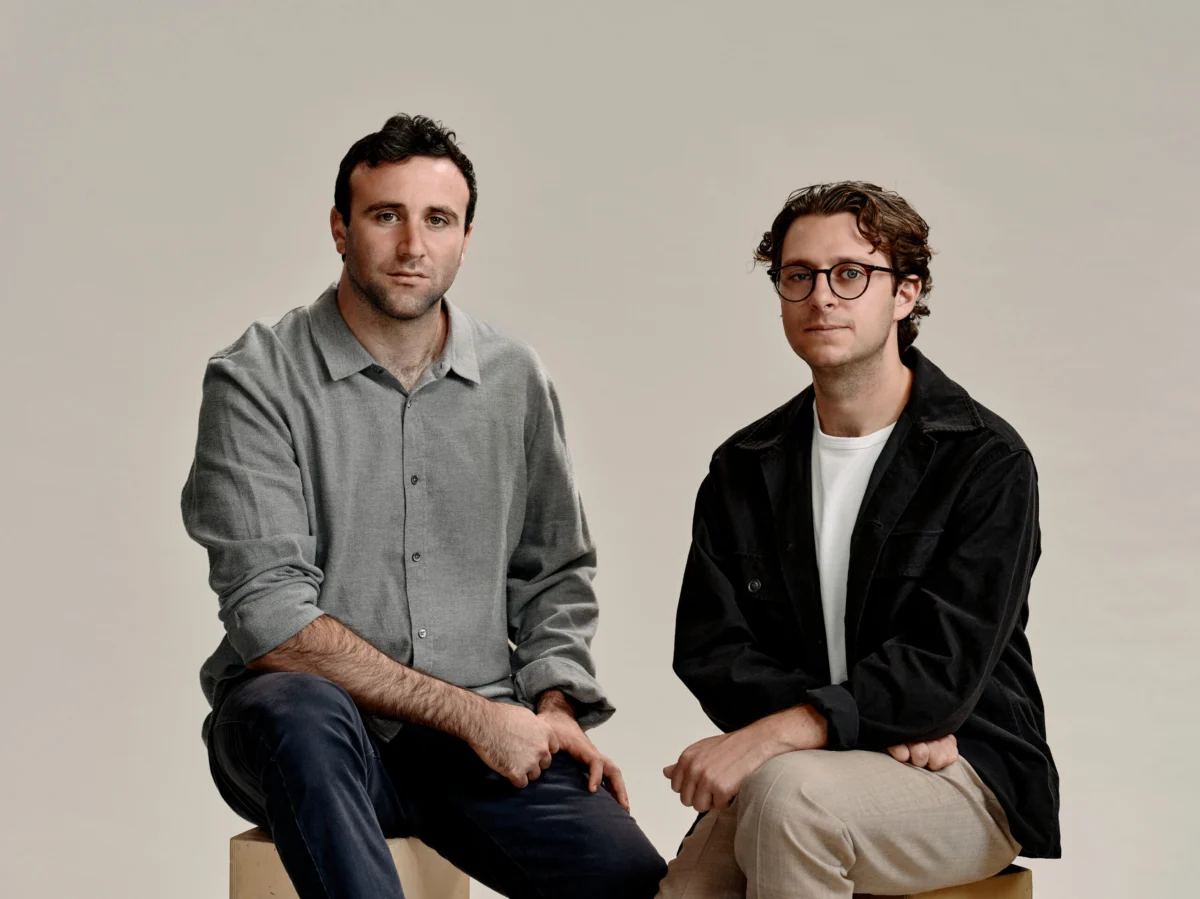
The insatiable demand for data, driven by the exponential growth of artificial intelligence, cloud computing, and the ever-expanding digital universe, is placing unprecedented strain on the world’s existing internet infrastructure. Hyperscale data centers, the colossal hubs of digital information, are proliferating globally, necessitating a robust and high-capacity network to shuttle vast quantities of data back and forth. For decades, this critical function has largely relied on a sprawling, yet often fragile, web of undersea fiberoptic cables that traverse the ocean floor. These subaquatic arteries, while crucial, present significant logistical challenges; they are notoriously difficult and expensive to access, repair, and, most critically, install, often requiring specialized deep-sea vessels and intricate engineering feats.
The inherent limitations of these undersea cables have spurred a search for viable alternatives. Traditional wireless approaches, both terrestrial and orbital, have struggled to bridge the bandwidth gap. Radio transmissions, while ubiquitous, simply lack the sheer capacity required to handle the petabytes of data coursing through modern networks. This has left a void, a pressing need for a solution that can offer the speed and scale of fiber optics without its geographical constraints and repair complexities. Now, a promising new contender has emerged from stealth mode, proposing a bold solution: the utilization of lasers, beaming data from space.
Endeavor Optical Networks (EON), a nascent startup founded in May and officially unveiling itself today, has secured $10.75 million in seed funding from prominent venture capital firms General Catalyst and Andreessen Horowitz. The company’s ambitious vision is to construct and deploy a constellation of laser-equipped spacecraft designed to establish direct, high-speed data links between data centers across continents, all from the vantage point of orbit. The founding duo, CEO Charlie Horowitz and CTO Tyler Presser, are at the helm of this groundbreaking endeavor, aiming to redefine global data connectivity.
The sheer scale of data transfer required by hyperscalers far exceeds the capabilities of most existing satellite communication networks. Even those systems designed to provide broadband internet service typically fall short of the 200 terabits per second (Tbps) or more that is now the benchmark for undersea fiber. However, recent advancements in satellite technology and optical communications are rapidly making space-to-ground laser transmission a more tangible reality. NASA’s recent Artemis II lunar mission, for instance, successfully demonstrated the potential of laser communications by beaming back substantial data from its journey, highlighting the technology’s scalability. Furthermore, several private space companies, including York, Kepler, and Cailabs, have already showcased successful laser links between Earth orbit and ground stations.
While these existing demonstrations represent significant progress, their throughput capacities, often in the range of 2.5 gigabits per second (Gbps), are a far cry from the requirements of hyperscale data transfer. EON, under Horowitz’s leadership, is setting its sights significantly higher, targeting an initial throughput of 2.4 Tbps. Achieving this ambitious goal necessitates overcoming one of the most persistent challenges in laser communications: atmospheric distortion. The Earth’s atmosphere, with its inherent turbulence and the presence of clouds, can significantly degrade and distort laser signals, making reliable, high-speed transmission a complex engineering puzzle. EON’s "secret sauce" is expected to lie in innovative solutions to mitigate these atmospheric effects, ensuring a stable and robust connection.
To realize its vision, EON plans to deploy a network of approximately 20 satellites. Each of these satellites will be engineered to provide a dedicated, high-capacity link between two continents. The initial fleet is designed to offer continuous, 24-hour coverage for its early customers. Strategic placement of ground stations in key geographical regions will be paramount, allowing EON to serve local data centers and Content Delivery Networks (CDNs) directly. The company emphasizes a commitment to redundancy, utilizing multiple ground station sites and leveraging real-time weather data to guarantee uninterrupted and reliable connectivity, a critical factor for data center operators who demand unwavering uptime.
EON is actively engaging with hyperscalers and artificial intelligence (AI) laboratories as prospective customers, recognizing their immense data transfer needs. The company is particularly focused on serving underserved or cost-prohibitive routes. These include lengthy intercontinental links, such as connecting France to Australia, or crossing regions with limited existing high-speed infrastructure, like the burgeoning data transit corridor between Africa and South America. EON intends to offer dedicated capacity, providing customers with complete control over their data transit, a proposition highly attractive to organizations with stringent data sovereignty and performance requirements.
The immediate focus for EON, following its substantial seed funding, is to establish a state-of-the-art optics laboratory. This facility will be crucial for research, development, and rigorous testing of their laser communication systems. The company also plans to significantly expand its engineering team, recruiting top talent in optical engineering, satellite systems, and network architecture. These investments will pave the way for comprehensive ground testing, a critical precursor to their planned demonstration satellite, which is slated for launch around the end of 2027. Horowitz anticipates that this pioneering spacecraft will achieve the highest optical downlink throughput ever recorded from orbit, with a target of at least 800 gigabits per second (Gbps), and potentially reaching a full terabit per second (Tbps).
The engineering required to achieve these throughputs is considerable. EON’s strategy involves a meticulous allocation of resources, prioritizing the development of the optical communications terminal. Particular emphasis will be placed on critical components, such as the highly precise gimbals responsible for accurately pointing the laser. For the satellite bus – the core structure and platform of the spacecraft – EON plans to leverage powerful, off-the-shelf solutions from established manufacturers, a strategy informed by Horowitz’s prior experience at Apex Space.
Charlie Horowitz’s background provides a strong foundation for this ambitious undertaking. He previously served as Chief of Staff to Apex CEO Ian Cinnamon and later as Director of Special Projects at the company. Ian Cinnamon, a notable figure in the space technology sector, expressed his strong confidence in Horowitz’s capabilities. "Charlie is a force of nature," Cinnamon stated, "he can move seamlessly from strategy to the details required to make something real. Charlie is the ideal founder, and I invested personally because I believe deeply in Charlie and what he’s building at EON with Tyler." This endorsement highlights the confidence EON has garnered from experienced industry leaders.
Complementing Horowitz’s leadership, CTO Tyler Presser brings a wealth of expertise as a PhD astronautical engineer with experience planning frontier missions for NASA. The company’s technical team is further bolstered by seasoned professionals. Michael David Francois, a long-time Google executive with a deep focus on global network infrastructure, brings invaluable insights into the demands of large-scale data networks. Wesley Baxter, an optics engineer with recent experience on Amazon’s Low Earth Orbit (LEO) satellite network, adds critical expertise in the practical application of optical technologies in space.
Jeannette zu Fürstenburg, the General Catalyst partner who spearheaded the seed investment, views EON’s mission as aligning perfectly with two of her firm’s key investment themes: artificial intelligence and infrastructure resilience. "I don’t worry about demand," she commented to TechCrunch, "I think all of that will solve for itself. It’s really all about can you actually get this thing into space in the time that we discussed? We really think about founder-product fit, [Horowitz] is just the right caliber of guy to go after a problem like this." This perspective underscores the strategic importance of EON’s technological and leadership capabilities.
EON is not the sole entity exploring laser-based satellite communication solutions for large-scale data transfer. Blue Origin, Jeff Bezos’s prominent space company, has announced its "TeraWave" initiative, a massive network of 5,048 satellites aiming to deliver speeds up to 6 Tbps for large-scale users. While Blue Origin’s plan is undeniably more ambitious in scale, it is also expected to require a longer development and deployment timeline. EON’s comparatively smaller satellite fleet offers the potential for quicker deployment, allowing them to address the market more rapidly, provided they can successfully navigate the same complex technical hurdles.
Caleb Henry, Director of Research at Quilty Space, offers a measured perspective on the challenges ahead. "Data centers have high standards for quality and redundancy," he points out. "Satellite internet is just now progressing from a technology of last resort to dependable, high-bandwidth infrastructure. That’s not to say it will be impossible to make satellites optimized for data center connectivity, just that it will be harder and take longer than most entrepreneurs suggest." This expert opinion highlights the critical need for EON to deliver on its promises of reliability and performance, moving beyond the perception of satellite internet as a niche or backup solution.
Despite the inherent complexities, a satellite-based laser network like EON’s may represent a more practical and achievable near-term solution compared to more futuristic concepts, such as building entire data centers in space. As Horowitz succinctly puts it, "We have one rule at the company: no physics problems." This pragmatic approach underscores EON’s focus on solving an existing, pressing market need. "There’s a market that exists today that we can go serve," he continued. "Down the road, we’ll go and take on more as it comes, but we know that this is a problem that exists today, that’s only getting worse. That’s our bet – more data is moving terrestrially than ever." This strategic focus on immediate market demand, coupled with a clear understanding of the escalating data traffic challenges, positions Endeavor Optical Networks as a company poised to make a significant impact on the future of global data connectivity.
