
 By Titik Puspa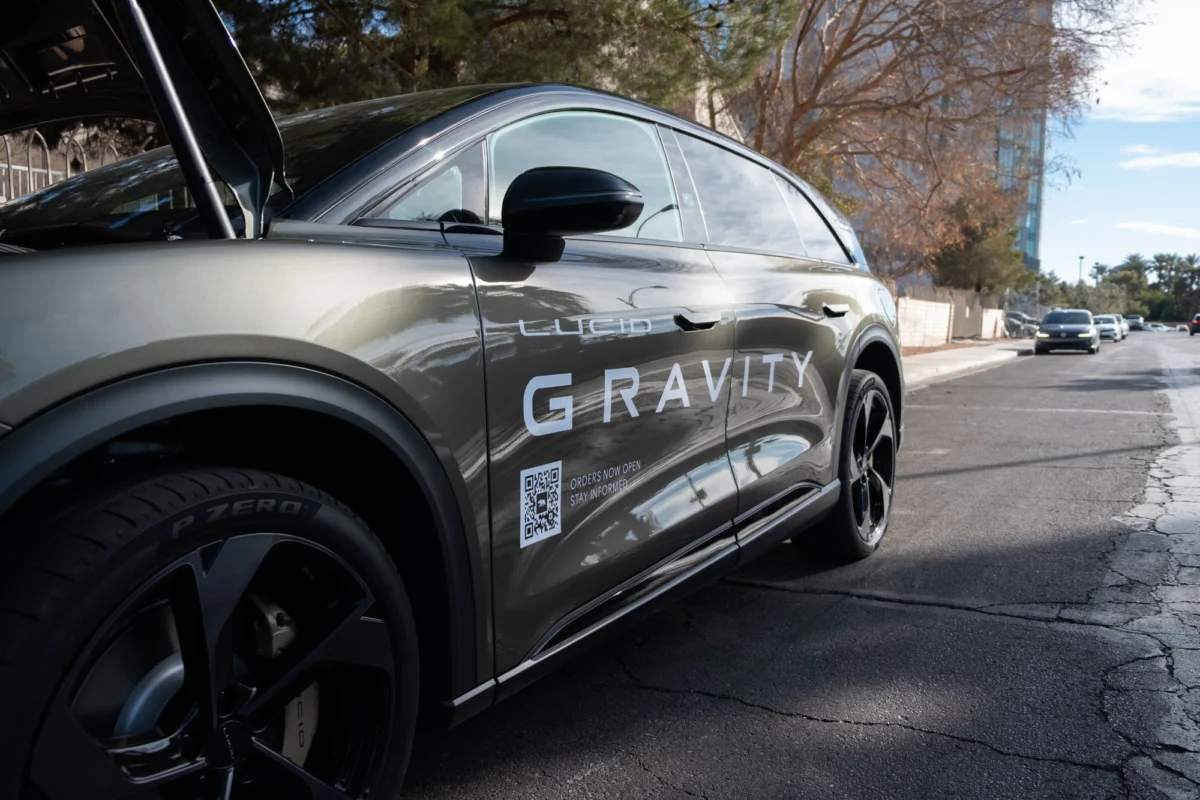
In a significant strategic pivot aimed at navigating the challenging landscape of the electric vehicle market, Lucid Motors announced on Tuesday an ambitious "operational reset" designed to conserve cash and refocus its efforts on key revenue-generating initiatives. The core of this plan involves a substantial $1.4 billion reduction in cash outflows, coupled with a sharpened focus on three critical "must-win" priorities: its burgeoning robotaxi program, the expansion of its manufacturing capabilities in Saudi Arabia, and the long-awaited launch of a more accessible mid-sized electric vehicle. This multifaceted approach signals a clear intent by the luxury EV maker to streamline operations, enhance financial discipline, and chart a more sustainable path toward profitability.
However, this strategic recalibration comes with a notable delay for its anticipated mid-sized electric vehicle. Initially slated to commence shipments by the end of 2026, the vehicle, which aims for a starting price under $50,000, has now been pushed back to next year. This decision, according to Lucid’s newly appointed CEO, Silvio Napoli, underscores a commitment to product readiness and quality assurance. "Our objective is clear: Mid-size will launch only when every process and quality requirement have been met," Napoli stated during a conference call with investors on Tuesday. "We will not repeat the mistakes of the past by bringing a product to market before it is ready." This statement reflects a crucial lesson learned, acknowledging past missteps in product launches that may have impacted consumer confidence and operational efficiency.
The comprehensive turnaround plan, spearheaded by Napoli, is designed to arrest Lucid’s current trajectory of escalating EV inventory and what has been described as unchecked spending. The target of $1.4 billion in cash savings is to be achieved through a combination of aggressive cost-cutting measures. Lucid detailed that capital expenditures will be reduced by $500 million, while projected savings of between $600 million and $800 million are expected from inventory management. Furthermore, operating expenses are slated for a $200 million reduction, as outlined in the company’s second-quarter earnings statement. If these initiatives prove successful, Napoli expressed confidence that the company will secure sufficient liquidity to extend its operational runway well into 2027.
Napoli did not shy away from candidly addressing the company’s shortcomings during his inaugural quarterly earnings call as CEO. His remarks painted a stark picture of past operational inefficiencies and strategic misalignments. "The way we operate has to change," he declared. "While there is no question that Lucid brought leading innovations and outstanding products to the market, we have disappointed on several fronts, and for far too long. We have not executed consistently, we miss commitments, launched products before they were ready, underinvested in service, responded too slowly to quality issues, and allowed complexity to slow decisions down." This self-assessment highlights a deep understanding of the internal challenges that have hampered Lucid’s progress and sets a clear mandate for the transformation ahead.
To that end, Napoli has already initiated significant organizational changes. The company has undergone a substantial shake-up in its leadership ranks, with the recruitment of several top executives. This includes the appointment of a new chief financial officer, chief technology officer, chief customer officer, chief digital officer, and chief transformation officer, signaling a deliberate effort to infuse new expertise and perspectives into the senior management team. Beyond leadership, Napoli has also implemented measures to streamline reporting structures, reducing the number of direct reports by half. Crucially, in June, the company directed a workforce reduction of 18%, impacting approximately 1,500 employees. This follows a prior layoff of 12% of its workforce just four months earlier, underscoring the urgency and scale of the cost-cutting measures.
Further contributing to the cost-saving efforts, Lucid has eliminated the second shift of EV production at its manufacturing facility in Casa Grande, Arizona. These combined actions, including the layoffs and the production shift adjustments, are projected to yield annualized savings of $158 million, as detailed by Napoli during the earnings call. These tangible reductions in operational overhead are a critical component of the broader strategy to enhance financial stability.
Despite these significant cost-saving measures and strategic realignments, Lucid’s financial performance in the second quarter continues to reflect the substantial investments and challenges inherent in scaling an EV manufacturer. The company reported revenue of $405 million, an increase from $259.4 million in the same quarter of the previous year, indicating growing sales volumes. However, this revenue growth was overshadowed by a net loss of $1.26 billion, or $3.30 per share, compared to a loss of $855.3 million, or $2.80 per share, in the prior year. This widening loss highlights the ongoing financial pressures faced by the company as it ramps up production and invests in future technologies. Lucid concluded the second quarter with a total liquidity of $3 billion, a figure that underscores the importance of its cash conservation efforts to ensure continued operations.
Amidst the focus on cost reduction, Napoli emphasized that several "must-win" projects remain central to Lucid’s long-term profitability strategy. These include the aforementioned mid-sized EV, the completion of its AMP-2 factory in Saudi Arabia, and its innovative robotaxi program developed in collaboration with Uber and Nuro. These initiatives are viewed not just as product lines, but as crucial avenues for future revenue generation and market penetration.
The midsize EV, internally codenamed "Cosmos," is positioned as the inaugural model from Lucid’s new mid-sized platform, which Napoli reiterated remains "an essential element of Lucid’s strategic plan." However, he acknowledged the significant work ahead, stating on the call that "the work ahead is substantial." His earlier comments about not executing consistently and responding too slowly to quality issues directly inform the decision to delay the vehicle’s launch, ensuring it meets Lucid’s stringent quality standards before reaching consumers. This disciplined approach to product development is a cornerstone of Napoli’s strategy to rebuild trust and deliver reliable, high-quality vehicles.
Napoli also expressed strong optimism regarding the robotaxi program, viewing it as a significant opportunity to diversify Lucid’s revenue streams beyond direct-to-consumer sales. To underscore the strategic importance of this venture, Lucid has established a new business unit named Lucid Technologies, which will be spearheaded by Chief Digital Officer Kai Stepper. This dedicated unit will concentrate on advancements in artificial intelligence, sophisticated driver-assistance systems, and cutting-edge digital technologies that are integral to autonomous mobility solutions.
The potential for higher profit margins within the robotaxi sector is a key driver of this strategic focus. "We project the margins vastly exceeding those of the traditional retail model," Napoli stated, referring to the robotaxi program that integrates Nuro’s autonomous driving technology into Lucid’s Gravity SUVs. The service will allow users to hail these self-driving vehicles via the Uber app, offering a premium mobility experience. This partnership leverages Uber’s established ride-sharing network and Nuro’s expertise in autonomous delivery and transportation technology, creating a powerful synergy for Lucid.
Currently, Nuro and Uber are engaged in testing a fleet of 100 vehicles across Houston and the San Francisco Bay Area. Lucid has begun delivering production validation vehicles for this program, assembled at its facility in Coolidge, Arizona. Regular vehicle production for the robotaxi is slated to commence in the fourth quarter, with an anticipated launch in late 2026, aligning with the revised timeline for the mid-sized EV and indicating a coordinated approach to new product introductions.
In a move to proactively address market concerns and speculation, Napoli directly refuted reports from the previous month suggesting that Lucid had engaged consulting firm AlixPartners to explore bankruptcy options. "Their engagement has been focused solely on supporting our cost-savings plan and streamlining our operations; we will be wrapping up their assignment once that work is complete, which we expect at the end of this month," he clarified. This statement aims to reassure investors and stakeholders about the company’s commitment to operational improvement and its long-term viability, framing the engagement with AlixPartners as a strategic partnership for efficiency, rather than a precursor to insolvency.
This story has been updated to incorporate additional details and context from Lucid’s second-quarter earnings call, providing a more comprehensive understanding of the company’s strategic direction and operational challenges.
