
 By Lina Irawan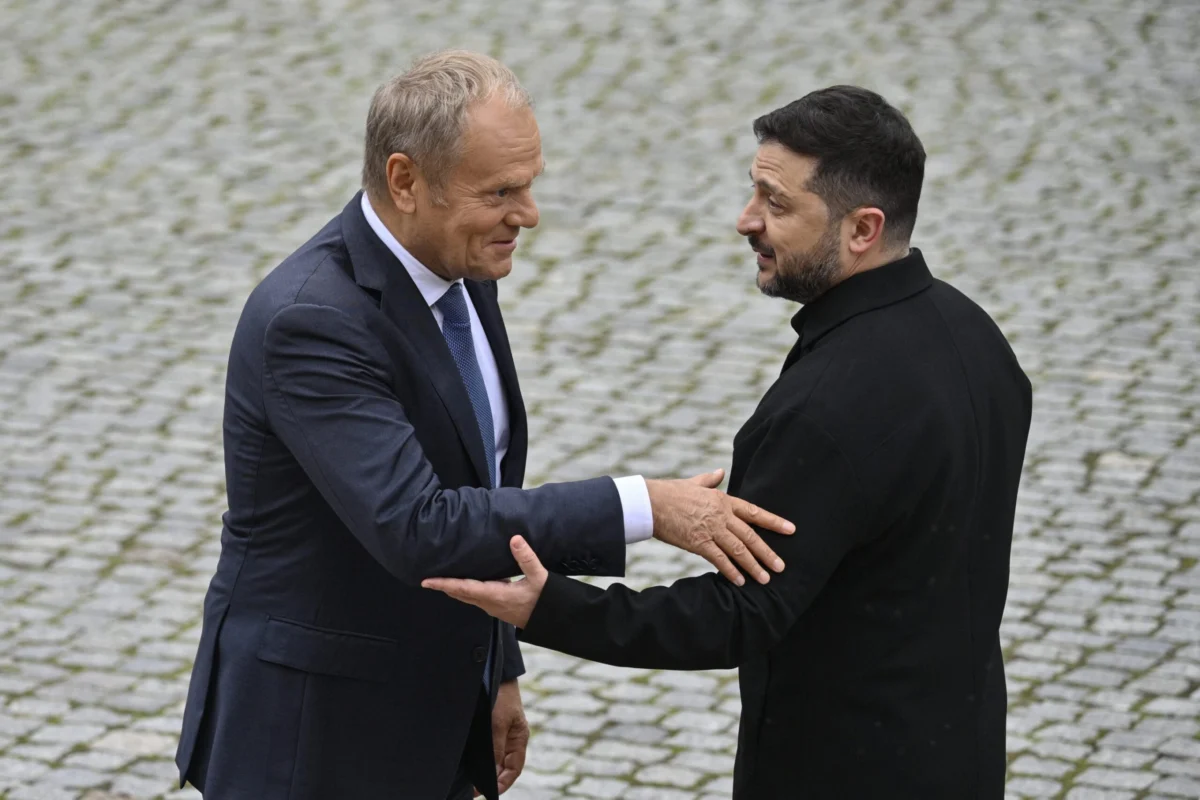
The inaugural summit, dubbed the "Carpathian Eight," convened Ukraine, Romania, Serbia, Poland, Slovakia, the Czech Republic, Austria, and Hungary in a significant diplomatic gathering, with the European Union also participating in the discussions. Held in the picturesque western Ukrainian ski resort of Bukovel, located in the Ivano-Frankivsk region, the meeting underscored Ukraine’s persistent efforts to forge stronger regional alliances and secure crucial international backing amidst the ongoing full-scale invasion by Russia.
This critical assembly unfolds as U.S.-mediated diplomatic efforts to end Russia’s 4 ½-year invasion remain at an impasse. Core disagreements, particularly over territorial concessions in eastern Ukraine and Kyiv’s demand for robust security guarantees from its international partners, have proven to be central sticking points in any potential peace deal. The timing of the summit is also notable, coinciding with the commencement of three days of voting in Russia’s first wartime parliamentary election, a process largely devoid of genuine opposition to President Vladimir Putin’s ruling party and widely anticipated to solidify the Kremlin’s political dominance.
The composition of the Carpathian Eight reflects the complex geopolitical landscape of Central and Eastern Europe. Nations like Poland and Romania have consistently stood as staunch allies of Ukraine, providing significant military, humanitarian, and political support, driven by shared historical experiences, a strong commitment to European security, and a direct threat perception from Russian aggression due to their proximity. Poland, in particular, has been a leading advocate for Ukraine’s EU and NATO membership and a key logistical hub for Western aid. Conversely, other participants, such as Hungary, Serbia, and Slovakia, have adopted more nuanced or even overtly critical stances. Hungary, under Prime Minister Viktor Orbán, has frequently blocked EU military aid packages to Kyiv and maintained close ties with Moscow, often citing national interests and energy dependence. Serbia, historically a Russian ally, has navigated a delicate balance between its EU aspirations and its traditional bonds with Russia, refusing to impose sanctions or provide direct military assistance. Slovakia, following a recent shift in government, has also ceased direct military aid to Ukraine, signaling a potential realignment of its foreign policy. This diverse group highlights both the potential for broader regional solidarity and the inherent challenges in achieving unified action.
President Zelenskyy, in a statement on Telegram, hailed the summit as a "significant beginning" for a movement designed to "further strengthen ties between our countries and create another strong element of cooperation at the EU level." He emphasized that the participating nations would collaborate on crucial sectors including security, energy independence, logistics, enhancing cross-border economic ties, and providing robust support for local communities. These areas of cooperation are vital for Ukraine’s long-term resilience and recovery, aiming to integrate its economy and infrastructure more deeply with its Western neighbors. The explicit involvement of the European Union in the discussions further underscores the strategic importance of this regional initiative, aligning it with broader European integration goals and Ukraine’s declared path toward EU membership.
Escalating Hybrid Threats and Europe’s Urgent Response
The gathering in Bukovel unfolded against a backdrop of increasing alarm across Europe regarding Russia’s escalating campaign of hybrid threats. Many European capitals are now grappling with a concerted and insidious strategy by Moscow, involving sabotage, sophisticated cyberattacks, pervasive disinformation campaigns, and potential drone incursions into NATO territory. These tactics are designed to destabilize, sow discord, and test the resolve of nations supporting Ukraine, often operating below the threshold of overt military aggression to avoid triggering collective defense mechanisms like NATO’s Article 5.
Poland’s Prime Minister Donald Tusk issued a stark warning on Thursday before his departure for Ukraine, cautioning that Moscow is actively planning hybrid strikes, potentially involving drones or rockets, against European countries that are staunchly supporting Kyiv, with Poland specifically identified as a potential target. This warning resonated deeply, given a series of recent incidents across the continent.
In recent weeks, officials in Poland, Germany, and Denmark have publicly accused Russia of involvement in a range of concerning activities. These include unexplained drone incursions over sensitive sites, acts of industrial sabotage, mysterious arson incidents, and intensified surveillance of critical defense facilities. Alarmingly, there have been reports of plans to use a drone carrying explosives to attack an airport in Germany, highlighting the increasingly brazen and dangerous nature of these hybrid operations. These incidents, though often difficult to definitively attribute, bear hallmarks of state-sponsored efforts to disrupt and intimidate.
The severity of these threats has prompted high-level calls for a more robust and coordinated European response. European Commission President Ursula von der Leyen, speaking on Wednesday, articulated the urgent need for the EU to develop a "NATO-like mechanism" to more effectively counter hybrid attacks attributed to Russia. She emphasized the necessity of achieving a "consensus on how to respond to certain incidents… that fall below armed aggression but clearly threaten our national security." Such a mechanism would likely involve enhanced intelligence sharing, joint threat assessments, coordinated diplomatic responses, and perhaps even collective counter-measures, aiming to bridge the gap between individual national responses and the full activation of NATO’s collective defense clause. The challenge lies in defining the threshold for such responses and ensuring swift, unified action among member states with diverse threat perceptions and political priorities.
Putin’s Warnings and Russia’s "Shadow Fleet"
Amidst these European concerns, Russian President Vladimir Putin delivered his own stern warnings. Speaking at a meeting of a government commission on new weapons, Putin dismissed Western claims about Russia’s purported aggressive plans as mere pretexts designed to justify increased defense spending by NATO and EU member states. He reiterated his denial of any hostile intentions toward Europe, portraying Russia as a nation merely reacting to perceived Western provocations. However, he quickly pivoted to a threat, stating that Russia would be "forced to respond to any aggressive action by Western allies," specifically citing the potential seizure of merchant vessels operated by Russia. "Let’s live in peace, otherwise we will be forced to respond in kind – it must be quite obvious to everyone," he declared, underlining a growing assertiveness in Russian rhetoric.
This warning echoes a previous threat made by Putin last month, where he vowed retaliation for what he termed "piracy" regarding Western seizures of Russia’s commercial vessels. He explicitly warned that Russia’s response would not necessarily be confined to the waters where such seizures occurred, implying that Moscow could retaliate in any area it deemed appropriate, thus raising the specter of broader, unpredictable actions.
The issue of maritime seizures is closely linked to Russia’s sophisticated efforts to circumvent international sanctions imposed after its full-scale invasion of Ukraine in February 2022. It is widely believed that Russia employs a vast "shadow fleet" comprising hundreds of ships, often operating under flags of convenience and with opaque ownership structures, to transport oil and other goods globally in defiance of these sanctions. This fleet is crucial for Russia to maintain its revenue streams and sustain its war economy. Both France and the United Kingdom have recently detained tankers suspected of being part of this "shadow fleet" for shipping oil in violation of international sanctions, and the European Union has sanctioned hundreds of such vessels. In a perceived escalation of its efforts to protect these illicit operations, Russia has recently begun deploying its warships to escort commercial vessels, adding another layer of tension to international maritime activities.
Diplomatic Fallout: Russia-UK Tensions Escalate
The heightened geopolitical climate was further underscored by a sharp diplomatic exchange between Moscow and London. Russia’s Foreign Ministry announced on Friday that it had summoned the British Chargé d’Affaires to deliver a strong protest regarding the United Kingdom’s continued increase in the supply of drones and other advanced weapons systems to Ukraine. The ministry accused the U.K. of adopting a "fiercely confrontational stance" aimed directly at "prolonging and escalating the armed conflict by every possible means." In a significant escalation of rhetoric, the Russian ministry declared that Russia "reserves the right to take necessary countermeasures in self-defense," and ominously warned that "any British military facilities in Ukraine used to strike Russian territory represent legitimate targets." This threat implicitly expands the scope of potential Russian military action to include not just Ukrainian assets but also the infrastructure supporting Western aid.
In response, Britain’s Foreign Office swiftly issued a statement reaffirming the U.K.’s unwavering commitment to providing Ukraine with the essential equipment it needs to defend itself against Russian aggression. The office dismissed Russia’s diplomatic reprimand as "yet another attempt to deflect attention from Russia’s barbaric full scale invasion of Ukraine and discredit the U.K. on the world stage." This exchange highlights the deep chasm in perspectives and the direct confrontation between a key NATO ally and Russia over the provision of military assistance to Kyiv.
EU Financial Lifeline for Ukraine
Amidst the military and diplomatic tensions, Ukraine received a crucial financial boost from the European Union. Following a telephone conversation with President von der Leyen on Friday, President Zelenskyy announced on Telegram that Ukraine had received a 3.3 billion-euro tranche (approximately $3.8 billion) from a broader EU financial support package. This funding is specifically earmarked to strengthen Ukraine’s defense capabilities, with a particular focus on the urgent procurement of missiles and drones, which are critical for both defensive operations and counter-offensive actions.
This influx of funds is vital for Ukraine, which faces a projected budget deficit of roughly $27 billion this year, a staggering figure largely driven by the costs of war, widespread destruction of infrastructure, and a decimated tax base. The continuous flow of international financial assistance is indispensable for Kyiv to maintain essential public services, pay salaries, and fund its defense efforts. Zelenskyy also indicated that Ukraine is preparing for a follow-up meeting with von der Leyen at the upcoming United Nations General Assembly in New York next week, where discussions will primarily focus on securing the country’s long-term financial stability and attracting further investment for reconstruction.
Intense Military Activity: Russian Strikes and Ukrainian Counter-Attacks
The summit and diplomatic maneuvers unfolded against a backdrop of ongoing intense military activity. Overnight Russian strikes inflicted further casualties and damage across Ukraine. In the Zhytomyr region, west of Kyiv, two people were killed and two others injured. Ukraine’s State Emergency Service reported that the strikes ignited fires in warehouse and production buildings. Rescuers bravely attempted to extinguish the blazes but were forced to retreat during repeated air raid alerts, underscoring the persistent danger. Emergency de-miners were also deployed to inspect the area for unexploded ordnance before firefighters could finally bring the fires under control.
Elsewhere, in the Kharkiv region, one person was killed and six others injured after Russian forces launched a drone attack on an electric train. The strike targeted a railway station in the Novovodolazka community, sparking a fire in two carriages of a suburban train and causing panic among passengers. These attacks on civilian infrastructure and transport networks appear designed to disrupt daily life and inflict psychological pressure.
Russia’s state nuclear corporation, Rosatom, reported that a Ukrainian drone on Thursday struck a cooling tower of a reactor unit at the Kursk nuclear power plant within Russia. While Rosatom claimed the attack posed no radiation threat and did not affect the plant’s operation, any strike on nuclear infrastructure carries inherent and grave risks, drawing international concern.
Meanwhile, the Russian Defense Ministry claimed on Friday that its air defenses had intercepted and destroyed a massive 629 Ukrainian drones overnight across 14 Russian regions, as well as over illegally annexed Crimea and the Azov and Black seas. Moscow Mayor Sergei Sobyanin provided a more specific figure for the capital, stating that more than 350 drones were headed toward Moscow, with most destroyed far from the city and 64 downed as they approached its perimeter. These claims, if accurate, highlight the significant escalation in Ukraine’s drone capabilities and its increasing willingness to target Russian territory, including military facilities and critical infrastructure, to disrupt the war effort and exert pressure on Moscow.
The Russian military, for its part, also stated on Friday that it carried out drone strikes overnight on Ukrainian ports, vessels, and a logistics center operating for the military. Specifically, Russian forces reportedly hit a bulk carrier in the Ukrainian port of Chornomorsk and a Nova Poshta logistics facility, located 6 kilometers (3.7 miles) northwest of Odesa. The Russian Defense Ministry asserted that this facility was being used for storing and distributing military cargo originating from Europe, indicating a deliberate targeting of Ukraine’s vital supply lines and its ability to receive Western military aid through its Black Sea ports. These ongoing exchanges of strikes underscore the brutal and attritional nature of the conflict, with both sides seeking to degrade the other’s military and logistical capabilities while projecting strength and resolve.
