
 By Rifan Muazin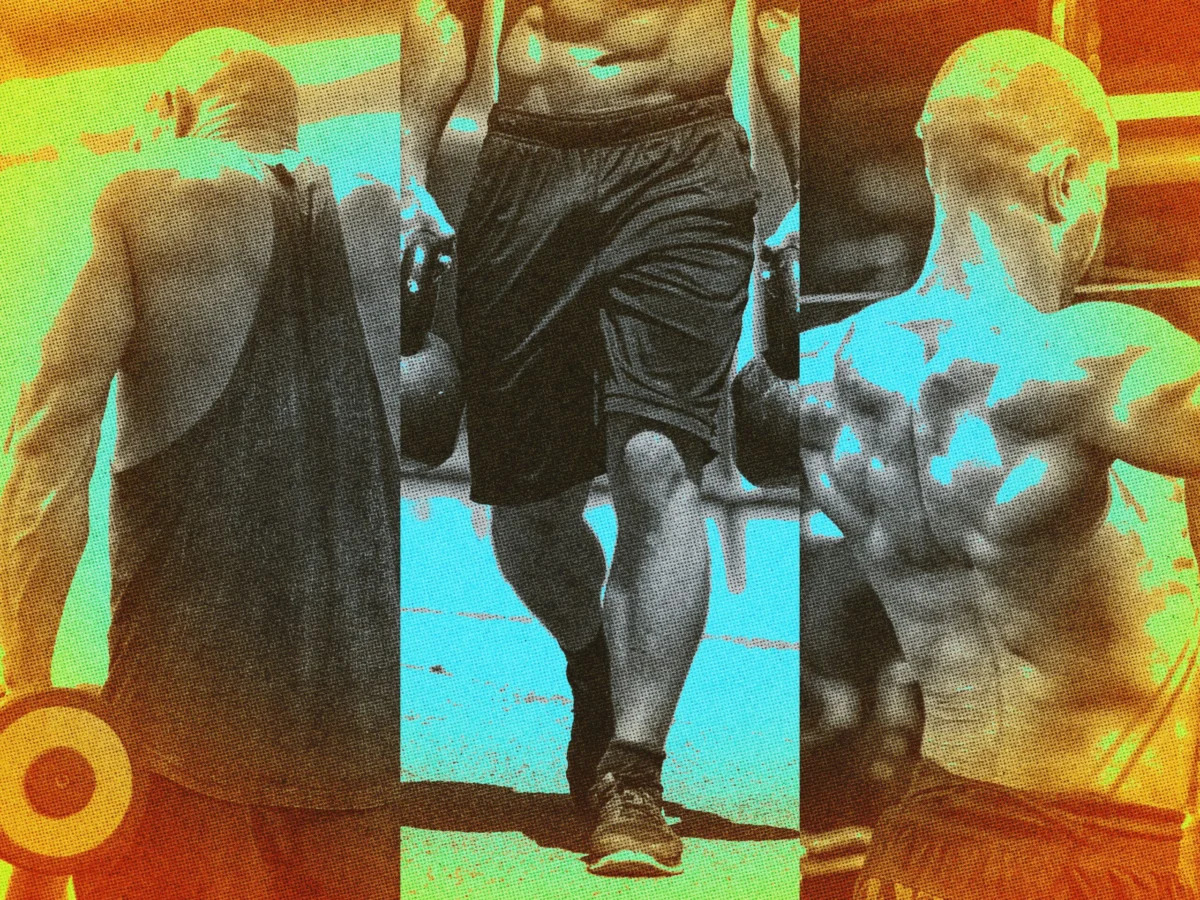
Ask someone in the weight room to point to their trapezius muscle, or “traps” in gym-speak, and they’ll probably gesture toward the small mounds of muscle nestled in between their neck and shoulders. But while those are technically part of your traps, they’re really just the tip of the iceberg. The trapezius is one of the most misunderstood and underutilized muscle groups in the human body, often relegated to a few sets of heavy shrugs at the end of a workout. In reality, this muscle group is a sprawling, diamond-shaped powerhouse that dictates everything from your ability to lift heavy objects to the way you stand while looking at your smartphone.
“There’s actually a lot more mass to the traps than most people realize,” says Luke Carlson, founder and CEO of Discover Strength. Your traps are a complex network of muscle fibers that extend from the base of the skull, travel down the sides of the neck to the shoulders, and then taper down to a point at the mid-back, near the twelfth thoracic vertebra. This single muscle group covers about a third of the visible surface area of your back, making it a critical component of both functional strength and physical aesthetics. However, because the traps live in a physiological gray area somewhere between shoulder day and back day, they’re often left out of both.
“When someone wants to add lean muscle tissue, a lot of times they think about the chest, the lats, the biceps, and the triceps,” Carlson says. “But we usually miss out on training the traps, and there’s a significant amount of muscle tissue there.” This neglect is not just a missed opportunity for muscle growth; it is a missed opportunity for injury prevention and postural correction. Increasing your overall muscle mass isn’t the only reason to do trap exercises. According to experts, strengthening your traps can prevent injuries in and out of the gym and even help protect your neck from the posture-destroying effects of modern life.
To understand why the traps are so vital, one must first understand their anatomy. Kinesiologists typically divide the trapezius into three distinct regions: the upper, middle, and lower fibers. The upper traps are responsible for elevating the scapula (shrugging) and supporting the weight of the arms. The middle traps are primarily responsible for scapular retraction—pulling the shoulder blades together—which is essential for a thick, powerful back. The lower traps are responsible for depressing the scapula and aiding in upward rotation, a movement that is critical for overhead lifting and shoulder health. When these three sections work in harmony, they create a stable foundation for almost every upper-body movement.
Developing your traps is a surefire way to fill out a formidable physique, as evidenced by the "yoked" appearance of actors like Dwayne Johnson in films such as The Smashing Machine. Unlike the latissimus dorsi, which are often hidden from the front, the traps are top-tier mirror muscles. “I think it’s a great muscle to train, because it’s just so visible, whether you’re wearing a T-shirt, tank top, or even a dress shirt,” says Carlson. A well-developed upper trapezius creates the "V-taper" look from the front, signaling strength and athletic prowess.
But cutting a hulking silhouette isn’t the only way that targeting your traps can benefit your appearance. Modern society is currently facing a postural epidemic known as "tech neck." As we spend hours hunched over laptops and smartphones, our heads drift forward, placing immense strain on the cervical spine. For every inch the head moves forward, its effective weight on the neck muscles increases by nearly ten pounds. “The other benefit of training the traps is we can prevent things like kyphosis, which is that forward curvature of the spinal column—what we call ‘tech neck’ today,” Carlson says. “The traps are what pull the head and the neck back. So, from a posture standpoint, it’s an awesome muscle to train.” By strengthening the middle and lower traps, you can pull your shoulders back and down, reversing the slouching habit and projecting a more confident, upright stance.
Giving your traps the attention they deserve can pay dividends in your other workouts too. “It’s obviously great for posture and your day-to-day, but working your traps is also going to carry over into keeping your shoulders healthy for pressing and other movements,” says Antony Brown, personal training leader at Life Time in Lake Zurich, Illinois. The shoulder is the most mobile joint in the body, but that mobility comes at the cost of stability. The traps act as the primary stabilizers for the scapula. “The traps really stabilize the shoulder joint,” says Brown. “If we can better lock the shoulders back and down on the bench press, or keep them nice and stable while overhead pressing, that’s going to lead to a much stronger press because you’ve got a way stronger base.” Without strong traps, the scapula can wing or tilt, leading to impingement and rotator cuff issues that can sideline a lifter for months.
Ready to pay tribute to the unsung heroes of your upper back? Here are the three best trap exercises, according to personal trainers, designed to target the muscle from every angle.
1. The Shrug
The shrug is the quintessential trap exercise, specifically targeting the upper portion of the muscle. This is the part that is most visible in the mirror and contributes to that powerful "neck-tie" look. “This is what you see when you look at someone’s neck and shoulders from the front,” Carlson says. Working on your upper traps is the most efficient way to build mass around the neck area.
One of the greatest advantages of the shrug is its accessibility. You can perform it with dumbbells, kettlebells, a barbell, or even a specialized trap bar. In a home setting, grocery bags or backpacks filled with books can serve as effective resistance. To perform a shrug correctly, stand with your feet shoulder-width apart, holding the weights at your sides with a neutral grip. Keeping your arms perfectly straight, lift your shoulders toward your ears in a slow, controlled motion. Hold the peak contraction for a second before lowering the weights back down.
However, many lifters fall into the trap of "ego lifting" during shrugs. “One of the biggest mistakes people make with training their traps—and with the shrug in particular—is they try to use too much weight, and so their shoulders don’t get as high as they theoretically could,” says Carlson. “Instead, start with a lower weight and aim for as much range of motion as possible at the top of the movement.” Avoid rolling your shoulders in circles, as this adds unnecessary stress to the rotator cuff without providing extra benefit to the traps.
2. Scapula Retraction
While shrugs handle the top, scapula retraction focuses on the "hidden" part of the traps. “This second exercise is for the fibers in the mid and lower trap,” Carlson says. These fibers are the ones responsible for pulling your shoulders back and preventing that rounded-shoulder look.
The setup for scapula retraction is identical to a seated cable row. However, the execution is much more subtle. Sit at a rowing station with your feet on the pads and your knees slightly bent. Grasp the handle, but instead of pulling with your arms, keep your elbows locked and totally straight. The only movement should come from your shoulder blades. Imagine trying to pinch a pencil between your shoulder blades as you pull them back.
“It’s just a subtle movement where you’re pinching the shoulder blades back, pausing, and then letting them roll forward again,” Carlson explains. “Focus on keeping your torso totally still. If your torso is not moving forward or backward, and only your shoulder blades are retracting and stretching, then you’re probably doing it right.” This exercise is a game-changer for anyone struggling with shoulder instability or postural issues.
3. The Farmer’s Carry
The final piece of the puzzle is the Farmer’s Carry, a functional movement that builds the traps through a phenomenon known as stretch-mediated hypertrophy. “We know from research that stretching a muscle under load is really beneficial to hypertrophy,” says Brown. He points to a 2025 study review published in the journal Sports Medicine and Health Science, which confirmed that training a muscle in a lengthened position can significantly increase growth.
The Farmer’s Carry is deceptively simple: pick up a pair of heavy weights and walk. “Just carrying heavy things with straight arms is going to build the traps, because they’re stretched and they’re loaded,” says Brown. “If you look at a lot of powerlifters and strongmen, they all have huge traps, and that’s why.”
To maximize the benefit, you must maintain a "tall" posture. “You want to try and keep your shoulders down and keep your chest up so that you’re getting that full stretch,” Brown says. Walking with a heavy pair of kettlebells or dumbbells while resisting the urge to let the weights pull your shoulders forward forces the traps to work isometrically to maintain structural integrity. This constant tension is a powerful stimulus for muscle growth and grip strength.
Integrating these three exercises into your routine—one for elevation (shrugs), one for retraction (scapula retraction), and one for isometric stretch (Farmer’s Carry)—will ensure that your traps are no longer a "gray area" in your training. By treating the trapezius as a priority rather than an afterthought, you can build a back that is as resilient as it is impressive, capable of supporting both your heavy lifts and your long days at the desk.
