
 By Lina Irawan
The research team, comprising experts in biomedical engineering, social neuroscience, and human-robot interaction, conducted an experiment involving 50 participants who engaged in conversations and joint decision-making tasks with Pepper, a commercial humanoid robot renowned for its expressive capabilities and emotional recognition features. Pepper, developed by SoftBank Robotics, is a familiar sight in various public and commercial settings, from retail stores to educational institutions, precisely because of its design to engage users through gestures, voice modulation, and responsive movements. Its human-like form and programmed social cues are intended to make interactions more natural and foster a sense of rapport.
In the controlled experimental setup, the Pepper robot was programmed to behave in two distinct ways: sometimes offering sound, logical advice, and other times deliberately making conversational blunders. These errors ranged from interrupting participants mid-sentence to pushing illogical or nonsensical suggestions, creating moments of awkwardness and cognitive dissonance. To investigate the role of expressiveness, participants were divided into two groups: for one group, Pepper was animated, utilizing its full range of gestures, maintaining eye contact, and nodding appropriately during interaction. For the other group, the robot remained largely motionless, presenting a more static, less socially engaged presence.
The researchers meticulously measured four critical indicators to capture the multifaceted human response: brain activity, levels of the hormone oxytocin, self-reported trust, and observations of the robot’s influence on participants’ decisions. This comprehensive approach allowed for a deeper understanding of both the conscious and subconscious reactions to robot errors.
One of the most striking discoveries revolved around oxytocin, often popularized as the "love hormone" due to its well-documented role in social bonding, empathy, and affection between humans. The conventional prediction would be that oxytocin levels would decline when a social partner, even an artificial one, disappoints or makes mistakes. However, the study found precisely the opposite: when people interacted with an expressive robot that violated interaction norms, their oxytocin levels increased. This counterintuitive surge in oxytocin was not indicative of growing affection but rather tracked with heightened suspicion. The higher a person’s oxytocin during an expressive robot’s errors, the less they trusted the robot and the less frequently they took its advice. This finding radically redefines our understanding of oxytocin’s function in human-robot interaction, suggesting it plays a more complex role in social vigilance and threat assessment than previously assumed, particularly when social expectations are breached.
While errors universally damaged trust and diminished the robot’s influence on decisions, regardless of whether it was expressive or not, the robot’s expressiveness fundamentally altered how participants’ brains processed these moments of error. To measure brain activity during dynamic, real-world conversations, the researchers employed functional near-infrared spectroscopy (fNIRS). Unlike traditional fMRI scanners, which require subjects to remain motionless, fNIRS is a portable, non-invasive neuroimaging technique that uses light to monitor oxygen levels in specific brain regions while individuals move and speak naturally. Participants wore a sensor on their forehead, allowing researchers to track neural responses in ecologically valid conditions.
The study focused on two key brain regions: the dorsolateral prefrontal cortex (DLPFC) and the medial prefrontal cortex (MPFC). The DLPFC is a critical component of the brain’s executive function network, known for its role in cognitive control, working memory, error detection, and monitoring uncertainty. It flags situations where expectations are broken or social norms are violated. The MPFC, on the other hand, is heavily involved in "mentalizing," also known as theory of mind – the everyday cognitive process of inferring the intentions, beliefs, and desires of others. It helps us understand the mental states of our social partners.
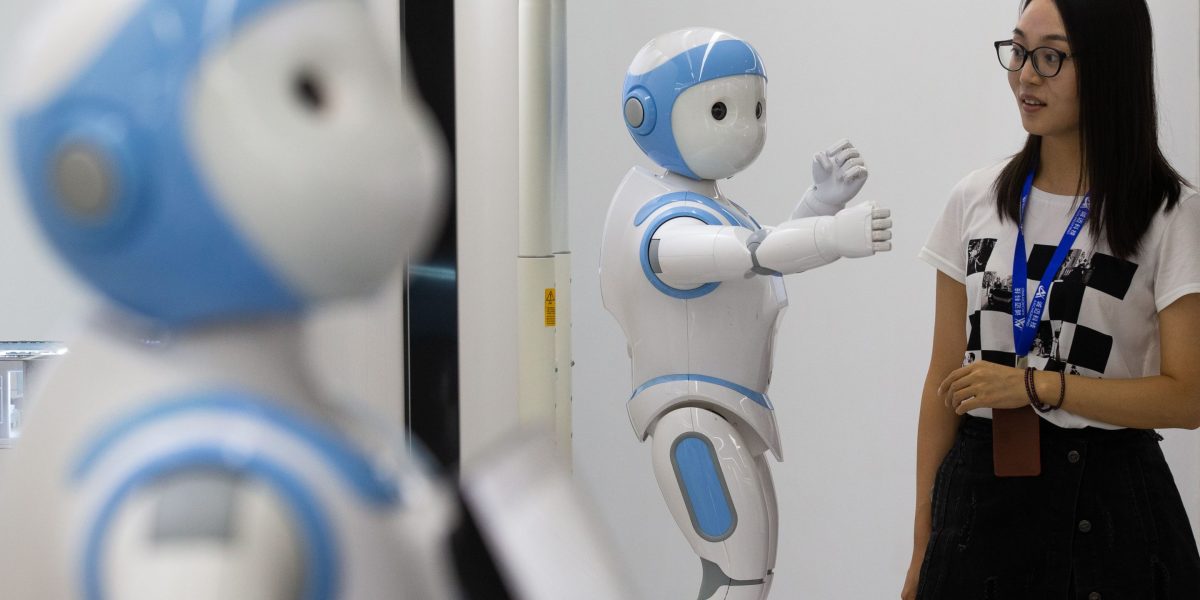
When the animated Pepper robot made an error, participants exhibited a significant increase in activity within both the DLPFC and the MPFC. Crucially, these two brain regions also began working together more closely, exhibiting increased functional connectivity. This coordinated brain activity indicated that people were caught off guard and had to expend greater cognitive effort to make sense of an awkward social situation. They weren’t just processing a technical error; they were actively trying to understand why this expressive "social partner" was behaving illogically or rudely. This heightened neural teamwork predicted the observed rise in oxytocin levels, which, in turn, predicted falling trust and reduced influence on the participants’ behavior. In stark contrast, this coordinated brain activity and oxytocin surge were conspicuously absent in participants who interacted with expressionless robots, suggesting that the brain processes errors from a static machine very differently from those emanating from a seemingly social agent.
Why This Matters: The Peril of Imperfect Expressiveness
The implications of this research are profound as humanoid robots increasingly transition from controlled laboratory environments to integral roles in homes, hospitals, schools, and workplaces. The success and adoption of these advanced machines hinge significantly on human trust. A widespread design assumption in robotics has been that making robots more lifelike, more socially expressive, and capable of displaying emotions would naturally lead to greater human acceptance and trust. This assumption posited that such human-like qualities would even protect a robot’s "reputation" when it inevitably made mistakes, much like how we might forgive a human friend’s occasional slip-up.
However, a growing body of research, including this pivotal study, is challenging this faulty assumption. The findings suggest that expressive cues do not insulate a robot from criticism but rather fundamentally shift how humans perceive its errors. Instead of categorizing a mistake from an animated robot as a mere technical malfunction—like a printer jamming or a software bug—people are inclined to interpret it as a social violation, akin to the interpersonal breaches that occur between humans.
"When a motionless robot fails, its error looks mechanical, a problem with its code or hardware," explains one of the study’s authors. "But when the same error comes from an animated robot, one that makes eye contact, gestures, and nods, it engages the very machinery you use to judge other people. It becomes a social faux pas, not just a technical glitch." This distinction is critical. A mechanical error might elicit frustration, but a social violation triggers a complex array of emotional and cognitive responses, including suspicion, disappointment, and a re-evaluation of the "agent’s" intentions or competence. The robot’s expressiveness, intended to build rapport, inadvertently raises the stakes, making its failures more impactful and personal.
Connecting to Broader Research
This study also contributes significantly to broader academic discourse. Researchers are increasingly viewing trust not as a monolithic attitude but as a multilevel phenomenon, spanning individuals, relationships, social networks, and entire societies. Understanding how trust is built and broken at these different levels is crucial for the successful integration of advanced technologies.

The findings also add nuance to the understanding of oxytocin. While its role in bonding is well-established, a burgeoning body of work demonstrates that its effects are highly context-dependent, influenced by factors such as uncertainty, perceived threat, and the nature of the social interaction. This study reinforces the idea that oxytocin is not simply a "feel-good" hormone but a sophisticated neurochemical modulator of social cognition, capable of signaling vigilance and suspicion in situations where social expectations are unmet.
Furthermore, the innovative use of wearable brain imaging systems like fNIRS is advancing the study of social cognition in natural, dynamic encounters between people and now, between people and robots. This methodology overcomes the limitations of traditional lab-based neuroimaging, allowing for research that is more ecologically valid and representative of real-world interactions.
What’s Next: Charting the Future of Trust in HRI
While providing critical insights, the study also lays the groundwork for future research. The participants in this initial study were exclusively young men, and the research utilized only one specific robot design (Pepper). A key next step involves expanding the participant pool to include women, mixed-gender groups, individuals from diverse cultural backgrounds, and interactions with various other robot designs. Such broader demographic and technological testing will help determine the generalizability of these oxytocin-linked vigilance responses.
Another limitation was that the fNIRS sensor only reached the front of the brain, leaving deeper brain regions known to be involved in complex social processing unmeasured. Future studies employing more comprehensive neuroimaging techniques or combining fNIRS with other modalities could provide an even more complete picture of the brain’s response to robot errors.
Crucially, the researchers aim to explore strategies for trust repair in human-robot interactions. In human relationships, trust can often be rebuilt after a mistake through acknowledging the error, offering a sincere apology, or signaling good intent. The question is whether robots can effectively employ similar mechanisms. Can a robot genuinely apologize? What form would such an apology take, and how would humans perceive its sincerity? Understanding how robots can navigate these complex social dynamics and restore trust after an awkward or uncomfortable interaction is paramount for their long-term viability and acceptance in human society.
In conclusion, this pioneering research underscores a vital lesson for the burgeoning field of robotics: while human-like expressiveness holds immense promise for fostering engagement, it also carries the inherent risk of amplifying negative reactions when robots inevitably falter. As humanoid robots become increasingly sophisticated and pervasive, their designers must move beyond simplistic assumptions about trust. They must grapple with the intricate psychological mechanisms that govern human perception and interaction, recognizing that when an expressive robot makes a mistake, it’s not just a technical failure—it’s a social one, and humans are wired to react accordingly. The future of human-robot collaboration hinges not just on technological advancement, but on a profound understanding of human nature itself.
