
 By Lina Irawan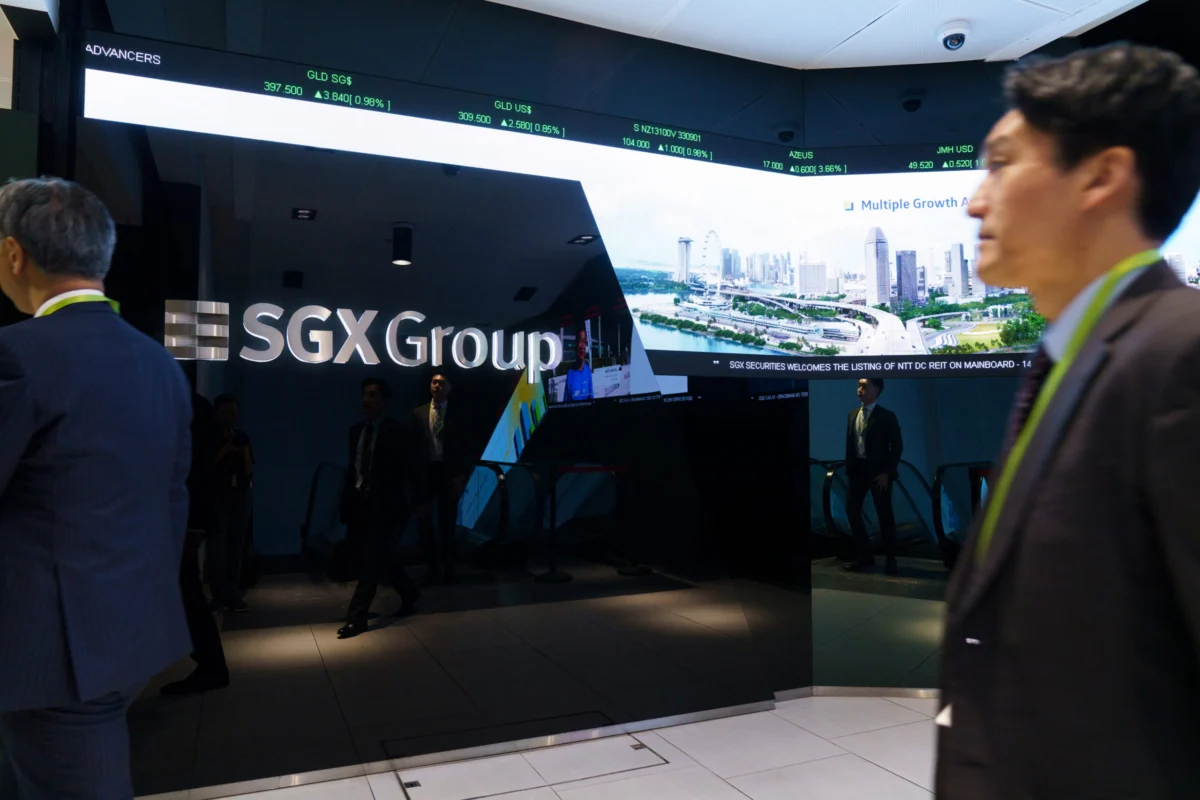
The Singapore Exchange (SGX) has announced a landmark financial year for 2026, reporting a formidable 14% surge in yearly revenue, reaching an unprecedented $1.17 billion. This sterling performance, coupled with a 24.6% increase in net profits, underscores the significant success of a series of comprehensive market reforms rolled out by the city-state in 2025, specifically designed to re-energize its equity market and enhance its global competitiveness.
The robust financial results, unveiled during a detailed results briefing on August 6, confirmed that the strategic initiatives implemented by Singapore have decisively paid off. Daniel Koh, the Chief Financial Officer of SGX, captured the sentiment of the moment, stating, "We achieved a milestone year, delivering our highest ever full year revenue and earnings. This strong performance was built on structural market changes and focused execution." The figures paint a vivid picture of a market undergoing a profound transformation, moving past a period often characterized by a perceived sluggishness and into an era of renewed dynamism and growth.
Catalyst for Growth: Singapore’s Bold Market Reforms
For years leading up to 2025, the Singapore stock market had faced challenges, including a relatively lower volume of new listings compared to regional rivals like Hong Kong and the burgeoning bourses in Shanghai and Shenzhen. Concerns over liquidity, investor interest, and the ability to attract high-growth companies had prompted policymakers to reassess the market’s structure and incentives. This introspection led to the formulation of the 2025 market reforms, a proactive and multi-pronged approach aimed at bolstering Singapore’s appeal as a premier listing destination.
Central to these reforms were two key policy levers. Firstly, the government introduced attractive tax rebates for newly-listed companies. These rebates were designed to significantly reduce the initial financial burden and operational costs associated with going public, making the SGX a more cost-effective and appealing option for businesses looking to raise capital. Such incentives are crucial in a highly competitive global landscape where exchanges vie for the most promising enterprises. The tax breaks likely covered areas such as listing fees, stamp duties, and potentially corporate income tax for a specified period, thereby directly improving the financial viability of an IPO for prospective companies.
Secondly, the government undertook a substantial intervention, injecting 1.5 billion Singapore dollars into the local equity market. This capital injection, likely channeled through government-linked investment vehicles such as GIC or Temasek Holdings, served multiple purposes. It aimed to boost market liquidity, signal strong government confidence in the domestic market, and provide an anchor for institutional investment. Such a move can often catalyze further private investment by reducing perceived risks and increasing market depth, making it easier for large blocks of shares to be traded without significant price impact. The direct effect of these reforms was immediately evident in the IPO landscape. SGX reported a remarkable 21 new IPO listings in FY2026, which collectively raised an impressive $3.2 billion. This figure stands in stark contrast to the preceding year, FY2025, when the exchange saw only six listings that managed to raise a paltry $20 million. This represents an astounding 160-fold increase in capital raised year-over-year, unequivocally demonstrating the efficacy of the reforms in reigniting the IPO pipeline.
The Global Listing Board: Bridging Asia with Global Capital
A significant structural market change, and arguably the most ambitious component of SGX’s refresh, is the dual listing partnership forged with the U.S. stock exchange Nasdaq. This innovative collaboration has materialized into the "Global Listing Board" (GLB), a platform designed to allow companies to simultaneously raise capital on both the SGX and Nasdaq using a single, streamlined set of offering documents. This initiative directly addresses a critical pain point for companies with global ambitions: the complex, costly, and time-consuming process of navigating disparate regulatory frameworks for multi-jurisdictional listings.
The GLB officially went live on June 29, 2026, following the successful passage of a bill in Singapore’s parliament that established the necessary legislative framework for such dual-listing arrangements. This legislative effort underscores the Singaporean government’s commitment to modernizing its capital markets and fostering greater global connectivity. By harmonizing compliance and legal requirements, the GLB offers a significant efficiency gain, potentially reducing legal fees, accounting costs, and the overall time-to-market for companies seeking access to both Asian and North American capital pools.
Pol de Win, SGX’s Head of Global Sales and Origination, expressed optimism during the results briefing, confirming, "The Global Listing Board is now operationally ready. A number of companies have started preparations to list on it, and we hope that translates into actual listings in the remainder of the year." While no firms have yet formally confirmed their plans to list on the GLB, market speculation is rife with potential candidates. Notably, data center operator DayOne and Singtel-backed Nxera, a prominent player in the data center sector, have been reportedly mulling over a dual IPO in the U.S. and Singapore. These types of companies—high-growth, technology-driven, and capital-intensive with inherently global business models—are precisely the targets SGX aims to attract through the GLB. Their need for significant capital to fuel expansion makes the prospect of tapping into two major liquidity pools highly appealing.
Boon Chye Loh, SGX’s Chief Executive Officer, articulated the strategic rationale behind the GLB, explaining, "The dual listing substantially reduces the friction for companies which want to access global capital. In particular, our focus is on high-growth companies with a nexus to Asia." This statement highlights SGX’s astute positioning: leveraging its deep understanding of Asian markets and its geographic advantage to serve as a bridge for Asian growth companies seeking broader global investor exposure, particularly from the deep institutional and retail capital available in the U.S. This strategy allows SGX to differentiate itself from other regional exchanges by offering a unique pathway to dual market access, rather than direct competition.
Broad-based Growth and Strategic Diversification
Beyond revitalizing its equity market, the SGX has concurrently pursued an aggressive strategy of diversifying its asset portfolio. Recognizing the inherent cyclicality and volatility of cash equities, the bourse has significantly deepened its push into Fixed Income, Currencies, and Commodities (FICC) since FY2016. This strategic pivot aims to build a more resilient and comprehensive financial ecosystem, less susceptible to the ebb and flow of a single asset class and better positioned to capture opportunities across the broader financial market spectrum.
In the fixed income arena, SGX has expanded its product offerings to cater to growing demand for risk management and hedging tools in Asia. "We’ve launched five Asian government bond contracts; they’re fairly unique and we hope to grow them," noted Michael Syn, SGX’s President, during the briefing. These contracts likely provide investors with efficient ways to gain exposure to or hedge against movements in sovereign debt markets across key Asian economies, offering a unique value proposition given the fragmented nature of bond markets in the region. By offering these derivatives, SGX enhances price discovery and liquidity for Asian fixed income, attracting both regional and international institutional investors.
Furthermore, SGX has identified and capitalized on unique market opportunities, particularly in Japan. Syn commented that the bourse was getting "quite significantly sucked" into the Japanese interest rate market. This increased focus is timely, as Japan, after decades of deflationary pressures and ultra-loose monetary policy, is undergoing a significant economic and monetary policy shift. The Bank of Japan’s adjustments to its yield curve control and a gradual move away from negative interest rates have rekindled investor interest in Japanese government bonds (JGBs) and the broader Japanese financial market. SGX has responded by launching 20-year Japanese Government Bond futures and short-term Japanese interest rate derivatives, providing essential tools for managing exposure to what Syn described as a market "back in a very large and idiosyncratic way." These products enable global investors to participate in and hedge against movements in one of the world’s largest and most influential bond markets.
The Singapore Exchange is also venturing into what Syn describes as "physically-linked derivatives," expanding its footprint in the commodities sector. A significant part of this initiative is Singapore’s national ambition to become a leading gold trading hub in Asia. This broader national strategy involves multiple stakeholders, and SGX is playing a crucial role. The bourse is actively involved in establishing an over-the-counter (OTC) gold clearing system for physical gold stored within the country. This system, announced by Singaporean politician Gan Kim Yong during the Asia-Pacific Precious Metals Conference in June and slated to take effect by the end of the year, is designed to enhance transparency, efficiency, and trust in physical gold transactions.
Syn elaborated on SGX’s multifaceted involvement, stating, "It’s not just a futures contract in gold. We’re helping the Monetary Authority of Singapore and gold bullion providers create a complete, local ecosystem, which includes physical gold clearing, vaulting, as well as gold warrants, futures and derivatives." This comprehensive approach positions Singapore not just as a derivatives trading center, but as an integrated hub for the entire physical gold value chain, offering secure vaulting services, efficient clearing mechanisms, and a full suite of financial products. This move capitalizes on Singapore’s reputation as a politically stable and financially secure jurisdiction, attracting central banks, sovereign wealth funds, and large institutional investors seeking a trusted location for their precious metal holdings, especially amid rising geopolitical uncertainties.
Optimistic Outlook Amid Global Uncertainty
Ultimately, SGX’s CEO Boon Chye Loh conveyed a strong sense of optimism regarding the bourse’s capacity to navigate and capitalize on new opportunities arising from the current landscape of geopolitical and economic uncertainty. He underscored the global investor community’s evolving needs, stating, "Global investors are seeking cross-asset solutions and more efficient ways to manage their risk." In a world characterized by complex macroeconomic shifts, supply chain disruptions, and geopolitical tensions, the ability to offer a diverse range of instruments for risk management across different asset classes becomes a critical competitive advantage.
Loh concluded with a powerful affirmation of SGX’s strategic positioning: "The deep and diverse liquidity across our franchise anchors them." This statement encapsulates the core value proposition of the Singapore Exchange: a robust, multi-asset platform that provides investors with not just access to capital, but also with the essential tools and stability needed to manage their portfolios effectively in an increasingly unpredictable global environment. Through a combination of strategic market reforms, innovative partnerships like the GLB, and a relentless drive towards diversification in FICC and commodities, the SGX has not only achieved a record-breaking financial year but has also solidified its position as a dynamic and indispensable financial hub in Asia and on the global stage. The journey from a "sluggish" market to a "milestone year" underscores a blueprint for strategic growth and resilience in the 21st century financial landscape.
