
 By Lina Irawan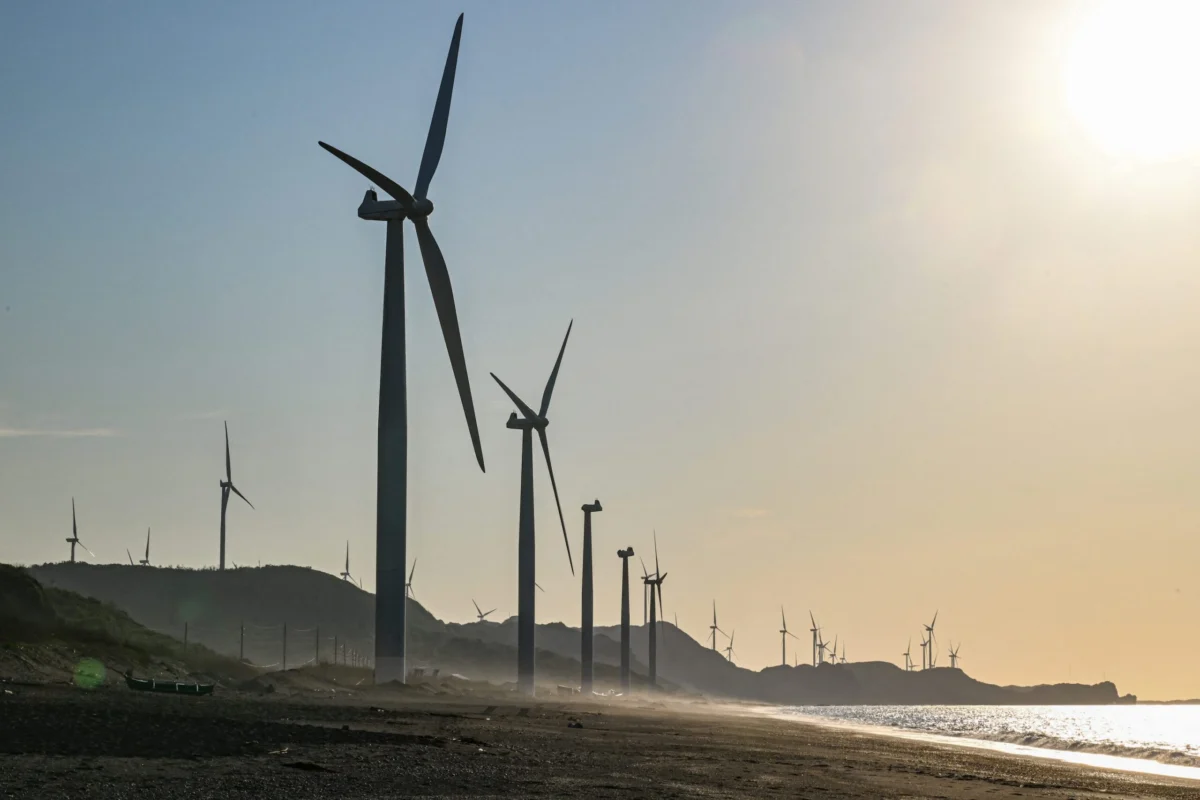
The ambition to lead in artificial intelligence is undeniable across Asia. Nearly every major economy in the region has meticulously crafted a formal national AI masterplan, recognizing AI as a cornerstone of future economic growth and national competitiveness. Japan, a technological powerhouse, recently underscored its commitment by announcing a staggering 370 trillion yen ($2.3 trillion) budget, allocating more than a quarter of that immense sum specifically to artificial intelligence and semiconductor development over the next 15 years. This monumental investment signals a clear intent to dominate key segments of the AI value chain, from advanced chip manufacturing to groundbreaking AI research and application. Other nations like South Korea, Singapore, and China are similarly pouring resources into R&D, talent development, and infrastructure to cultivate their own AI ecosystems.
However, the realization of these grand AI visions hinges precariously on a fundamental, often overlooked, resource: electricity. The computational intensity required to develop and operate advanced AI models is unprecedented. Training a frontier AI model, involving billions of parameters and vast datasets, concentrates enormous computing power into a handful of specialized data centers. These facilities demand massive, uninterrupted power supplies, often requiring dedicated substations and direct grid connections. Conversely, AI inferencing—the process of applying trained models to real-world data—pushes the need for low-latency facilities into dense urban hubs, closer to end-users and data sources. This dual demand for both concentrated, high-volume power and dispersed, low-latency power creates immense pressure on existing energy grids. The scale of this challenge is stark: data center power demand across the Asia-Pacific region is projected to surge by an estimated 165% between 2023 and 2030, a growth trajectory that dwarfs conventional energy planning.
Despite these headline-grabbing figures and ambitious announcements, a significant portion of the region’s proclaimed megawatt capacity for data centers remains a phantom. Industry insiders often refer to these as "bragawatts"—impressive numbers on paper that are agonizingly slow to materialize into actual, usable energy. This chasm between aspiration and reality stems from several deep-seated issues within Asia’s energy infrastructure.
One primary bottleneck is the rapid, but often uncoordinated, development of renewable energy generation. While significant strides have been made in deploying solar and wind farms, these clean energy sources are typically built far from major demand centers due to land availability and resource concentration. Furthermore, their intermittent nature—solar panels only generate power when the sun shines, wind turbines only when the wind blows—presents a formidable challenge for grid stability. Without substantial investments in new, high-capacity transmission lines, smart grid technologies, and advanced energy storage solutions, these renewable sources cannot reliably power the 24/7 demands of server racks operating at full capacity. The International Energy Agency’s Southeast Asia Outlook painted a sobering picture, revealing that grid and storage investment in the region in 2025 amounted to a mere $13 billion. This figure is a stark contrast to the estimated $50 billion needed annually until 2050 to adequately support the region’s energy transition and digital ambitions.
Compounding this technical challenge is a complex interplay of political and economic priorities. In an era marked by higher global fuel prices and heightened energy insecurity, governments and policymakers often find themselves in a delicate balancing act. The fundamental imperative to "keep the lights and the air-conditioning on" for residential and commercial consumers, along with supporting essential industries, frequently supersedes the electricity supply needs of data centers, particularly during periods of peak demand or resource scarcity. This prioritization reflects a broader societal contract, but it inevitably delays or diverts power from the burgeoning digital infrastructure sector.
The United States offers a cautionary tale that resonates deeply with Asia’s current predicament. Despite being a developed economy with a relatively robust grid, the U.S. has experienced significant hurdles in its data center expansion. As much as half of all planned U.S. data center projects may not come online this year, according to industry analysts. In the first three months of the year alone, 75 data center projects, collectively valued at an astonishing $130 billion, were either blocked or substantially delayed due to local opposition—a figure matching the total number of projects halted in all of 2025. These delays are often driven by "Not In My Backyard" (NIMBY) sentiment, environmental concerns over water usage and carbon footprints, and mounting pressure on local power grids and other municipal resources.
Asia, unfortunately, is already experiencing its own version of this bottleneck. According to a white paper co-authored with Oxford’s Smith School, the region managed to deliver only about 38% of its announced data center capacity in 2024, representing one of the widest plan-to-delivery gaps observed globally. The problem is particularly acute in nations like Malaysia and India, both of which have aggressively positioned themselves as future digital infrastructure hubs. Johor, a Malaysian state bordering Singapore and a key data center cluster, has been forced to ban the construction of new Tier 1 and 2 facilities due to escalating concerns over the strain on local water infrastructure. This decision highlights the broader environmental footprint of data centers, which require significant amounts of water for cooling. Meanwhile, India’s ambitious plans to double its projected data center capacity by the end of the next financial year face severe headwinds from profound grid delivery lags, struggling to accommodate an estimated 263 GW load addition anticipated from the AI boom.
In the current climate of "AI-driven euphoria" flooding global markets, the chasm between what is optimistically promised and what is practically feasible is only set to widen. This speculative fervor has already begun to distort commodity markets. Copper prices, a bellwether for infrastructure development, have remained stubbornly high on assumptions of surging data center construction demand, despite the actual pace of build-out being far slower. Similarly, the cost of critical electrical transformers, essential components for connecting data centers to the grid, is running at two to three times pre-2020 levels as developers scramble to lock in scarce equipment amid global supply chain disruptions and intense demand. If the interconnection queues—the waiting lists for new projects to connect to the electricity grid—continue to stretch as they have in the U.S. and Europe, this profound mismatch between announced and delivered capacity could trigger a painful boom-bust cycle, reminiscent of the volatility seen in metals markets over the past decade.
Recognizing the impending crisis, some forward-thinking Asian economies are beginning to implement proactive measures. Singapore, Malaysia, and South Korea, for instance, are responding with more stringent regulatory frameworks that mandate data center developers to submit detailed plans for battery storage, curtailment management (strategies to reduce power consumption during grid stress), and comprehensive grid-impact assessments. While these measures are crucial for long-term sustainability, they inevitably mean that Asia’s AI build-out may experience a deliberate slowdown, even as the U.S. presses ahead with a further $4 trillion in data center construction planned through 2028. Every quarter that Asian operators wait for grid upgrades and regulatory approvals is another quarter of valuable compute capacity, skilled talent, and critical capital that could be deployed elsewhere, potentially diminishing Asia’s competitive edge in the global AI race.
To overcome these structural impediments and truly unlock its digital potential, Asia must embrace a more liberal and transparent approach to energy markets. This entails fostering distributed energy generation and enabling more robust electricity trading, essentially opening wholesale electricity markets to genuine price competition. Such reforms would not only attract significantly more private investment into the energy sector but also substantially ease the region’s heavy dependence on imported oil and gas, thereby enhancing energy security and accelerating decarbonization efforts. However, achieving this requires a fundamental shift towards deeper, more transparent energy markets.
Currently, most Asian electricity systems operate within a traditional ecosystem. This typically involves vertically integrated, state-owned utilities acting as single buyers, with retail tariffs often set administratively rather than by market forces. Trading opportunities for third parties are limited, stifling the generation of crucial future pricing signals through forward contracts—a mechanism that investors in mature markets like Europe and the U.S. take for granted. This lack of market transparency and liquidity leaves renewable energy investors in Asia with less certainty over long-dated returns, making their investments more vulnerable to arbitrary government intervention during demand surges or crises. This elevated risk directly contributes to grid projects stalling for lack of adequate investment, creating a vicious cycle where the very grid that Asia’s data centers desperately need to connect to remains underdeveloped.
Encouragingly, some critical work to liberalize electricity markets is already underway across the region. Japan’s power futures market, driven by recent reforms, is emerging as the fastest-growing electricity derivatives market globally, providing vital hedging tools and price discovery mechanisms. In India, the Indian Energy Exchange (IEX) now operates sophisticated day-ahead and term-ahead markets, facilitating more dynamic electricity trading. Furthermore, a significant milestone was achieved in 2022 when electricity began flowing and being traded commercially from Laos, through Thailand and Malaysia, to Singapore—a tangible demonstration of regional grid interconnectivity and cross-border energy trade potential. Marex, where I work, has been actively contributing to growing liquidity in Japan’s power derivatives markets, and was recently selected to provide an over-the-counter (OTC) trading platform supporting New Zealand’s standardized super-peak electricity contract, further deepening a local market that, like many across Asia, has historically been fragmented and thinly traded.
These initial steps offer a compelling glimpse into what deeper, more sophisticated Asian power markets could look like: instruments and platforms that empower generators, industrial users, and investors to hedge and price electricity with the same confidence and precision they apply to other global commodities. For Asia to truly hit the ambitious AI build-out targets it desires, its electricity needs to trade with the same rigor and transparency as crude oil does in the global market. Ultimately, achieving this future will require power markets that are sufficiently robust, liquid, and transparent to instill in capital the confidence to build ahead of demand, rather than perpetually struggling to catch up from behind.
