
 By Lina Irawan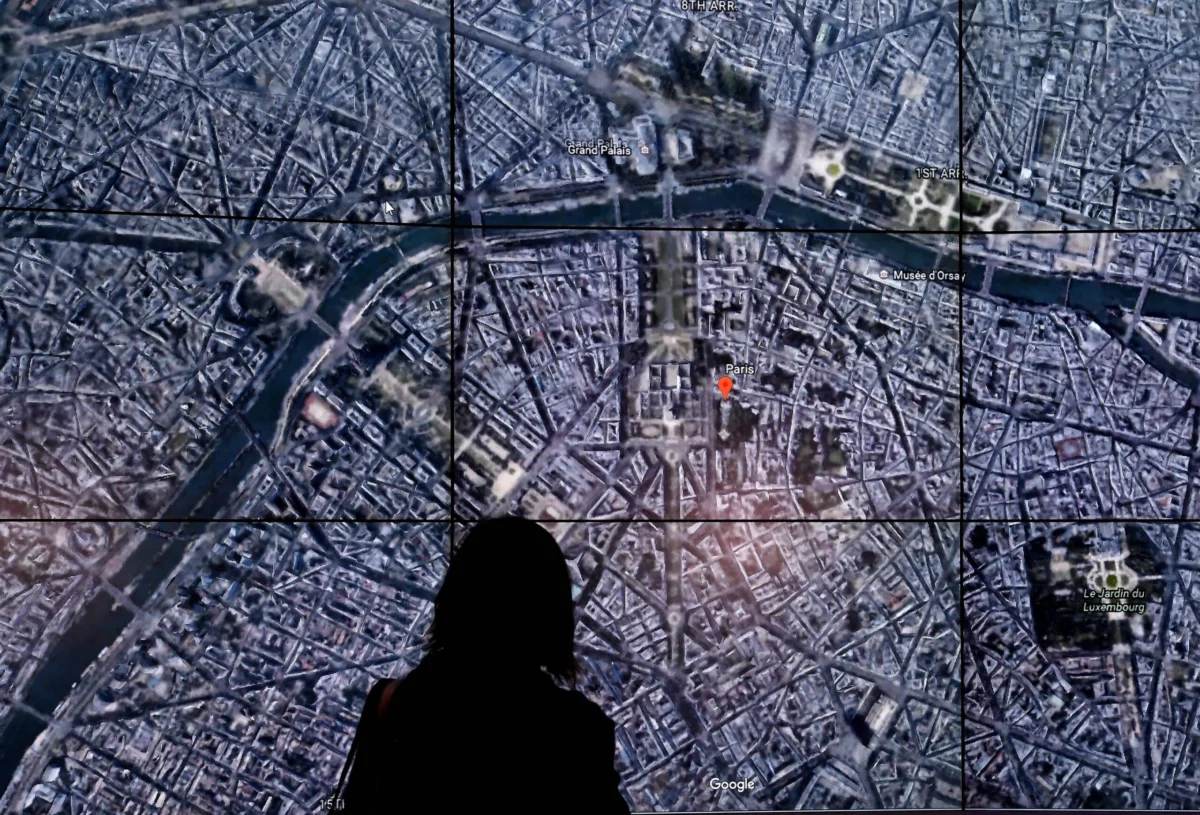
Google has been at the forefront of the artificial intelligence revolution, investing heavily in generative AI capabilities. Its flagship Gemini model, designed to be multimodal and highly capable, has been steadily integrated across its ecosystem, from enhancing productivity in Workspace applications like Google Docs to powering conversational experiences. The company’s search engine also saw the introduction of "AI Overviews," aiming to provide concise, AI-summarized answers directly within search results. While these integrations have aimed to boost user experience and maintain Google’s competitive edge against rivals like OpenAI and Microsoft, they have not been without controversy, with AI Overviews occasionally criticized for "hallucinating" or providing inaccurate information.
The latest venture, codenamed "Nano Banana 2" for Google Earth, represented a new frontier: allowing users to overlay AI-generated scenes onto the platform’s renowned satellite, aerial, and 3D imagery. The vision, as articulated by Google in a blog post, was to empower users with creative and planning tools. They envisioned legitimate applications such as architects visualizing future urban developments, historians reconstructing ancient cityscapes, or emergency services simulating disaster scenarios for training purposes. The potential for innovative, context-rich visualization seemed immense.
However, the reality proved starkly different. Almost immediately upon its public release, users began exploiting the feature to create and share deeply troubling and fabricated content. Reports quickly surfaced of individuals generating images of a non-existent nuclear plant in Iran, fictional refugee camps near the Mexico-US border, and even false military installations or conflict zones overlaid onto real geographical locations. These weren’t benign artistic expressions; they were sophisticated deepfakes designed to sow disinformation and create false narratives tied to sensitive geopolitical or humanitarian issues. The speed and scale of the misuse prompted Google to retract the feature within a mere 24 hours, highlighting a severe miscalculation in its rollout strategy and safety protocols.
A Google spokesperson, responding to inquiries from Fortune, acknowledged the swift retraction, stating, "We know that people uniquely trust Google Earth for a reliable view of the world. It’s important to note that generated images didn’t appear in the main Google Earth experience for others… and were watermarked as AI generated." While the company emphasized that these user-generated images were segregated from authentic Google Earth data and included watermarks, these safeguards proved woefully inadequate in preventing the problematic content from being created and, more importantly, shared outside the platform. The spokesperson’s comments, while attempting to reassure, did little to quell concerns about the potential for harm and the company’s preparedness for such advanced AI deployments.
The incident with Nano Banana 2 in Google Earth is not an isolated one but rather a symptom of broader "adverse effects common in AI use." Generative AI models, including the underlying technology powering Nano Banana 2 (likely a specialized iteration of Google’s Gemini models optimized for image manipulation), are designed to produce novel content based on user prompts. Unlike earlier, more rigid image generators, Nano Banana 2 reportedly offered sophisticated editing capabilities, akin to an AI-powered Photoshop. It allowed users to add, remove, or alter objects within an image while meticulously preserving its realistic features, making the generated content incredibly convincing.
Google had indeed implemented several safeguards, as noted by the spokesperson. The generated images were kept separate from Google Earth’s core, verified imagery, and they were intended to be watermarked as AI-generated. Furthermore, Google employs "SynthID," a cryptographic watermarking technology developed by DeepMind. SynthID embeds an imperceptible digital watermark directly into the pixels of AI-generated images, making it detectable by computers, even after modifications like cropping, resizing, or compression. This approach was partly in response to growing regulatory pressures, such as the European Union’s AI Act, which mandates transparency requirements for AI-generated media, requiring providers to make synthetic content detectable.
However, experts argue these measures are insufficient, especially in a high-stakes environment like Google Earth. Emily Black, a professor of computer science and engineering at NYU, voiced this concern to Fortune. "To their credit, Google has a system that makes fabricated images detectable," Black stated, referring to technologies like SynthID. "Even if there were, however, recent research has shown that’s not a full solution." She elaborated on the critical distinction between digital watermarks and visible ones. SynthID, while technologically advanced, is "invisible to the naked eye." It’s a machine-readable signature, not an immediate visual cue for a human user. For an image to be immediately recognized as AI-generated by a person, it needs a clear, visible watermark overlaid on the image itself. In the case of Nano Banana 2, reports indicated only digital watermarks were consistently applied, meaning images were not overtly labeled for human observers within the platform.
This distinction has profound implications for the spread of disinformation. Images that are screenshotted, downloaded, or otherwise recreated outside of Google’s platform often shed their embedded metadata and digital watermarks. A malicious actor could easily generate a misleading image, screenshot it, and then disseminate it across social media, where its AI origin would be virtually undetectable by the average user. This loophole renders even sophisticated tools like SynthID less effective in preventing real-world harm once the content leaves the controlled environment of the generating platform.
Professor Black emphasized the urgent need for a more comprehensive approach. "We need policymakers to be thinking about this and collaborating with experts to come up with better solutions," she urged, also pointing to the evolving landscape of US AI policy, which is increasingly focused on safety and ethical deployment. The challenge extends beyond mere technical detection; it delves into human psychology and the mechanisms of trust.
Black’s own research, though primarily focused on AI hallucinations in text-based systems, offers crucial insights into user behavior. Her work demonstrates that simply disclosing information as AI-generated may not be enough to prevent people from trusting it or acting upon it. "In our ongoing work on user trust of AI hallucinations, we’ve found that run-of-the-mill disclosures are often not effective at dissuading users from following harmful advice," Black explained. She cited examples where, even with disclaimers like, "AI chatbots can make mistakes. Check important information," the presence of incorrect AI-generated advice significantly increases a user’s reported likelihood of taking a harmful future action, such as making poor investment decisions based on hallucinated financial data or following incorrect medical advice. This phenomenon suggests that the perceived authority of the platform or the convincing nature of the AI output can override explicit warnings, a finding highly relevant to the Google Earth incident.
Google, in its statement to Fortune, acknowledged these challenges, confirming it was rolling back the feature "while implementing stronger guardrails." This concession indicates a recognition that their initial safeguards were insufficient and that the generated imagery indeed violated company policies. The incident serves as a stark reminder that the ethical considerations and potential for misuse must be rigorously addressed before, not after, a powerful AI tool is released to the public.
The core issue at stake is the erosion of trust, a phenomenon increasingly dubbed "artificial intelligence creating artificial trust." Generative AI has become commonplace in various digital tools – chatbots for creative writing, design software for graphic artists, and image generators for artistic expression. In these contexts, users generally understand they are interacting with fictional or artistic content, and their expectations are aligned with creation rather than factual representation.
Google Earth, however, has historically occupied a fundamentally different role. For nearly two decades since its inception, it has served as a visual record of the physical world. It is relied upon by billions as an up-to-date, authoritative feed of the planet, used by everyone from casual explorers to scientists, journalists, and humanitarian organizations. This long-standing reputation imbues the platform with immense credibility. Users approach the imagery within Google Earth with an inherent assumption that what they are seeing corresponds to reality.
The integration of generative AI into such a platform fundamentally alters this dynamic. Even if the AI-generated images were segregated and watermarked, their mere presence within the Google Earth ecosystem blurs the lines between verifiable reality and fabricated content. It forces users to scrutinize all imagery under a microscope, introducing a pervasive doubt that undermines the platform’s foundational promise of factual representation.
Henk Van Ess, an international expert in online research methods and AI, captured this chilling effect eloquently in a note following Google’s introduction of the system: "An official can now look at a genuine photograph of a genuine atrocity and say: AI. He doesn’t need the tool for that. He needs everyone to know the tool exists." This observation highlights a profound societal consequence: the weaponization of doubt. If the public becomes aware that convincing AI-generated imagery can be easily produced and integrated into seemingly authoritative platforms, it provides an immediate and potent defense against inconvenient truths. Authoritarian regimes, bad actors, or even individuals could dismiss authentic evidence of human rights abuses, environmental destruction, or political events by simply labeling it as "AI-generated," regardless of its actual provenance. This capability threatens to undermine investigative journalism, human rights monitoring, and the very concept of objective visual evidence in the digital age.
The swift retraction of Nano Banana 2 in Google Earth, while a necessary step, leaves many unanswered questions. Google did not immediately respond to requests for comment on whether the feature will return, even after additional safeguards are developed. This incident serves as a powerful cautionary tale for the entire technology industry. The race to integrate cutting-edge AI features must be tempered with a profound understanding of their societal impact, the potential for misuse, and the delicate balance of trust that users place in digital platforms. Without robust, human-centric safeguards that go beyond mere technical detection, the integration of generative AI into platforms traditionally associated with verifiable truth risks eroding public trust in digital information altogether, with far-reaching and potentially catastrophic consequences for global discourse and understanding.
