
 By admin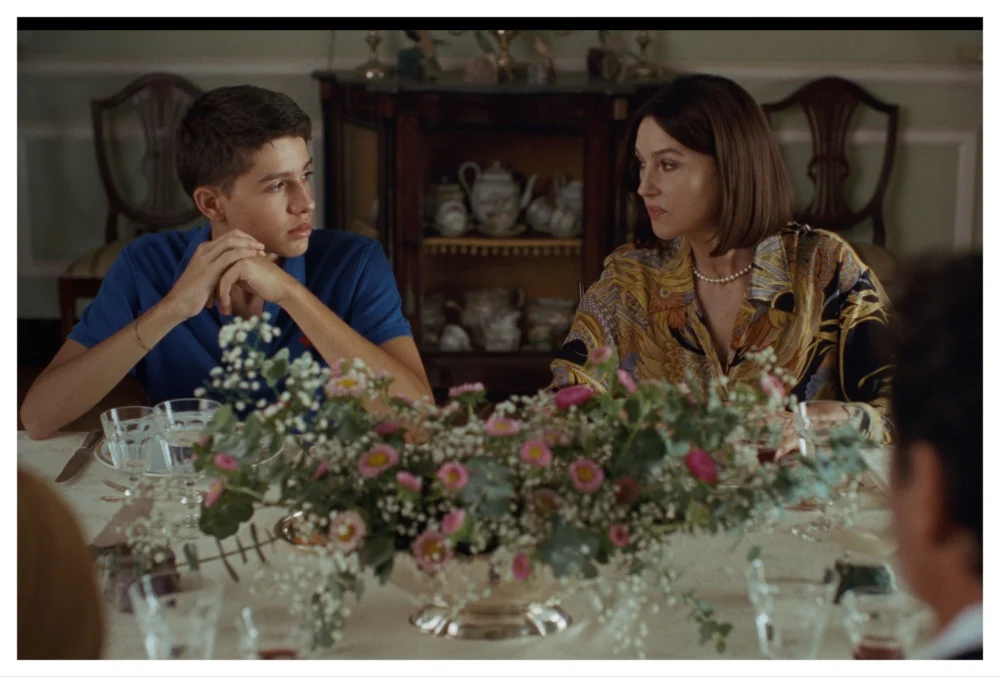
In the captivating new film "Ketticä," director Giovanni Tortorici masterfully unleashes the formidable power of Monica Bellucci’s signature sneer, a potent instrument of nuanced performance that has, inexplicably, been underutilized by filmmakers for far too long. When granted the freedom to fully embody her innate sense of irony, Bellucci transforms into an unparalleled purveyor of self-aware drama, laced with the perfect degree of camp iconicity. While her role as the quasi-caricatured bourgeois mother to a more authentically rendered teenager is a supporting one, Tortorici’s deliberate juxtaposition of genuine adolescent nihilism against the stylized backdrop of the adult world breathes fresh life into a well-worn cinematic formula. The narrative, charting the aimless journey of a privileged youth, paradoxically feels anything but directionless.
Tortorici, whose debut film "Diciannove" already showcased a profound understanding of the under-20 demographic’s existential drift, continues to excel in capturing the disaffected depths of adolescence. While some critics might point to a perceived shallow depiction of working-class youths in contrast to their more affluent counterparts, few can deny his virtuosic command of character and atmosphere, conveyed through astute camera angles and the strategic use of space. The film’s evocative soundscape, featuring the melancholic voice of Lebanese singer Oumeima El Khalil, accompanies sweeping panoramic shots of Palermo. The juxtaposition of El Khalil’s lyrical detachment from the locale, and its simultaneous, unexpected resonance, echoes the stylistic brilliance of soundtracks curated by Luca Guadagnino, Tortorici’s mentor and producer. Set in 2012, an era where Facebook was as integral to daily life as the then-new iPhone 5, the film introduces Giulio (Salvatore Gallina), a teenager teetering on the brink of academic failure. The opening sequence, a delightfully amusing slow-motion pan, travels from a weary teacher to a group of profoundly bored students, then languidly progresses outdoors to the carpark, resisting the conventional pace of time until Giulio ignites his car and the iconic strains of "You Spin Me Right Round" erupt from the radio.
This playful yet deeply expressive visual language is the hallmark of "Ketticä," rendering it an immensely enjoyable viewing experience. A prime example of this is the scene where Giulio, moments after a kiss with his girlfriend Elena (Ida Poerio), enters his car. The camera, positioned at floor level, imbues the sixteen-year-old with an imposing, larger-than-life stature. However, upon receiving a breakup text, the viewpoint shifts to eye-level, instantly shrinking him back to his normative teenage size. This isn’t to suggest he’s utterly heartbroken, but the altered perspective subtly highlights his performative grief, the forced tear, the strategically composed selfie, and its immediate dissemination across Facebook.
Giulio’s primary existential struggle revolves around the daunting question of his future. Residing in his family’s historic palazzo with his parents, Vittoria (Bellucci) and Antonio (Tommaso Cristiano Wirz), and attending a private school where small class sizes foster a sense of camaraderie but little actual academic absorption, he finds himself adrift. Even his grandmother’s attempts to impart cultural enrichment fall flat, particularly during a hilariously fraught dinner scene. Here, Vittoria unleashes a torrent of acidic barbs at her stoic mother-in-law, while the passive Antonio allows the familial skirmish to wash over him.
As ennui permeates both his home and school life, Giulio becomes captivated by Ketty, also known as Ketticä (Rachele Testagrossa), a girl from the wrong side of the tracks with a notorious reputation for instigating catfights. Confident, street-smart, and a stark contrast to Giulio’s world of privilege, Ketty possesses an insider’s knowledge of Palermo’s illicit markets, including where to procure the finest cannabis. With Giulio’s ample allowance, their excursions lead them to the Bonagia district, where he dedicates approximately €20 daily to purchasing marijuana from a dealer operating in a square dominated by a statue of Padre Pio. It’s ambiguous whether Giulio’s increasing reliance is on the cannabis itself or the subtle thrill of danger that accompanies associating with a girl whose hardened image acts as an irresistible magnet for attention. Regardless, his burgeoning entanglement with Ketty is becoming increasingly apparent to those around him.
The stark contrast between Giulio’s privileged existence and Ketty’s reality is palpable. Within his social circle, where owning a car at fourteen is not uncommon, the struggles of the lower classes are often reduced to a form of spectator sport, documented and shared on Facebook before being swiftly forgotten. These youths are shielded by their parents’ wealth, a stark difference to Ketty’s limited prospects, which often boil down to escalating catfights with girls whose most defining features are their garish makeup and ostentatious nail extensions. Whether intentionally crafted or not, scenes involving Ketty’s regular entourage are imbued with an inherent element of condescending amusement, a sentiment absent from the interactions of the private school students who possess the luxury of not needing to posture or defend themselves. While the audience can empathize with Vittoria’s exasperated outbursts, Bellucci’s exquisitely ironic flamboyance ensures that our laughter is directed at the situation, not at her, a distinction that becomes clear when witnessing the petty revenge tactics of Ketty’s hard-edged rivals.
The cinematic landscape is unfortunately littered with instances where directors, in their attempts to delve into the adolescent psyche, inadvertently expose the vast psychological chasm separating filmmaker from subject. However, in "Ketticä," as in "Diciannove," Tortorici demonstrates a profound understanding that perpetual ennui is not synonymous with an unyielding void, nor is adolescent angst the sole or most compelling facet of teenage experience. His ability to listen is evident: he attentively absorbs the nuances of his actors (many of whom are newcomers), he keenly observes the younger generations around him, and he draws upon the authentic recollections of his own youth. "Ketticä" further showcases his confident exploration of cinematic grammar, deploying it with precision to serve character and mood, thereby solidifying the immense promise of his directorial debut.
Tortorici’s approach to depicting adolescence is remarkably nuanced, eschewing simplistic portrayals of teenage angst for a more complex exploration of identity, social stratification, and the search for meaning in a hyper-connected yet paradoxically isolating world. He captures the specific malaise of a generation grappling with the anxieties of a rapidly changing society, where digital validation often supersedes genuine connection. Giulio’s journey, from the superficiality of his privileged environment to the raw authenticity of Ketty’s world, represents a quest for something more substantial, a desire to break free from the predictable trajectory laid out for him. This exploration of class disparity is handled with a delicate touch, avoiding didacticism while still highlighting the profound differences in opportunity and perspective that shape the lives of his young protagonists. The film doesn’t offer easy answers, instead presenting a multifaceted portrait of youth navigating the complexities of modern life.
The visual storytelling in "Ketticä" is a testament to Tortorici’s burgeoning talent. His use of unconventional camera angles, slow-motion sequences, and evocative cinematography creates a distinct atmosphere that is both dreamlike and grounded in reality. The panoramic shots of Palermo, with their blend of historical grandeur and contemporary urban sprawl, serve as a powerful backdrop to the personal dramas unfolding within the narrative. This visual richness is further enhanced by the carefully selected soundtrack, which acts as an emotional counterpoint to the on-screen action, amplifying the film’s mood and themes. The integration of popular music, from "You Spin Me Right Round" to potentially more contemporary tracks that reflect the era, adds another layer of authenticity to the adolescent experience, grounding the film in a recognizable cultural context.
Monica Bellucci’s performance, though supporting, is a tour de force. Her portrayal of Vittoria is a masterclass in controlled intensity, a woman trapped in a gilded cage, her sharp wit and ironic pronouncements serving as both a defense mechanism and a cry for something more. She embodies the disillusionment of a certain segment of the bourgeoisie, a world of inherited wealth and unspoken expectations, where appearances are paramount and genuine emotion is often suppressed. Bellucci’s ability to convey a complex inner life through subtle gestures and expressions elevates the character beyond a mere stereotype, making Vittoria a compelling and memorable figure. Her interactions with her mother-in-law and husband reveal the simmering tensions and unspoken resentments that lie beneath the veneer of respectability.
The film’s exploration of the relationship between Giulio and Ketty is central to its thematic concerns. Their unlikely bond, forged in the crucible of adolescent rebellion and social marginalization, offers a glimpse into the possibility of connection across class divides. Ketty, with her streetwise pragmatism and fierce independence, represents a reality that Giulio is both drawn to and intimidated by. Their interactions are marked by a blend of attraction, apprehension, and mutual curiosity, as they navigate the boundaries of their respective worlds. The film wisely avoids romanticizing their relationship, instead focusing on the genuine emotional resonance and the shared search for identity that binds them together.
"Ketticä" is a film that rewards patient viewing, offering a rich tapestry of characters, themes, and visual artistry. Giovanni Tortorici has established himself as a director with a singular vision, capable of capturing the complexities of the adolescent experience with both sensitivity and a keen sense of style. His collaboration with Monica Bellucci has yielded a performance that is both iconic and deeply human, a reminder of the actress’s immense talent and her ability to command the screen even in a supporting role. As the film concludes, leaving the audience with a sense of both closure and lingering questions, it solidifies its place as a significant contribution to contemporary cinema, a testament to the enduring power of thoughtful storytelling and inspired performances. The film’s success lies not in providing definitive answers, but in posing profound questions about identity, belonging, and the search for authenticity in a world that often prioritizes superficiality. It is a cinematic achievement that resonates long after the credits roll, a powerful testament to the directorial prowess of Giovanni Tortorici and the enduring allure of Monica Bellucci.
