
 By admin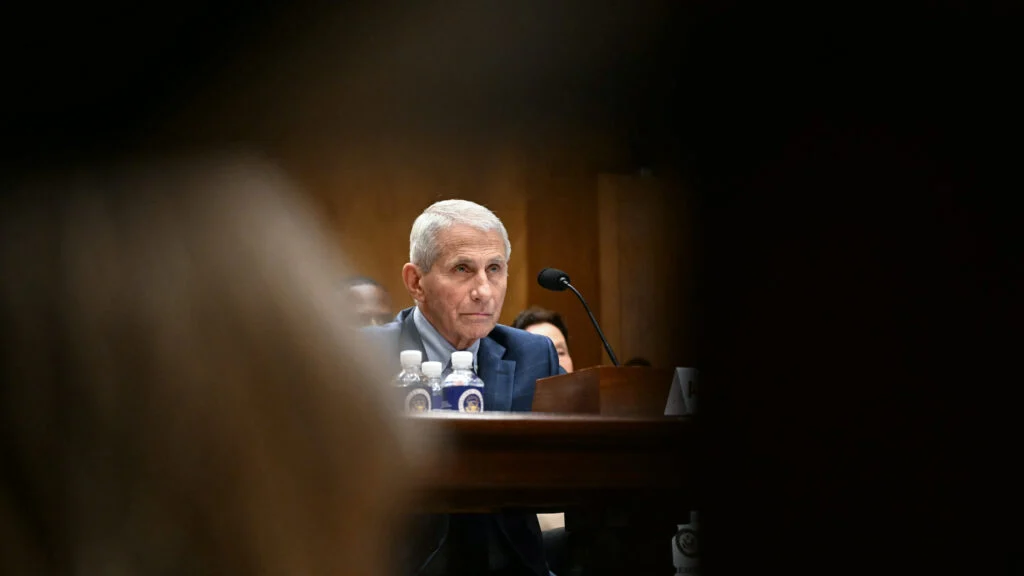
The recent Senate committee hearings regarding the origins of the Covid-19 pandemic have served as a definitive master class in political theater, effectively diverting national attention away from the critical issues facing the United States’ public health infrastructure. This escalation reached a fever pitch on Thursday, August 6, 2026, when the committee voted to hold Dr. Anthony Fauci in contempt of Congress. The charge stemmed from Fauci’s decision to invoke his Fifth Amendment rights—a defensive measure taken before a committee chaired by individuals who have publicly declared that the former director of the National Institute of Allergy and Infectious Diseases (NIAID) should be behind bars. This legal and political confrontation marks a new low in the weaponization of public health, shifting the focus from the actual source of the pandemic to a domestic scapegoat who spent decades serving under both Republican and Democratic administrations.
To understand the absurdity of the current political climate, one must look back at the indisputable facts surrounding the emergence of SARS-CoV-2. The Covid-19 pandemic originated in Wuhan, China, in late 2019. In the crucial early weeks and months of the outbreak, the Chinese government engaged in a systematic campaign to suppress information. Rather than alerting the international community to a novel respiratory threat, Beijing dragged its feet, allowing the virus to gain a foothold globally. The World Health Organization (WHO) was systematically frustrated in its attempts to gather basic epidemiological data regarding the virus’s transmissibility. This delay was not merely a bureaucratic oversight; it was a strategic silence that denied the rest of the world the precious weeks required to stockpile personal protective equipment, develop testing protocols, and prepare hospital systems for an unprecedented surge.
Once the virus escaped China’s borders and began ravaging Europe and North America, the obfuscation shifted into a higher gear. The Chinese state apparatus actively covered up the initial facts of the epidemic, silencing whistleblowers such as the late Dr. Li Wenliang, who was reprimanded by police for "making false comments" after he tried to warn fellow medics about a cluster of SARS-like pneumonia cases. When the international community finally demanded an independent investigation into the origins of the virus, China responded with hostility. WHO representatives were effectively locked in their hotel rooms in Wuhan, subjected to strict controls, and presented with a narrative that the virus might have been imported into China via frozen food—a theory widely dismissed by the global scientific community as specious. Furthermore, any country that dared to call for a transparent, open-access investigation, most notably Australia, faced immediate and harsh economic retaliation, including massive tariffs on exports like barley and wine.
Despite this clear trail of international obstruction, the American political lens has remained hyper-focused on Dr. Anthony Fauci. As the leading U.S. public servant in the field of infectious diseases for over forty years, Fauci’s expertise was once considered a national asset. However, in the current polarized environment, he has been cast as the primary antagonist. The issue of the virus’s origin remains salient because identifying the source of any epidemic is the cornerstone of predicting and preventing the next one. Yet, the reality is that Fauci does not hold the keys to this mystery. The answers reside exclusively within the borders of China, and the Chinese government’s refusal to share laboratory records, local public health data, and early patient samples is the true barrier to scientific clarity.
History shows that this pattern of behavior from Beijing is not an anomaly but a standard operating procedure. During the 2002–2004 outbreak of SARS (Severe Acute Respiratory Syndrome), a virus closely related to the one that causes Covid-19, the world witnessed a similar script. While 66% of the deaths from SARS occurred in China or Hong Kong, the virus eventually spread to 29 countries. The first cases were identified in Guangdong province in November 2002, yet the Chinese government failed to report the outbreak to the WHO until February 2003. During that gap, state-run media was prohibited from reporting on the disease, and the true scale of hospital admissions and fatalities was hidden. This lack of transparency allowed travelers to export the virus to Canada and Singapore, leading to dozens of preventable deaths.
Following the SARS-1 crisis, China claimed to have modernized its public health capacity, professing a commitment to international reporting standards. However, eighteen years later, when faced with the emergence of Covid-19 in Wuhan, the regime reverted to its previous tactics. The suppression of information was even more sophisticated, involving the digital scrubbing of early data and the intimidation of scientists who sought to alert the global community. In this information vacuum, pandemic experts were forced to speculate. The 2002 SARS outbreak was eventually traced to "spillover" from animals, specifically civets sold in live animal markets, which had likely been infected by horseshoe bats in southern China. Similarly, MERS (Middle East Respiratory Syndrome), another coronavirus that emerged in 2012, was linked to transmission from camels to humans.
Given this historical context, the scientific community’s initial assumption in 2020—that Covid-19 was the result of a natural zoonotic spillover—was entirely logical. The early clustering of cases around the Huanan Seafood Wholesale Market in Wuhan pointed toward a live animal source. However, the proximity of the Wuhan Institute of Virology (WIV)—a facility known to be conducting high-level research on SARS-like coronaviruses—introduced the "lab leak" theory. The WIV is located roughly eight miles from the market, and its researchers had famously traveled to bat caves in southern China, hundreds of miles away, to collect samples. The possibility that a researcher was accidentally infected in the field or that a laboratory mishap occurred remains a valid scientific hypothesis.
If a cover-up occurred, the culpability lies with the Chinese authorities who denied access to the WIV’s laboratory records and refused to provide the raw data from the earliest known cases in Wuhan. Blaming Dr. Fauci for failing to provide these answers is akin to blaming a detective in Washington, D.C., for failing to solve a crime in a foreign jurisdiction where the local police have sealed the crime scene and burned the evidence. Furthermore, the political effort to conflate the origins of the virus with domestic public health measures—such as mask mandates and social distancing—is a logical fallacy that serves only to polarize the public.
The persecution of Dr. Fauci represents a dangerous precedent for the future of American science. When public servants are threatened with prison for their best-effort interpretations of evolving data during a crisis, it discourages the best and brightest from entering public service. The current Senate committee’s focus on criminalizing the response to a global catastrophe, rather than pressuring the source of the data suppression, does nothing to make the United States safer. If the committee were truly serious about the origins of Covid-19, it would acknowledge that the definitive answer may never be found without a fundamental change in China’s willingness to cooperate.
Moreover, if the goal is to protect American citizens from future threats, the focus should be on the systemic risks posed by modern animal husbandry and the wildlife trade. There is a high probability that the next pandemic will emerge from the same geographic region due to the continued interaction between humans and wild animal reservoirs. By focusing on the "Fauci sideshow," the U.S. government is ignoring the structural vulnerabilities that leave the world exposed to "Disease X."
As of August 2026, the global community remains at risk. The lessons that should have been learned about international transparency, rapid response, and the decoupling of science from partisan politics have been discarded in favor of a domestic political vendetta. While the Senate continues its hearings and the rhetoric against public health officials intensifies, the fundamental threats to our health remain unaddressed. In the grand theater of Washington, the band plays on, providing a soundtrack to a nation that is arguably less prepared for the next pandemic than it was for the last one. The focus on punishing individuals for the crimes of a foreign regime is not just a distraction; it is a profound failure of governance that undermines the very security it claims to protect. Only by returning to a fact-based, internationally focused inquiry can we hope to prevent the next global tragedy. Until then, the cycle of blame and obfuscation will continue, leaving the public vulnerable to the next invisible enemy.
