
 By admin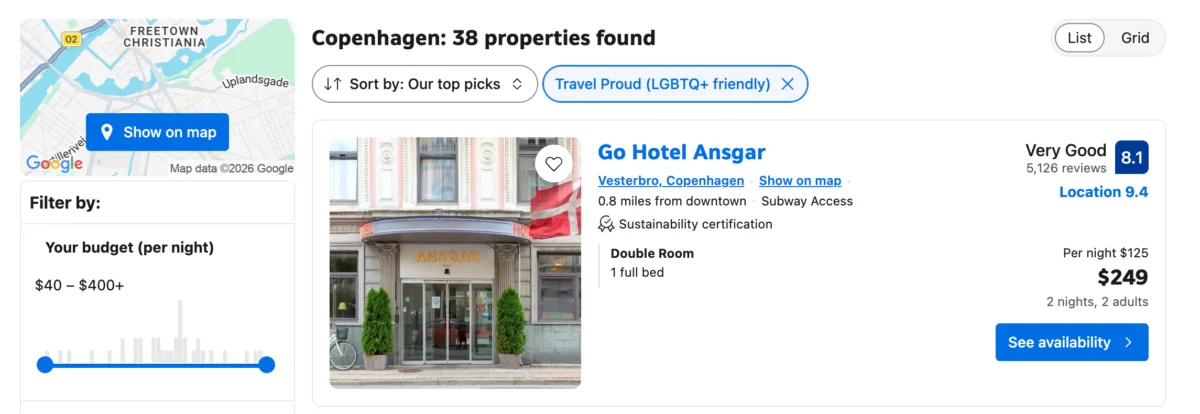
The necessity of such a program is underscored by staggering data regarding the current state of global travel. According to recent research conducted by Booking.com, the reality for LGBTQ+ travelers remains starkly different from that of their cisgender and heterosexual counterparts. The survey revealed that a mere 31% of LGBTQ+ travelers globally feel comfortable being "out" while traveling. Perhaps more concerning is the finding that 44% of these travelers are taking significantly more precautions today than they were just a few years ago, a statistic that reflects a tightening social and political climate in various regions of the world. For these individuals, travel is not merely about relaxation; it is a calculated risk that requires constant self-monitoring and the concealment of their authentic selves to ensure a peaceful stay.
The friction points in hospitality are often subtle but deeply impactful. For a gay couple, the simple act of checking into a room with a king-size bed can lead to an awkward or even hostile interaction where a receptionist assumes a mistake was made and offers two twin beds instead. For transgender or non-binary travelers, the discrepancy between their legal identification and their gender expression can lead to invasive questioning or misgendering at the front desk. These moments of "friction" do more than just dampen the mood of a vacation; they reinforce a sense of exclusion and signal that the traveler is not truly welcome in the space they have paid to occupy.
To address these systemic issues, Booking.com developed Travel Proud, a comprehensive and free training program offered to its global network of hotel and accommodation partners. The program was created in direct collaboration with HospitableMe, a world leader in inclusive hospitality education that specializes in helping brands understand the nuances of the LGBTQ+ consumer. The training is not a mere checkbox exercise; it is a 90-minute online course, currently available in 11 languages, designed to shift the perspective of hotel staff. It provides practical skills and linguistic techniques that allow providers to create a more inclusive environment from the moment a guest interacts with the property.

Once a property completes the training, it is equipped with a Travel Proud Customer Toolkit, which serves as a guide for guest-facing staff to implement their new knowledge in real-time scenarios. Furthermore, the property receives a dedicated "Travel Proud" badge on its Booking.com listing. This badge acts as a beacon for travelers, signaling that the establishment has made a proactive commitment to inclusivity. On the consumer side, Booking.com has integrated a "Travel Proud (LGBTQ+ friendly)" filter into its search interface, allowing travelers and allies to curate their searches to include only those properties that have undergone the accreditation process.
The genesis of Travel Proud stems from a deep dive into the psychological barriers that prevent LGBTQ+ people from traveling freely. Kristofer Barber, Booking.com’s director of global communications, noted during an interview at the company’s Amsterdam headquarters that the impetus for the program was the recurring feedback regarding the fear of judgment. Barber emphasized that while a platform cannot control every individual interaction that occurs within a third-party hotel, it can use its massive influence to advocate for better standards. The goal was to identify where the "friction points" were—such as the anxiety surrounding the check-in process—and provide the tools to smooth them over.
The scope of the program’s success is evident in its rapid adoption. To date, Travel Proud has been embraced by more than 150,000 properties across 163 countries and 20,000 cities. This scale is significant because it represents a global shift in how the hospitality industry perceives the "Pink Pound" or "Pink Dollar"—the economic power of the LGBTQ+ community. Estimates suggest that LGBTQ+ travelers spend over $200 billion annually on tourism, often traveling more frequently and staying longer than the average tourist. By making properties more welcoming, Booking.com is not only performing a social good but also tapping into a massive, loyal market segment that prioritizes safety and inclusivity when choosing where to spend their money.
However, the program faces the challenge of operating in a world where legal protections for LGBTQ+ individuals are inconsistent. In many of the 163 countries where Travel Proud properties exist, local laws may still be hostile toward the community. This makes the training even more vital. In regions where the social climate is conservative, a Travel Proud-certified hotel can act as a "safe harbor," a space where international and local LGBTQ+ guests know that the staff within those four walls will treat them with dignity, regardless of the political landscape outside.

The Travel Proud initiative focuses on three distinct pillars: helping LGBTQ+ people choose with confidence, empowering accommodation partners to be exceptionally welcoming, and utilizing inclusive language across the Booking.com platform itself. The latter is a crucial component of the digital experience. Inclusive language involves moving away from gendered honorifics and heteronormative assumptions in automated emails, booking confirmations, and user interfaces. By normalizing inclusive language, the platform reduces the cognitive load on marginalized travelers, allowing them to feel seen and respected before they even leave their homes.
The partnership with HospitableMe has been instrumental in ensuring the training remains culturally sensitive and up-to-date. As the understanding of gender identity and expression evolves, so too must the hospitality industry. The training covers the importance of using correct pronouns, the nuances of the "coming out" experience during travel, and how to handle sensitive situations without causing embarrassment or harm to the guest. It encourages hotel managers to look at their own policies—such as gender-neutral restrooms or inclusive marketing materials—to ensure that the "Travel Proud" badge is not just a marketing tool, but a reflection of the property’s core values.
The broader impact of the Travel Proud program is its potential to set a new industry standard. When a major player like Booking.com—which lists millions of properties—prioritizes inclusive travel, it forces competitors and independent operators to take notice. We are seeing a shift where inclusivity is no longer viewed as an "extra" or a niche specialty, but as a fundamental requirement of modern hospitality. Other major chains, such as Marriott and Hilton, have also launched their own diversity initiatives, but Booking.com’s approach of providing free, accessible training to even the smallest bed-and-breakfasts democratizes the ability to be inclusive.
As the program continues to grow, the ultimate goal is to reach a point where such a filter is no longer necessary because inclusivity has become the baseline for all travel experiences. For now, the 150,000 properties carrying the badge represent a significant step toward a world where everyone, regardless of who they love or how they identify, can experience the transformative power of travel without fear. By removing the "friction" of the check-in and the anxiety of the "two beds" conversation, Travel Proud allows guests to reclaim the joy of the journey. It ensures that the focus remains where it should be: on the exploration of new cultures, the relaxation of a well-earned break, and the creation of memories that are untainted by the shadow of discrimination. Through education and visibility, Booking.com is not just changing how hotels operate; it is helping to cultivate a global culture of belonging, one check-in at a time.
