
 By Lina Irawan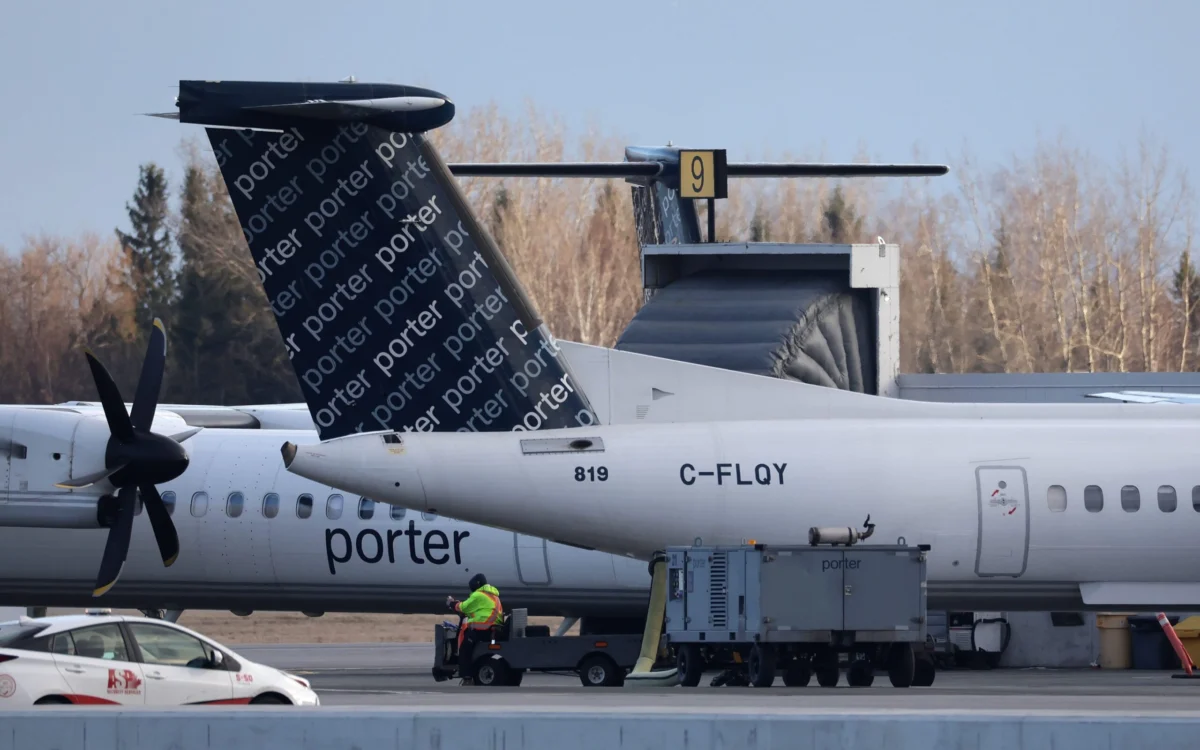
A Porter Airlines flight bound for Toronto from Victoria International Airport (YYJ) was dramatically canceled last week, stranding dozens of passengers overnight, after a young child steadfastly refused to sit down and buckle up for takeoff. The incident, which unfolded on Thursday, August 3rd, 2026, underscored the absolute priority of aviation safety regulations and the cascading disruptions that even minor non-compliance can trigger in a tightly scheduled airline operation. The flight, believed to be PD204, was initially preparing for departure when the crucial safety lapse occurred, ultimately forcing its return to the terminal and leading to its untimely demise past the airport’s strict midnight runway closure.
According to a statement released by the Toronto-based airline on Sunday, August 6th, the cabin crew and the child’s parent made repeated, exhaustive attempts to secure the youngster in their seat. Despite these efforts, the child remained uncooperative, posing an undeniable safety risk that could not be overlooked. Aviation safety protocols, mandated by Transport Canada and international bodies, unequivocally require all passengers, regardless of age, to be properly seated with their seatbelts fastened during takeoff, landing, and whenever the seatbelt sign is illuminated. This fundamental rule is in place to protect individuals from sudden movements, turbulence, or potential emergencies, making the child’s continued refusal a non-negotiable issue for the flight crew.
With no resolution in sight and the clock ticking, the flight captain made the difficult but necessary decision to abort the takeoff procedure. The aircraft, which had already pushed back from the gate and was taxiing towards the runway, was redirected back to the terminal. The purpose was clear: to remove the parent and child who were preventing the flight from safely proceeding. This unexpected return to the gate initiated a complex logistical chain reaction, requiring ground staff, security, and airline personnel to coordinate the disembarkation of the two individuals and the offloading of their checked baggage – a mandatory step to ensure the safety and security of all remaining passengers and cargo.
The process of removing the family and their luggage proved more time-consuming than initially anticipated. Each minute spent on the ground pushed the flight closer to a critical deadline: Victoria International Airport’s strict 12:30 a.m. runway closure. This closure, common at smaller or regional airports, is often implemented to minimize noise disturbances for nearby communities or to allow for essential maintenance work. As the final checks and procedures were completed, it became painfully clear that the Toronto-bound flight had missed its window. With the runway now unavailable, Porter Airlines had no option but to cancel the flight entirely, forcing the remaining passengers to disembark for a second time, this time with the certainty of no departure that night.
The cancellation left approximately 70-80 passengers, many of whom were likely tourists returning home or business travelers with tight schedules, stranded at YYJ late on a Thursday night. Porter Airlines issued an apology to the affected passengers, confirming they were all rebooked on a flight the following day. However, the disruption extended beyond a mere delay; it meant unexpected overnight stays, often at the airline’s expense, the inconvenience of rearranging ground transportation, and for some, potentially missed connections at Toronto’s Billy Bishop City Airport (YTZ) or Pearson International Airport (YYZ) for onward journeys. The ripple effect of such an incident can be substantial, impacting business meetings, family events, and carefully planned itineraries.
Aviation experts quickly weighed in on the incident, emphasizing the captain’s ultimate authority and responsibility for flight safety. "The captain’s decision to return to the gate was absolutely the correct one," stated Dr. Eleanor Vance, a former commercial pilot and aviation safety consultant. "There’s zero tolerance for non-compliance with safety regulations, especially during critical phases of flight like takeoff. While inconvenient for others, the safety of everyone onboard takes precedence over schedule adherence." She further explained that airline crews are rigorously trained to handle such situations, and the removal of disruptive passengers, including those unable to comply with safety instructions, is a standard, albeit rare, procedure.
Child development specialists also offered insights into the challenges of flying with young children. Dr. Liam O’Connell, a child psychologist specializing in travel anxiety, noted, "Air travel can be incredibly overwhelming for a young child. The confined space, strange noises, pressure changes, and disruption to routine can lead to meltdowns. While parents bear the primary responsibility, airlines and fellow passengers can sometimes underestimate the unique stresses children face." He suggested that preparation, including explaining the process, bringing comfort items, snacks, and age-appropriate entertainment, can help mitigate such incidents. However, he stressed that ultimately, safety rules must be followed, and parents need to be prepared for the possibility of removal if their child cannot comply.
For Porter Airlines, an incident like this, while infrequent, carries both financial and reputational costs. Industry analysts estimate the direct costs of a single flight cancellation can range from tens of thousands to well over a hundred thousand dollars, factoring in fuel, crew salaries, overnight accommodation for passengers, rebooking fees, and potential compensation for lost time or missed connections. "Porter prides itself on a more refined, comfortable travel experience," commented Sarah Chen, a travel industry analyst. "An incident like this, even if the airline acted appropriately, can still generate negative press and passenger frustration, particularly for those whose travel plans were ruined. It highlights the unpredictable nature of air travel, even for premium carriers."
The broader context of unruly passenger incidents has been a growing concern for airlines globally since the pandemic. While most reported incidents involve adult passengers exhibiting aggressive or alcohol-fueled behavior, situations involving children who cannot or will not comply with safety rules present a different, yet equally serious, challenge. Airlines are increasingly implementing stricter policies and enhancing crew training to manage these disruptions effectively, underscoring that the smooth operation of a flight relies heavily on the cooperation of every individual onboard.
In the aftermath of the Victoria incident, discussions have resurfaced regarding strategies for parents flying with very young children. Suggestions include booking direct flights to minimize transitions, flying during a child’s typical sleep times, and even considering a separate seat for toddlers to provide more space and comfort, though this adds to travel costs. Airlines, for their part, are exploring better pre-flight communications about expectations for parents and offering more family-friendly amenities, although the core safety requirements remain non-negotiable.
The incident serves as a stark reminder of the delicate balance required to operate modern air travel. While the immediate focus is on the disruption caused to passengers, the underlying principle of aviation safety remains paramount. Every regulation, from seatbelt requirements to emergency procedures, is designed to protect lives. In this instance, a child’s simple refusal, though not malicious, ultimately triggered a chain of events that prioritized this fundamental safety principle, albeit at the cost of significant inconvenience for many travelers. As air travel continues to rebound and passenger volumes grow, such incidents, while rare, highlight the continuous need for passenger awareness, cooperation, and the unwavering commitment of airlines to safety above all else.
