
 By Rifan Muazin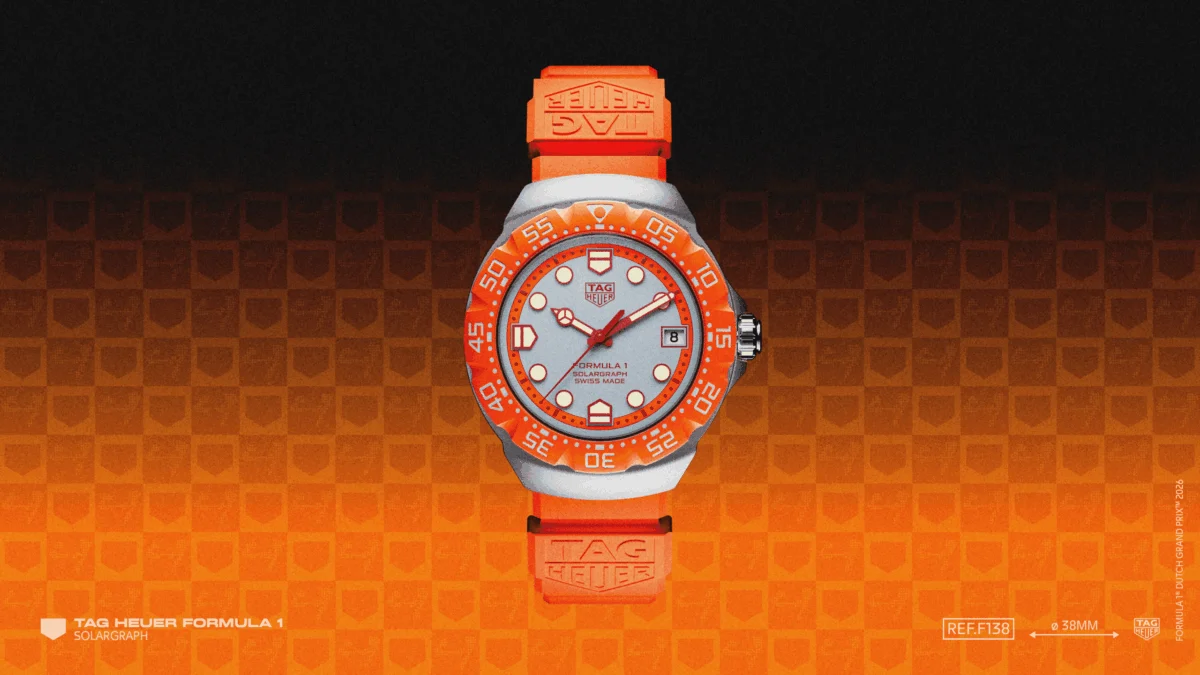
The horological world has witnessed several seismic shifts in consumer behavior over the last decade, but few have been as fascinating to track as the resurgence of the TAG Heuer Formula 1 collection. Once regarded as the entry-level gateway for aspiring enthusiasts, the Formula 1 line underwent a radical transformation in cultural status following a high-profile collaboration with the lifestyle brand Kith in early 2024. That partnership, which tapped into a deep well of 1980s and 90s nostalgia, effectively recalibrated the market’s perception of the model. What was once a reliable, sporty quartz watch became a lightning rod for "Beanie Baby-esque" market dynamics, where demand far outstripped supply and secondary market prices began to fluctuate wildly. Following that initial frenzy, TAG Heuer strategically transitioned the collection into a permanent fixture in April 2025, but as the latest announcement proves, the brand is far from finished with the hype-driven limited edition model.
Today, the Swiss watchmaker has unveiled two new electric limited-edition references that serve as a vibrant tribute to one of the most atmospheric stops on the Formula 1 calendar: the Dutch Grand Prix at Circuit Zandvoort. These new models, designated as WBY111H.FT8128 (on a rubber strap) and WBY111L.BA0042 (on a stainless steel bracelet), are not merely aesthetic updates; they are a celebration of national identity, racing history, and a specific geographical location that has defined the modern era of racing.
The Significance of Circuit Zandvoort and the "Orange Army"
To understand the design choices behind these new timepieces, one must understand the unique character of Circuit Zandvoort. Nestled among the rolling sand dunes along the North Sea coast, the track is renowned for its undulating topography and its "old-school" feel. Unlike the modern "Tilkedromes" characterized by massive runoff areas and flat surfaces, Zandvoort is tight, winding, and dictated by the natural landscape. Its signature banked corners, particularly the Arie Luyendyk curve, allow drivers to carry immense speed into the main straight, creating a high-stakes environment that rewards bravery and precision.
The color orange, which dominates the accents of both new watches, is a direct nod to the Dutch national identity. In the context of modern Formula 1, orange has become synonymous with the "Orange Army"—the sea of Dutch fans who travel across the globe to support three-time World Champion Max Verstappen. By leaning into this palette, TAG Heuer is capturing a specific moment in sports history. However, the release carries a bittersweet undertone: the 2026 season is expected to be the final iteration of the Dutch Grand Prix for the foreseeable future, as the race’s contract comes to an end and the sport looks toward new markets. This looming expiration date adds a layer of "finite" collectibility to these watches that transcends their limited production numbers.
Design and Aesthetics: A Study in Subdued Fire
The new Formula 1 Solargraph models are housed in a 38mm stainless steel case, a size that reflects the broader industry trend toward more wearable, mid-sized proportions. The barrel-shaped case features a brushed finish that emphasizes its tool-watch heritage, while the signed crown ensures water resistance up to 100 meters. The most striking visual element is the bi-directional 60-minute bezel, crafted from TH Polylight—a high-tech material that offers a distinct tactile feel and durability.

The dial is a masterclass in contrasting textures and tones. A matte grey base provides a neutral canvas for the "fiery" orange and red accents. The outer minute track is rendered in a vivid orange, punctuated by red indices that draw the eye toward the center. The handset is also finished in red, creating a cohesive racing-inspired aesthetic. To ensure legibility in low-light conditions—or perhaps during a late-night North Sea beach party—the applied shield and round indices are filled with eggshell-colored Super-LumiNova, providing a warm, vintage-adjacent glow that contrasts beautifully with the modern color scheme.
The choice between the two models largely comes down to the wearer’s preference for weight and versatility. The WBY111H.FT8128 comes equipped with a high-grade orange rubber strap that mirrors the vibrancy of the dial, making it an ideal choice for summer wear and active use. Conversely, the WBY111L.BA0042 features a classic three-row stainless steel bracelet, which tempers the brightness of the orange accents and provides a more formal, integrated look.
Technical Prowess: The Solargraph Calibre TH50-00
Under the hood of these Dutch GP editions lies TAG Heuer’s Solargraph movement, the Calibre TH50-00. This movement represents a significant technological partnership between TAG Heuer and Manufacture La Joux-Perret, a subsidiary of Citizen Watch Co., which is the undisputed leader in light-powered timekeeping technology.
The Solargraph movement is designed for the modern user who values convenience without sacrificing performance. The technical specifications are objectively impressive: a mere one minute of exposure to light (whether sunlight or artificial) is sufficient to power the watch for an entire day. When fully charged—which takes approximately 40 hours of light exposure—the watch can run for up to 10 months in total darkness. This makes it an ideal "set-it-and-forget-it" piece for a collection. Furthermore, the battery has an estimated lifespan of 15 years, significantly reducing the environmental impact and the maintenance requirements typically associated with traditional quartz or mechanical movements.
From an engineering perspective, the Solargraph technology requires a specialized dial construction. The matte grey dial must be translucent enough to allow light to pass through to the solar cells beneath it, yet opaque enough to maintain a premium, solid appearance. TAG Heuer has perfected this balance, ensuring that the technology remains invisible to the naked eye while providing relentless reliability.
Market Positioning and the "Affordable Luxury" Segment
The pricing for these limited editions—$2,150 for the strap model and $2,250 for the bracelet—places them in a competitive but lucrative segment of the market. In an era where the prices of mechanical luxury watches have skyrocketed, TAG Heuer is positioning the Formula 1 Solargraph as a high-value alternative that offers brand prestige, legitimate racing heritage, and cutting-edge technology.

Critics often debate the value proposition of high-end quartz or solar watches, but TAG Heuer’s success with the Formula 1 line suggests that a younger generation of collectors is less concerned with the "soul" of a mechanical escapement and more focused on design, narrative, and ease of use. By limiting the production to 1,500 pieces for the rubber strap version and 1,000 pieces for the steel bracelet version, the brand is ensuring that these watches remain exclusive enough to maintain interest among collectors while being accessible enough to be worn as daily drivers.
The "Beanie Baby" comparison mentioned in the early days of the 2024 relaunch is an apt one. The Formula 1 collection has become a "collectible" in the truest sense, where specific colorways and collaborations drive social media engagement and brand heat. However, unlike a fad, the Formula 1 line has the backing of decades of history, dating back to 1986 when it was the first watch released after the acquisition of Heuer by TAG (Techniques d’Avant Garde).
Strategic Timing and the Future of the Formula 1 Line
The timing of this release—scheduled for preorder on Tuesday, August 18th at 5 a.m.—is calculated to coincide with the height of the summer racing season. It also serves as a strategic bridge between the high-concept Kith collaboration and the broader rollout of the permanent Solargraph collection. By continually releasing limited, region-specific or event-specific models, TAG Heuer keeps the Formula 1 line in the conversation without diluting the core brand.
As the Dutch Grand Prix approaches its final laps in the coming years, these watches will likely stand as a memento of a specific era of Formula 1—one defined by the dominance of a Dutch driver and the global explosion of the sport’s popularity. For the enthusiast, they represent a rare combination of technical utility and emotional storytelling.
In conclusion, the WBY111H.FT8128 and WBY111L.BA0042 are more than just "orange watches." They are a sophisticated nod to a legendary racetrack, a celebration of a national sporting movement, and a showcase for the future of light-powered horology. Whether you are a member of the "Orange Army" or simply a collector looking for a robust, stylish timepiece to close out the summer, these new Formula 1 Solargraphs offer a compelling package that is sure to disappear from the virtual shelves as quickly as a Formula 1 car through the dunes of Zandvoort.
