
 By admin
The Atmos Rewards program is unique among domestic airline loyalty programs because of its membership in the Oneworld alliance. This means that points earned through these Bank of America credit cards are not merely restricted to flights between Seattle and Honolulu; they can be leveraged for high-value redemptions on global partners such as American Airlines, British Airways, Cathay Pacific, and Japan Airlines. Because Atmos Rewards points are widely considered among the most valuable airline miles due to their flexible award charts and limited devaluation history, choosing the right card to accumulate them is a critical financial decision for the savvy traveler.
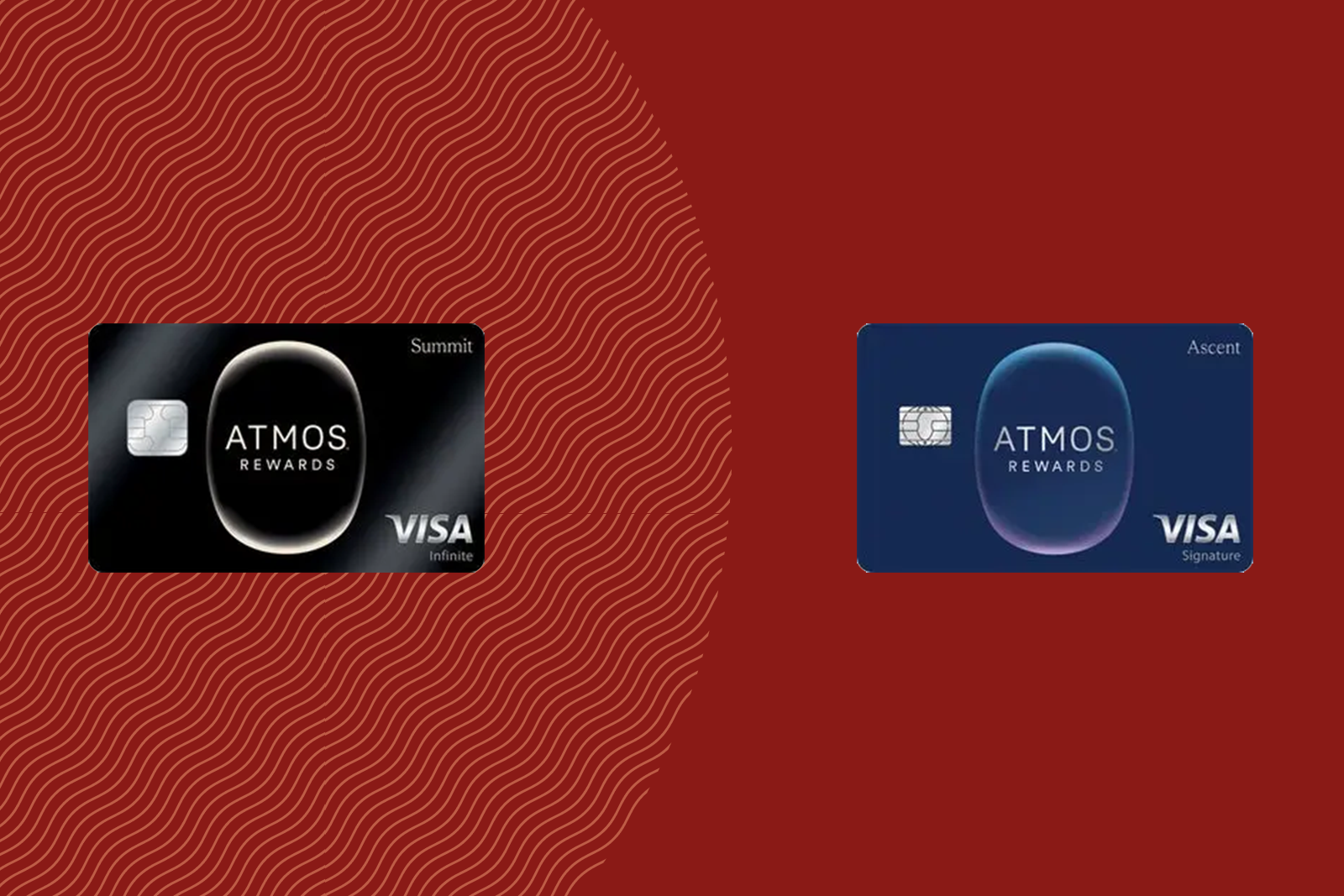
Starting with the entry-level option, the Atmos Rewards Ascent Visa Signature card carries a manageable $95 annual fee. This card is strategically positioned for the "everyday" traveler—someone who flies several times a year and wants to ensure their loyalty to the Alaska-Hawaiian brand is rewarded without the burden of a high carrying cost. The current welcome offer for the Ascent is particularly aggressive, offering 70,000 bonus points plus a $99 Companion Fare (plus taxes and fees starting at $23) after the cardholder spends $2,500 on purchases within the first 90 days of account opening. Based on industry valuations from August 2026, the points alone in this offer are valued at approximately $1,085. When you factor in the potential savings from the Companion Fare, which allows a friend or family member to fly for a flat fee regardless of the market price of the ticket, the first-year value of the Ascent card easily clears the $1,200 mark.
On the other end of the spectrum is the Atmos Rewards Summit Visa Infinite card, a premium offering designed for the true road warrior. With a $395 annual fee, the Summit card competes in the "premium-lite" category, sitting just below the ultra-premium cards like the Amex Platinum or Chase Sapphire Reserve in cost, but offering highly specific airline benefits that those general travel cards cannot match. The welcome bonus for the Summit is even more lucrative: 80,000 bonus points and a 25,000-point Global Companion Award after spending $4,000 in the first 90 days. This offer carries a combined valuation of roughly $1,628. For travelers who have significant upcoming expenses, the extra $1,500 in spend required to hit the Summit’s bonus is a small hurdle for an additional $500+ in total value.
The divergence between the two cards becomes even clearer when examining their earning structures. Both cards offer a standard 3 points per dollar on eligible Alaska and Hawaiian Airlines purchases, making them equal for direct flight bookings. Furthermore, both cards benefit from a 10% rewards bonus on all points earned from card purchases if the cardholder maintains an eligible Bank of America account, such as a checking or savings account. This "relationship bonus" is a hallmark of Bank of America’s ecosystem and provides a powerful incentive for existing customers to stay within the bank’s portfolio.
However, the secondary earning categories are where the Summit begins to pull away. The Atmos Summit earns 3 points per dollar on dining and, perhaps most uniquely, on all foreign transactions. While many cards waive foreign transaction fees, very few actually offer a bonus multiplier on every dollar spent outside the United States. This makes the Summit an elite choice for international travelers who want to earn at a high rate while exploring Europe or Asia. Conversely, the Atmos Ascent focuses on domestic everyday life, offering 2 points per dollar at gas stations and EV charging stations, on local transit (including ride-hailing services like Uber and Lyft), and on cable and select streaming services. For a suburban commuter, the Ascent’s gas and transit multipliers might actually out-earn the Summit over a year of routine spending.

The real meat of the comparison lies in the travel perks and the path to elite status. The Atmos Rewards program uses "status points" to determine a flyer’s tier, and the credit cards provide a significant shortcut. The Summit cardholder earns 1 status point for every $2 spent, while the Ascent cardholder earns 1 status point for every $3 spent. More importantly, the Summit provides a massive head start by granting 10,000 status points every year on the account anniversary. Since Atmos Silver status—the program’s first tier—is typically reached at 20,000 points, the Summit cardholder is essentially halfway to elite status before they even step foot on a plane. This status grants perks like preferred seating, priority check-in, and occasional upgrades, which can significantly enhance the travel experience.
Lounge access is another area of significant differentiation. The Atmos Summit provides two Alaska Lounge passes every quarter, totaling eight passes per year. Given that day passes for airline lounges typically cost between $50 and $60, this benefit alone is worth up to $480 annually, which more than offsets the $395 annual fee. These passes are flexible, requiring only a same-day ticket on Alaska, Hawaiian, or a Oneworld partner. The Ascent card, by contrast, offers a $100 discount on an annual Alaska Lounge+ membership. While this is a nice perk, it requires the cardholder to still shell out several hundred dollars for the full membership, making it less of a "free" benefit and more of a subsidized luxury.

The companion benefits also reflect the tiered nature of these cards. The Ascent’s $99 Companion Fare is a staple of the Alaska Airlines brand, but it now requires a $6,000 annual spend to renew after the first year. The Summit takes a more modern approach with its "Global Companion Award." Cardholders receive a 25,000-point award annually on their anniversary and can earn a massive 100,000-point award if they spend $60,000 on the card in a year. For high spenders, the ability to "buy" a companion’s ticket with points rather than cash offers superior flexibility, especially on expensive long-haul routes to Hawaii or international destinations.
Redemption flexibility is the final piece of the puzzle. While both cards allow users to book into the same award chart—including the famous "sweet spots" like 4,500-point short-haul domestic flights on American Airlines or 75,000-point business class seats on Japan Airlines—the Summit offers a unique "bridge" to the hotel world. Summit cardholders have the exclusive ability to transfer Atmos Rewards points to hotel partners, including Marriott Bonvoy, Hilton Honors, and IHG One Rewards, at a 1:1 ratio. While experts generally advise against this because Atmos points are worth more for flights (roughly 1.5 to 1.8 cents each) than for hotel stays (often worth less than 1 cent), the option provides a safety net for travelers who find themselves "point rich and cash poor" when trying to book a resort stay.
Choosing between the Atmos Ascent and the Atmos Summit ultimately comes down to a calculation of travel frequency and spending habits. The Ascent is the "safe" choice; it is a card that pays for itself through its companion fare and elevated earnings on daily transit and gas. It is ideal for the traveler who wants the perks of a co-branded card—like free checked bags and priority boarding—without the pressure of a high annual fee.
The Summit, however, is a value-optimization machine for the frequent flyer. If you visit an Alaska Lounge just four times a year, the card is effectively free. If you spend $20,000 a year on the card, you earn elite status that would otherwise require thousands of miles of flying. For those who frequently travel internationally, the 3x multiplier on foreign transactions is a game-changer that can accelerate the path to a dream vacation faster than almost any other card on the market. In the new era of Atmos Rewards, Bank of America has provided two distinct paths to the sky; whether you choose the Ascent or the Summit, the unified power of Alaska and Hawaiian Airlines ensures that your loyalty is more valuable than ever before.
