
 By admin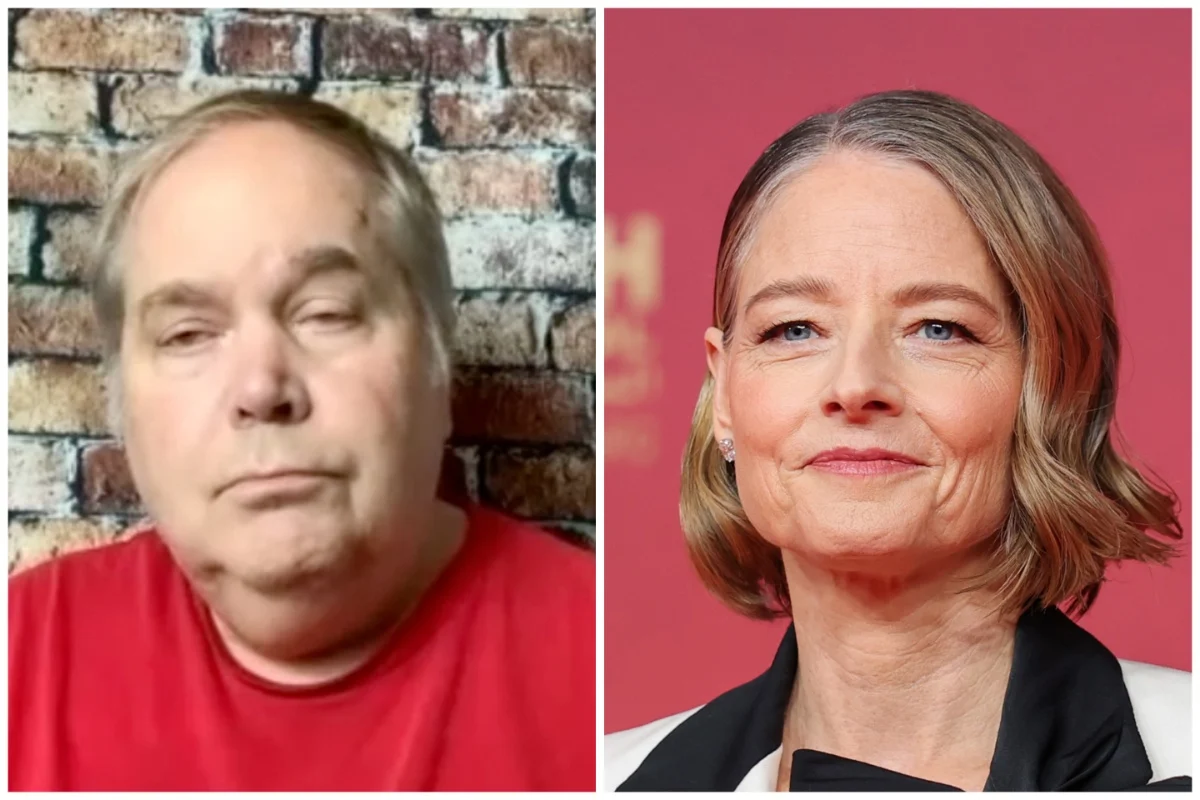
John Hinckley Jr., the Oklahoma-born individual infamous for his 1981 assassination attempt on President Ronald Reagan, has resurfaced with a new message directed at actress Jodie Foster, the object of his obsession. In a recent appearance on the "Mark Joseph Show," as reported by Entertainment Weekly, Hinckley expressed his well wishes for the acclaimed "The Silence of the Lambs" star. "I just wish Jodie Foster well, you know," Hinckley stated. "I don’t really see her movies, but I wish her well, and I know she’s doing quite well. And that’s all I can say is just, I wish Jodie well, and I hope she has a good life." This sentiment, delivered more than four decades after the violent act that shook the nation, offers a glimpse into the enduring, albeit now seemingly distant, fixation that fueled Hinckley’s notoriety.
The events of March 30, 1981, remain etched in American history. Hinckley, then 25 years old, lay in wait outside the Washington Hilton Hotel. As President Reagan emerged, surrounded by a throng of onlookers, Hinckley unleashed a barrage of six shots from his Röhm RG-14 revolver. The hail of bullets not only endangered the President but also struck Press Secretary James Brady, Secret Service agent Timothy McCarthy, and police officer Thomas Delahanty. A bullet, ricocheting off Reagan’s limousine, tragically found its mark in the President’s chest. In the immediate aftermath, Alfred Antenucci, a labor official, tackled Hinckley to the ground, with crucial assistance from Agent McCarthy, preventing further violence.
The ensuing legal battle captivated the nation. Hinckley was tried in federal court, facing thirteen charges. However, in a verdict that sparked considerable debate and public outcry, he was found not guilty on all counts by reason of insanity. This outcome highlighted the complex intersection of mental health and criminal responsibility, a theme that would continue to resonate in public discourse. The defense successfully argued that Hinckley suffered from severe delusional disorder, driven by his consuming obsession with Jodie Foster.
Hinckley’s obsession with Foster was not a sudden development. Years prior to the assassination attempt, he had engaged in a disturbing pattern of stalking the young actress. At the time of the shooting, Hinckley was 25, while Foster, already a rising star, was a mere 18 years old. Her burgeoning career had already seen her achieve significant recognition with roles in iconic films such as "Taxi Driver" (1976), where she played a pre-teen prostitute, and the family comedy "Freaky Friday" (1976). Foster’s portrayal of the character Iris in "Taxi Driver" had a particularly profound and disturbing impact on Hinckley, reportedly fueling his delusion that he was somehow connected to her on a profound, almost spiritual level. He had even sent her letters and attempted to communicate with her, believing his actions would somehow forge a bond between them.
During his interview on the "Mark Joseph Show," Hinckley candidly reflected on his motivations, articulating the depth of his delusion. When asked by host Mark Joseph about his intended outcome of assassinating Reagan, Hinckley confessed, "I wanted to have a union with Jodie Foster and live the rest of my life with her and all these things that, of course, were delusional. But I was believing those things at the time, so the best outcome would have been a union with Jodie Foster." This statement underscores the distorted reality in which Hinckley was operating, where the violent act of assassination was perceived as a pathway to romantic fulfillment.
He further elaborated on the fantastical scenario he envisioned: "I thought she would, you know, after things settled down, join me wherever I was," Hinckley admitted. "I wasn’t sure if I was gonna be in jail or the hospital or what after things settled down. I had this notion that she was gonna join me wherever I was." This chilling revelation illustrates the profound disconnect from reality that characterized Hinckley’s mental state, where the legal and personal consequences of his actions were secondary to the imagined reunion with his cinematic idol.
The assassination attempt on President Reagan was not an isolated incident of political violence in American history. However, the specific motivation behind Hinckley’s actions – an obsessive infatuation with a Hollywood actress – set it apart, drawing significant attention to the psychological underpinnings of such extreme behavior. The case raised critical questions about the role of media in shaping perceptions and the potential for public figures to become the unwitting targets of deranged individuals. The intense media coverage of both the shooting and the subsequent trial undoubtedly amplified Hinckley’s notoriety, a factor that likely contributed to the perpetuation of his fixation.
Jodie Foster, a private individual, has largely remained stoic and dignified in her public responses to the events. In the past, she has spoken about the trauma and the unsettling nature of being the focus of such a violent obsession. Her career has continued to flourish, marked by critical acclaim and numerous accolades, including two Academy Awards. She has gone on to become a respected director and producer, carving out a distinguished path in Hollywood. Foster’s resilience in the face of such a disturbing chapter in her life is a testament to her strength and professionalism.
John Hinckley Jr.’s release from court-ordered psychiatric confinement in 2018, after decades of treatment and supervision, marked another significant turning point. The decision by a federal judge to grant him an unconditional release was met with a mixture of relief and apprehension. While mental health professionals deemed him no longer a danger to himself or others, the memory of his actions and the potential for relapse remained a concern for many. His current interview, where he expresses well wishes for Jodie Foster, could be interpreted in various ways. Some might see it as a sign of genuine remorse and a desire to move forward, while others may view it as a continued, albeit more subdued, manifestation of his past obsessions.
The enduring fascination with John Hinckley Jr. and his attempt to assassinate President Reagan speaks to the profound impact of this event on the American psyche. It serves as a stark reminder of the fragility of life, the complexities of mental illness, and the potential for obsession to manifest in destructive ways. Hinckley’s latest message to Jodie Foster, while seemingly innocuous on the surface, is intrinsically linked to a dark and disturbing chapter in American history, a chapter that continues to hold a morbid fascination for many. The narrative of Hinckley, the would-be assassin driven by cinematic fantasy, remains a cautionary tale, a testament to the often-unforeseen consequences of fame and the enduring power of the human psyche, in both its brilliance and its darkness. The public’s continued interest in his statements, even decades later, highlights the lasting imprint of his actions and the ongoing quest to understand the motivations behind such extreme acts. The "Mark Joseph Show" appearance, therefore, is not merely a celebrity interview but a historical footnote, offering a fleeting glimpse into the mind of a man forever linked to a pivotal moment in American history and the enduring, yet hopefully now resolved, fixation on a Hollywood icon.
