
 By Rifan Muazin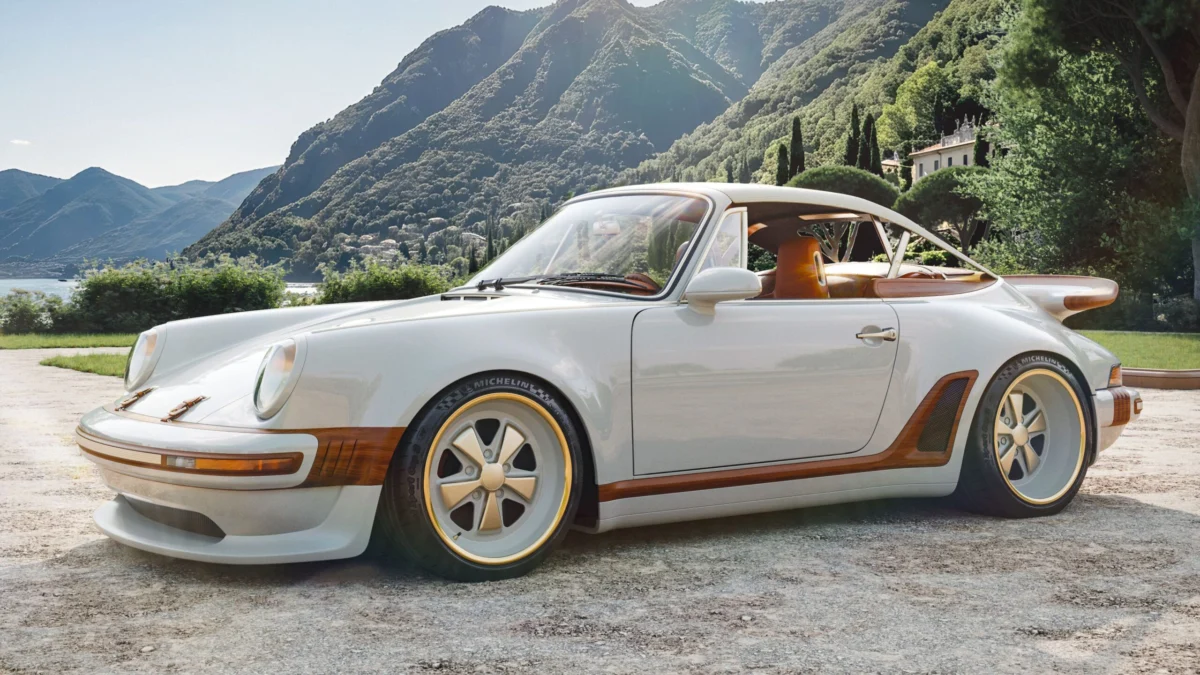
The boundaries of the Louis Vuitton universe, a realm once defined strictly by the rigid geometry of steamer trunks and the refined textures of monogrammed canvas, are expanding at an unprecedented velocity. Since its founding in 1854 as a specialist luggage-maker in Paris, the maison has transformed into a global cultural juggernaut, weaving its identity into the very fabric of contemporary lifestyle. Today, the Louis Vuitton catalog is a testament to the brand’s "Art of Travel" philosophy, encompassing everything from high-fashion apparel and fine jewelry to unexpected lifestyle curiosities like branded foosball tables, artisanal chopsticks, and Virgil Abloh-designed Nike Air Force 1s. Yet, despite this relentless diversification into sporty accessories and leisure equipment, one final frontier remained largely untouched by the official LV monogram: the automotive world. While the brand has historically crafted bespoke trunks for luxury vehicles and classic car rallies, it has never before placed its design imprimatur on the actual architecture of a car. That changed today with the announcement of a landmark collaboration with the legendary California-based customizer Singer Vehicle Design, resulting in two one-of-a-kind Porsche 911s that redefine the intersection of horology, leathercraft, and high-performance engineering.
The genesis of this partnership was not a marketing boardroom strategy, but rather a specific request from Singer Vehicle Design for a singular component: a dashboard clock. Singer, founded by Rob Dickinson in 2009, has earned a global reputation for its "restorations reimagined," a process where vintage air-cooled Porsche 911s (typically the 964 generation) are stripped to their bones and rebuilt with carbon fiber bodies, state-of-the-art suspension, and air-cooled flat-six engines that are as much musical instruments as they are power plants. These vehicles frequently command prices in the mid-to-high six figures, and often well over a million dollars, representing the pinnacle of the "restomod" movement. According to Jean Arnault, Louis Vuitton’s Director of Watches and the youngest son of LVMH Chairman Bernard Arnault, the project quickly outgrew its initial horological scope. "In addition to the design and production of this clock by La Fabrique du Temps Louis Vuitton workshops in Switzerland, it quickly became apparent to us that this collaboration with Singer could extend to the personalization of every functional element of the vehicle, enhancing them through our expertise in leather craftsmanship and watchmaking," Arnault explained. This shift highlights Jean Arnault’s broader strategy of elevating Louis Vuitton’s watchmaking division by aligning it with the highest tiers of artisanal manufacturing and mechanical excellence.
The collaboration has produced two distinct automotive icons: a "Classic" coupe and a "Classic Turbo" convertible, each reflecting a different facet of the Louis Vuitton aesthetic. The "Classic" model is a vibrant homage to the maison’s heritage colors, ensconced in a palette of rich saffron, cobalt blue, and yellow. This vehicle serves as a rolling showcase for the skills of La Fabrique du Temps, LV’s specialized watchmaking manufacture in Meyrin, Switzerland. At the heart of the dashboard sits a detachable Louis Vuitton clock inspired by the brand’s flagship Tambour collection. This timepiece is designed for versatility, capable of being removed from its housing to function as a desk clock, ensuring the owner remains connected to the vehicle’s spirit even when away from the driver’s seat. The integration of horology into the car’s DNA continues through the instrumentation; the speedometer, rev counter, and auxiliary gauges are all executed with the same typographic and aesthetic rigor as a high-end Louis Vuitton watch, replacing the standard VDO units typically found in vintage Porsches.
Because this marks Louis Vuitton’s inaugural foray into comprehensive automotive design, the maison’s creative teams, in conjunction with Singer’s engineers, scrutinized every square inch of the vehicles. The exterior of the Classic coupe features a custom-engineered roof rack, a nod to the brand’s travel-centric roots. This rack is not merely decorative; it is built to secure a range of bespoke LV equipment, including a specialized trunk, a monogrammed surfboard, or a pair of high-performance skis. The interior is a masterclass in tactile luxury, swathed entirely in premium Louis Vuitton leathers that have been treated to withstand the rigors of the road while maintaining the softness of a luxury handbag. Every touchpoint, from the chromium-plated control knobs and toggle switches to the precisely milled air vents, has been redesigned to reflect the brand’s commitment to "objets d’art."
The second vehicle in the collection, the "Classic Turbo" convertible, takes a different but equally sophisticated path. This model was heavily influenced by Nicolas Ghesquière, Louis Vuitton’s longtime Artistic Director of Women’s Collections. Finished in a luminous Calcaire Lutétien white—a shade evocative of the Lutetian limestone found in the foundations of Paris—the car features a sumptuous interior accented by fine wood veneer trim. This choice of materials bridges the gap between mid-century automotive elegance and the avant-garde futurism for which Ghesquière is known. The Turbo model emphasizes a more fluid, lifestyle-oriented approach to performance, blending the raw power of Singer’s turbocharged flat-six engines with a refined, almost architectural interior environment.

True to the Louis Vuitton ethos, the experience of owning these vehicles extends far beyond the driver’s seat. The collaboration includes a comprehensive suite of bespoke apparel and luggage, ensuring a "total look" for the owner. Each car is accompanied by a custom-fitted luggage set, designed to maximize the 911’s notoriously compact trunk space. For the Classic coupe, the maison has created a racing jacket crafted from Millésime leather—a rare, high-quality hide sourced from French calves raised under strict welfare standards—paired with cotton-and-silk denim jeans. The footwear options include customized LV driving shoes or LV Remix Derbys, offering a choice between track-ready functionality and city-ready elegance. Accessories for the coupe include perforated leather driving gloves, available in natural leather or cobalt blue, and a calfskin-trimmed driver’s helmet that meets modern safety standards while maintaining a vintage aesthetic.
The Classic Turbo convertible offers a more fashion-forward, "feminine" take on the driving suit. Ghesquière’s influence is evident in the made-to-measure driving suit cut from parachute silk, a material that offers both lightness and a high-fashion sheen. This is complemented by braided leather gloves and a pair of LV "Sneakerinas"—a hybrid of a sneaker and a ballerina flat—along with a monogrammed helmet. This holistic approach to design ensures that the driver and the machine exist in a state of aesthetic harmony, a concept that harks back to the "concours d’elegance" events of the 1920s and 30s where cars and fashion were judged as a single unit.
The technical achievement of these cars cannot be overstated. A standard Singer restoration involves approximately 4,000 hours of meticulous labor, with every component—from the carbon-fiber body panels to the nickel-plated brightwork—perfected by hand. By integrating Louis Vuitton’s specialized workshops into this process, the complexity of the builds increased exponentially. The collaboration required a seamless dialogue between the trunk makers of Asnières, the leather workers of the maison’s French ateliers, the watchmakers of Switzerland, and the automotive engineers of Southern California. The result is a vehicle that transcends the traditional "car" label; it is a piece of kinetic sculpture that appeals to both "hypebeasts" who crave brand exclusivity and "gearheads" who demand mechanical perfection.
From a strategic perspective, this collaboration signals a new era for LVMH. Under the guidance of the Arnault family, the group has increasingly sought to dominate the "ultra-luxury" segment by creating products that are essentially unprocurable through traditional retail channels. By partnering with Singer, a brand that represents the absolute pinnacle of automotive craftsmanship, Louis Vuitton reinforces its position as the ultimate purveyor of luxury. This move also taps into the booming "restomod" and collector car market, which has seen values for air-cooled Porsches skyrocket over the last decade. By placing its monogram on a Singer Porsche, Louis Vuitton is not just selling a car; it is claiming territory in a high-growth asset class where the buyers are the same ultra-high-net-worth individuals who collect Tambour watches and limited-edition trunks.
Ultimately, the Louis Vuitton x Singer Porsche 911s are more than just a brand exercise. they represent the culmination of over a century of expertise in the "Art of Travel" meeting the cutting edge of 21st-century automotive engineering. They are a testament to the idea that luxury is not about what is necessary, but what is possible when two masters of their respective crafts are given the freedom to innovate without compromise. As these two vehicles hit the road, they carry with them the legacy of a Parisian luggage-maker and the soul of a California dreamer, proving that even in a world of digital screens and mass production, there is still a profound hunger for the hand-built, the bespoke, and the beautiful. This collaboration doesn’t just put a monogram on a car; it places Louis Vuitton firmly in the driver’s seat of the future of luxury.
