
 By admin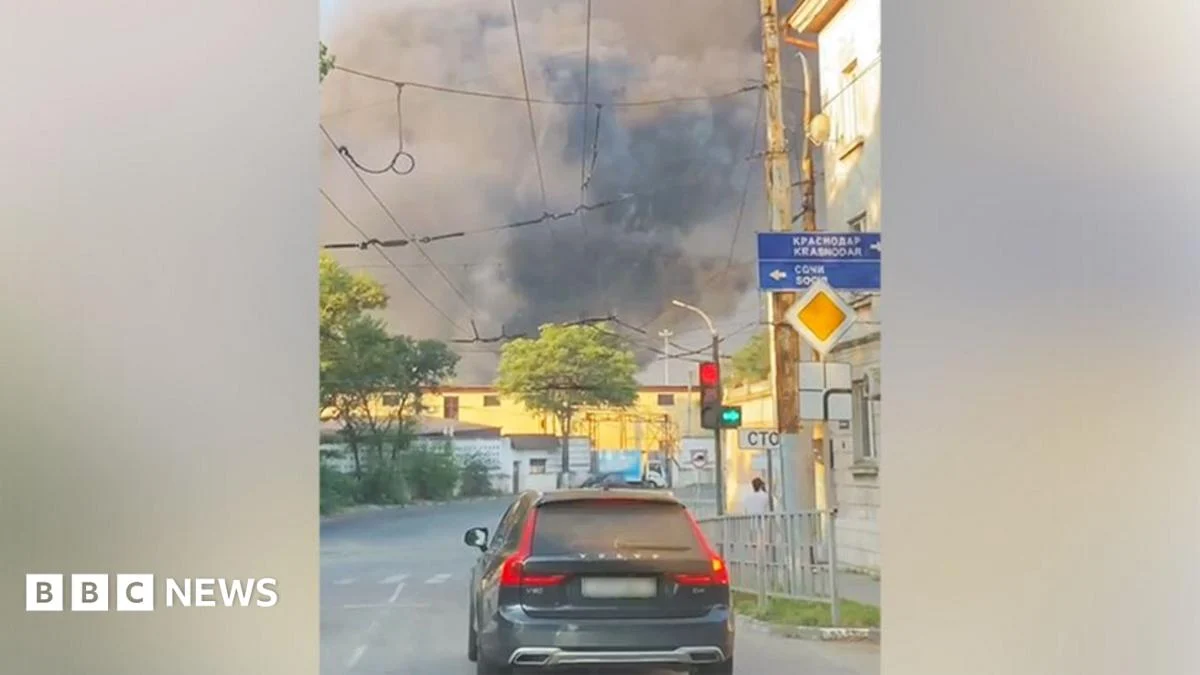
In a significant escalation of the conflict, Ukraine launched a "massive" overnight drone and missile assault on Russia’s strategically vital port city of Novorossiysk, inflicting substantial damage on two major grain export terminals and striking the last significant Russian naval base on the Black Sea. The audacious operation, described by Ukrainian President Volodymyr Zelensky as a "unique operation," has sent shockwaves through global agricultural markets and further underscored the escalating naval warfare in the Black Sea region. Local officials reported a grim toll, with three individuals, including an eight-year-old child, losing their lives and another 24 sustaining injuries in the coordinated attack.
President Zelensky, while not explicitly mentioning the grain terminals, confirmed Kyiv’s involvement, stating that rockets, jet, and naval drones were deployed to target the Russian base. This claim was later corroborated by Ukraine’s military, which announced that four Russian warships, including two frigates, were directly hit. Russia’s Ministry of Defense has remained conspicuously silent on the matter, refraining from any public comment on the extent of the damage or the casualties. President Zelensky, however, issued a stern warning, declaring on social media, "The occupying fleet and all the infrastructure that supports it will not be safe as long as Russian aggression continues."
The port of Novorossiysk, one of Russia’s largest maritime hubs, has become a crucial anchor for its Black Sea fleet. Following Ukrainian attacks that rendered its former primary base at Sevastopol in Russian-occupied Crimea too vulnerable, the majority of Russia’s Black Sea naval assets have been relocated to Novorossiysk. This strategic shift highlights the increasing effectiveness of Ukrainian long-range strike capabilities and the growing challenges Russia faces in maintaining its naval dominance.
The impact on global food security was immediately apparent. A major grain trading company confirmed to Russia’s state-run TASS news agency that its terminal in Novorossiysk had been struck. Similar confirmations were provided to Reuters and Russian outlet RBK by another entity, underscoring the widespread disruption to vital export infrastructure. In response to the mounting logistical constraints, the Russian Ministry of Agriculture announced on Wednesday that it was actively working to reroute cargo flows to ports situated on the Baltic and Caspian Seas, as well as through land-based routes. While the ministry’s statement alluded to "current logistical constraints," it conspicuously avoided any direct mention of Ukraine’s attacks.
The overnight assault was characterized by a barrage of explosions reported across Novorossiysk, as Russian air defenses reportedly engaged and downed multiple aerial objects. The intensity of the attack prompted the declaration of an emergency situation in the city on Wednesday. Beyond the port facilities, the drones struck surrounding areas, causing damage to critical infrastructure, including pipelines, which led to the suspension of the city’s water supply. The human cost of the attack extended beyond the immediate vicinity of the port. Regional Governor Veniamin Kondratyev reported that a man was killed by falling drone debris in a separate incident. Furthermore, Kondratyev detailed that "several hundred drones" had targeted various locations across the surrounding Krasnodar region overnight, resulting in damage to dozens of buildings, including residential homes.
In a grim tit-for-tat, Russia launched its own aerial strikes on Ukraine during the same overnight period, resulting in the deaths of at least 11 civilians between Tuesday and Wednesday. The majority of these fatalities occurred when Russia targeted the southern city of Zaporizhzhia with a combination of ballistic missiles and glide bombs, further illustrating the devastating human cost of the ongoing conflict.
The current barrage of attacks represents a significant escalation in the ongoing naval warfare that has intensified throughout the summer. After a period of relative quiet in the Black Sea, both Kyiv and Moscow have resumed targeting each other’s ports and shipping infrastructure. Ukraine’s ability to conduct long-range strikes on Russian territory has grown considerably, with recent attacks on vessels in the eastern Black Sea directly impacting Russia’s crucial grain shipments.
Russia, a global powerhouse in wheat exports, is facing potentially severe repercussions. According to a Moscow-based analytics firm, August exports could plummet by more than half compared to the average of the past five years, a direct consequence of the disruptions in the Black and Azov Seas. This exacerbates existing global food security concerns, which have been a persistent issue since Russia’s full-scale invasion of Ukraine in 2022.
The strategic importance of the Black Sea grain trade cannot be overstated. Together, Russia and Ukraine are major players in the global grain market, with significant export volumes crucial for buyers in North Africa, the Middle East, and parts of Asia. The collapse of the 2022 Black Sea Grain Initiative, a UN-brokered deal that allowed Ukraine to resume agricultural exports amidst a Russian blockade, has further compounded these challenges. Moscow’s decision to withdraw from the initiative and its subsequent attacks on vessels utilizing maritime corridors to Odesa aimed to deter foreign companies from trading with Ukraine, leading to a reported 23% decrease in Ukrainian exports by July, according to the Ukrainian Agribusiness Club (UCAB).
Russian Foreign Ministry spokeswoman Maria Zakharova, in response to the Novorossiysk attacks, accused Ukraine of targeting Russian grain and agricultural infrastructure. She asserted that these actions contribute to a rise in global food prices and exacerbate grain shortages. However, Zakharova also reiterated Russia’s commitment to continuing its strikes on "facilities that [Ukraine’s armed forces] use on the Black Sea to destabilise the navigation situation," vowing to persist until "the full elimination of threats to security projected to the Sea of Azov and the Black Sea." This rhetoric underscores Russia’s strategy of weaponizing food security and using its naval presence to exert influence in the region.
The international community has long voiced concerns about the war’s impact on global food supplies. The Black Sea Grain Initiative, though ultimately unsuccessful, represented a critical attempt to mitigate these fears by ensuring the flow of Ukrainian agricultural products to the global market. Its failure, coupled with the escalating attacks on vital port infrastructure and shipping routes, paints a grim picture for global food security and highlights the complex geopolitical ramifications of the ongoing conflict. The attacks on Novorossiysk represent a direct challenge to Russia’s maritime capabilities and its ability to control vital export routes, while simultaneously deepening the economic and humanitarian consequences of the war for nations reliant on Black Sea grain.
