
 By admin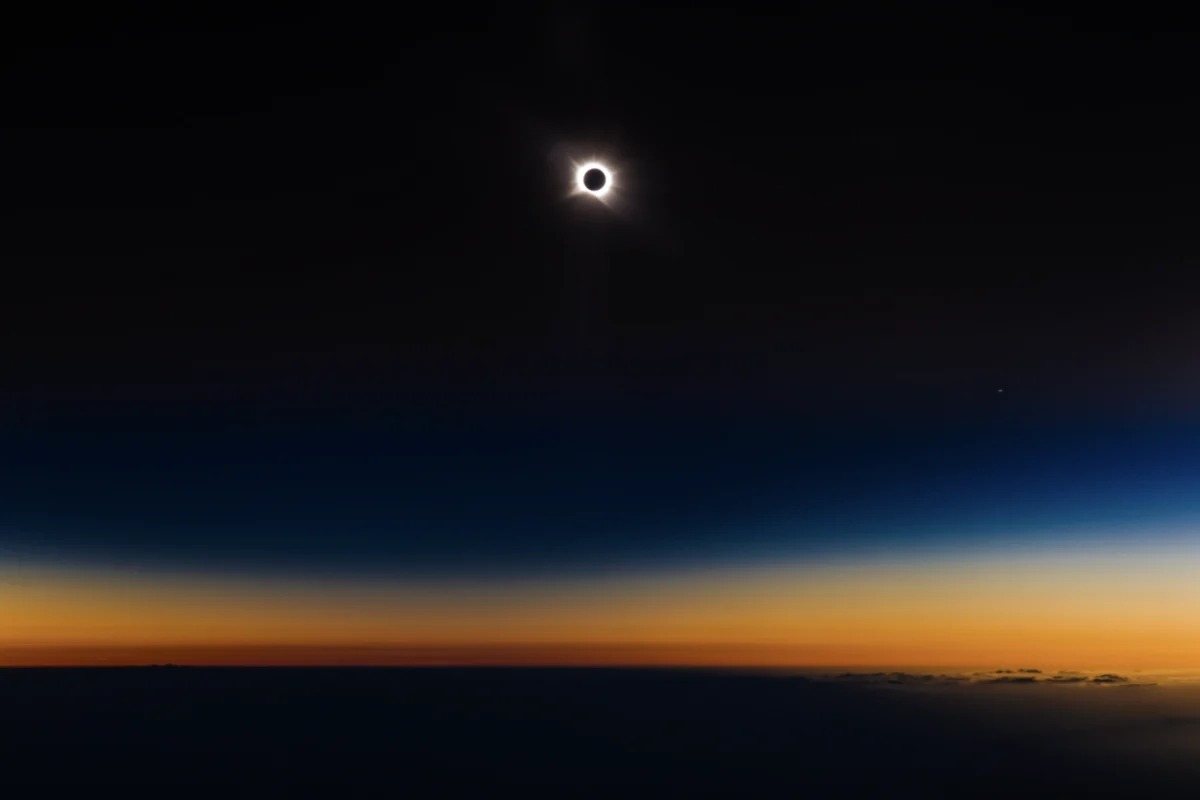
I had recently crossed the threshold of my 40th birthday and was coming off an exhausting year of professional travel that had taken me across multiple continents. Burnout was looming, and I had strictly imposed a travel ban for the remainder of August to recuperate. But by Monday afternoon, the "travel bug"—that familiar, restless tingle in the fingertips—returned with a vengeance. The realization hit me: the path of totality for the August 12, 2026, solar eclipse was slicing right through northern Spain and the Balearic Islands. It was tantalizingly close, a mere two-hour hop from the United Kingdom.
The 2026 total solar eclipse was a historic event, marking the first time a total eclipse had been visible in continental Europe since 1999, and the first in Spain since 1905. The path of totality, roughly 180 miles wide, was set to sweep across the Atlantic, clipping Greenland and Iceland before making landfall on the Iberian Peninsula. For a points and miles aficionado, the challenge wasn’t just getting there; it was getting there using the strategic tools of the trade. I immediately turned to my digital arsenal: SeatSpy and Seats.aero. These platforms are the lifeblood of the award-travel community, allowing users to scan for "unicorn" availability—those rare seats open for booking with frequent flyer miles rather than cash.
To my shock, despite the height of the British summer school holidays and the massive influx of tourists heading to Spain for the eclipse, British Airways had wide-open award availability. Usually, flights to Mediterranean hotspots in August are booked months, if not a year, in advance. Yet, there they were: seats waiting to be claimed. This sparked a more ambitious thought. What if I didn’t just watch the eclipse from the ground? What if I could witness the shadow of the moon from the stratosphere?
Seeing an eclipse from a commercial aircraft is a rare feat of timing and navigation. At 35,000 feet, you are above the weather, eliminating the risk of cloud cover—the eternal enemy of the eclipse chaser. Furthermore, the perspective is unique; you can see the moon’s shadow, the umbra, racing across the Earth’s surface at supersonic speeds. I initially thought I had found the perfect solution with a flight to Palma de Mallorca (PMI) and even shared my excitement on social media. However, the collective intelligence of the internet quickly corrected me. The geometry of a solar eclipse is precise; because the sun is at a specific altitude and the plane is moving, the "parallax" effect means that a flight path that looks correct on a flat map might actually miss the cone of darkness.
Determined to get the science right, I enlisted the help of my housemate, a professional airline pilot. Together, we became amateur astronomers and flight dispatchers. We cross-referenced the official NASA path of totality with three days of historical FlightRadar24 data. We weren’t just looking for a route; we were looking for a schedule. We needed a flight that would be in a specific corridor of airspace over the Bay of Biscay or Northern Spain at exactly the moment the moon obscured the sun.
One flight emerged as the clear winner: British Airways Flight 2644 from London Gatwick (LGW) to Malaga (AGP). Historically, this flight suffered from a consistent "Slot Delay"—a common occurrence in busy European summer airspace—taking off about an hour after its 5:10 p.m. scheduled departure. This specific delay was the "Goldilocks" zone we needed. If it left on time, we would be too far south. If it were delayed by 60 to 70 minutes, we would intercept the umbra perfectly.
I checked the British Airways Executive Club portal one last time. The seats were still there. I booked the flight for a mere 14,000 Avios and a symbolic £2.50 (approximately $3) in taxes. Leveraging my BA Club Gold status, I secured a window seat on the right-hand side (the starboard side), which, according to our calculations, would be facing west-southwest—directly toward the sun during the eclipse’s peak.
The day of the flight was a blur of nervous energy. Reaching Gatwick via the train, my friends and I found the terminal surprisingly calm. We indulged in a "cheeky Nando’s"—a British pre-flight tradition—while checking our solar filters and ISO-certified eclipse glasses. As I watched the departure board, I found myself doing something no traveler usually does: praying for a delay. Every minute the "Go to Gate" message didn’t appear felt like a victory for our astronomical timing.
We boarded late, as hoped. I was the last to step onto the Airbus A320, hoping my late boarding might somehow anchor the plane to the tarmac for just a few more precious minutes. We pushed back from the gate and joined a queue of aircraft. I sat in seat 5F, clutching my camera, watching the clock. At 6:05 p.m., the engines roared, and we took to the skies. We were airborne five minutes ahead of our "ideal" window, but within the margin of error.
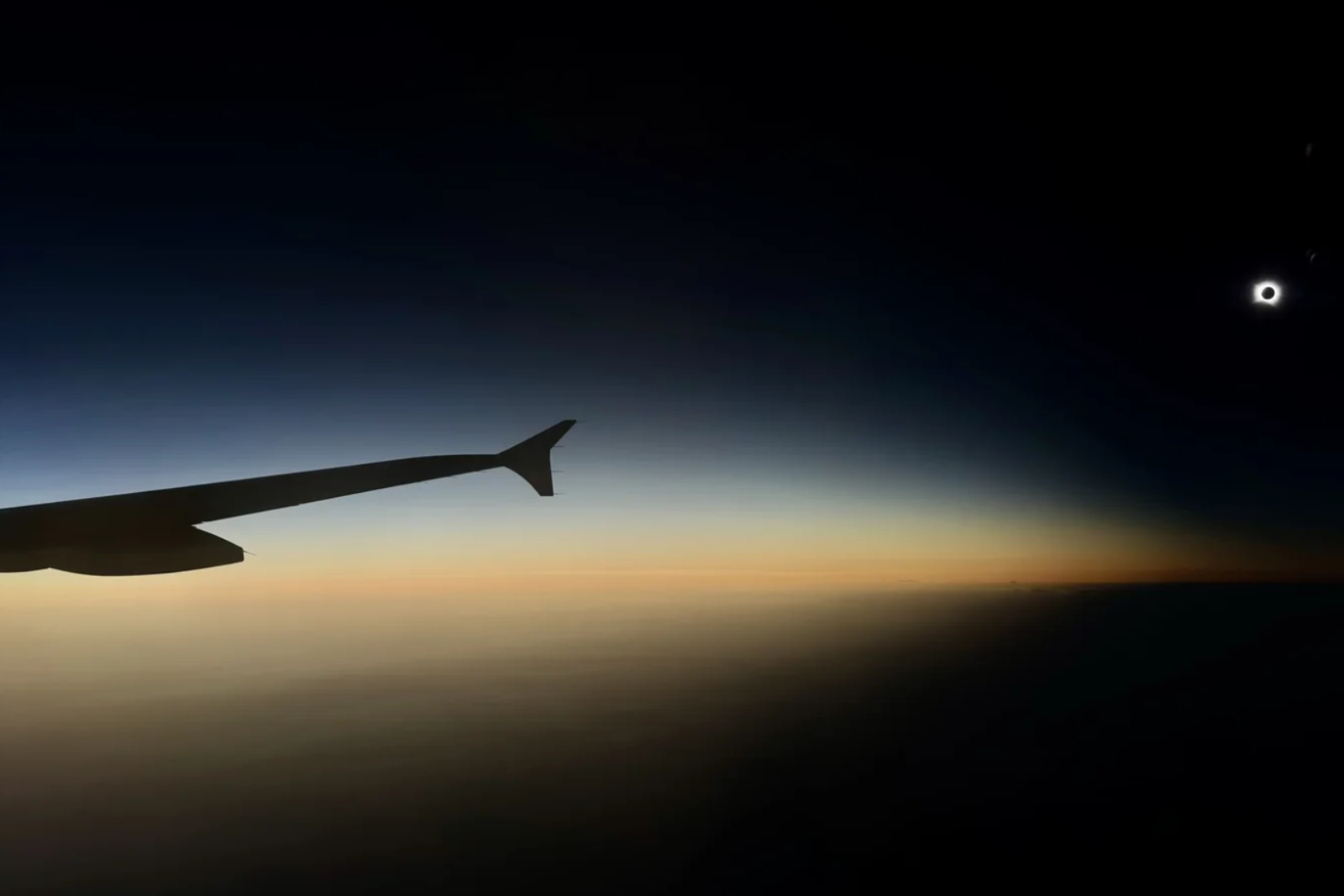
As we climbed through the layers of the atmosphere, the sky transitioned to a deep, bruised purple. Through the solar glasses, I could see the "First Contact." The moon was beginning its transit, taking a small, curved bite out of the sun’s golden disc. It was a surreal realization that out of the 150-plus passengers on board, only a handful of us realized we were currently participating in a high-stakes celestial chase. Our cardboard glasses drew curious stares until we began passing them around, allowing our fellow travelers to witness the sun shrinking into a thin, brilliant crescent.
Forty minutes into the flight, the captain’s voice crackled over the intercom. Usually, pilots announce weather updates or arrival times. This time, the tone was different—it was filled with genuine awe. He informed the cabin that he had been coordinating with air traffic control to maintain a heading that would keep us within the path of totality. He described what was about to happen: the "approaching darkness" of the moon’s shadow.
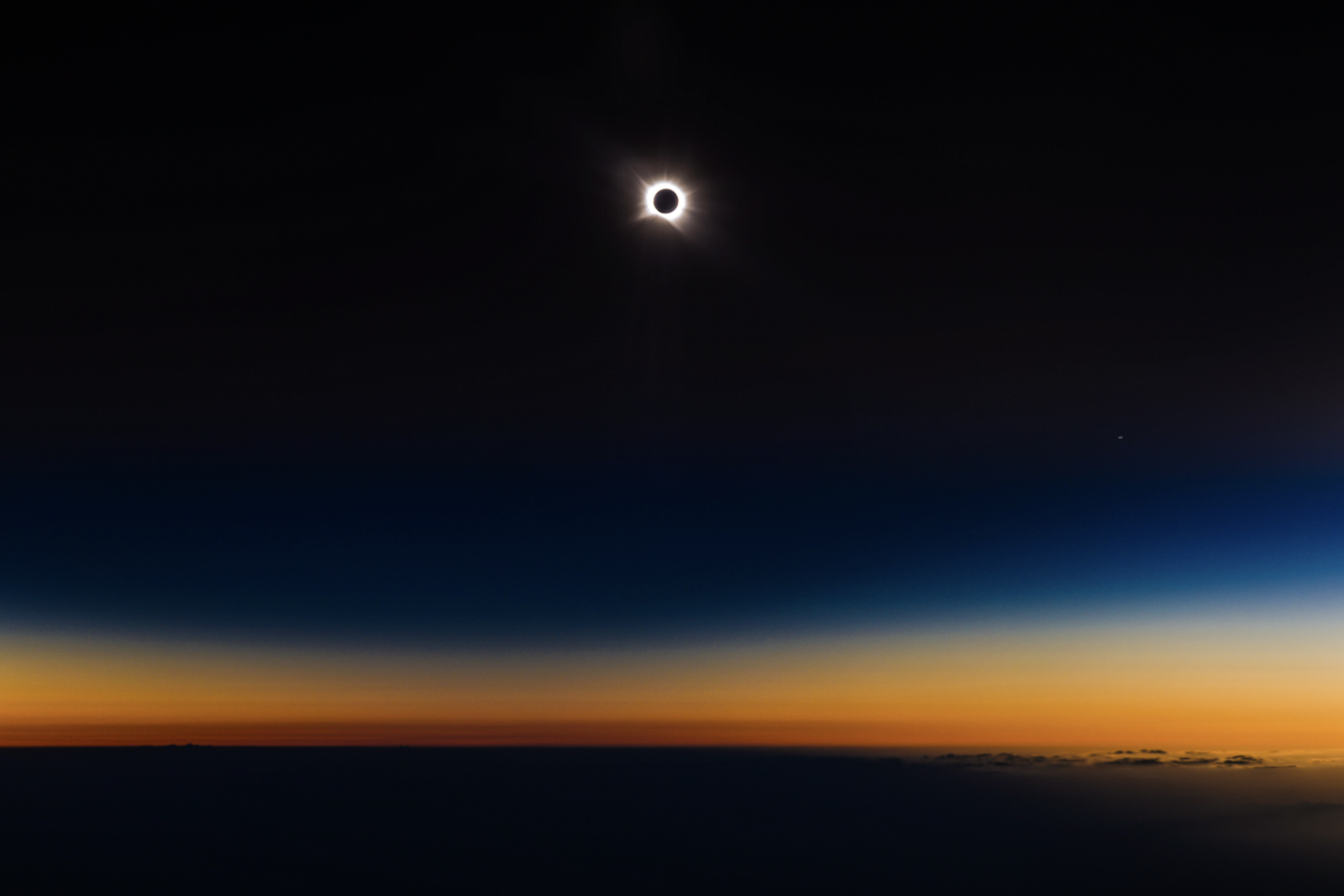
The experience of totality at 35,000 feet is impossible to fully capture in prose. On the ground, the environment cools, and birds stop singing. In the air, the effect is visual and visceral. I looked out the window and saw a wall of darkness rushing toward us from the horizon at over 1,500 miles per hour. It was the umbra—the deepest part of the moon’s shadow. Within seconds, the midday sun vanished.
The cabin was plunged into a strange, twilight gloom. Outside, the sun’s corona—the ethereal, wispy outer atmosphere usually hidden by the sun’s glare—shimmered in a halo of ghostly white light. This was the "Diamond Ring" effect in reverse, followed by the breathtaking silence of totality. The energy in the plane was electric; strangers were hugging, and gasps of disbelief echoed through the cabin. For 90 seconds, we were suspended in a pocket of cosmic shadow, flying through a night that shouldn’t have existed.
As a journalist, my instinct was to document. I was juggling a DSLR with a telephoto lens, an iPhone for video, and a secondary camera for wide-angle shots of the cabin. But for a few seconds, I put the gear down. I stared into the black void where the sun should be and felt the sheer scale of the universe. It was a reminder of why we travel: not just to see new places, but to witness moments that make our daily worries feel infinitesimal.
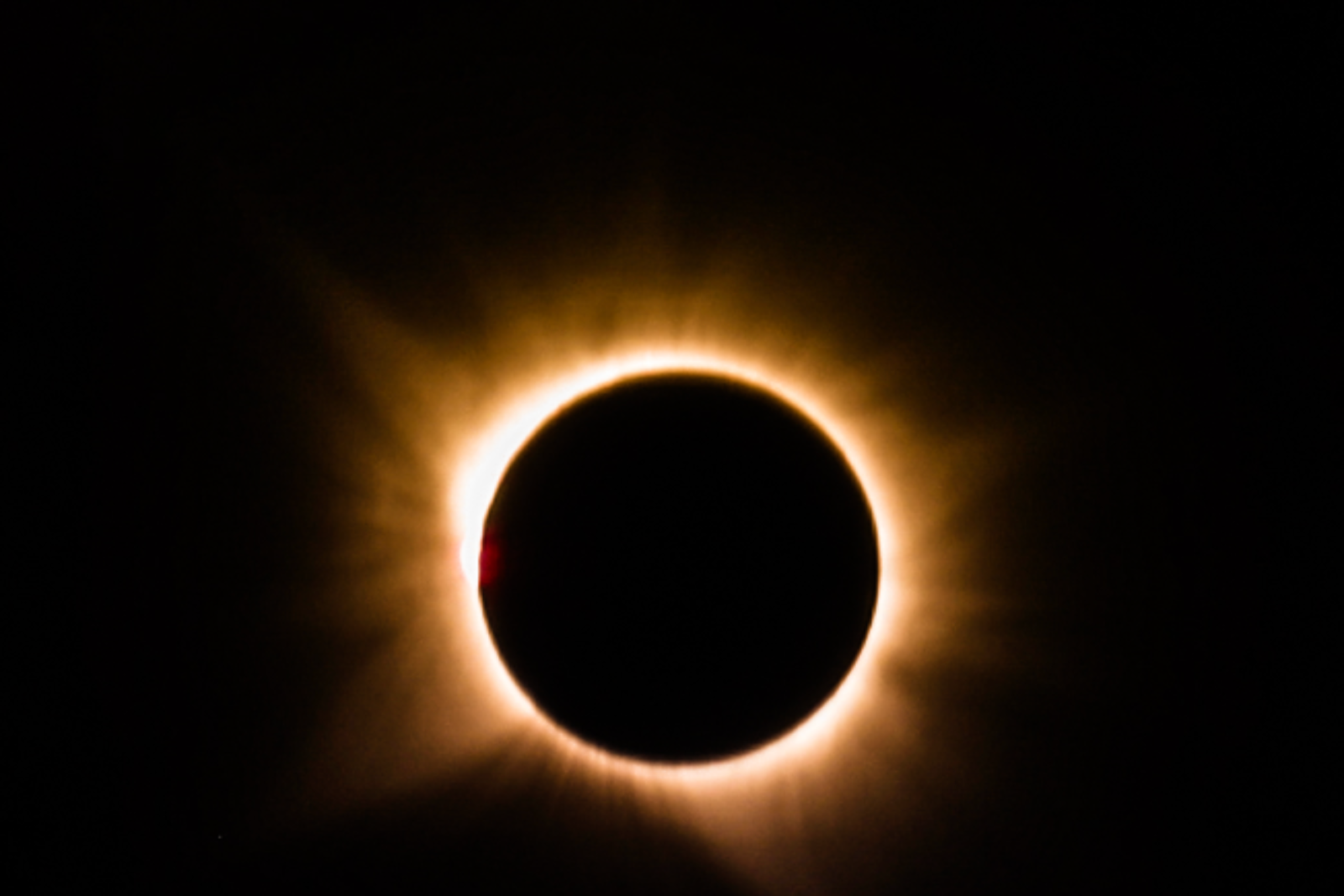
The shadow eventually passed, racing ahead of us toward the Spanish interior. The "Diamond Ring" reappeared—a single, blinding point of light as the first sliver of the sun emerged from behind the lunar disc. The cabin erupted. People who had been strangers minutes ago were now sharing photos via AirDrop and animatedly discussing what they had just seen. The flight crew, equally moved, moved through the cabin with a renewed sense of camaraderie.
The spectacle didn’t end with totality. As we began our descent into Malaga-Costa del Sol Airport, the sun, still partially eclipsed, began to set. We were treated to a "horned sunset," where the sun looked like a glowing scimitar sinking into the Mediterranean Sea. It was the perfect coda to a journey that had been defined by precision, luck, and the unique magic of aviation.
Landing in Malaga, the heat of the Spanish summer hit us, but the "chills" from the eclipse remained. We had successfully navigated the complexities of orbital mechanics and airline scheduling for the cost of a few miles and a cup of coffee. This journey underscored a growing trend in the industry: "Astro-tourism." Travelers are increasingly seeking out destinations based on celestial events, from the Northern Lights in Scandinavia to total eclipses in remote corners of the world. For the travel industry, this represents a lucrative niche; for the traveler, it represents a chance to reconnect with the natural world through the lens of modern technology.
As I walked through the arrivals hall, I was already looking ahead. The next great eclipse is slated for August 2, 2027, with a path of totality crossing the Strait of Gibraltar and passing directly over the Valley of the Kings in Luxor, Egypt. The duration of totality there will be an incredible six minutes and 23 seconds—one of the longest in the 21st century.
Luck played its part on BA2644, certainly. But it was the intersection of data, loyalty program strategy, and a willingness to break my own rules that placed me in that window seat. In the end, finding the perfect flight for a shot at totality wasn’t just about the destination; it was about the realization that sometimes, the most rewarding journeys are the ones we take when we follow the tingles of adventure rather than the demands of a calendar. My 40th year had begun with a literal "darkness," but it was the most brilliant light I had ever seen.
