
 By Rifan Muazin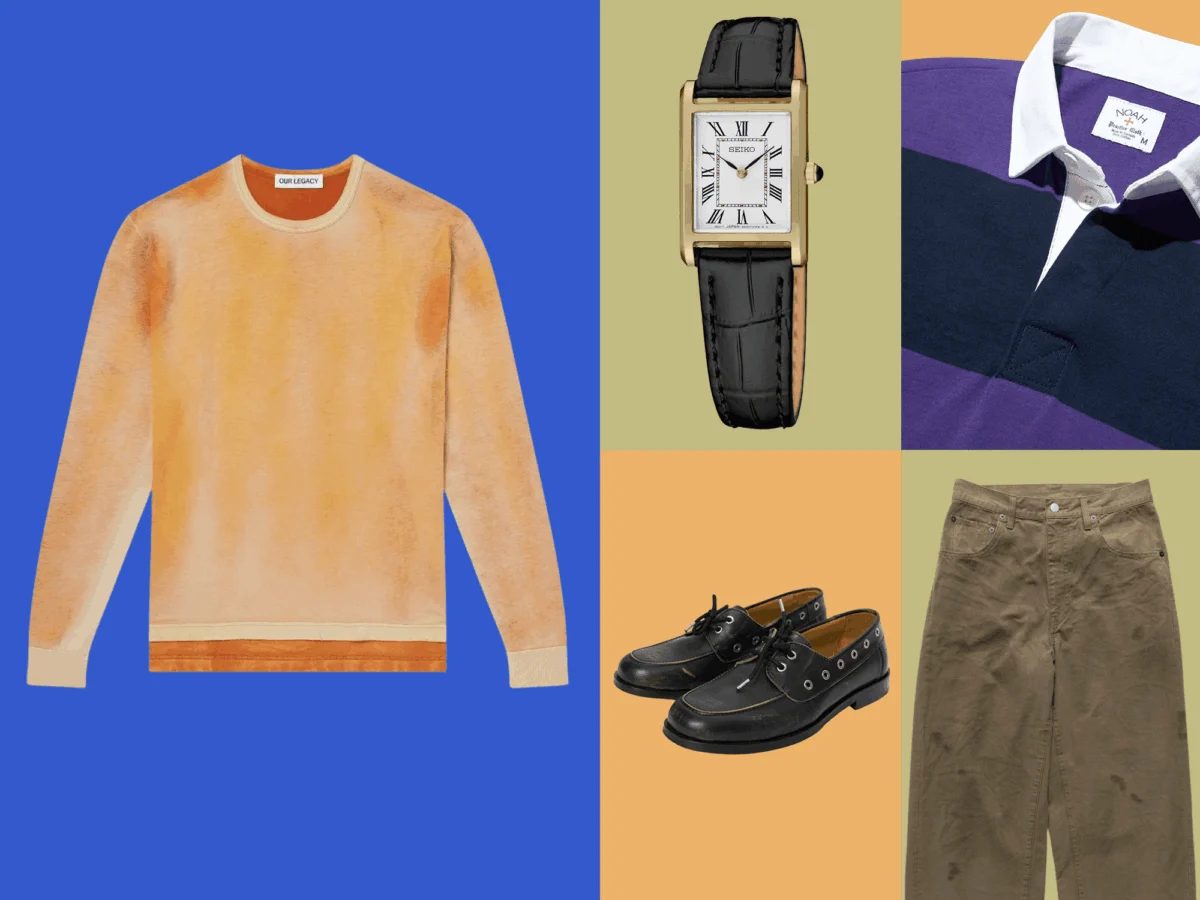
To understand the significance of this list, one must first look at the brands that are currently steering the ship of menswear. Among the handpicked selections are pieces from Noah, Mfpen, Seiko, Ssstein, and Our Legacy—names that evoke a specific kind of modern sophistication. Noah, founded by former Supreme creative director Brendon Babenzien, continues to bridge the gap between the rebellious spirit of skate culture and the refined aesthetics of traditional East Coast prep. By emphasizing ethical production and high-quality materials, Noah has become a beacon for the conscious consumer who refuses to sacrifice style for sustainability. Their inclusion in the Hit List underscores a broader industry shift toward "investment pieces"—garments that are built to last a lifetime rather than a single season.

In contrast to the Americana-infused roots of Noah, the presence of Mfpen highlights the undeniable influence of the Scandinavian design movement, specifically the "Copenhagen look." Founded by Sigurd Bank in 2015, Mfpen has gained a cult following for its use of deadstock fabrics and its ability to subvert classic menswear tropes. The brand’s contribution to the "breezy layers" category often involves oversized shirting and lightweight outerwear that prioritizes comfort without appearing slouchy. This aesthetic reflects a growing desire among men for clothing that feels effortless—a "relaxed-formal" hybrid that works as well in a creative office as it does at a weekend gallery opening.

The technical heart of the Hit List is perhaps best represented by Seiko. While the fashion world often fixates on the ephemeral, the world of horology offers a sense of permanence. Seiko, a titan of Japanese watchmaking with a history dating back to 1881, remains a favorite among editors because it democratizes the luxury of a mechanical timepiece. Whether it is the rugged charm of the Seiko 5 Sports line or the refined precision of the Prospex series, a Seiko watch on the wrist signals an appreciation for engineering and heritage. In the context of the Hit List, a watch is not just a tool for telling time; it is a foundational accessory that grounds an outfit, providing a sense of weight and history to even the most experimental looks.

Experimentalism is precisely where Ssstein and Our Legacy come into play. Ssstein, a Japanese label known for its obsessive attention to silhouette and "negative space," offers a masterclass in how to manipulate fabric to create drama. Their pieces often feature exaggerated proportions that challenge the wearer to rethink their relationship with their clothes. On the other hand, Our Legacy, hailing from Stockholm, has become the "cool kid" of the fashion industry by perfecting the art of the "slightly off" aesthetic. Whether it is a digital-print shirt that looks like aged leather or a pair of mohair cardigans in an unexpected hue, Our Legacy specializes in pieces that look like vintage finds but feel entirely futuristic. Their inclusion in the Hit List is a nod to the "intellectual fashion" movement, where the value of a garment lies in its ability to spark conversation.

One of the most talked-about categories in this season’s curation is the "freakiest shorts." For decades, the standard for men’s shorts was a safe, knee-length cargo or a conservative chino. However, the modern Hit List embraces the "short-short" revolution, popularized by style icons like Paul Mescal and Donald Glover. These "freaky" shorts often feature 5-inch (or shorter) inseams, bold patterns, and technical fabrics. The shift represents more than just a change in hemlines; it is a reclamation of the male form and a rejection of the baggy, shapeless silhouettes of the early 2000s. By pairing these daring shorts with "breezy layers"—think an open-knit crochet shirt or a lightweight linen blazer—the modern man achieves a balanced silhouette that is both provocative and polished.

The concept of "breezy layers" is particularly relevant as the fashion industry grapples with the realities of climate change. Editors are increasingly looking for "trans-seasonal" clothing—items that can be layered up or down depending on the erratic nature of modern weather. This has led to a resurgence in the popularity of fabrics like seersucker, Tencel, and high-gauge knits. These materials allow for the structural integrity of traditional tailoring but with the breathability of athletic wear. The Hit List showcases how a well-chosen layer, such as a translucent ripstop jacket or a perforated vest, can add depth to an outfit without adding heat.

Beyond the garments themselves, the "hottest accessories" section of the list serves as a deep dive into the details that define a persona. This year, the focus has shifted toward jewelry that feels personal and lived-in. Gone are the days of sterile, high-shine gold chains; in their place are beaded necklaces, silver signet rings with a weathered patina, and eyewear that leans into 1970s maximalism. These accessories are the "connective tissue" of a wardrobe, allowing a man to transition from a minimalist look to something more expressive with just a few small additions.

The curation of the Hit List also reflects a significant analytical shift in the menswear market: the decline of "logomania" in favor of "stealth wealth" or "quiet luxury." However, the GQ editors offer a unique twist on this trend. While the colors may be muted and the logos absent, the textures and cuts are anything but quiet. The "hit" items are those that stand out because of their superior drape and the way they move with the body. This is where the expert perspective becomes crucial. An editor’s eye can distinguish between a generic linen shirt and one from a brand like Our Legacy, which may have been treated with a specific wash to give it a unique, "crunchy" texture.

From a sociological perspective, the Best New Menswear Hit List acts as a mirror to the changing definitions of masculinity. The inclusion of "freaky shorts" and "breezy layers" suggests a man who is comfortable with his body and unafraid of vulnerability. The mix of heritage brands like Seiko with "new-school" labels like Mfpen shows a respect for the past combined with an eagerness for the future. It is a wardrobe for the "modern polymath"—a man who is as likely to be discussing mechanical movements as he is the environmental impact of deadstock fabric.

Furthermore, the design of the Hit List itself, credited to Brittany Loggins, utilizes a visual language that mirrors the eclectic nature of the clothes. The use of mixed media and collage-style layouts in fashion journalism helps to contextualize these items not as museum pieces, but as part of a vibrant, messy, and exciting daily life. The photography, provided by the brands themselves (Noah, Mfpen, Seiko, Ssstein, Our Legacy), emphasizes the tactile nature of the products—the weave of the fabric, the glint of the watch crystal, and the specific tint of a lens.

As we look toward the future of menswear, the Hit List serves as an essential roadmap. It encourages men to move away from the "uniform" of the past and toward a more modular way of dressing. The goal is to build a "Hit List" of one’s own—a collection of pieces that resonate on a personal level while maintaining a high standard of quality. Whether it is a perfectly cut pair of shorts from Mfpen or a timeless Seiko diver, these items are the building blocks of a modern identity. In a world that is increasingly digital and ephemeral, there is something profoundly grounding about the weight of a well-made coat or the mechanical tick of a watch. The GQ editors have done the hard work of filtering the noise; what remains is a concentrated dose of style that is as much about the way we live as it is about what we wear. This list is a testament to the fact that, despite the chaos of the fashion cycle, true style remains a constant, evolving language of self-expression and craftsmanship.
