
 By admin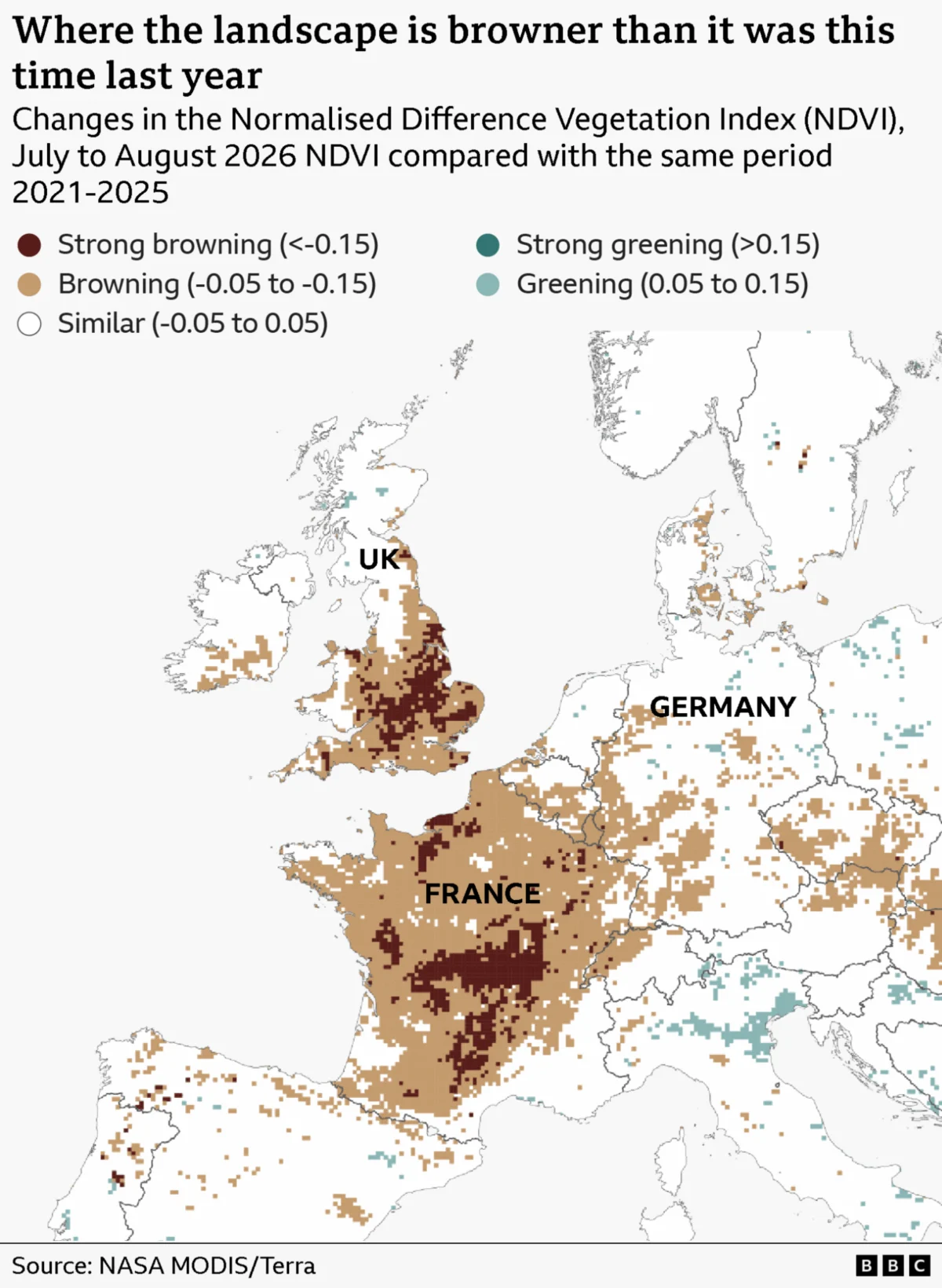
The relentless grip of this summer’s extreme temperatures on western Europe is now starkly visible from space, as successive heatwaves since May have left an indelible mark on the continent’s landscapes. Satellite images, meticulously analyzed by BBC Verify, paint a grim picture of shrunken glaciers, vast swathes of land scarred by wildfires, verdant fields parched into arid expanses, and alarmingly low river levels. Even iconic landmarks have not been spared; the magnificent Palace of Versailles, south of Paris, appears as a solitary island of green amidst a sea of parched, brown fields in these striking aerial views. The European Union’s climate monitoring service, Copernicus, has officially confirmed that the period between June and July this year registered as the hottest on record for western Europe.
The immediate driver of these oppressive heatwaves has been the persistence of high-pressure weather systems. These systems have brought about unbroken periods of clear, sunny skies, allowing temperatures to steadily climb to unprecedented levels. However, the Met Office attributes the escalating intensity and frequency of these hot spells to the overarching influence of climate change, primarily driven by the burning of fossil fuels. This long-term warming trend has been gradually raising global average temperatures for decades, making such extreme heat events significantly more probable and more severe. BBC Verify’s investigation delves into the tangible ways this sweltering weather has reshaped the natural and built environments across the European continent.
Rivers Run Drier: Unveiling Ancient Secrets and Crippling Industries
The lifeblood of Europe, its mighty rivers, have been reduced to mere trickles in many regions. The Danube, the continent’s second-longest river, has receded to levels not seen in three decades across several countries. This dramatic drop in water levels has unearthed astonishing historical relics that lay submerged for generations. In Bulgaria, the skeletal remains of a mammoth have been discovered, offering a tangible link to prehistoric times. Similarly, in Serbia, a sunken World War II warship has emerged from the depths, a somber testament to the conflicts of the past now revealed by the present-day drought. The visual contrast is stark: one image shows the riverbed, while another, depicting the same location, clearly reveals the warship’s hull breaking the surface.
The consequences of these low river levels extend far beyond historical curiosities, impacting vital infrastructure and industries. In regions where the Danube flows through Hungary and Romania, nuclear power stations have been compelled to either cease operations or significantly reduce their output. This drastic measure is a direct result of the inability to draw sufficient river water, which is crucial for their cooling systems. The Rhine, another major European artery, has also been severely affected. Cargo vessels have found themselves stranded on increasingly shallow riverbeds, disrupting vital trade routes, while popular river cruises have been cancelled, impacting the tourism sector. The economic ramifications of these waterway disruptions are substantial, affecting supply chains and livelihoods across the affected nations.
Retreating Glaciers in the Alps: A Stark Warning from Europe’s Icy Crown
Even the majestic, snow-capped peaks of the Alps have succumbed to the pervasive heat. Ongoing scientific measurements indicate that this summer is on track to be one of the most catastrophic on record for the melting of Alpine glaciers. With more than a month of the summer season still remaining, the rate of ice loss is accelerating at an alarming pace. The situation was exacerbated by a mild winter, which left glaciers with less insulating snow cover than usual by the end of April. This precarious state was then hit by an unusually early heatwave in May, which significantly accelerated the melting of the remaining snow.
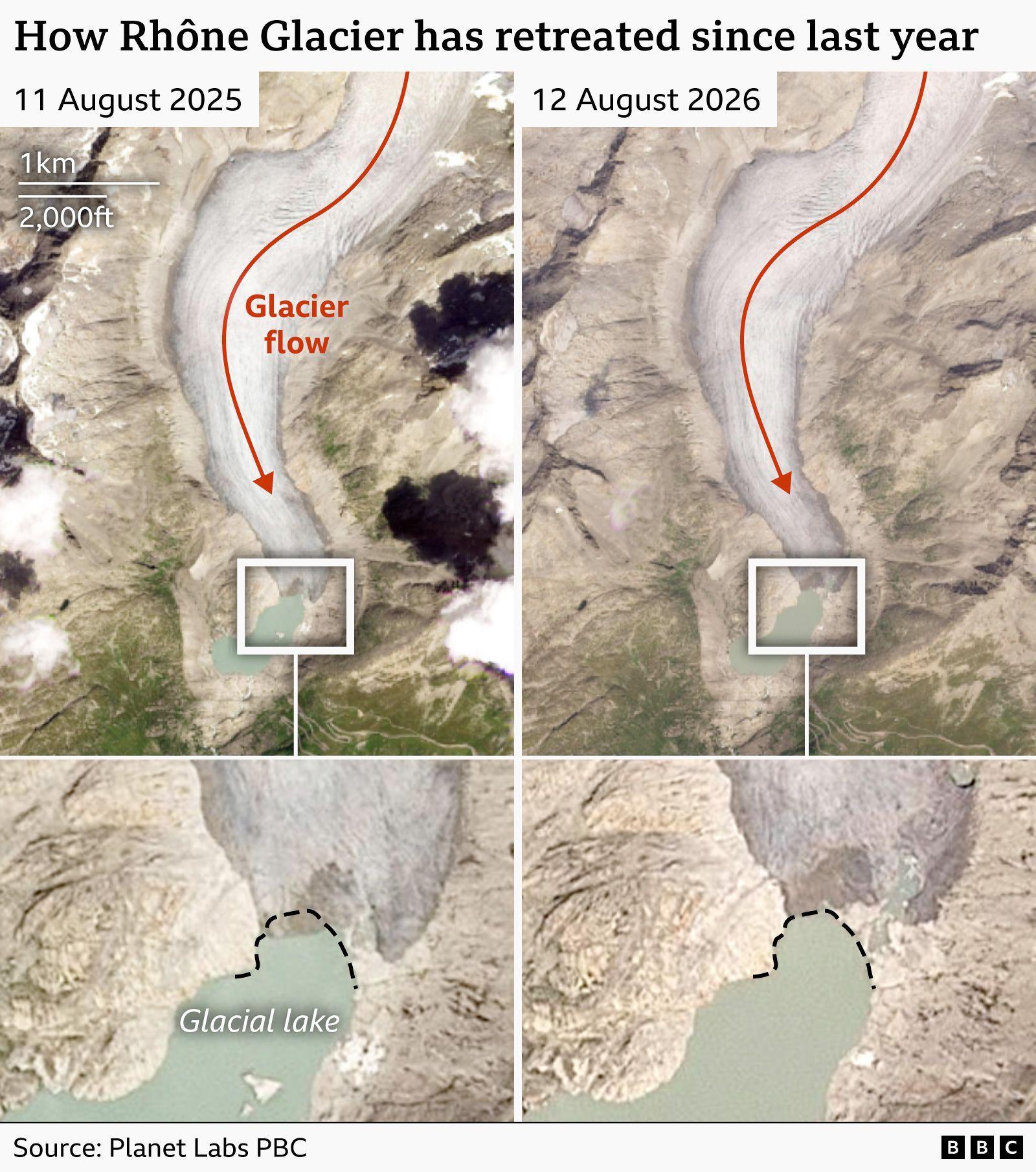
This premature snowmelt exposed the underlying ice, leaving the glaciers exceptionally vulnerable to the subsequent, more intense heatwaves. The consequence is a dramatically accelerated rate of melting. Satellite imagery provides compelling evidence of this phenomenon. For instance, the Rhone Glacier in Switzerland, a popular tourist attraction, has shown a significant retreat. Satellite comparisons reveal that much of the glacier’s terminus has receded by 50 meters (160 feet) or more since the same period last year. This visible recession is not merely an aesthetic change; it represents a fundamental alteration of the Alpine landscape and a loss of a vital freshwater resource.
Dr. Lander van Tricht, a glaciologist at the Swiss Federal Institute of Technology, explained the critical shift in recent years. He stated that climate change has led to "much less snow in winter and much, much more melt in summer." He further cautioned that if this trend continues, "the future looks very dramatic for the Alps." The implications of widespread glacier melt are profound, ranging from increased flood risks due to glacial lake outbursts to long-term water scarcity in downstream regions that rely on glacial meltwater for irrigation and drinking water. The Alps, often perceived as an immutable natural wonder, are now a visible barometer of the planet’s warming climate.
Wildfires Turn Landscapes Brown: A Continent Engulfed in Flames
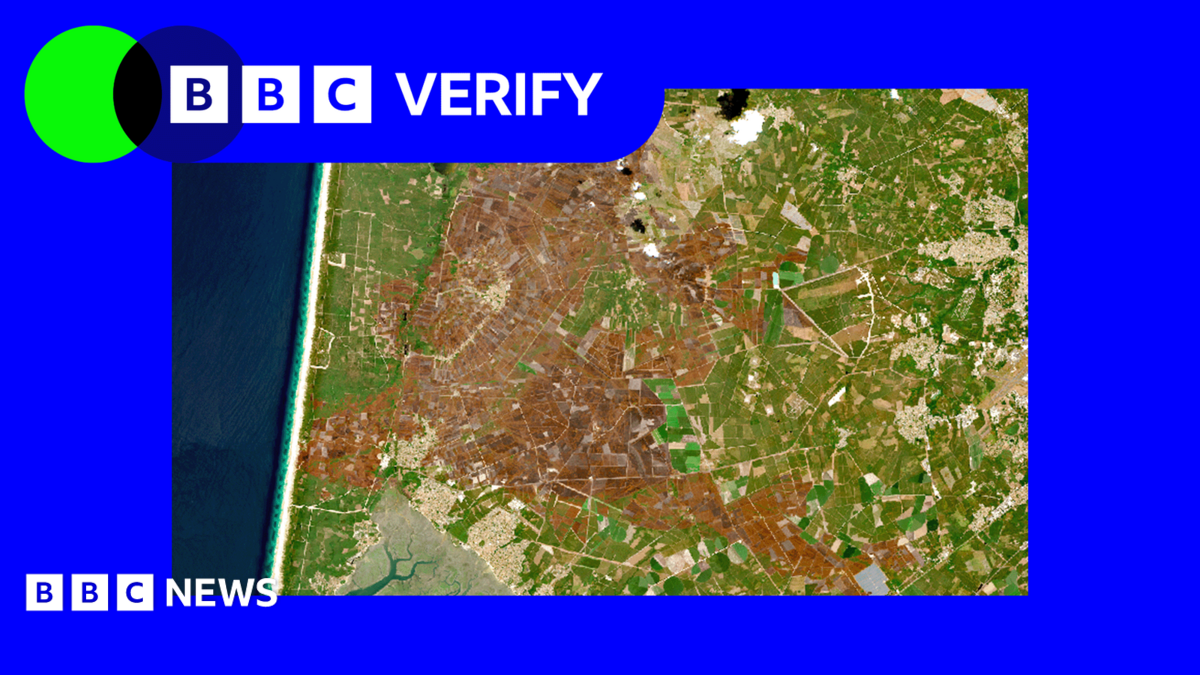
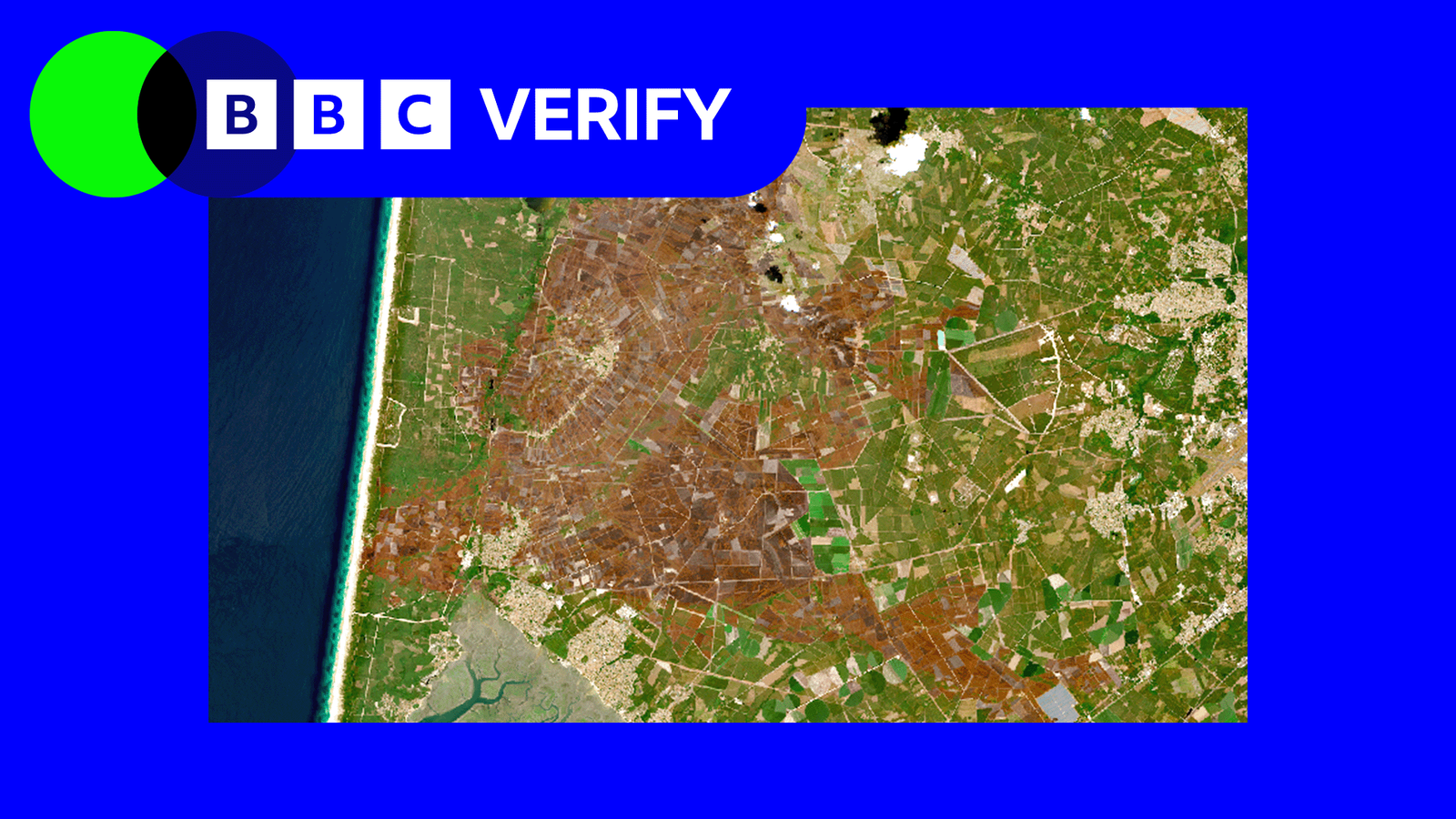
The sweltering heat has also fueled a surge in devastating wildfires across western Europe, transforming once-vibrant landscapes into desolate, blackened expanses. France, in particular, has endured a catastrophic wildfire season, with over 90,000 hectares (900 square kilometers or 350 square miles) consumed by flames. This figure already represents France’s worst year on record for wildfires, according to data from the European Forest Fire Information System. The single largest blaze, in the Gironde region near Bordeaux, scorched approximately 42,000 hectares, an area comparable in size to the Isle of Wight.
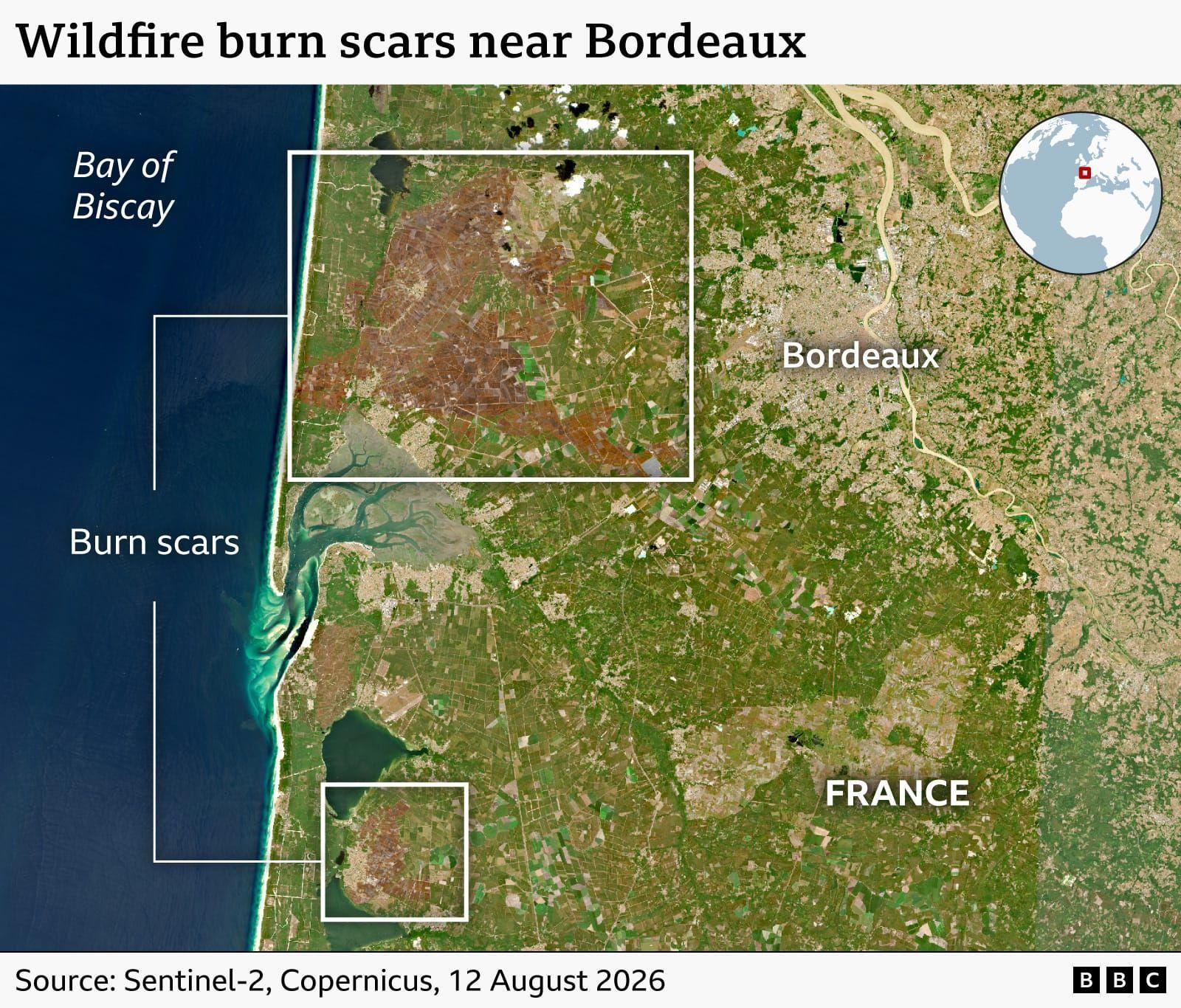
A significant contributing factor to the ferocity and scale of this year’s wildfires is the tinder-dry condition of the land. Dr. Douglas Kelley, from the UK Centre for Ecology and Hydrology, emphasized that extreme wildfires are becoming "more and more frequent" due to climate change. He explained that the elevated temperatures create ideal conditions, rapidly drying out vegetation and soils, making them highly susceptible to ignition and rapid spread. Even at a zoomed-out perspective, satellite imagery of western France clearly illustrates a dramatic increase in the browning of the land when compared to the same period in the previous year.
To quantify this widespread vegetation stress, BBC Verify utilized the Normalised Difference Vegetation Index (NDVI). This satellite-derived metric assesses the greenness and health of vegetation. Lower NDVI readings signify sparser or stressed plant life. The analysis revealed that this summer’s NDVI readings fell below a five-year benchmark (2021-2025) across approximately 70% of France. Similarly, close to half of the United Kingdom and roughly 40% of western Germany exhibited comparable browning. The accompanying map vividly illustrates this phenomenon, highlighting the extent of vegetation stress across the region.
Professor Andrew Challinor, from the University of Leeds, commented on the concerning implications of these satellite observations. He stated that the images are "consistent with widespread water stress," which "does not bode well" for the agricultural sector. Given that much of Europe’s land is dedicated to crop cultivation, this widespread stress could have a significant impact on food production and the broader agricultural industry. In the most severely affected areas, soil moisture levels are critically low, falling below those recorded on approximately 98% of comparable dates in the historical record, according to Professor Luis Samaniego from the Helmholtz Centre for Environmental Research. He further warned that even if rain eventually returns, some of the agricultural damage may already be irreversible, impacting harvests and livelihoods. The visual evidence from space serves as a powerful and urgent reminder of the profound and far-reaching consequences of a rapidly warming planet.
